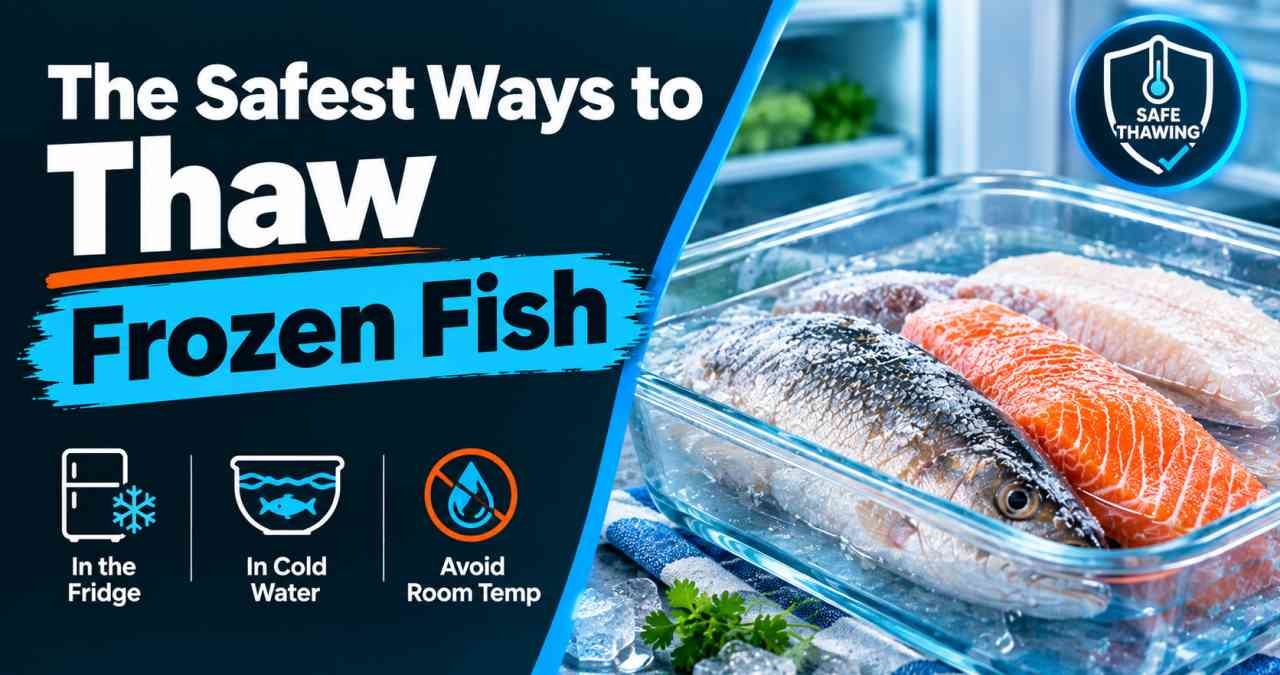
The Safest Ways to Thaw Frozen Fish
Three methods keep frozen fish safe while it thaws: the refrigerator, a sealed bag in cold water, or the microwave immediately followed by cooking. Every other approach, including the counter and warm water, lets bacteria multiply in ways that cooking afterward doesn’t fully undo.
That last point surprises people. Cooking kills active bacteria, but some produce toxins along the way that survive heat just fine. The method you choose to thaw fish isn’t just about convenience. It’s the actual mechanism that determines whether the fish stays safe before it ever reaches the pan.
Table of Contents
Why Can’t You Just Thaw Fish on the Counter?
Bacteria multiply fastest between 40°F and 140°F, a range food safety agencies call the danger zone. Inside that zone, certain bacteria can double in number in as little as 20 minutes. A piece of fish left at room temperature spends hours passing through that range, giving bacteria far more time to multiply than a quick glance at the clock would suggest.
Here’s the part most people miss. The outside of a frozen fillet reaches room temperature long before the inside does. That thin outer layer sits in the danger zone for the entire time the fish is thawing on the counter, even while the center is still solid. By the time the whole piece looks thawed, the surface has often spent several hours exactly where bacteria grow best.
This is also why methods that seem harmless, like leaving fish out for just an hour while you prep everything else, still carry real risk. The clock starts the moment it leaves the freezer, not once it looks thawed.
Method 1: Thawing in the Refrigerator
Move the fish from the freezer to the refrigerator, on a plate or in a shallow container to catch any liquid it releases. A pound of fillets typically takes about a full day. Something thicker or whole can take up to two days, so this method rewards planning the night before rather than the afternoon of.
This is the only one of the three methods with no real time pressure once thawing is done. Fish thawed this way can sit safely in the fridge for another day or two before you cook it, since it never left the safe temperature range in the first place. It’s the slowest option, but also the most forgiving.
Method 2: Thawing in Cold Water
Seal the fish in a leak-proof bag, submerge it in a bowl of cold tap water, and change the water every 30 minutes to keep it cold. Most fillets thaw this way in 30 minutes to an hour. Something thicker can take a bit longer.
The seal matters as much as the temperature. An unsealed or leaky bag lets water contact the fish directly, which can wash away flavor and let whatever is in the water itself reach the surface. Cold, not warm or hot, is the other non-negotiable part. Warm water speeds up thawing, but it also pushes the fish’s surface into the danger zone well before the center has thawed, undoing the entire point of the method.
Unlike refrigerator thawing, fish thawed in cold water should be cooked right away rather than left to sit, since parts of it have been warmer than a full refrigerator hold throughout the process.
Method 3: Thawing in the Microwave
Use your microwave’s defrost setting, checking and rotating the fish every couple of minutes, and move it straight into a hot pan or oven the moment it’s thawed. This is the fastest of the three methods, and also the least forgiving.
Microwaves thaw unevenly. Thin edges can begin cooking while the center is still icy, which is exactly why this method should flow directly into cooking rather than sitting on the counter afterward for a few minutes. Those few minutes are enough time for the already-warmed edges to reach the danger zone while you’re doing something else.
Is It Ever Safe to Use Warm or Hot Water to Thaw Fish Faster?
No, and the reasoning is worth understanding since the idea seems logical on its face. Hot water does thaw fish faster. It also raises the surface temperature into the danger zone almost immediately, long before the center has thawed, giving bacteria on the surface a genuine head start while the middle is still catching up.
Cold water avoids this specifically because the water itself never gets warm enough to push the fish’s surface out of a safe range. The speed difference between cold and hot water is real. It comes at the cost of the one thing that actually keeps the method safe.
What If You Forgot to Plan Ahead?
Skip thawing entirely. Cooking fish directly from frozen is a genuinely good option covered in How to Cook Fish from Frozen and Make It Taste Amazing, and it sidesteps the whole question of timing a thaw around dinner. If you do need it thawed specifically, cold water is the realistic fast option, not a shortcut through room temperature or hot water.
Does It Matter If the Fish Is Whole or a Fillet?
Yes, mainly in timing. A whole fish has more mass and takes noticeably longer to thaw by any method than a thin fillet does, so a schedule built around fillets will leave a whole fish partially frozen if you don’t account for the difference. When in doubt, check the thickest part before assuming something is fully thawed, not the outside.
Frequently Asked Questions
Can you refreeze fish thawed in cold water or the microwave?
Generally not recommended raw, since parts of the fish were warmer than a full refrigerator thaw throughout the process. The complete answer is in Can You Refreeze Fish After Thawing? The Real Answer.
How do you know if fish thawed properly versus just on the outside?
Check the thickest part. It should give evenly to light pressure with no icy or hard center remaining.
Is it safe to thaw fish in its original vacuum-sealed packaging?
Yes. For cold water thawing, intact, leak-proof original packaging works fine. For refrigerator thawing, the original packaging is fine either way.
Does thawing time change for smoked or cured fish?
Not meaningfully. The same danger-zone reasoning and the same three methods apply regardless of how the fish was prepared before freezing.
What to Check Next
For the complete picture of fish storage and safety, including refreezing and cooking temperatures, see Fish Storage and Food Safety: The Complete Guide. And if you’re still deciding whether fresh or frozen is the better buy in the first place, that’s covered in Fresh vs Frozen Fish: Which Is Actually Better?.
