Buying Guide
-
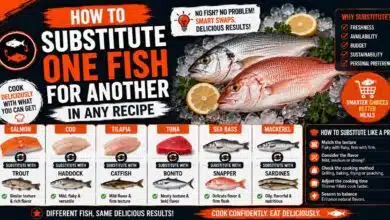
How to Substitute One Fish for Another in Any Recipe
Substitute based on texture and fat content, not on how similar two species sound or look. A firm, meaty fish and another firm, meaty fish will behave the same way in a recipe even if they’re not remotely related; two fish from the same family can cook completely differently if one is delicate and the other is firm. This isn’t a theoretical skill for me; several of the species that show up constantly in international recipes simply aren’t available where I live, so substitution is something I rely on in…
-

Questions to Ask Your Fishmonger Before You Buy
A good fishmonger wants these questions, not just tolerates them; the ones who hesitate or get vague are telling you something useful too. Asking well is one of the most underused tools a home cook has, and it costs nothing. I’ve been asking the same core set of questions for years, at markets I know well and ones I’ve never been to, and the pattern holds every time: a confident, specific answer is a good sign regardless of the setting, and a dodge or a generic reassurance is worth paying…
-
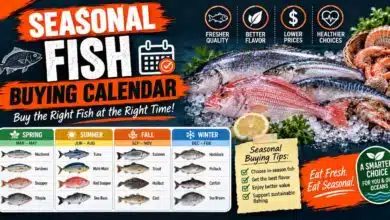
Seasonal Fish Buying Calendar
Fish absolutely have seasons, but no single calendar works everywhere, and any list that claims otherwise oversimplifies. Seasonality depends on hemisphere, region, and even which specific body of water a fish comes from; a species at its peak in one part of the world can be completely out of season, or not present at all, somewhere else at the same time of year. What’s genuinely useful, and what actually holds up regardless of where you live, is understanding why fish have seasons in the first place and how to find…
-
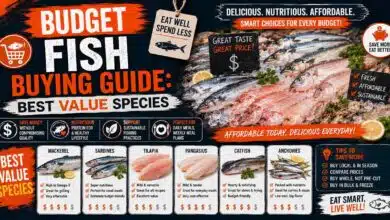
Budget Fish Buying Guide: Best Value Species
Price and quality in fish are much less connected than people assume. Some of the best-tasting, most versatile fish available are also consistently the cheapest, simply because they’re farmed efficiently or haven’t been marketed the way salmon and cod have. This list covers the species that are reliably good value almost everywhere, plus how to think about finding value in your own specific market, since exact prices shift constantly by region, season, and where you’re shopping. I grew up cooking with fish that never had any marketing behind them at…
-
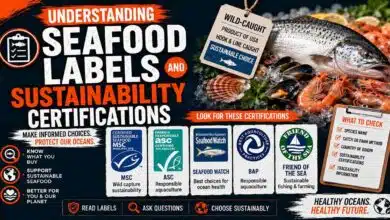
Understanding Seafood Labels and Sustainability Certifications
A real sustainability label means an independent organization actually checked a specific fishery or farm against a defined standard; it’s not the fishery or the brand grading its own homework. That’s the whole point of a certification, and it’s also exactly what fake or vague “sustainable” claims are missing. The three labels you’ll see most often are MSC, ASC, and BAP, and knowing what each one actually verifies, and how to tell a genuine label from marketing language that just sounds sustainable, takes the guesswork out of a claim that’s…
-
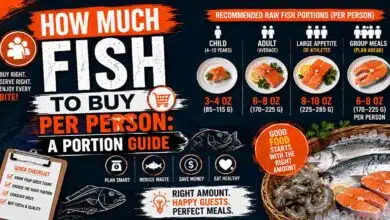
How Much Fish to Buy Per Person: A Portion Guide
Plan on 6 to 8 ounces (roughly 170 to 225 grams) of raw, boneless fillet per person for a standard main course. That number is a genuinely reliable starting point, but the real math behind it has more moving parts than a single figure suggests: whole fish needs a different calculation than fillets, cooking itself changes the weight again, and appetizers, kids, and shellfish all follow their own rules. I always buy a little over any estimate rather than exactly to it, and once you understand why the numbers move…
-
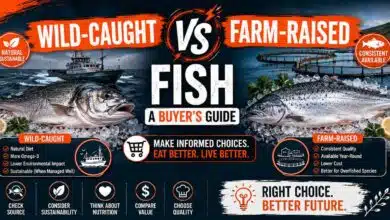
Wild-Caught vs Farm-Raised Fish: A Buyer’s Guide
Neither wild-caught nor farm-raised is automatically the better choice; the real dividing line isn’t wild versus farmed, it’s responsibly managed versus not, and both categories have genuine examples of each. A well-managed fishery and a well-run farm can both be excellent choices; an overfished stock and a poorly managed farm can both be problems, regardless of which label is on the package. That’s a more honest answer than either side of this debate usually gives you, and it’s also more useful, because it means the real question isn’t “which type”…
-
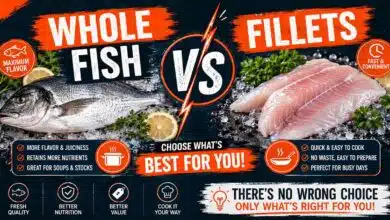
Whole Fish vs Fillets: Which Should You Buy?
Buy whole fish when freshness and value matter most and you don’t mind extra prep; buy fillets when convenience and speed matter more than saving money. The honest version is more nuanced than that one-line rule, though whole fish isn’t automatically cheaper once you account for what you throw away, and fillets aren’t automatically the “lazy” choice once you factor in how much faster they cook. I buy both, and which one I reach for depends on the species, the dish, and honestly how much time I have that day.…
-
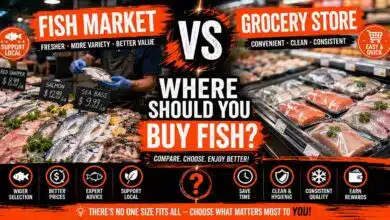
Fish Market vs Grocery Store: Where Should You Buy Fish?
Both can work well; the real difference isn’t the venue itself; it’s turnover, staff knowledge, and how much you’re able to inspect before you buy. A dedicated fish market or full-service counter usually wins on all three. A grocery store usually wins on convenience and, more often than people assume, on price. I shop at both, depending on what I’m cooking and how much time I have. The short version: for a fish that’s the whole point of the meal, I go out of my way for a market. For…
-
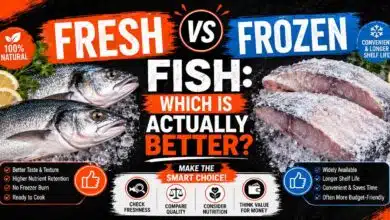
Fresh vs Frozen Fish: Which Is Actually Better?
Properly frozen fish is usually just as good as fresh, and often better than “fresh” fish that’s spent days getting to the counter. The quality difference people notice has almost nothing to do with fresh versus frozen as categories; it comes down to how the fish was handled and how many times it went from frozen to thawed and back again. I keep a stock of good flash-frozen fillets in my own freezer for exactly this reason. It’s rarely the compromise people assume it is, and once you know what…