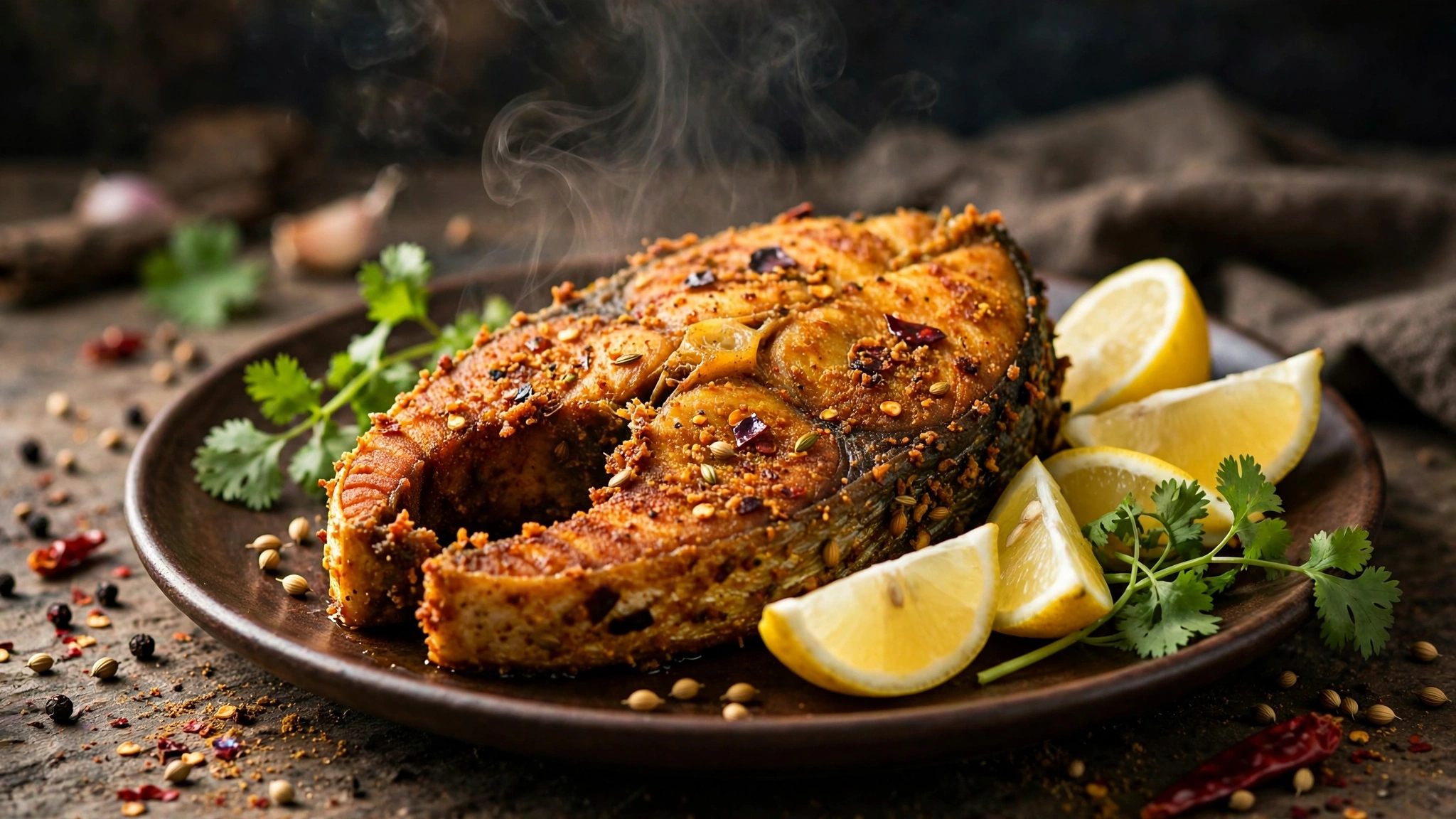
Lahori and Multani Fish Recipes: A Regional Guide
When I hear the names Lahori and Multani attached to fried fish, I think first of a plate arriving hot: crisp masala crust, soft fish inside, lemon ready, and everybody eating with their hands before the steam has even settled. Those two city names carry a beloved fried-fish tradition on our side of the kitchen, and it is the tradition I cook toward at home.
I am Wasim Abbas Bhatti, the Fish’s Chef, and this guide sits inside Fish Recipes from Around the World, Mahigar’s world-cuisine hub. My general home fry lives in Pakistani-Style Fish Fry: Authentic Desi Masala Recipe; this page is its named companion — the Lahori–Multani direction as I practise it in my own kitchen.
Now the honest line, because it matters more than the recipe. I am not going to invent neat rules for how Lahore must differ from Multan, or dress my household pan up as a street-by-street city guide. A true city-level account — the shops, the histories, the exact local recipes — needs firsthand local research and detail I will not fake. What I can give you, honestly, is twenty-plus years of cooking fish, eight years of netting canal fish, my own spice hand, and a home method built around fresh river fish, a rested masala, one clean fry, and no shortcuts with bones or doneness.
Table of Contents
What These Two Names Mean in My Kitchen
At my table, “Lahori–Multani” is not a formula. It is a direction: take the fried fish seriously.
That means the fish is chosen fresh and cut with care, not whatever was left at the counter. It means the masala is not a quick dusting thrown on at the last second; in this home version I let my house masala rest on the fish a little longer than I do for an ordinary weekday fry, so the seasoning sits into the surface instead of skating off in the pan. And it means the serving stays simple and generous — the fish lands hot in the middle of the table, lemon and fresh things beside it, and the plate is shared.
What it does not mean is that I will tell you “Lahore does this” and “Multan does that” as if I had measured both cities from inside their kitchens. If Mahigar ever publishes that comparison, it will come from Mahigar’s own research and experience in those places, written down properly — not from confidence. Until then, judge this page by what it is: a home cook’s honest version of a named tradition, with every step I actually use explained plainly.
Choosing the Fish: Traits Before City Names
A city name cannot rescue the wrong fish. Choose by traits, the same way I teach across Mahigar.
Fresh first. Whole fish should have bright eyes and a clean sea smell; steaks and fillets should look moist, feel firm, and spring back when pressed. If the fish smells sour or heavy before any spice touches it, choose another fish. Masala on tired fish is only tired fish with better clothes.
Firm enough for one turn. The piece must hold together while a crust sets and survive one confident turn. Thick steaks and firm fillets behave best in this fry. Very delicate, thin fish can be cooked, but it asks for a gentler pan and more room; it is not where I would start.
Even thickness beats variety. A thick steak beside a thin tail piece means one piece dries while the other is still raw in the middle. Cut or choose pieces that match, so the whole batch reaches done together.
Whole small fish are welcome. Cleaned, scaled, and scored shallowly, a small whole fish fries crisply and the frame protects the flesh. Score to let heat reach the thick part evenly — never so deep that the fish opens and dries out.
Be honest about river-fish bones. Rohu, catla, and their carp-family relatives can carry fine bones that no masala and no fry will remove. In my house we eat them slowly, with our hands, and an adult checks children’s portions piece by piece. If your table will not manage that calmly, pick a cleaner-filleting firm fish. Nobody enjoys a celebration plate they are nervous about.
Prep and the Longer Masala Rest
Everything in this dish is decided before the oil warms.
Clean the fish properly first: scale and gut whole fish, rinse, and pat dry; run a fingertip along fillets for pin bones and pull what you feel; portion the batch evenly. The full board routine — scaling, gutting, scoring, pin-boning, and drying — is taught step by step in Fish Prep and Butchery: Every Skill You Need.
Then season it as a household method, not a measurement. I rub my own house masala over every face of the fish and into the scores, the same hand I use in my general Pakistani fry. The difference here is patience: I let the seasoned fish rest a little longer than a quick weekday batch, so the spice clings and settles. I will not attach minutes to that rest or print a blend ratio, because a home habit is not a laboratory formula, and inventing one would be fake precision.
One rule sits above the rest, though: the surface must be dry when the fish meets the pan. A longer rest can draw moisture outward, so pat the fish dry again at the last moment. Wet fish under masala steams, the crust slides, and no city name anywhere will save it.
My Lahori–Multani Home Fry Routine
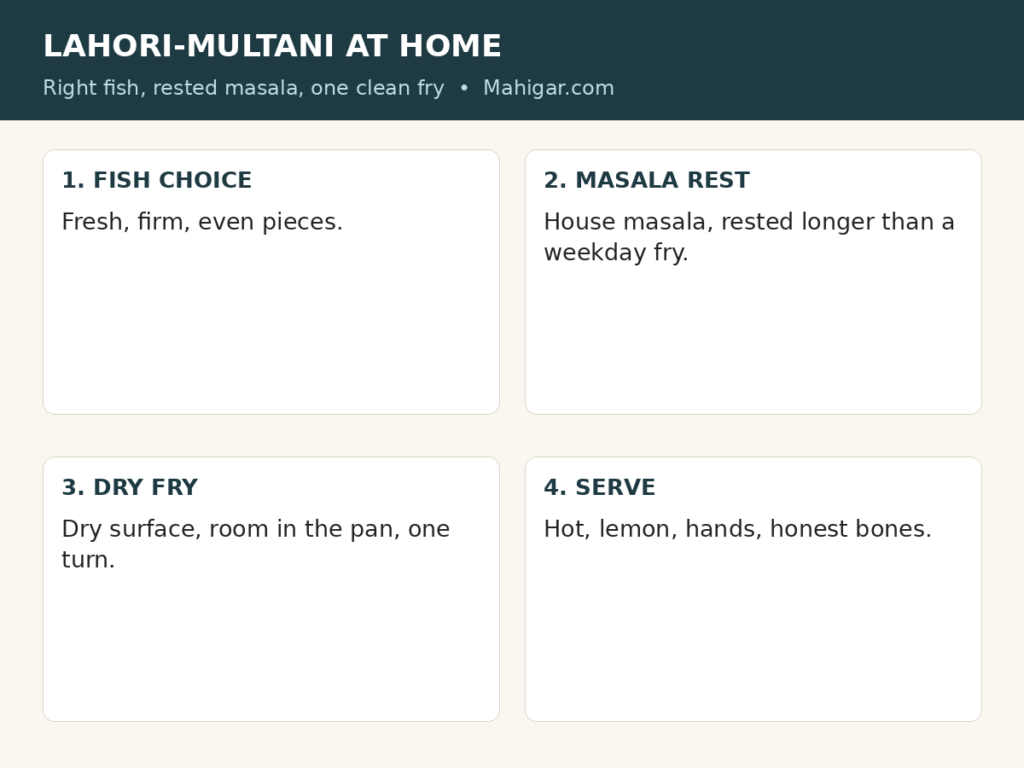
-
Choose fresh, firm fish in even pieces
Whole small fish cleaned and scored, or steaks and fillets of a matching thickness.
-
Do the board work calmly
Scale, gut, rinse, pin-bone-check, and portion before any heat is lit.
-
Rub on your house masala
Cover every face and work it gently into the scores.
-
Rest the seasoned fish a little longer than a weekday fry
Long enough for the spice to settle and cling — a household habit, not a timed formula.
-
Pat the surface dry and fry with room
One honest layer, space around each piece, so the fish fries instead of steaming.
-
Turn once, then check the thickest part
Let the first crust set before touching the fish. Fin fish is done at 145°F (63°C), or opaque and flaking easily; the full chart is in Safe Internal Cooking Temperatures for Every Type of Fish.
-
Drain briefly and serve at once
Lemon, fresh coriander, and onion beside it. This plate waits for nobody.
What to Avoid
Wet fish. The first failure, every time. It steams under its spice coat and the crust never truly forms. Dry it at the last moment, even after the masala rest.
A crowded pan. Pieces touching each other leak moisture into the shared space and fry pale. Two honest batches beat one crowded one.
Turning early or often. Fish lifted before its crust sets tears and leaves the coating behind in the oil. One side, one crust, one turn.
Extra time “to be safe.” Past 145°F (63°C), or past opaque-and-flaking, you are not adding safety — you are drying the fish and hardening the crust. Trust the check.
Spice as a mask. If the raw fish failed the smell check, the correct move is another fish, not more masala. Strong seasoning is for fresh fish that deserves it.
Serving It the Way My Table Does
At my table this fish goes to the centre of the spread and hands go in. Lemon is squeezed over each hot bite, torn coriander and sliced onion keep it bright, and the fish is eaten piece by piece, slowly enough to mind the bones. Plain rice or warm roti beside it is plenty; the fry carries the meal.
Serve children and nervous eaters the checked, cleaner pieces, and let an adult work through any rohu or catla portion first. That is not fussiness. That is how our families have always eaten honest river fish — with pleasure, and with attention.
Frequently Asked Questions
Is this an authentic Lahori or Multani recipe?
It is my honest home version of the Lahori–Multani fried-fish tradition, written from my own kitchen. It is not a claim to any city’s exact recipe, shop method, or history — that level of city detail would need firsthand local research, and I will not invent it.
How is this different from your Pakistani-style fish fry?
The general page teaches my everyday Pakistani home fry. This page follows the Lahori–Multani name as I practise it at home: fish chosen fresh and by traits, a masala rest a little longer than a weekday batch, the same dry-surface fry, and a shared, lemon-bright serving.
What fish should I buy for this fry?
Fresh, firm fish in even pieces — thick steaks, firm fillets, or a small whole fish cleaned and scored. With rohu, catla, and other carp-family fish, expect fine bones that frying does not remove, and let an adult check portions for children.
How do I know the fish is safely done?
Check the thickest part: 145°F (63°C), or flesh that is opaque and flakes easily. On a whole fish, check down near the backbone. A crisp crust tells you about the outside only — the check tells you about the centre.
What to Check Next
If your masala keeps sliding or your crust tears, go back to the general method in Pakistani-Style Fish Fry and rebuild the dry-surface habit there; then walk the Prep pillar for the board skills, and keep the Temperature guide beside the stove for the one number that ends every argument.
From here, the hub tour continues through Mahigar’s world-cuisine pillar — and when Mahigar brings back true city-level detail from Lahore and Multan, this page will be the first one I deepen. Fresh fish, rested masala, dry surface, one turn: that is the tradition as my home honestly cooks it.
