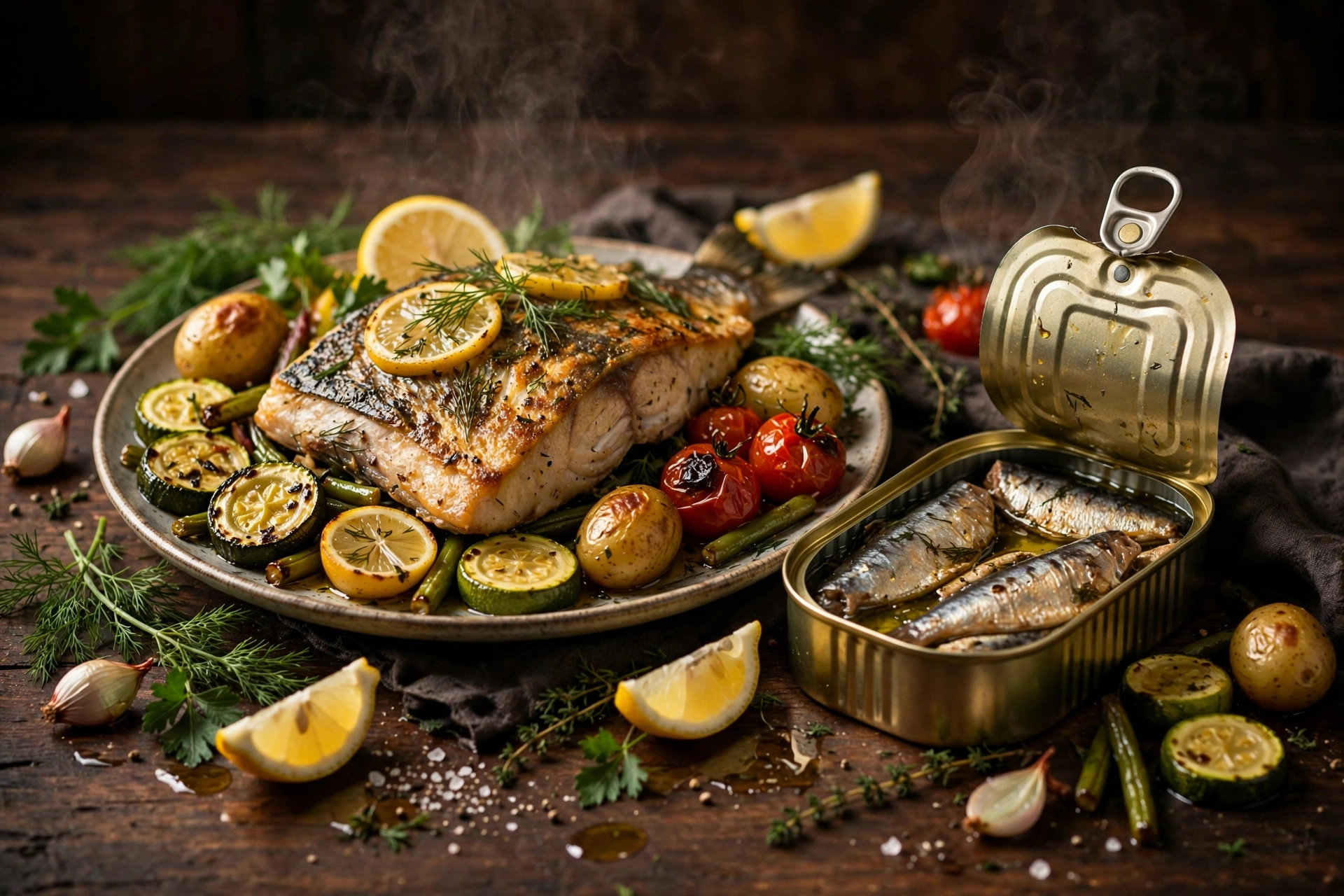
Budget-Friendly Fish Recipes
At the fish counter last month, I watched a man do the maths out loud. He counted coins in his palm, looked at the prawns, looked away from the prawns, and walked out with nothing, when a tin of sardines and a whole local fish on the next slab would have fed his family twice over for less. The problem was never the money in his hand. It was that nobody ever taught him the habits that make fish affordable.
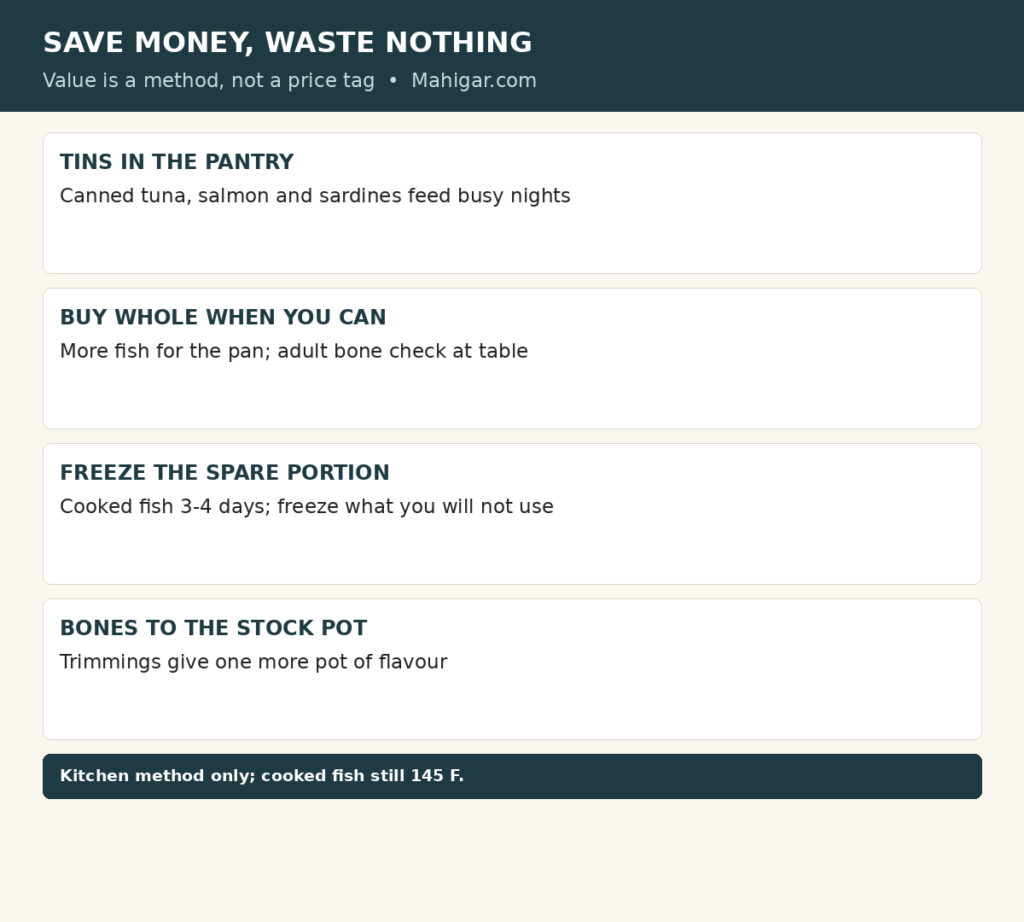
Budget fish cooking is not about finding a magic cheap species. It is about habits: keep good tins in the pantry, buy the whole fish instead of the trimmed fillet, freeze a spare portion when the market is kind, and let the bones earn their keep in a stock pot. Prices change too fast (city to city, season to season) for any article to print them honestly. What I can teach you instead is the method that makes any fish counter affordable. Near my canals, the honest everyday fish are the plentiful local ones, and every coast and market town has its own list like mine. This guide sits inside Fish Recipes for Every Diet and Lifestyle, Mahigar’s diet hub, and it covers the budget table: how to eat fish often, and eat it well, without treating dinner like a special occasion.
One honest note before we start: you will not find a single price in this article. That is deliberate. A price printed here would be wrong somewhere (maybe wrong in your city, maybe wrong next season), and stale numbers help nobody. The habits below work at any market because they do not depend on a number.
Table of Contents
Habit One: Keep Good Tins in the Pantry
The cheapest fish dinner is often the one already in your cupboard. Canned fish is real fish: canned light tuna, sardines, and canned salmon all carry strong protein, the bone-in tins bring calcium from their soft bones, and salmon and sardines bring the omega-3s that fresh oily fish is praised for. I compared the actual USDA figures for the three famous tins in Canned Fish Nutrition Compared: Tuna, Salmon, Sardines. Read the chart there if you want the numbers; the kitchen conclusion is simple. A tin waits patiently for the busy week, needs no thawing, and is already cooked, which makes it the fastest honest fish dinner there is.
Anchor the pantry with two or three tin suppers your family already likes: tuna folded through potatoes or salad, sardines on toast with lemon and onion, canned salmon flaked into rice. Anchovies are the fourth tin, but treat them as a flavouring (a little goes into a sauce or dressing), not as a serving of fish.
One caution belongs here: the name on the tin changes the answer. Canned light tuna sits among the FDA/EPA Best Choices, while albacore (white tuna) is a Good Choice for once a week. Same shelf, different rule, and the Mercury guide below carries the full picture.
Habit Two: Buy the Whole Fish, Respect Its Bones
A fillet is a whole fish with the work done for you, and you pay for that work in yield. Buy the fish whole and you get tonight’s dinner plus a frame: flesh for the pan, and head, bones, and trimmings left over for the stock pot (habit four). Whole fish also shows its freshness honestly, bright eyes, red gills, a clean smell, in a way a wrapped fillet cannot.
Here is the honest trade, and I will not soften it: whole fish means bones, and bones mean care. Fine-boned river fish like rohu carry delicate Y-bones that no cooking melts away. They reward patience and punish haste. At my table, an adult checks any bony portion before it goes to a child, flake by flake, and nobody is ever promised a boneless bite from a whole fish. Tilapia and catfish give cleaner, easier portions for nervous eaters; pomfret’s frame is kinder than most. Choose the whole fish your household can handle calmly, and the saving never costs anyone a bad experience.
For the priced species list itself (which fish the Buying Guide wave already judged good value, and how to grade what you see at the counter), that work lives in the Budget Fish Buying Guide in Mahigar’s buying guides. This page is the cooking half; that one is the shopping half.
Habit Three: Frozen Is a Strategy, Not a Compromise
Frozen fish has an unfair reputation. A fillet frozen properly (often frozen on the boat or soon after landing) can be in better shape than “fresh” fish that travelled badly for days. For a budget kitchen it has a second virtue: it lets you buy when the buying is good and eat when the week is lean.
Two rules keep frozen fish honest. Thaw it in the fridge, never on the counter, and cook it with the same respect as fresh: dry surface, hot pan, one turn. And when you do buy fresh fish in a good week, buy a portion more than tonight needs and freeze the spare properly: portions wrapped tight, air pressed out, labelled with what it is. My full method is in How to Freeze Fresh Fish at Home. That one habit (fresh price this week, freezer dinner next week) smooths out a fish budget more than any single species swap.
Habit Four: Let the Bones and Trimmings Earn Their Keep
Throwing away a fish frame is throwing away a second meal. Heads, bones, and clean trimmings make a simple fish stock, and that stock turns plain rice, a thin soup, or a vegetable curry into a fish dinner’s second act. I will not print a broth recipe with times and quantities here. Kitchens and frames vary too much, but the principle is old and sound: simmer the clean frame gently, strain it, chill it fast, and use it soon.
Two disciplines keep this habit safe rather than sorry. Only frame from fish that was fresh and handled cold goes anywhere near a stock pot. The stock pot is not a rescue for tired fish. And stock is a cooked food like any other: into the fridge at 40°F (4°C) or below, and used inside the same three-to-four-day cooked-fish window this site teaches everywhere. A budget habit that makes someone ill is not a saving.
Habit Five: Buy What the Market Has Fresh Today
The last habit is a question, not a shopping list: ask what came in plentiful today. Every market has a fish that is cheap because it is abundant that week. Near my canals it has long been the local freshwater fish, rohu and pangasius among them, hardy species that feed whole towns without ceremony. Your coast, your river, your market town will name different fish, and that is exactly how it should be. A cook who follows the day’s abundance eats better fish for less than a cook who arrives demanding one famous species in its expensive week.
Cook those plentiful fish with the respect you would give a famous one: fresh and mild-seasoned when the flesh is delicate, properly crisped when it can take it. Abundance is not a quality problem. It is usually the freshest fish on the slab.
The Safety Rules Do Not Bend for a Budget
Cheap fish is still fish, and three rules follow it home at any price. It gets cooked through: fin fish to 145°F (63°C) in the thickest part, or opaque and flaking. It lives cold: 40°F (4°C) or below, raw fish used within one to two days, cooked fish within three to four, and anything sour-smelling, slimy, or springless is discarded, however little it cost. Saving money never means saving doubtful fish.
And the mercury rule is a buying rule, not a cooking one. The budget species in this guide (tilapia, catfish, canned light tuna, and sardines) sit among the FDA/EPA Best Choices, good for two to three servings a week, while albacore tuna takes the once-a-week Good Choice slot. Big, long-lived predators sit on the avoid side of the chart whatever their price. The full species chart lives in Mercury in Fish: Safe Levels by Species. Rohu and pangasius are my everyday fish, but the FDA/EPA chart does not name them, so I place them honestly: plentiful freshwater fish, eaten in a varied rotation, not a category I invented for them.
Frequently Asked Questions
What is the cheapest fish to cook at home?
There is no honest universal answer. It depends on your city, your season, and what is plentiful near you. The better skill is spotting value: whole fish over fillets, tins in the pantry, frozen portions bought in a good week, and the species the market has fresh today.
Is canned fish as good as fresh fish?
For the nutrients this site has checked, the tins hold their own: canned light tuna, sardines, and canned salmon all carry strong protein per 100 grams, and the bone-in tins add calcium fresh fillets do not. The full USDA comparison, including where tuna falls behind on omega-3, is in the Canned Fish Nutrition Compared guide linked above. Fresh and canned are different dinners, not better and worse ones.
How do I stretch one fish across two meals?
Buy it whole. Serve the fillets or steaks as the first dinner, send the head, frame, and trimmings to a simple stock, and let that stock carry a soup, rice dish, or vegetable curry as the second. The frame must come from fresh, cold-handled fish, and the stock lives by the same fridge rules as any cooked fish: three to four days at 40°F or below.
Can I feed children on a fish budget?
Yes, with the same two rules as any family table: choose lower-mercury fish, and check the bones like you mean it. Tilapia and catfish give mild, manageable portions; fine-boned fish like rohu must be checked flake by flake by an adult before a child’s serving, and never promised boneless. Children’s serving sizes by age follow the FDA/EPA chart in the Mercury guide, and anything diagnosed or medical belongs to your child’s clinician, not a recipe page.
What to Check Next
This week, run one budget habit at a time. Stock two or three tins your family will actually eat. Next market trip, buy one whole fish and plan its second act before you cook the first. And when the slab offers something plentiful you did not go in for, let the plan bend. That flexibility is the whole strategy. Then tell me which habit saved your week; a budget earned at the counter is a budget that lasts.
