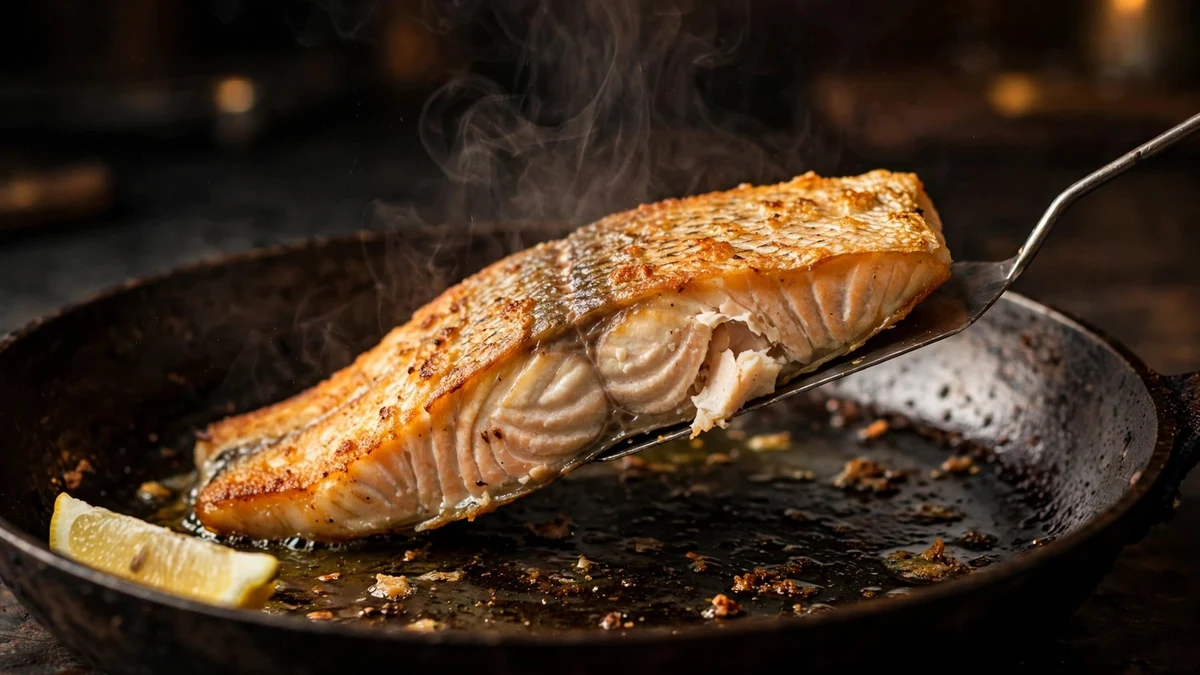
Best Pans for Cooking Fish Without Sticking
Fish welds itself to pans. That is the problem I am solving on this page, because the torn fillet and the ruined skin are what make good cooks give up on fish night. The fix is simpler than another shopping trip: the best pan for cooking fish without sticking is the one matched to the fish you cook most, plus habits that cost nothing. In my kitchen I cook delicate skinless fillets in a nonstick-style pan without a second thought, sear skin-on fillets in stainless steel when I want crisp skin, lean on cast iron when a thick piece needs steady heat, and let an enamelled pan handle the gentle and the sauced. Pick by your fish, learn the pan, and sticking stops being the story.
Table of Contents
First, the Honest Truth: No Pan Fixes Wet Fish
Fish sticks when it goes in wet, the pan is not hot enough, there is too little fat, or you move it before its surface has cooked and let go. I have explained that whole story, the steam stage, the sticky stage, and the moment of release, in Why Fish Sticks to the Pan (And How to Stop It), and it applies in every pan on this page.
So judge the pans below against your own honest habits. Pat the fish dry. Heat the pan first, then add fat and let it shimmer. Lay the fish down and leave it alone until it releases. If a pan still fights you after all that, the pan verdict is real. If you skipped the habits, you have not met the pan yet. You have only met the steam.
Nonstick-Style Pans: the Forgiving Start
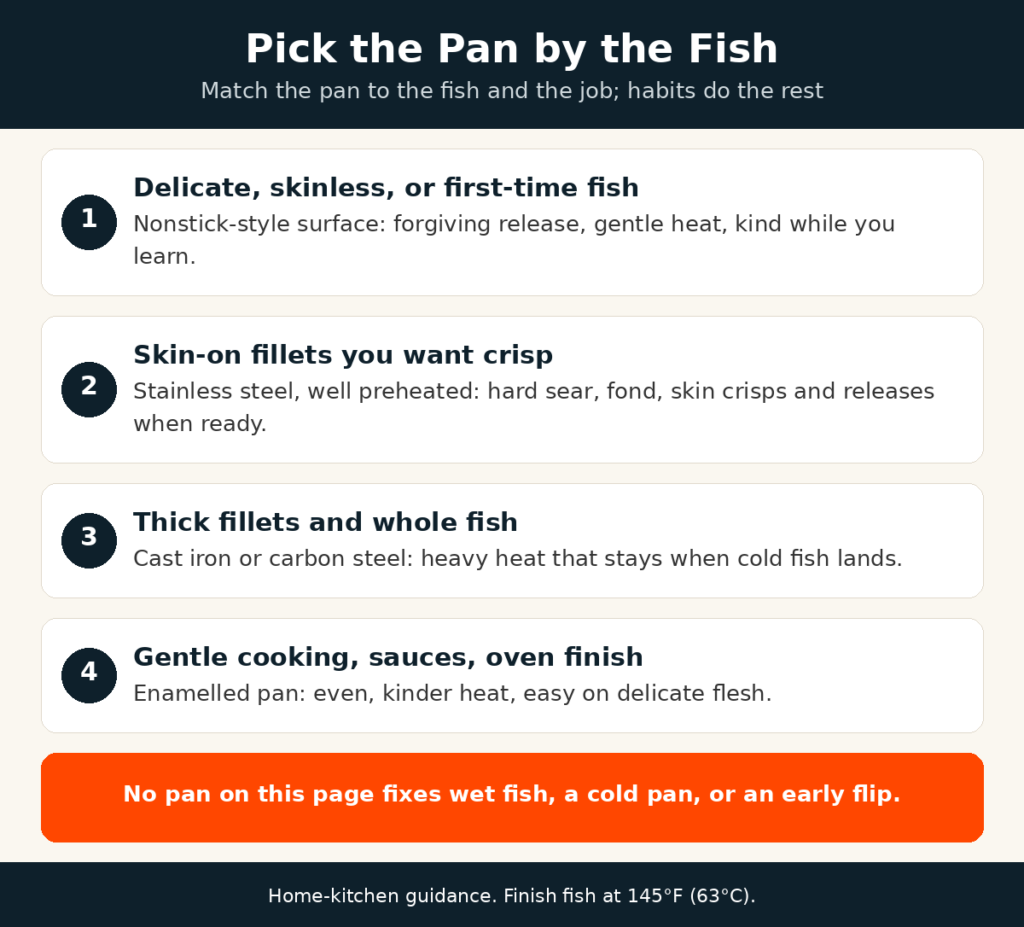
This is the pan I point beginners to without embarrassment. A nonstick-style surface releases delicate, skinless fillets, sole, tilapia, thin white fish, with the least drama, and it forgives the early flip that tears flesh in other pans. When I am cooking fish on a tired weeknight and I want calm, this is the pan I reach for. For a cook who is learning fish, that forgiveness is worth more than any searing trophy.
The honest limits: it is a gentle-heat pan. It will not give you the deep, hard sear or the browned drippings a pan sauce is built on, and crisp skin is harder work here. Treat the surface kindly, no violent heat, no metal tools raking across it, no scouring, and it will repay you with calm fish for a long time. When the surface is tired and everything starts to grab, that is the pan asking to retire, not the fish misbehaving.
Best job in my kitchen: delicate skinless fillets, gentle frying, and any night when I want fish without a wrestling match.
Stainless Steel: the Sear Pan
Stainless is the pan that frightens people, and the one that taught me the most. Preheated properly, with fat shimmering, it sears skin-on fillets hard, crisp skin, good colour, and those browned bits left behind that become a pan sauce. And here is its secret, the one nobody believes until they see it: fish that seems welded to stainless will often release on its own once the surface has cooked. The pan is not holding your fish hostage. It is asking you to wait.
The honest price: stainless shows your habits without mercy. Wet fish sticks. A cold pan sticks. An impatient flip tears. It also asks for a proper preheat every time, no shortcuts. But a cook who learns stainless learns fish itself: dry surface, hot pan, patience, one confident flip.
Best job in my kitchen: skin-on fillets where crisp skin is the point, and any fish I plan to sauce from the pan.
Cast Iron and Carbon Steel: the Heat Holders
These are the heavy pans, and their gift is memory. Once hot, they stay hot when a cold, thick fillet lands. Where a thin pan would shiver and drop its temperature, cast iron and carbon steel keep searing. That makes them my choice for thick fillets, sturdy pieces, and whole fish that need steady heat from below.
The honest price: they are heavy, they heat slowly, and they ask for simple care, dry them after washing, keep them lightly oiled, and do not leave them soaking. A well-kept surface becomes kinder with use; a neglected one sulks. They are also less forgiving than nonstick for very delicate skinless fish, so bring dry fish and patience, or choose the fillet that can stand up to them.
Best job in my kitchen: thick skin-on fillets, whole fish, and any sear I do not want to fade halfway.
Enamelled Pans: the Gentle One
An enamelled pan, enamel over a heavy base, is the diplomat of my shelf. The heat is even and a little kinder, the surface does not react with tomato, lemon, or wine, and fish that finishes in a sauce or slides into the oven lives comfortably here. For gentle cooking, braising-style fish, and sauced dishes, it behaves beautifully.
The honest limits: it is heavy, it dislikes violent heat shocks, and the enamel can chip if it is knocked or scraped, so treat it like the long-term tool it is. It will not out-sear stainless, and it is rarely the cheapest seat at the table, but for a cook whose fish often ends in sauce, it may be the pan that gets used most.
Best job in my kitchen: gentle fillets, sauced fish, and oven-finished pieces.
Fat Helps Every Pan on This Page
Whatever metal you choose, fat is the thin cushion between fish and pan, and the oil itself is a choice worth making properly. A light, even film, heated until it shimmers, does more for release than any shopping decision. Which oil suits which heat is a question of its own, and I have set it out in Best Cooking Oils for Fish (Smoke Point Guide). For pan work, my short version is simple: refined, calm oils for hotter searing; save the delicate flavour oils for the end.
What to Buy First (and What Can Wait)
Buy in the order of your real cooking, not a catalogue’s order:
- Cook delicate fish most weeks? Start with a nonstick-style pan and learn calm, gentle fish.
- Chase crisp skin? Put your money and your patience into stainless, and learn the preheat until it is boring.
- Cook thick or whole fish? Cast iron or carbon steel will hold the heat your fish needs.
- Finish fish in sauce? An enamelled pan will quietly become your favourite.
This pan choice is only the cooking step of a bigger kit. The full buying order, knives and prep tools first, then the pan, then the thermometer, then the turner, extras last, is laid out in Essential Equipment for Cooking Fish at Home. What can honestly wait: a second specialty pan of any kind. One pan, learned deeply, cooks more good fish than three pans used hopefully.
Frequently Asked Questions
What is the best pan for fish that never sticks?
There is no pan that never sticks, there are only pans that forgive. A nonstick-style surface releases delicate, skinless fish with the least effort and is the kindest choice while you learn. But wet fish, a cold pan, and an early flip will defeat any pan ever made, so the habits matter as much as the metal.
Can you cook fish in a stainless steel pan without it sticking?
Yes, and it is my favourite pan for crisp skin. Preheat the pan, add fat and let it shimmer, lay dry fish down, and leave it alone. The fillet releases once its surface has cooked. Move it too early and it tears; wait, and stainless lets go.
Is cast iron good for fish?
For thick fillets and whole fish, very good. Its weight holds heat when cold fish lands, so the sear does not fade. For very delicate skinless fillets it is less forgiving than nonstick, so bring dry fish and patience, or choose a sturdier piece.
Do I need more than one fish pan?
Not at first. One pan matched to the fish you cook most, learned properly, covers most home fish cooking. Add a second only when a real habit asks for it, crisp skin most Fridays, sauced fish most Sundays, not because a set was on sale.
What to Check Next
Tonight, before any shopping: take the pan you already own, heat it first, add fat until it shimmers, pat the fish dry, and leave it alone until it releases. Then finish it properly, 145°F (63°C) in the thickest part, or opaque and flakes easily, as the Safe Internal Cooking Temperatures for Every Type of Fish guide sets out. If the pan still fights you after honest habits, you have earned a verdict. Come back to this page, pick the family that matches your fish, and buy once, for the job.

One Comment