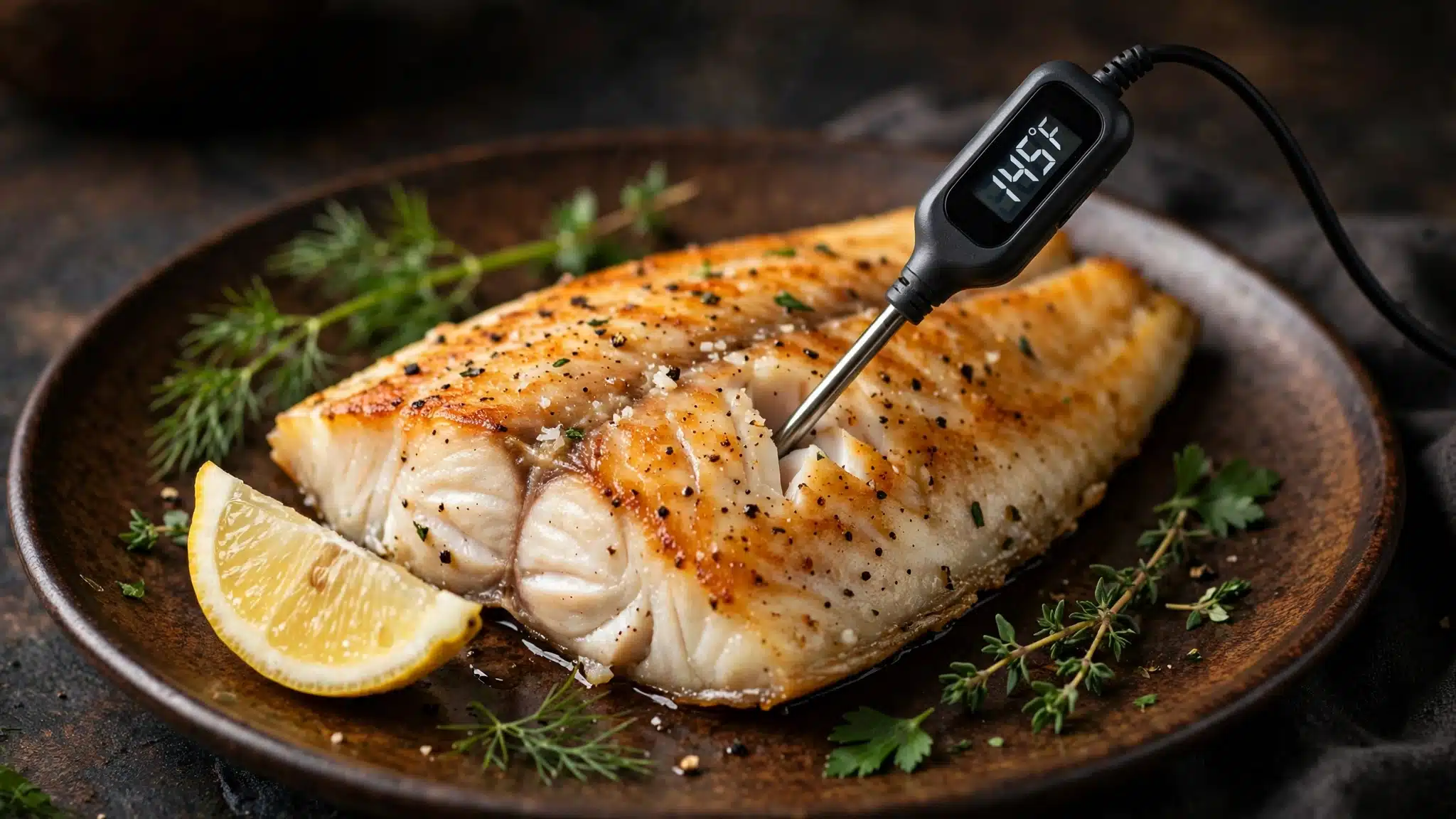
Safe Internal Cooking Temperatures for Every Type of Fish
Cook almost every type of fish to an internal temperature of 145°F (63°C), measured in the thickest part, or until the flesh is opaque and separates easily with a fork. That one number covers salmon, cod, tilapia, trout, sea bass, and nearly every other fin fish you will cook at home. Ground fish cakes need 155°F (68°C), and stuffed fish needs 165°F (74°C). I say this as someone who cooked fish for years by eye alone: the eye is a good backup, but it is not a measurement. A thermometer ends the argument in five seconds. For the complete storage and safety system this temperature belongs to, see Fish Storage and Food Safety: The Complete Guide.
Table of Contents
The Only Temperature Chart You Really Need
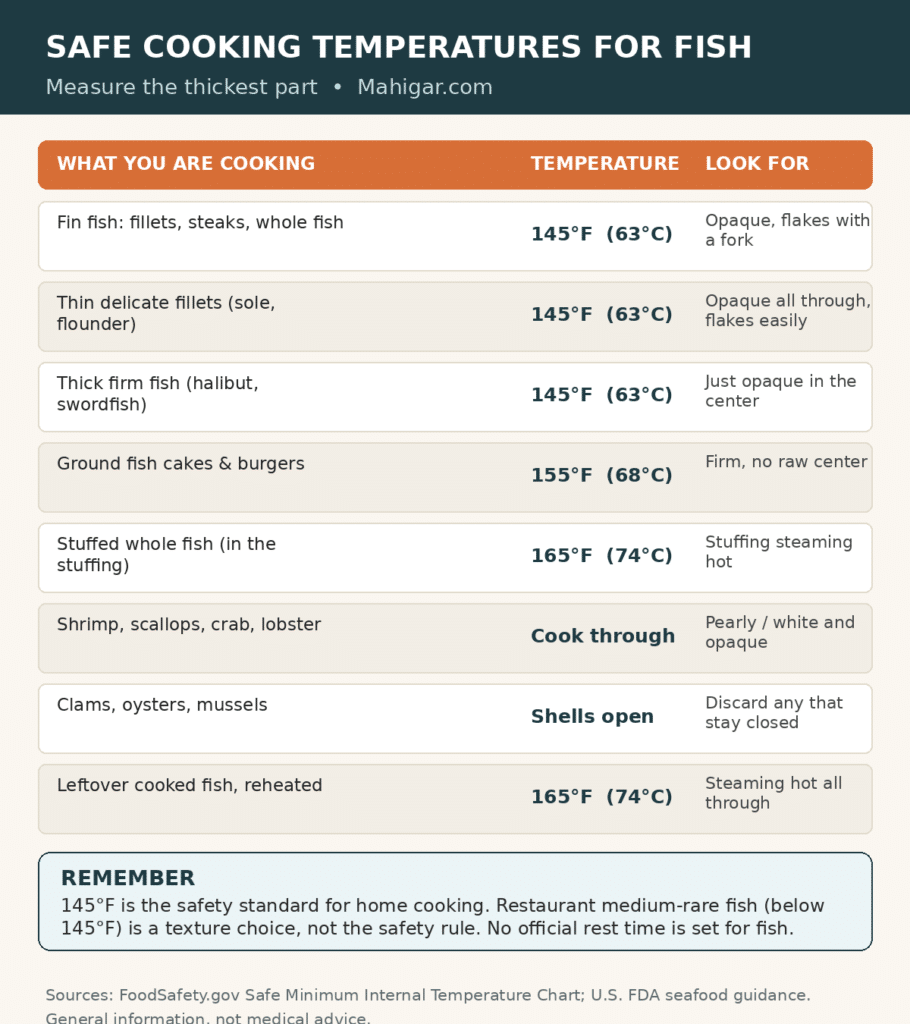
The FoodSafety.gov Safe Minimum Internal Temperature Chart gives one rule for fish, whole or fillet: 145°F (63°C), or cook until the flesh is no longer translucent and flakes easily. See also the FDA guidance on selecting and serving seafood safely.
| Type of fish | Safe temperature / doneness | What to look for |
|---|---|---|
| Fin fish fillets, steaks, whole fish | 145°F (63°C) | Opaque flesh, flakes with a fork |
| Thin delicate fillets (sole, flounder, thin tilapia) | 145°F (63°C) | Opaque all through, flakes very easily |
| Thick firm fish (halibut, swordfish, tuna steak) | 145°F (63°C) | Opaque at edges, just opaque in center |
| Ground or minced fish (fish cakes, fish burgers) | 155°F (68°C) | Firm, opaque all through, no raw center |
| Stuffed whole fish | 165°F (74°C) in the stuffing | Stuffing steaming hot, flesh opaque |
| Shrimp, lobster, crab, scallops | Cook through | Flesh pearly or white and opaque |
| Clams, oysters, mussels | Cook until shells open | Discard any that stay closed |
| Leftover cooked fish, reheated | 165°F (74°C) | Steaming hot all through |
The 155°F and 165°F figures follow FDA Food Code standards taught for ground seafood and stuffed fish: grinding mixes surface bacteria through the meat, and stuffing is the slowest part to heat.
Why 145°F, and Why Chefs Argue About It
You will see restaurants serve salmon at a soft, deep-pink medium-rare, well below 145°F. That is a texture choice, not a safety standard. My advice at home is simple: use the safety number, especially for children, pregnant readers, older family members, and anyone with a weaker immune system. 145°F does not mean dry fish. Fish turns dry when it goes far past the target. Most overcooked fish was ruined not by the target, but by ten extra minutes “to be safe.” The thermometer is what lets you stop on time.
How to Take the Temperature of Fish
Use a food thermometer in the thickest part of the fish to check that fin fish reaches 145°F (63°C).
Start checking early
Begin probing a few minutes before you expect it to finish.
Go into the thickest part
Slide the thermometer in sideways into the center of the thickest section.
Keep the tip off bone and pan
Touching bone or metal gives a false reading.
Wait for a stable number
You are looking for 145°F (63°C) for fin fish.
Check a second spot on big pieces
Near the backbone on a whole fish.
Rest it briefly, 2 to 3 minutes
The federal chart sets no required rest time for fish, so treat rest as heat evening out — not a substitute for reaching 145°F.
What Changes by Thickness, Not by Species
Species changes flavor. Thickness changes timing. A thin fillet can go from raw to overdone in a couple of minutes, so check early. A thick steak or whole fish cooks unevenly, so the probe near the thickest point matters more than surface color. Before cooking, if raw fish smells sour or ammonia-like, temperature will not rescue it. Check it first with How to Tell If Fish Has Gone Bad, and keep the storage limits in How Long Does Fish Last in the Fridge?.
If You Do Not Have a Thermometer
Buy one when you can — it is the cheapest accuracy upgrade in fish cooking. Until then, slip a fork or knife point into the thickest part and gently pull the flesh aside. Done fish is opaque all the way through, no longer translucent or glassy, and separates into flakes easily. Treat this as a backup, not an equal. Color lies more often than a probe does.
What About Raw Fish, Sushi, and Sashimi?
Raw fish is outside the 145°F rule by definition. FDA parasite controls rely on commercial freezing by the supplier — for example -4°F (-20°C) or below for 7 days, or colder methods for shorter times. A home freezer usually cannot prove it held those temperatures, and “sushi grade” is a trade term, not a home test. Buy fish for raw dishes only from a trusted fishmonger, keep it cold, eat it the same day, and never serve raw freshwater fish. This is general information, not medical advice. If your plans change and that fish will now be cooked instead, the rules switch back completely — including the refreezing rules in Can You Refreeze Fish After Thawing?.
Frequently Asked Questions
Is fish safe to eat at 130°F or 135°F, like many restaurants serve it?
That is below the FDA and FoodSafety.gov safe minimum of 145°F (63°C). Some restaurants make that texture choice with carefully sourced fish, but it is not the safety standard I recommend for home cooking.
Do I need to rest fish for 3 minutes like steak?
No official rest time is set for fish in the federal chart — the 3-minute rest applies to beef, pork, and ham. A short stand helps heat even out, but the fish must reach 145°F first.
Where exactly do I put the thermometer in a whole fish?
In the thickest flesh near the backbone, tip in the center of the flesh and not touching bone. Test a second spot if the fish is large.
Can I rely on cooking time per inch instead of temperature?
Timing helps you plan, but thickness, starting temperature, and your pan or oven change the result. Use time to know when to start checking, and the thermometer to know when to stop.
What to Check Next
Temperature is the finish line, but storage decides whether the fish was worth cooking at all. Keep this guide beside the storage chart and the spoilage check, all inside the pillar guide, and you have the full safety sequence: store it right, check it honestly, cook it to 145°F.
Sources: FoodSafety.gov Safe Minimum Internal Temperature Chart; U.S. FDA Selecting and Serving Fresh and Frozen Seafood Safely. General information, not medical advice.
