Do You Need a Fish Spatula? A Buyer’s Guide
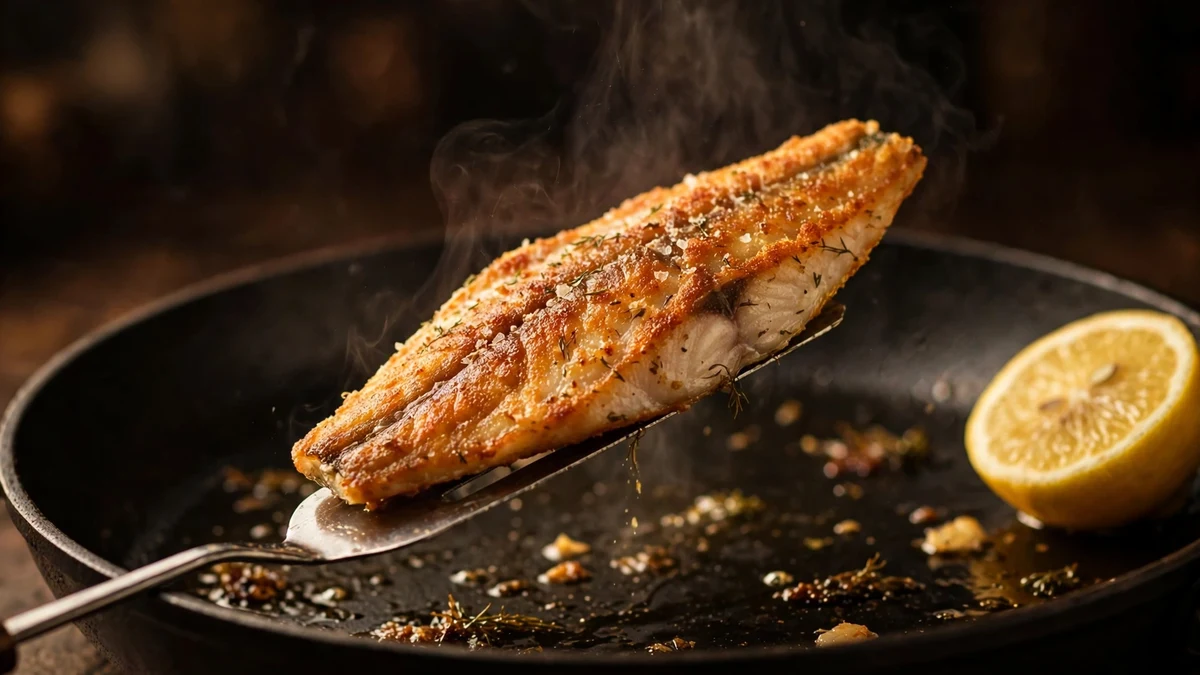
The fillet was perfect right up until the flip. Crisp skin, good colour, and then my old turner wedged under its front edge, folded it in half, and tore it open. If that scene sounds familiar, this page is for you. A fish spatula will not fix every kitchen, but it fixes that one moment: it slides thin and flexible under a delicate fillet and lifts it in one piece. Whether you actually need one comes down to the fish you cook most weeks, and that is the honest question I answer below.
Table of Contents
The Short Verdict: Who Needs One, Who Can Skip It
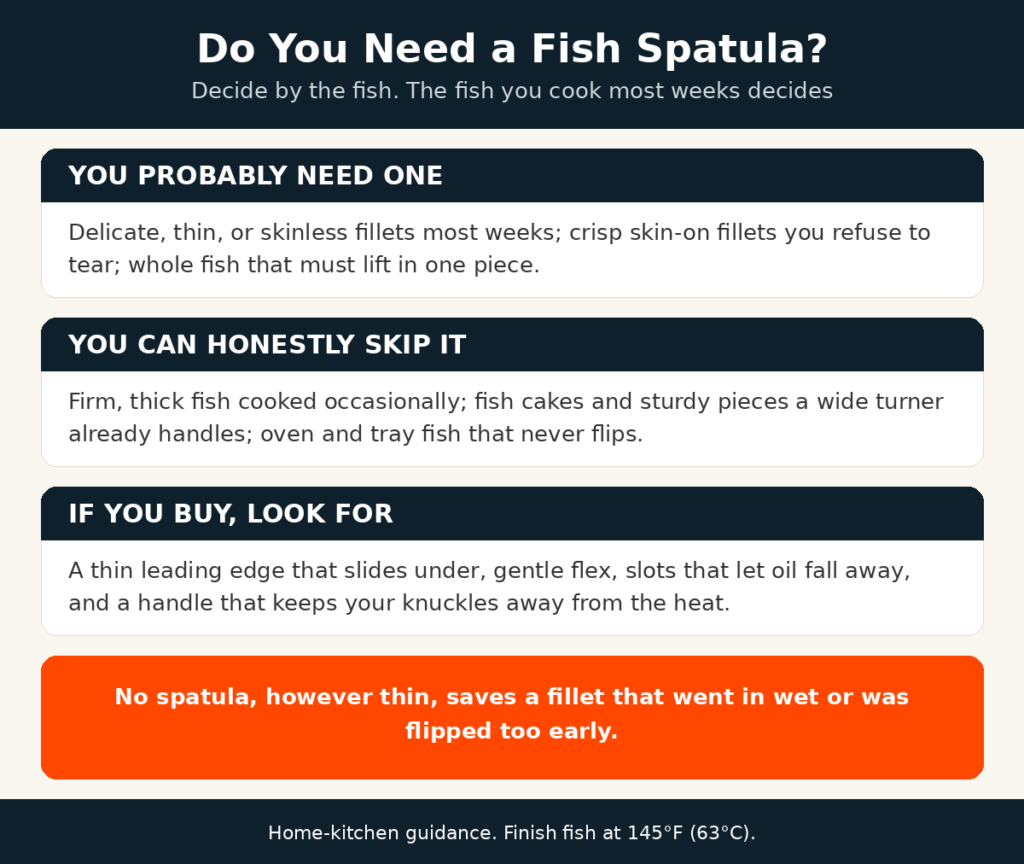
You probably need one if your regular fish is delicate. Thin fillets, skinless white fish, and crisp skin-on pieces all share one weakness: they break at the flip. A fish spatula’s thin edge slides under the whole fillet instead of pushing at its front edge, and its gentle flex lifts without folding the flesh over itself. Whole fish benefit too. A long, flexible blade supports more of the fish as it leaves the pan or grill. If fish night at your house means fragile fillets, this tool stops being a luxury.
You can honestly skip it if your regular fish is sturdy. Thick salmon portions, firm white fish, fish cakes, and anything cooked on a tray or in the oven either flip easily with a wide turner or never flip at all. A regular turner used patiently, fully under the piece, one confident lift, handles those without drama. Buying a fish spatula for fish you cook twice a year is not equipping a kitchen. It is decorating a drawer.
Why the Thin Edge Works: The Design Reasoning
A fish spatula is not a normal spatula that shrank. Three design choices make it a fish tool, and once you understand them you can judge any turner in your drawer.
The thin leading edge is the whole point. Fish, especially crisp skin, sits close to the pan, and a thick edge arrives like a bulldozer: it pushes the fillet forward, scrapes the skin, and tears the flesh before it ever gets underneath. A thin edge slides under instead, the way a knife slides under a cake. The fillet barely knows it has been picked up.
The flex is the second half of the trick. A slightly springy blade bends with the curve of the fish and the pan, so more of the blade supports more of the fillet. A stiff turner holds only the front third of a delicate piece and lets the rest droop and snap. Flex is not weakness here; it is how the fillet survives the lift.
The slots do quieter work: they let oil and pan juices fall away as you lift, so the fillet arrives on the plate as fish, not as fish in a puddle. And the angled, offset neck keeps your knuckles up and away from the pan’s heat while the blade stays flat, a small kindness you notice the first time you turn fish in a crowded, hot pan.
What to Look For If You Buy
Judge any fish spatula by your hand and your fish, in this order:
- An edge that truly slides. The leading edge should feel thin and tapered, made to slip under crisp skin without scraping it off. If it feels like a shovel, it will behave like one.
- Gentle, springy flex. Pick it up and press it lightly: it should bend a little and come back, not feel rigid and not feel floppy. The fillet needs support with give.
- A blade long enough for your fish. It should get under most of the fillets you actually cook. Whole-fish cooks want the longer reach; small-fillet cooks are fine with less. Buy for your pan, not for a catalogue’s idea of your pan.
- A handle that respects heat. Long enough to keep your fingers away from the pan’s edge, comfortable while wet, and made of a material you can care for easily. A handle that forces your knuckles toward the heat will make you dread the flip.
- A surface match with your pan. A thin metal edge is at home in stainless, cast iron, and carbon steel; on delicate nonstick-style surfaces, use the gentlest edge you have and a lighter hand, whatever the tool. Which pan you are pairing it with matters as much as the tool itself, and that matching is the whole subject of Best Pans for Cooking Fish Without Sticking.
What I would not pay extra for: a famous name stamped on the handle, a matching set, or a second and third size just in case. One spatula, judged by the five points above, is the purchase.
How I Use It (and How Any Turner Ruins Fish)
The tool only finishes what technique starts. Fish that went into the pan wet, or that you try to move before its surface has cooked and released, will tear under the finest spatula ever forged. That whole story is in Why Fish Sticks to the Pan (And How to Stop It).
My order, whatever turner is in my hand: let the fish release first. Then slide the blade fully under, in one patient movement, so the whole fillet is supported. Lift once, confidently. Fish wants one brave flip, not three nervous ones. For a whole fish or a very long fillet, I use the spatula plus a spoon or a second turner at the tail end, so nothing hangs and snaps. And I rest the spatula out of the hot pan between turns; a tool left cooking in the pan is a tool aging before its time.
Where It Sits in the Kit
In my buying order, the spatula is a fourth-job tool, turn, bought after prep, cooking, and checking are covered. It comes after the sharp fillet knife, after the pan that releases your fish, and after the instant-read thermometer, because a perfect flip on undercooked fish is still undercooked fish. The full order, and the honest verdicts on every other drawer candidate, live in Essential Equipment for Cooking Fish at Home. If your turner tears fillets every Friday, this little tool jumps the queue honestly. If it does not, let the queue stand.
Frequently Asked Questions
Is a fish spatula really necessary?
No. It is helpful, not necessary. It earns its place when delicate, thin, or crisp skin-on fillets are your regular fish, because its thin, flexible edge lifts them without tearing. For firm, thick fish or oven fish, a wide turner used patiently does the same job.
Can I just use a regular spatula for fish?
Yes, if it is wide and thin-edged and you let the fish release before you lift. The regular turners that ruin fish are the thick, blunt ones that push instead of slide, and any turner used too early. Technique forgives more tools than shopping does.
What size fish spatula should I buy?
The size that supports the fish you cook most, under most of the fillet, not just its front edge. Cooks who lift whole fish want the longer blade; cooks who mostly turn small fillets need less. Judge it in your hand against your pan, not against a size chart.
Will a fish spatula damage my pan?
Used gently, no, but match the edge to the surface. A thin metal edge is fine in stainless, cast iron, and carbon steel. On delicate nonstick-style surfaces, keep the touch light and let the fish release rather than scraping. The spatula should slide under fish, never pry at the pan.
What to Check Next
Tonight, flip your fish with whatever you own and watch honestly: did the tool slide under, support the fillet, and turn it once, or did it push, tear, and blame the fish? If the tool was the problem on a fish you cook every week, you have your answer. Then serve that fish finished properly, 145°F (63°C) in the thickest part, or opaque and flakes easily, as the Safe Internal Cooking Temperatures for Every Type of Fish guide sets out. The best flip in the world still only delivers the fish. Cooking it right is the cook.
