Is a Fish Poacher Worth Buying?
It is the longest pan in the shop, and it does exactly one job. I love poached fish, truly, and my honest answer for most home kitchens is still no: a fish poacher is not worth buying. The job itself is simple, hold a whole fish in shallow, gentle liquid until it is just cooked, and a deep lidded pan, a roasting tray with a rack, or a steamer you already own does it honestly. The poacher only earns its cupboard when whole-fish poaching is a habit you already have, not one you are hoping to start.
Table of Contents
The Short Verdict: Who It Suits, Who Can Skip It
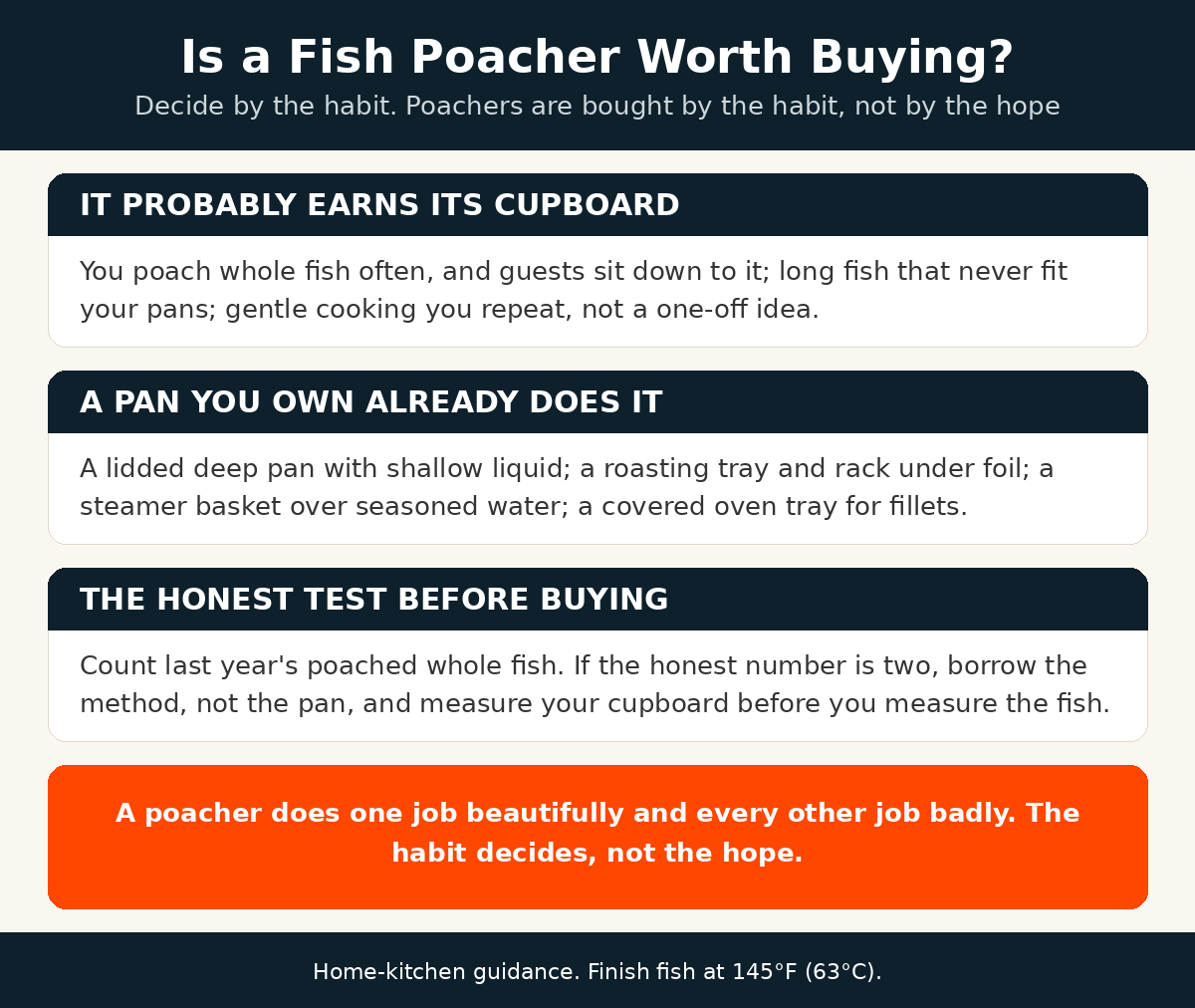
A poacher probably earns its place if poaching whole fish is something you truly do, for family occasions, for guests, for the quiet pleasure of a whole fish carried to the table. Its length fits fish that fold awkwardly into round pans, its rack lifts the cooked fish out in one piece, and its shallow liquid keeps the cooking gentle and even along the whole body. If that scene happens at your table again and again, the tool is not a luxury. It is the right pan for a real habit.
You can honestly skip it if poaching is an occasional idea. Twice-a-year poached fish does not need a dedicated long pan; it needs the method, which works in pans you already own. If your fish life is mostly fillets in a frying pan, the poacher will be the longest, emptiest resident of your cupboard. Buy for the habit you have. Storage is a cost too.
What a Fish Poacher Actually Does
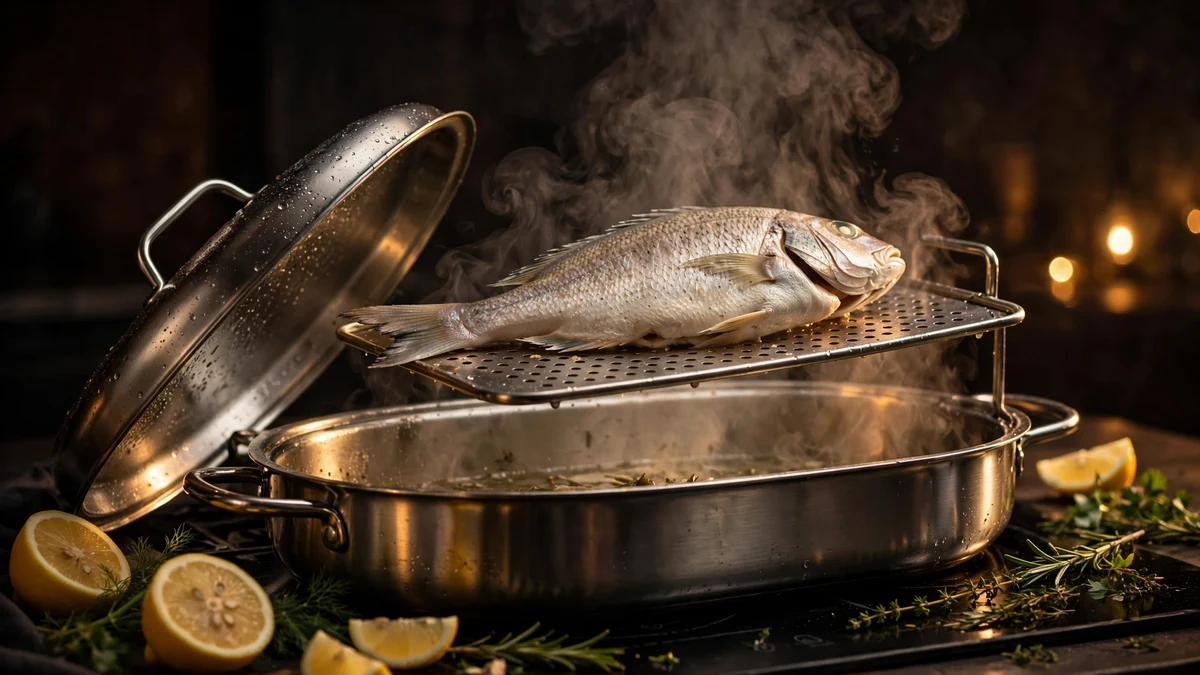
Strip away the romance and a fish poacher is three things: a long, narrow pan shaped like the fish itself, a tight lid, and a perforated rack that sits inside it.
The fish rests on the rack in shallow, seasoned liquid, water or stock with lemon, herbs, and aromatics, and cooks gently, never at a violent boil. Because the liquid is shallow and the heat is low, the whole fish cooks evenly from head to tail instead of the middle racing ahead of the thick end. When it is done, you lift the rack by its handles and the fish comes out whole, in one piece, ready for the platter. That lift is the poacher’s one true party trick: a poached fish is delicate, and sliding it off a rack beats fishing it out of a round pan in pieces.
That is the whole design. Nothing about it is magic, which is exactly why ordinary pans can borrow the method so successfully.
Who Genuinely Benefits
The guest cook. If a whole poached fish is your way of feeding people you like, placed in the centre of the table and portioned in front of everyone, the poacher removes the two anxious moments: fitting the fish in, and getting it out whole. The second act of that scene, carrying and serving the fish once it lands, is its own skill, and it is covered in How to Serve Whole Fish at the Table
The long-fish cook benefits too. Some fish simply do not respect round pans. When the fish you buy is regularly longer than every lid you own, the poacher stops being a specialty item and becomes the pan that fits your shopping.
And the gentle cook, the one who poaches because they love the clean, quiet flavour of fish cooked in seasoned liquid, week after week, will use it enough to justify every centimetre. Habit is the whole test. Frequency, not enthusiasm.
Who Can Skip It: Pans You Own Already Do This
Here is the part the shop will not tell you: poaching is a method, not a pan. The method is gentle heat, shallow seasoned liquid, a cover, and patience, and most kitchens already own three ways to do it.
A deep, lidded frying pan or sauté pan takes fillets and shorter whole fish happily. Shallow liquid, lid on, heat low. For most home poaching, this is the answer, and it is already in your cupboard.
A roasting tray with a rack, covered with foil, is the whole-fish substitute. The tray gives length, the rack gives the lift, the foil plays the lid’s part. It is not as graceful as a poacher, and the fish does not mind at all.
A steamer basket or insert over seasoned water gives the same gentle cooking with even less liquid, and the fish lifts out on the basket.
A covered oven tray handles fillets quietly while you make everything else.
None of these is a compromise dinner. Poached fish from a lidded pan tastes like poached fish. The full method, liquid, timing by feel, and the doneness cues, is taught in How to Poach Fish.
The Cupboard Question Nobody Asks in the Shop
A fish poacher is usually the longest pan a home cook owns, and it spends its life between jobs doing nothing. Before measuring your fish, measure your cupboard: where does a pan built for a whole fish actually live the other fifty weeks of the year? On top of the cupboard gathering dust, in practice, for most people.
That is not an argument against ever buying one. It is the honest price tag nobody prints: you are buying the storage problem along with the pan. If the poaching habit is real, the storage is a fair trade, the same trade any smoker or grill-basket owner makes. If the habit is a hope, the pan becomes a long reminder of a dinner you cooked twice. My rule stands: count last year’s poached whole fish. A proud number buys the poacher. A small number borrows the method.
What to Look For If You Buy
If your count says yes, judge a poacher by these plain tests:
- Length for your fish, not a catalogue’s. The fish you actually buy should lie flat with room at both ends. Buy for your market, not for the biggest fish in a photograph.
- A rack that lifts honestly. The insert should sit steady, hold the fish above the pan floor, and have handles your fingers can grip when everything is hot and wet. The rack is the reason the pan exists.
- A lid that truly closes. Gentle cooking needs the steam kept in. A loose, rattling lid makes you cook longer and guess more.
- Stove sense. The pan should sit across your burners without silly overhang, so the heat stays even along the fish instead of scorching the middle.
- Handles you trust when it is full. A poacher full of hot liquid and fish is an awkward carry. Short, sturdy handles beat elegant ones.
What I would not pay extra for: a famous name, a matching set of single-job pans, or size bought just in case for a fish you have never brought home.
Where It Sits in the Kit
In my buying order, prep, cook, check, turn, extras last, the poacher sits firmly with the extras. It comes after the sharp fillet knife, the pan that releases your fish, the thermometer, and the spatula, because it serves one method instead of every fish dinner. The full order and the honest verdicts on the other long-term cupboard candidates live in Essential Equipment for Cooking Fish at Home. If poached whole fish is genuinely your table’s favourite scene, the poacher jumps the queue honestly. If it is a twice-a-year thought, let the queue stand and keep the cupboard.
Frequently Asked Questions
Can I poach fish without a fish poacher?
Yes, easily. A deep lidded pan for fillets and short fish, a roasting tray with a rack under foil for whole fish, a steamer basket over seasoned water, or a covered oven tray all poach fish gently and well. The method is shallow seasoned liquid and low, covered heat. The poacher just shapes itself around long fish.
What is the advantage of a real fish poacher, then?
Two things: it fits long whole fish without folding them, and its rack lifts the delicate cooked fish out in one piece. If you poach whole fish often, those two moments are worth a dedicated pan. If you poach rarely, they are not worth the cupboard.
Is poached fish healthier than fried fish?
It is a gentler, leaner way to cook, fish in seasoned liquid, nothing added but flavour, and many people choose it for exactly that reason. But the honest answer is that it is a different pleasure, not a superior one. Cook the fish properly either way and serve it fresh; the method you enjoy is the one you will repeat.
How do I know poached fish is done without cutting it open?
The same cues as every other method: the flesh turns opaque and flakes easily at the thickest part, and a thermometer there reads 145°F (63°C). Poached fish is delicate, so check once, gently, and trust the cues instead of repeated prodding.
What to Check Next
Count your last year honestly. If whole poached fish is a real habit at your table, buy the poacher without guilt and store it like you mean it. If it is not, take the method into the pans you own tonight, shallow seasoned liquid, lid on, heat gentle, and serve the fish finished properly at 145°F (63°C), opaque and flaking easily, as the Safe Internal Cooking Temperatures for Every Type of Fish guide sets out. A borrowed method beats a bought regret, every time.
