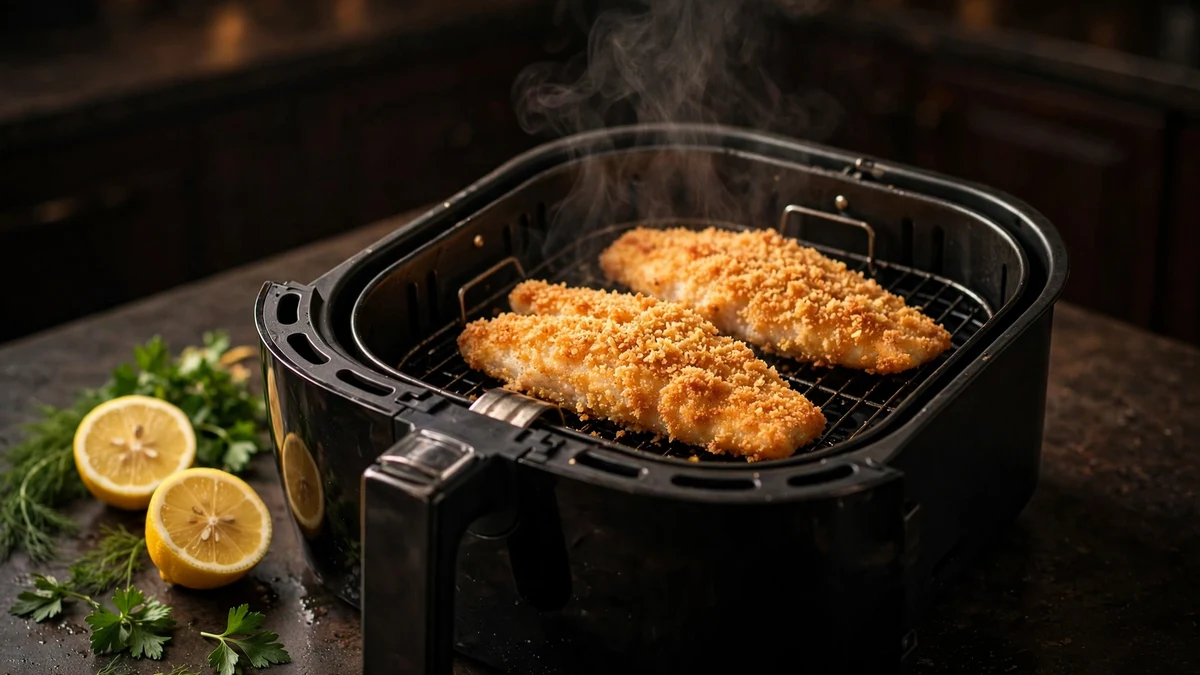
Air Fryer Fish: Is It Actually Good?
People ask me about air fryer fish the way they ask about a new neighbour: is it actually good, or is everyone just being polite? My honest answer is yes, it is good, inside clear limits. In my kitchen it shines with crisp coated fillets on a busy weeknight, and it brings last night’s fried fish back to life beautifully. It also fails, predictably, when I ask it to do a pan’s work.
So I judge it as one method among several, never as a replacement for the pan. This guide is part of Essential Equipment for Cooking Fish at Home, and I give you the straight trade-offs as I know them: what the basket does well, where the pan still wins in my hands, and the few habits that decide which side your dinner lands on. No miracle talk, and no timings I have not earned.
Table of Contents
Table of Contents
What an Air Fryer Actually Does to Fish
An air fryer is a small, fierce fan oven. That one sentence explains both its talent and its limits.
Hot air circles fast around the fish, drying the surface and browning a coating quickly, while the inside cooks in the same rush of heat. Nothing sits in oil; at most, the fish wears a light film of it. Because the heat arrives from the air rather than from a pan’s metal or a bath of oil, the machine rewards dry, firm surfaces and punishes wet ones. A crumbed or spice-dusted fillet comes out crisp and even in my basket. A fillet in thin, dripping batter sheds its coat through the rack and cooks in patches. Understand that, and you understand air fryer fish.
Where It Genuinely Wins
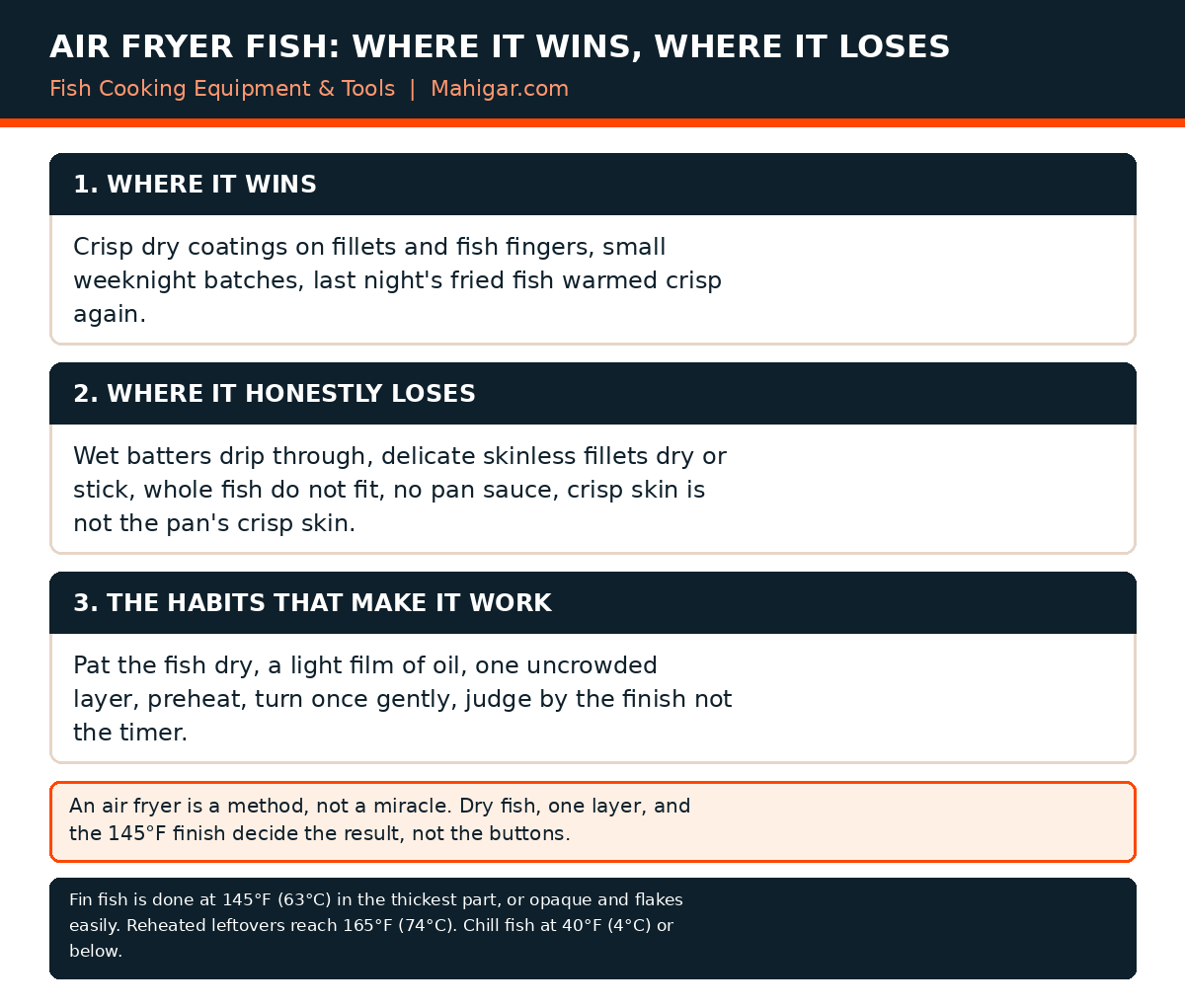
Crisp coatings are its home ground. Dry crumbs, a firm spice crust, and cornmeal-style coatings crisp on all sides at once, with no shallow pan of oil to manage and no turning anxiety over a fragile crust. For coated white fish and homemade fish fingers, this is the easiest weeknight route I know.
Small batches suit real fish dinners. One or two fillets cook evenly because the basket is small and the air reaches everywhere. I do not heat a big oven for a small piece of fish, and I do not watch a pan like a hawk. For a household cooking fish for two on a weekday, that calm is worth a great deal.
It reheats fried fish better than anything else in my kitchen. Last night’s fried fish, warmed in the basket, comes back crisp instead of sad, a small mercy every fish house understands. Reheated leftovers still follow the standing rule: heat them through to 165°F (74°C), and do not reheat fish that has already lived its 3 to 4 days in the fridge.
Where It Honestly Loses
Wet batters drip and fail. A thin, runny batter slides off the fish and through the basket before the heat can set it. If battered fish is the craving, my honest answers are a dry coating here, or a proper pan of oil there. I do not blame the fish, and I do not blame the machine. It is simply the wrong tool for that job.
Delicate skinless fillets dry and stick. A thin, bare fillet has no shield. The rushing air can dry its surface before the middle is ready, and an unoiled basket can grab it. Firm, coated, or skin-on pieces forgive the air fryer; the thinnest skinless fillet is happier in a gentle pan. The pan-by-pan verdict is in Best Pans for Cooking Fish Without Sticking.
Whole fish simply do not fit. A basket is a small room. A whole fish worth serving needs a pan, a tray, or a grill, where it can lie flat and be lifted with respect. In my house, the air fryer is a fillet appliance, and I do not force it to be anything else.
Crisp skin is not the pan’s crisp skin. Skin-on fish in the basket crisps respectably, but it is a dried crisp, not a fried crisp: no bubbling fat, and no pan sauce from the browned bits afterward. The true glass-crisp skin of a hot pan, the method taught step by step in How to Pan-Sear Fish for Restaurant-Quality Crispy Skin, remains the pan’s crown. Anyone who tells you the basket equals it is selling something.
The Habits That Make It Work
Dry surface, light oil, one uncrowded layer, and judging by the finish. Those four habits decide almost every result I get.
Pat the fish dry first. This is the same law as the pan, unchanged: surface water becomes steam, and steam is the enemy of crisp. I dry the fish, then coat it, then cook it, in that order.
Use a light film of oil, not a bath. A brush or spray of oil over the coating helps it brown and keeps it from drying to cardboard. Which oil suits hot, dry heat is a smoke-point question, answered properly in Best Cooking Oils for Fish (Smoke Point Guide).
One layer, uncrowded, always. The air must reach every side. Two layers steam each other and undo the only thing the machine is for. I cook in two honest batches rather than one crowded one.
Preheat, turn once, gently. A hot basket from the first second sets the coating before it can slump. One careful turn, with a thin spatula rather than tongs that tear, keeps both sides honest.
Judge by the finish, never by the timer alone. I will not print a minute-table here, because baskets, fillet thickness, and coatings all change the answer, and invented precision is how fish gets ruined with confidence. The finish is the established one: 145°F (63°C) in the thickest part, or flesh that is opaque and flakes easily. I check the thickest piece, and let the smallest one rest in its warmth.
Who Should Buy One, and Who Can Skip It
Buy one if your fish life is weeknight fillets, coated fish for the family, and small batches you want crisp without standing over oil.
That cook will use it weekly and honestly, and I have no argument with the purchase. Skip it if your fish life is whole fish, skin-on pan work, sauces, and curry. The basket serves none of those, and a good pan, a tray, and a grill already cover your table. And skip it, at least for fish, if your hope is that it will make delicate fish effortless. It will not. Technique still decides in my kitchen; the machine just dries and browns what I hand it.
Frequently Asked Questions
Is air fryer fish actually good?
Yes, for the right fish and the right job: dry-coated fillets, small batches, and reheating fried fish come out genuinely crisp and pleasant in my experience. It is not a pan replacement. Wet batters, whole fish, delicate skinless fillets, pan sauces, and true crisp skin all still belong elsewhere.
Why did my air fryer fish come out dry?
Usually one of three honest causes: the fillet was thin and skinless with no coating to protect it, the basket was crowded so the surface steamed instead of crisping, or it simply cooked past done. I pat dry, use a light film of oil, cook one layer, and pull the fish at 145°F (63°C) or when it is opaque and flakes, not minutes later to be safe.
Can I cook battered fish in an air fryer?
Only dry-style coatings behave. Crumbs, cornmeal-style coats, and firm spice crusts crisp well; a thin, wet, dripping batter slides off and through the basket. For true battered fish, a pan of oil remains the honest method at my stove.
Is air fryer fish healthier than pan-fried fish?
It uses less oil, because the fish wears a light film instead of sitting in a bath. That much is plain. Beyond that, I make no health verdicts from an appliance. Fresh fish, cooked through and served promptly, is the healthy habit; the machine is only a method.
What to Check Next
Tonight, ask what your fish life actually looks like. Coated weeknight fillets and small crisp batches for your family on busy evenings at home? The air fryer will serve you well: dry fish, light oil, one layer, and the 145°F finish. Whole fish, crisp skin, and sauces? Keep your money and love your pan. Either way, I chill my fish cold at 40°F (4°C) or below, cook it through, and let the method match the fish instead of forcing the fish to match the machine.
