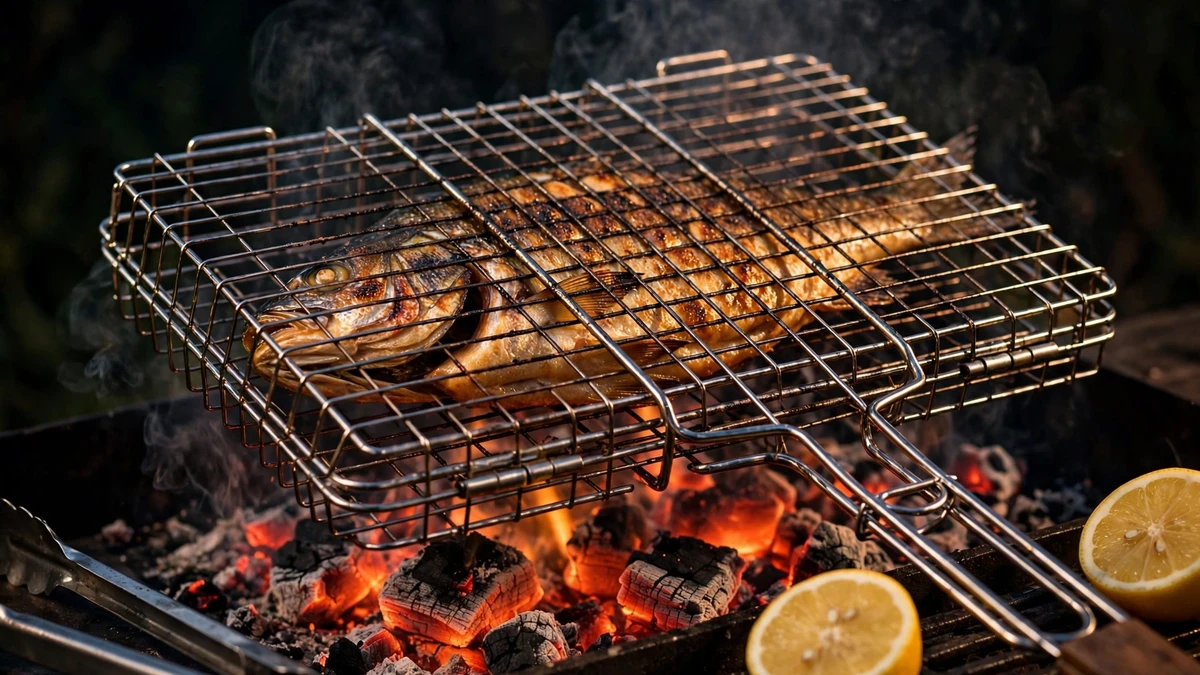
Best Grill Baskets for Cooking Fish
I still remember the first delicate fillet I lost to a grill. Half of it stayed welded to the bars, the other half fell through in flakes, and I stood there with a spatula feeling like the fire had won. If you grill fish, some version of that evening has happened in your garden too. The fish was fine. My method was not.
A grill basket is the simple answer I reach for now when the fish is delicate or whole. It holds the fish inside a hinged cage so I turn the basket, not the fish itself. This guide is part of Essential Equipment for Cooking Fish at Home, and I judge the three basket types the way I judge every tool, by the fish you actually cook. No prices, no brand worship, no fake tests. And I will be honest from the start: a basket helps a regular griller a lot, and a twice-a-year griller may not need one at all.
Table of Contents
First: What a Basket Actually Does
A basket holds fish still so you can turn it in one piece. That is its whole job, and it does it well.
The fish lies inside a hinged wire cage, the lid closes, and from that moment my hands never touch the fish. I flip the basket and the fish turns with it, whole and unbroken, with nothing left behind on the grates and nothing fallen into the fire. That one trick answers the two ways grilled fish usually dies in my experience: sticking to the bars, and tearing apart at the turn.
But notice what a basket does not do. It does not dry the fish, heat the grill, or season anything. It is a holding tool, not a cooking skill. On my grill the skill still decides the dinner. The basket just stops fragile fish from punishing small mistakes, and that is reason enough for many cooks to own one.
The Three Types, Honestly Judged
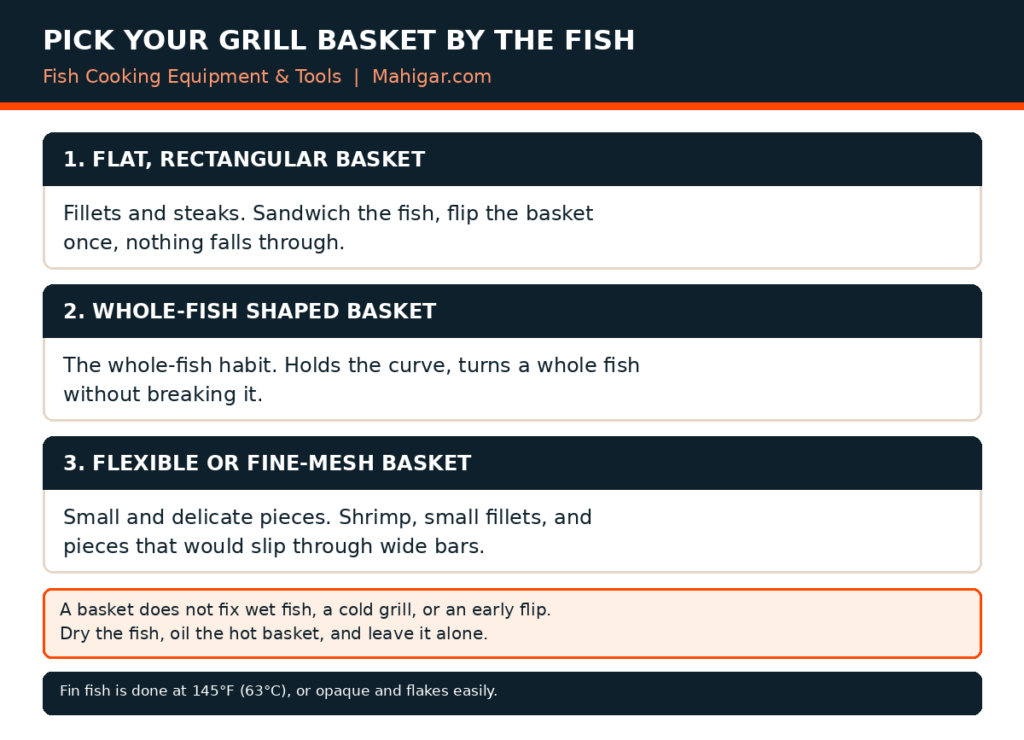
Flat, rectangular basket, the fillet workhorse. Two flat grates hinged together, closing over fillets or steaks of a fairly even thickness. This is the type most fish cooks mean when they say grill basket, and in my kitchen it is the honest first choice for ordinary pieces: the fish stays flat, the skin stays down, and the whole load turns in one calm motion. Its limit is thickness. A very thick steak makes the lid bulge, and a thin tail end gets squeezed while the thick end is barely held.
Whole-fish shaped basket, for the whole-fish habit. Curved or fish shaped, built to cradle a whole fish without flattening it. Grilled whole fish is one of my favourite ways to serve fish, and this type turns it from a two-spatula gamble into one confident flip. If you have never grilled a whole fish and do not plan to, though, it is cupboard sculpture. I tell every cook the same thing: buy it for the habit, not for the hope.
Flexible or fine-mesh basket, for small and delicate pieces. A softer, finer grid that closes gently over small fillets, shrimp, and pieces that would slip through wide bars or break at a touch. It is the kindest type for delicate fish, and in my experience the easiest to overfill. Crowded pieces steam against each other instead of crisping, so I keep one honest layer, always.
How to Use One So the Fish Does Not Stick Anyway
Dry fish, a hot basket, oil on both sides, and one confident flip. That routine matters more than the basket itself.
Here is the part the box never prints: fish can stick inside a basket exactly the way it sticks to a grate, because the cause is the same. Protein bonds to hot metal before the surface firms, and wet flesh bonds fastest of all. That science, and why patience rather than force is the cure, is the same lesson as the pan, and it is laid out in Why Fish Sticks to the Pan (And How to Stop It). On my grill, I work like this:
- Dry the fish. I pat fillets or the whole fish properly dry with paper towels. It is the cheapest step and the one everyone skips.
- Heat the basket with the grill. The empty basket goes on while the grill heats, so hot metal meets the fish, never cold bars.
- Oil the hot basket, and oil the fish. I brush the hot basket with a high smoke point oil, and the job-based choices are in Best Cooking Oils for Fish (Smoke Point Guide), and I give the fish a light coat too. Oil on both sides of the meeting is the difference between release and regret.
- Lay the fish in, close the lid, and leave it alone. The surface needs time to firm and release. Every peek and hopeful early flip tears what patience would have freed whole.
- Flip the basket once, confidently. One turn, when the first side has firmed and coloured, then I leave the second side alone too.
Skin-On or Skinless on the Grill?
Skin-on fish is the forgiving case on a grill, and skinless fish is the case the basket was born for.
Skin-on brings its own shield. The skin holds the flesh together, takes the direct heat, and can crisp beautifully while the flesh stays gentle. In a basket, skin-on fillets and whole fish are where grilling feels easy for me.
Skinless fish is more delicate, and honestly it needs the extra care. Bare flesh bonds to metal faster and tears sooner, so I dry it extra well, oil generously, and never crowd the pieces. Very thin, soft fillets may still be happier in a pan or on a tray. A basket cannot make a fragile fish sturdy; it can only stop the grill from finishing the demolition. My full grilling routine, fish choice, heat, judging by eye, and serving, lives in The Ultimate Guide to Grilling Fish.
What to Look For, and What to Skip
Look for a firm hinge, bars close together, and a size matched to your usual fish. Skip novelty shapes and miracle coatings.
In the shop, I check a hinge and latch that close firmly and open without a fight, bars close enough together that flakes cannot escape as the fish firms, and a handle that keeps my hand an honest distance from the heat, or comes off while the basket sits on the grill. I match the size to the fish I grill most, not the biggest fish I ever hope to meet. And I ask one plain question: will it wash without a ceremony? A basket that is miserable to clean will quietly stop being used in any kitchen, mine included.
I skip the theatre: baskets shaped like novelties, coatings with miracle claims, and any best ranking I cannot verify. I will not rank brands or quote measurements I have not taken myself. Match the type to your fish and your habit, learn the dry, oil, hot routine, and a plain, well-made basket will serve you for years.
Frequently Asked Questions
Do I really need a grill basket for fish?
Only if grilled fish is a real habit for you. If you grill delicate fillets or whole fish most weeks, a basket earns its place by ending the sticking and tearing losses I know too well. If you grill sturdy steaks a few times a year, a hot, clean, oiled grate with one confident flip does the job honestly without new equipment.
Which basket type is best for beginners?
The flat, rectangular basket. It suits the fillets most home cooks grill, holds them evenly, and teaches the one-flip habit without the squeeze and guess of shaped baskets. I add the whole-fish shape only when whole fish becomes a regular pleasure at the table.
Why does fish stick even inside a basket?
For the same reason it sticks to a pan: wet flesh meeting metal that is not hot enough, then being moved before the surface firms and releases. Dry the fish, heat the basket with the grill, oil both, and leave it alone until the first side has firmed. The basket holds the fish, but the habits free it.
Can I grill skinless fish in a basket?
Yes, and that is one of its best jobs. Skinless fillets are the delicate case, so pat them extra dry, oil the fish and the hot basket well, keep one uncrowded layer, and flip the basket once. Very thin, soft fillets may still cook more kindly in a pan.
What to Check Next
Tonight, before buying anything, work with what you own: choose the fish you grill most, pat it dry, heat and oil the grate or basket you already have, and flip once with confidence. If delicate fish still breaks and sticks after your habits are honest, you have found a true equipment need, and now you know how to match the basket type to that fish. Whatever the basket, I finish my fish at 145°F (63°C) in the thickest part, or opaque and flaking easily, and serve it promptly off the heat.
