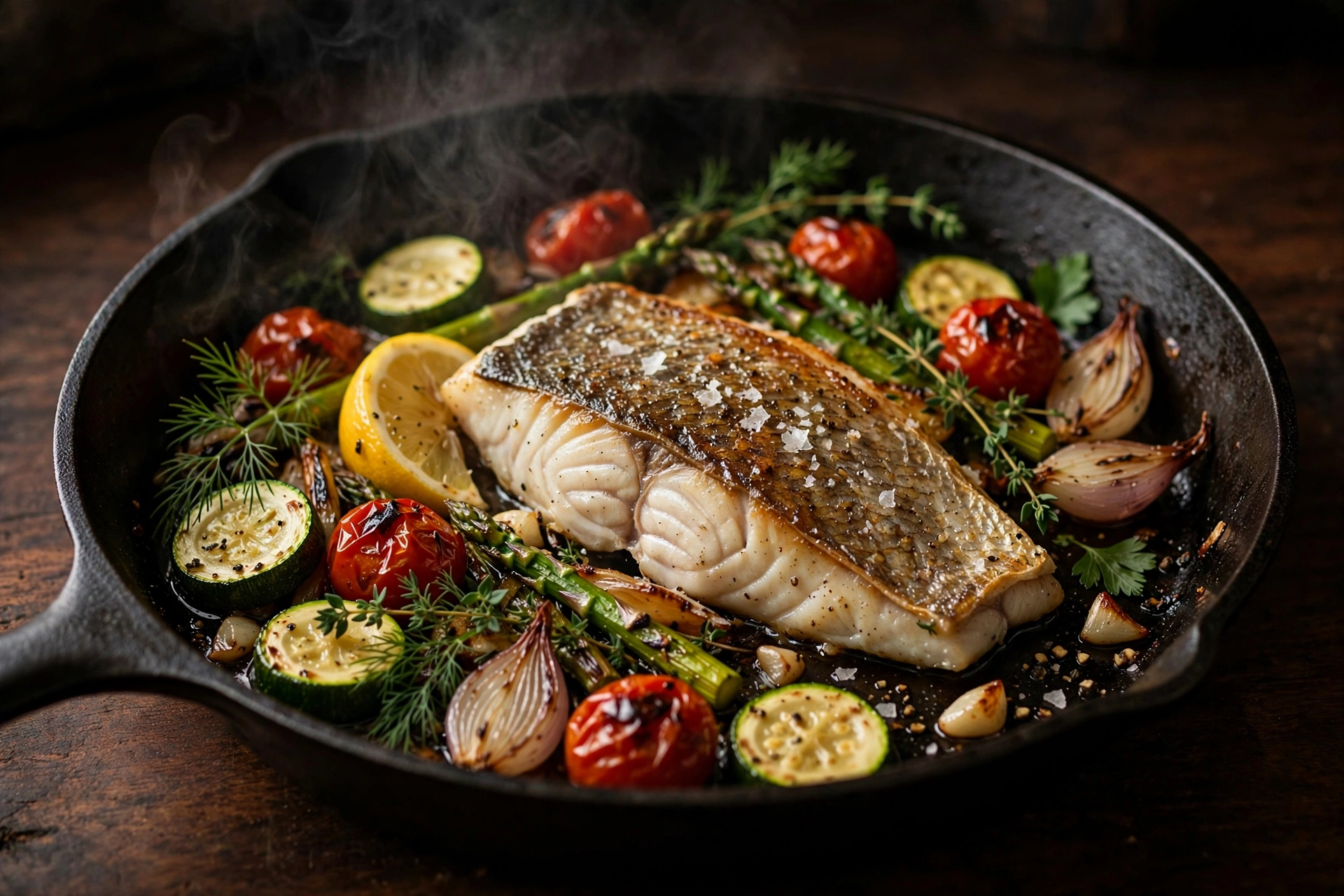
20-Minute Weeknight Fish Dinners
Six o’clock, fridge open, shoulder aching from the day, and somebody in my house asks the dangerous question: what is for dinner? This is the hour that ruins more fish dinners than any recipe ever has. Not because fish is slow. Because the clock is already winning, and a tired cook reaches for something familiar and fried instead.
Here is the thing I have learned on a hundred Tuesdays: fish is the fastest serious protein I cook, and the reason is not a secret technique. Fish is fast because it is thin. A thin fillet gives heat very little distance to travel, the flesh tells you plainly when it is done, and the fastest fish dinner of all barely involves cooking at all. It involves a tin opener. That is the honest version of this page’s title, and I would rather teach you that version than pin a proud minute count on a dinner I have not timed in your kitchen, with your pan, on your stove.
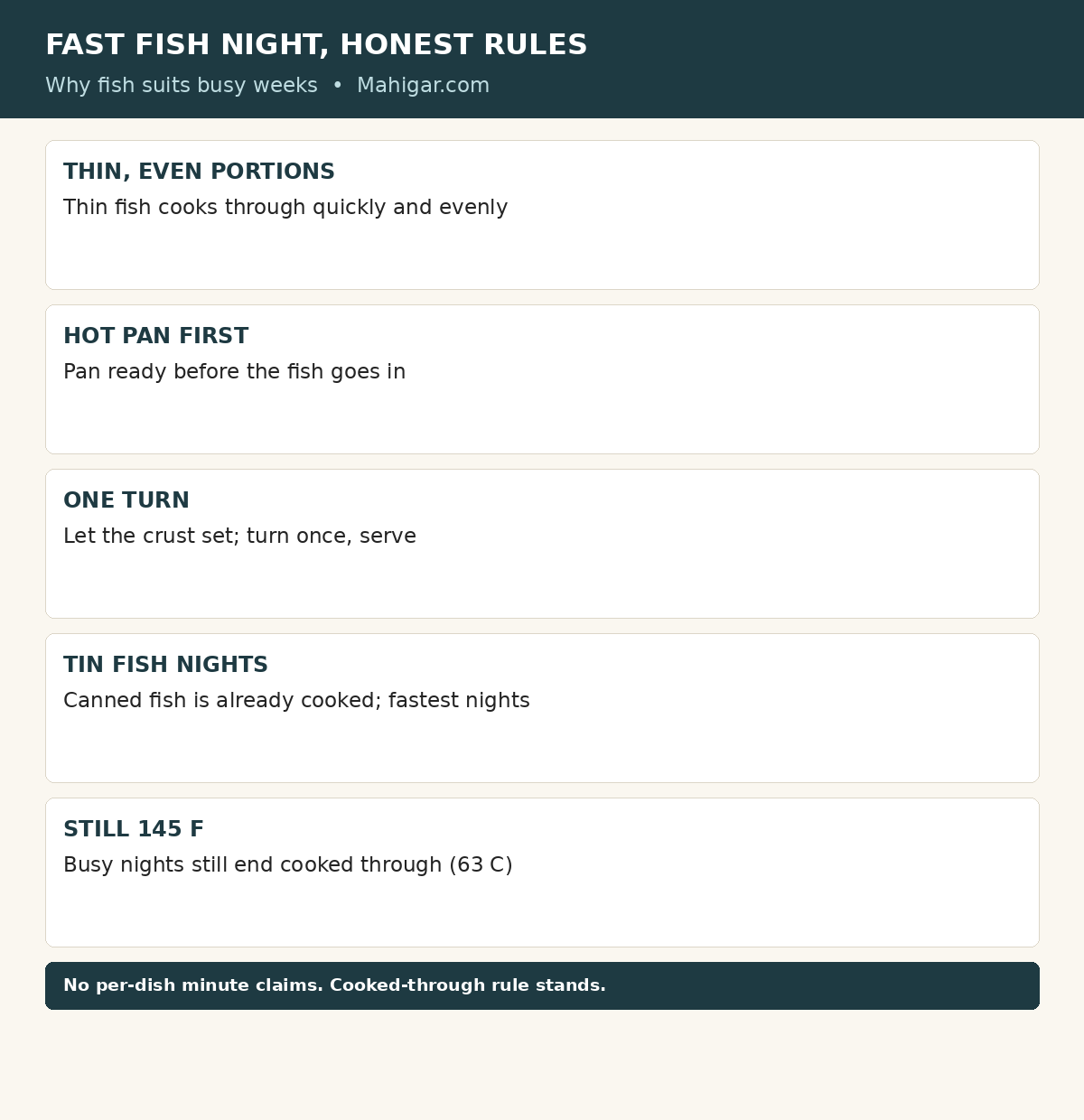
So let me say the house rule out loud, because the whole guide runs on it: no dish below wears a cooking time I would have to invent. Instead, you get the structure that makes fish naturally weeknight-fast. Thin portions, a pan that is hot before the fish arrives, one calm turn, and a pantry tin standing by for the nights when even that sounds ambitious. This guide sits inside Fish Recipes for Every Diet and Lifestyle, Mahigar’s diet hub, and it is the least “diet” page in it. It is a tired-Tuesday operating system.
Table of Contents
Why Fish Is Fast (and Where the Time Actually Goes)
When a fish dinner runs long, the fish is rarely the slow part. The slow parts are deciding at six o’clock, thawing at six-fifteen, and chopping vegetables while the pan sits cold. The fish itself asks for very little: portions that are thin and even, honest heat, and a finish it announces out loud: flesh turned opaque, flakes separating under the fork.
That is also why I distrust printed cooking times for fish, including friendly ones on recipe cards. Your fillet’s thickness, your pan, and your stove decide your evening; a number timed in my kitchen cannot. Learn the finish cues once and you stop needing the clock at all. That, honestly, is the weeknight skill this page is selling.
The Four Habits That Make Fish Nights Fast
- Thin, even portions. Speed starts at the counter or the cutting board. Thin fillets and even pieces cook through quickly and, just as usefully, at the same pace, so nothing sits waiting in the pan while a thicker neighbour catches up.
- Hot pan before fish. Let the pan get properly hot first, not after the fish is already in. A fillet that lands on real heat starts cooking at once and builds its crust, instead of slowly warming in its own juices.
- One turn, then leave it alone. Constant flipping steals heat and breaks delicate flesh. Put the fish down, let the first side finish its work, turn once, and let it be. This is also how fish stops sticking and tearing on fast nights. Most “slow” fish dinners are really just fish being rescued.
- A tin in the house for the fastest nights. Some evenings, the honest fastest dinner is the one that is already cooked. Keep reading.
Dinner Idea 1: The One-Turn Pan Fish
The workhorse of my week is a thin fillet (tilapia, or any thin white fish you buy well), dried on the surface, seasoned simply, and pan-cooked with the skin on where the fish has skin worth crisping. The method is the same whatever the species: dry fish, hot pan, down once, one turn, out.
When you want the full technique with the crispy-skin detail, my earlier guide How to Pan-Sear Fish for Restaurant-Quality Crispy Skin walks through it properly. On a weeknight you do not need the ceremony. You need that one-turn discipline and a dry surface.
Serving on the fastest nights is whatever the pan gives you next: greens wilted in the same pan after the fish comes out, so the plate builds in one place and the washing-up stays honest. Lemon over everything. Nobody at my table has ever asked for more ceremony than that.
Dinner Idea 2: Tin Nights Are Real Dinners
Canned light tuna and sardines are already cooked, already portioned, and already in your house, which makes them the fastest fish in this guide by a distance. A tuna plate with whatever salad the fridge offers; sardines over rice or toast with lemon and chilli: these are dinners, not apologies.
There is a quiet safety kindness here too. The fast choice and the sensible choice turn out to be the same fish: tilapia, canned light tuna, and sardines all sit on the FDA/EPA Best Choices list that my Mercury guide charts in full. On the nights when you are too tired to think, the thinking was already done for you at the shop.
Dinner Idea 3: Portions Big Enough to End the Evening
A fast dinner that has everyone back in the kitchen by nine o’clock is not a saving. Portion the fish generously enough to satisfy: firm fillets, proper pieces, and the evening holds. This is where quick cooking meets the protein question, and my companion guide High-Protein Fish Recipes lays out which species carry a plate through the evening, on sourced USDA figures rather than package promises (the humble tin included).
The weeknight mistake I see most often is the apologetic scrap of fish beside a mountain of side dish. Cook the fish like it is the dinner, because it is.
Dinner Idea 4: One Pan, Whole Plate
The last fast pattern in my kitchen is assembly rather than cooking: fish and its company in one pan or one tray, so dinner builds itself in a single place. Even fish pieces on top, the vegetables that forgive everything around them, lemon and herbs over the lot. Nothing needs its own pot, its own timing, or its own rescue mission.
What makes this weeknight-honest is the same rule as everywhere else on this page: the fish still comes out when it is opaque and flaking, whether the vegetables are ready or not. Fast cooking is often just refusing to make dinner into four separate projects.
Thaw Like the Week Depends on It (It Does)
Frozen fish is a weeknight friend only if yesterday-you was kind. Move tonight’s fish from the freezer to the fridge in the morning (the night before, for thick pieces), and never thaw on the counter, where the outside warms up while the middle is still ice. Thawed cold, fish stays inside the same safety frame as everything else on this site: kept at 40°F (4°C) or below, and raw fish used within one to two days.
And if the fish is still frozen solid at six o’clock, that is not a failure; it is information. Tonight is a tin night, and the fillets get tomorrow. Dinners stay fast when the plan bends instead of breaking.
Fast Never Skips Safe
Speed is no excuse for a raw middle. Fin fish is done at 145°F (63°C) in the thickest part, or opaque and flaking easily. The full chart, shellfish included, lives in Safe Internal Cooking Temperatures for Every Type of Fish. The check itself takes seconds, which is exactly why fish can be both the fastest and the safest protein on a tired night: the fish tells you, plainly, when it is ready.
And the discard rule does not slow down either. Sour smell, slime, flesh that does not spring back when pressed. That fish is not dinner at any speed. Throw it out and open the tin.
Frequently Asked Questions
Is fish really faster than other proteins on a weeknight?
At the pan, yes: thin fillets give heat very little thickness to cross, and fish announces doneness with the opaque-and-flaking cue instead of hiding it. Where evenings are actually lost is deciding and thawing, which is why this guide spends as much time on setup as on cooking. What I will not do is put a minute count on your dinner; your fillet’s thickness decides it.
What fish should I keep in the house for fast nights?
Thin frozen fillets that you thaw in the fridge, plus canned light tuna and sardines in the pantry. All three sit on the FDA/EPA Best Choices list, so the fast default is also the sensible one. Add one pan you trust and lemons in the fruit bowl, and most tired nights are covered.
Mine always sticks and falls apart when I hurry. What am I doing wrong?
Usually two things: a wet surface going into a pan that is not hot yet, and turning too early and too often. Dry the fish, heat the pan first, put it down once, and let the crust form before the single turn. The full one-turn method, with the crispy-skin detail, is in the pan-sear guide linked above.
Can I cook fish straight from frozen instead of thawing?
You can. Mahigar carries a separate guide to cooking fish from frozen (How to Cook Fish from Frozen and Make It Taste Amazing), and you will find it by that title. In this kitchen, though, the calmer weeknight pattern is fridge-thawed fish or a tin. A frozen-solid fillet asks more of the pan than a tired Tuesday usually has to give.
What to Check Next
Audit your last fish dinner honestly: where did the evening actually go? Deciding, thawing, or cooking? Fix that one stage this week. Fillets into the fridge in the morning, tins in the pantry, one trusted pan within reach. Then let the fish do what it has always done: cook faster than everything around it.
