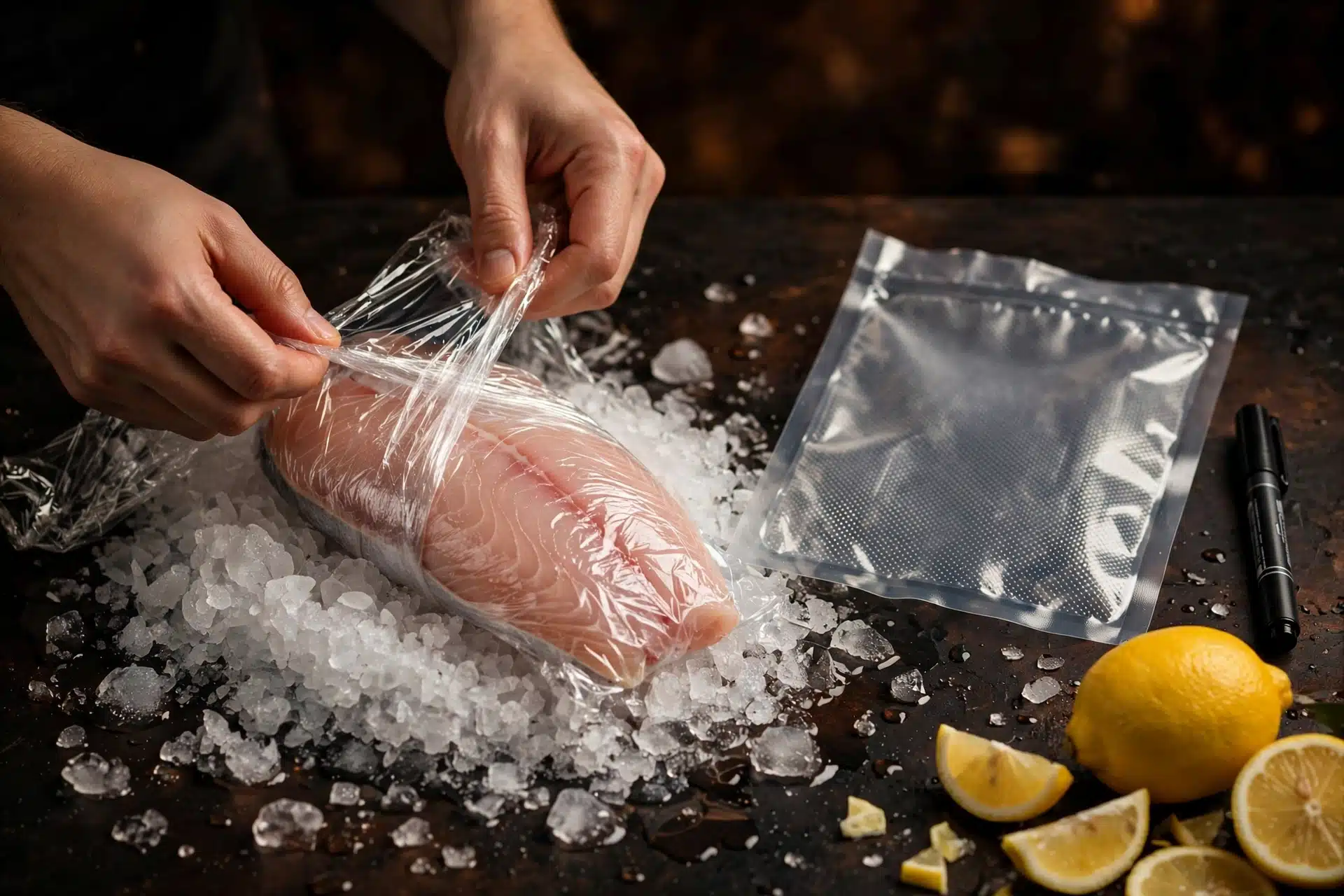
How to Freeze Fresh Fish at Home
To freeze fresh fish at home, rinse it in cold water, pat it completely dry, divide it into meal-size portions, and wrap each portion tight with no air touching the flesh — plastic wrap plus foil, a vacuum-sealed bag, or a thin ice glaze on whole fish. Label it with the date, freeze fast at 0°F (-18°C) or below, and use fatty fish within 2 to 3 months and lean fish within about 4 to 8 months for best quality. I have frozen fish for years. The fish that came out sweet and firm, and the fish that came out dry and sad, were separated by one thing only: how well I wrapped it. For the complete storage system this belongs to, see Fish Storage and Food Safety: The Complete Guide.
Table of Contents
Start With Fish That Is Worth Freezing
Freezing does not improve fish. It only preserves the quality you put in. If it smells sour or ammonia-like, feels slimy, or has sat past its fridge window, do not freeze it and hope. Use the checks in How to Tell If Fish Has Gone Bad. Freeze on the day you buy or catch whenever you can. Check fridge time against How Long Does Fish Last in the Fridge?
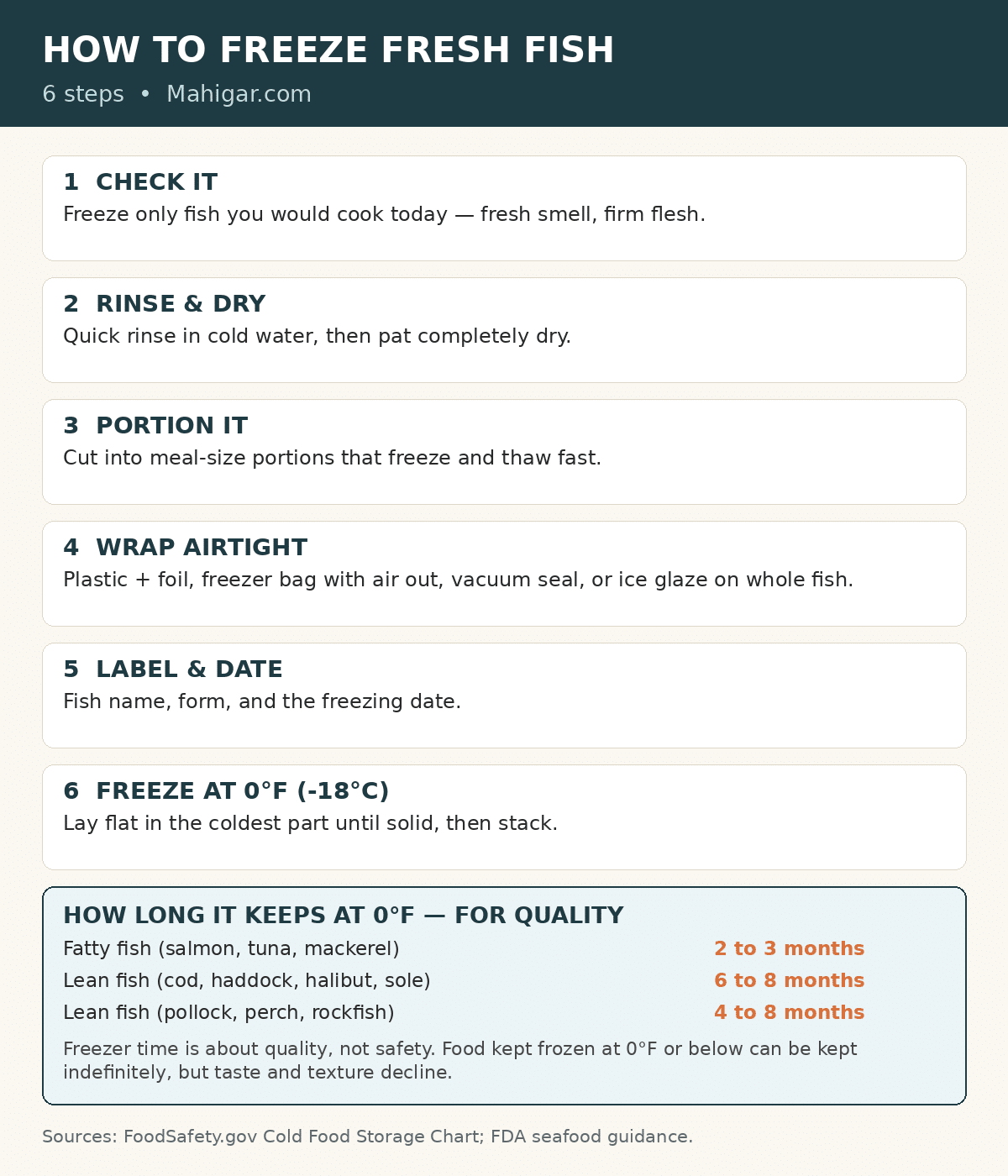
How to Freeze Fresh Fish in 6 Steps
How to freeze fresh fish at home in 6 steps
Rinse and dry completely
Rinse the fish in cold water and pat it completely dry.
Portion into meal-size pieces
Divide the fish into meal-size portions.
Wrap airtight
Wrap tight in plastic, then foil, a freezer bag, or vacuum seal, with no air touching the flesh.
Or glaze whole fish
Freeze solid, dip in ice water, and repeat until a thin ice shell forms, then bag.
Label with date
Label with the fish name, form, and freezing date.
Freeze fast and flat
Freeze fast and flat at 0°F (-18°C) or below.
Wrapping Methods Compared: Plastic, Vacuum, or Glaze?
| Method | How it works | Best for | Watch out |
|---|---|---|---|
| Plastic wrap + foil/freezer bag | Wrap tight, press out air | Most homes | Air creeps in over months |
| Vacuum sealing | Machine removes air | Long storage, fatty fish | Needs machine |
| Water glaze | Freeze solid, dip repeatedly | Whole fish | Ice shell slowly shrinks |
FDA advice: if fish will not be used within about 2 days, wrap tightly in plastic, foil, or moisture-proof paper and freeze.
Freezer Burn: What It Is and How to Stop It
Freezer burn is not dangerous. It is quality damage: pale, dry, leathery patches when air reaches the surface. Stop it with no air in the package, a real second layer, and a steady 0°F toward the back of the freezer.
How Long Does Frozen Fish Keep?
FoodSafety.gov says freezer guidelines are for quality only — food kept frozen continuously at 0°F or below can be kept indefinitely for safety, but flavor and texture decline.
| Fish type | Freezer time for best quality | Examples |
|---|---|---|
| Fatty fish | 2 to 3 months | Bluefish, catfish, mackerel, mullet, salmon, tuna |
| Lean fish | 6 to 8 months | Cod, flounder, haddock, halibut, sole |
| Lean fish | 4 to 8 months | Pollock, ocean perch, rockfish, sea trout |
Freezing pauses the clock, it does not rewind it.
Thawing: The Short Version
Thaw in the refrigerator overnight, or sealed in a plastic bag in cold water. Never thaw on the counter. If you have more than you can cook, see Can You Refreeze Fish After Thawing?
Frequently Asked Questions
Should you rinse fish before freezing it?
Quick rinse is fine, pat completely dry afterwards.
How long can you freeze fresh fish at home?
Fatty fish 2 to 3 months, lean fish up to 6 to 8 months for best quality at 0°F, per FoodSafety.gov. Times are about quality, not safety.
Does freezer burn make fish unsafe?
No, it is a quality problem. Cut away worst dry spots.
Can you freeze fish in supermarket packaging?
Only short time; tray wrap lets air through. Rewrap tightly or vacuum seal.
What to Check Next
Freezing sits in the middle of the storage sequence: buy fresh, check honestly, freeze early and airtight, thaw safely, then cook with confidence.
Sources: FoodSafety.gov Cold Food Storage Chart; U.S. FDA Selecting and Serving Fresh and Frozen Seafood Safely.
