Fish Food Poisoning: Symptoms, Causes, and Prevention
Fish food poisoning most often causes diarrhea, stomach cramps, nausea, vomiting, and sometimes fever. How fast it starts depends on the cause: toxin in poorly chilled fish can make you ill within minutes to an hour, while bacteria from spoiled or undercooked fish can take hours to a few days. Trouble breathing, swelling, confusion, bloody diarrhea, or signs of dehydration mean get medical care — do not wait. After twenty years of cooking fish, this is the outcome every rule on Mahigar exists to prevent. For the complete system, see Fish Storage and Food Safety: The Complete Guide.
This article is general information, not medical advice. Only a doctor can diagnose food poisoning. If you feel unwell after eating fish, seek medical care promptly.
Table of Contents
The Three Main Causes, in Plain Words
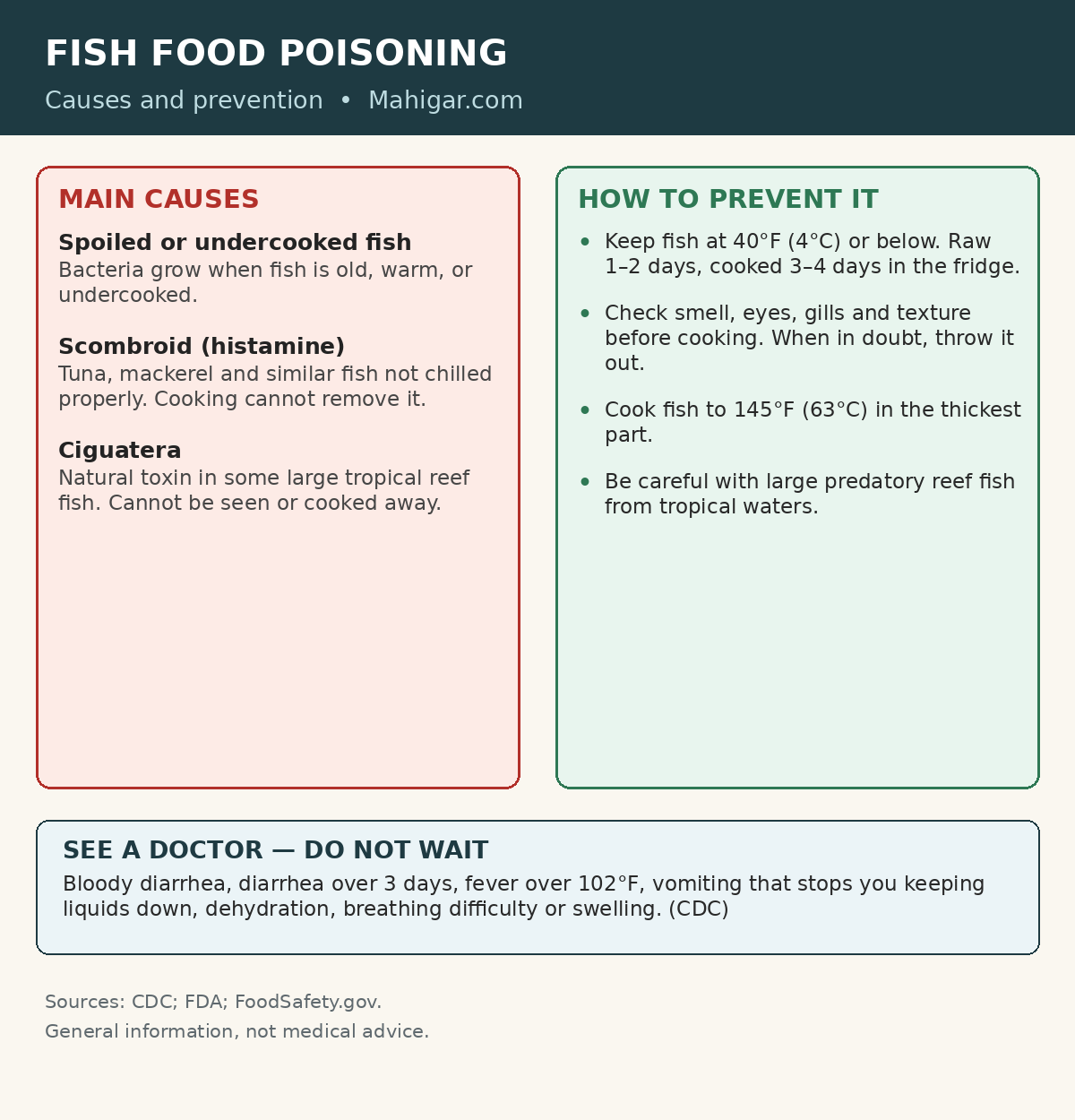
Most fish food poisoning falls into three groups. Knowing which one you are dealing with explains why symptoms can start in minutes, or not for days — and why cooking cannot fix every problem.
1. Bacteria: spoiled, undercooked, or cross-contaminated fish
This is the most common cause overall, as FoodSafety.gov notes in its overview of bacteria and viruses that contaminate food. The fish may have spoiled, been undercooked, or picked up germs from hands, boards, or other foods. Cold storage slows these germs down, a freshness check catches spoilage before cooking, and proper cooking kills harmful germs.
2. Scombroid: the histamine problem
When fish like tuna, mackerel, mahi-mahi, sardines, anchovies, herring, bluefish, amberjack, and marlin are not properly refrigerated, bacteria convert histidine in the flesh into histamine. That is the pattern the CDC describes for scombroid. The fish usually looks and tastes normal, and cooking, smoking, or freezing does not remove histamine that has already formed.
3. Ciguatera: natural toxin in large tropical reef fish
Ciguatera comes from a natural toxin that builds up in large tropical reef fish such as barracuda, grouper, amberjack, sea bass, and red snapper. It does not change the look, taste, or smell of the fish, cooking does not destroy it, and it is unrelated to how the fish was stored. Prevention here is about knowing the source and type of fish, not about your fridge.
How Soon Do Symptoms Start?
The timing is a clue to the cause, but it is not a diagnosis. As a rough guide:
| Cause | How soon symptoms usually start |
|---|---|
| Scombroid | A few minutes to about 1 hour |
| Ciguatera | Usually 3 to 6 hours, up to 30 hours |
| Bacteria | A few hours to a few days |
What the Symptoms Feel Like
The CDC lists the common symptoms of food poisoning as diarrhea, stomach pain or cramps, nausea, vomiting, and fever. Most fish-related cases start with some combination of those.
Scombroid often resembles an allergy: flushing, headache, palpitations, itching, blurred vision, cramps, and diarrhea, usually starting fast. Ciguatera can add tingling, a metallic taste, tooth pain, and hot-cold sensitivity, where cold feels hot and hot feels cold.
Do not diagnose yourself from this list. Tell the doctor what fish you ate, where it came from, and when symptoms began — that timing helps them work out the cause.
What to Do If You Feel Sick After Eating Fish
Stop eating the fish. Keep the packaging and any leftovers, stored safely and labelled, in case health officials need to identify what you ate — but do not eat more of it to test it. Note the time you ate it and when symptoms started.
Get medical care promptly if symptoms are severe, and do not wait for the warning signs in the next section. The CDC advises drinking fluids when you have diarrhea or vomiting to prevent dehydration. I am a fish cook, not a doctor, so I will not suggest medicines here — that advice needs to come from a clinician who knows your situation.
When to See a Doctor — Do Not Wait
The CDC says to see a doctor if you have:
- Bloody diarrhea
- Diarrhea that lasts more than 3 days
- A high fever over 102°F
- Vomiting that stops you keeping liquids down
- Signs of dehydration, such as very little urine, a dry mouth, or dizziness on standing
Get urgent care straight away for breathing difficulty, swelling, confusion, or fainting. Those are not wait-and-see symptoms.
Prevention: The Habits That Stop Most Cases
- Keep it cold at 40°F or below. Respect the time windows in How Long Does Fish Last in the Fridge?
- Check it before cooking. Use the smell, look, and touch checks in How to Tell If Fish Has Gone Bad.
- Cook to 145°F. Follow Safe Internal Cooking Temperatures for Every Type of Fish.
- Clean and separate. Clean, Separate, Cook, Chill — wash hands and surfaces, keep raw fish away from ready-to-eat food, cook it properly, and chill leftovers promptly.
Remember the limit of cooking: it kills bacteria, but it does not remove histamine or ciguatera toxin. Cold storage and sensible sourcing are what stop those two.
Frequently Asked Questions
How long after eating bad fish do symptoms start?
It depends on the cause: scombroid usually starts within minutes to an hour, ciguatera usually in 3 to 6 hours and up to 30 hours, and bacteria in a few hours to a few days. This is general information, not medical advice — see a doctor if you feel unwell.
Can you get food poisoning from fish that was fully cooked?
Yes. Histamine from scombroid and ciguatera toxin are not destroyed by cooking, and cooked fish can also be contaminated afterwards if it is handled or stored badly.
Is scombroid the same as a fish allergy?
No. Scombroid is histamine poisoning from poorly chilled fish, and it can affect anyone who eats that fish. It can look like an allergy, which is why a doctor needs to assess it.
When should I see a doctor after eating fish?
See a doctor for bloody diarrhea, diarrhea over 3 days, a fever over 102°F, vomiting that stops you keeping liquids down, or signs of dehydration. Get urgent care for breathing difficulty, swelling, confusion, or fainting.
What to Check Next
Prevention is a sequence: check the fish before you cook it, respect fridge timelines, and cook to 145°F. Those guides sit inside the pillar, Fish Storage and Food Safety: The Complete Guide, so start there and work through the checks in order.
Sources: CDC Food Poisoning Symptoms; CDC Travelers Health Food Poisoning from Seafood; FoodSafety.gov Bacteria and Viruses. General information, not medical advice.
