
Is Fish Skin Safe to Eat?
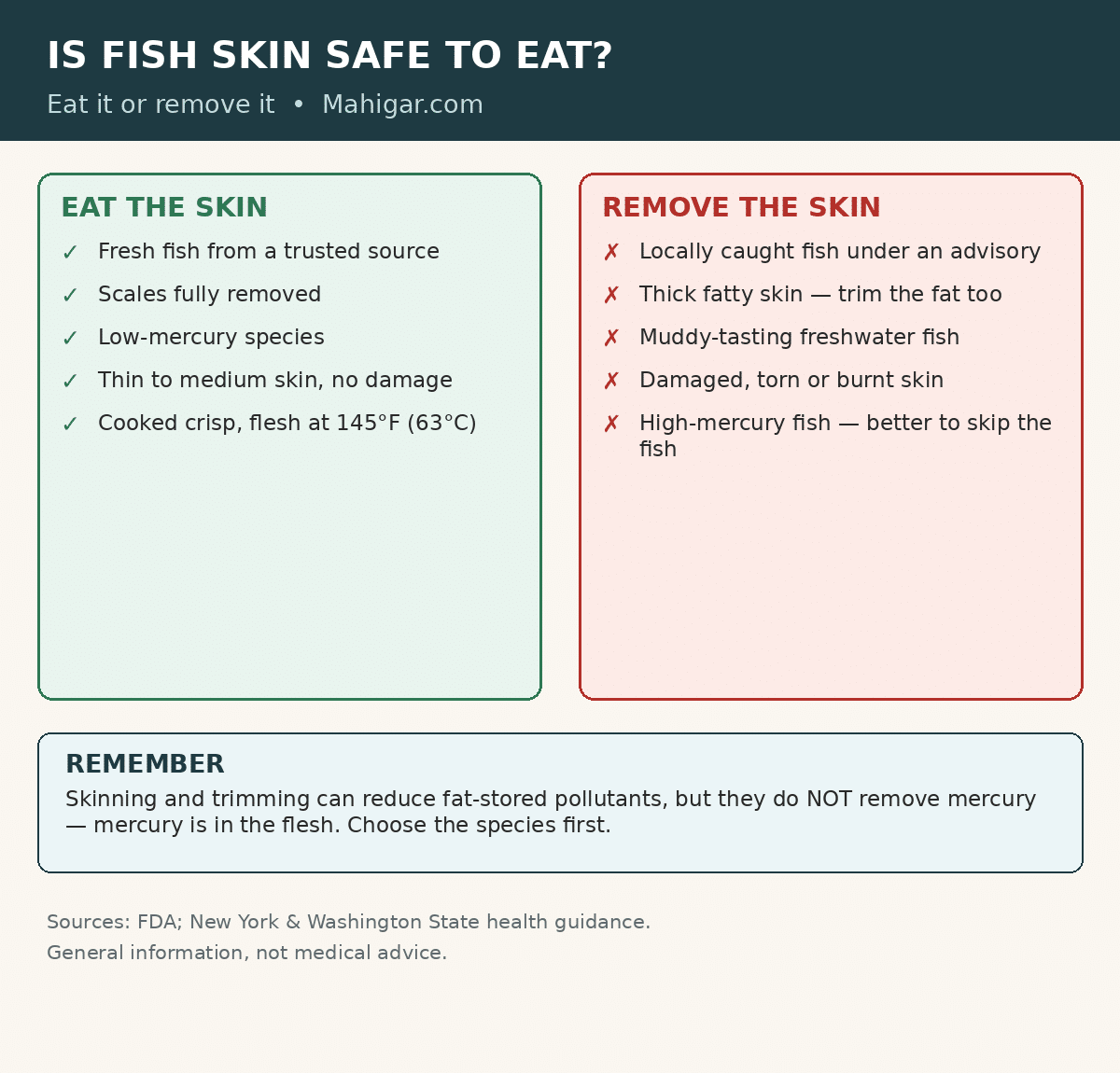
Yes — fish skin is generally safe to eat, and often delicious, when the fish is fresh, the scales are fully removed, and the skin is cooked properly to 145°F (63°C). Where I remove it instead is on large predatory fish, fish with thick fatty skin, muddy-tasting freshwater fish, and any skin that is damaged or burnt. The species and the source decide. In my kitchen, crispy skin is the part everyone fights over. For the complete safety picture, see Fish Storage and Food Safety: The Complete Guide.
Table of Contents
What Is Actually in Fish Skin?
Fish skin carries protein including collagen, omega-3 fatty acids in oily fish, and nutrients such as vitamin D, vitamin E, and selenium. Exact numbers change with species — the honest summary is that the skin of a good fish is not junk. This is general nutrition information, not medical advice.
The Safety Part: Freshness and Cooking Come First
Skin is only safe when the fish under it is safe. Judge it with How to Tell If Fish Has Gone Bad. Cook to 145°F per Safe Internal Cooking Temperatures for Every Type of Fish. Scales off, always. For buying, storing, and serving seafood safely, follow the FDA guidance on selecting and serving fresh and frozen seafood safely.
When the Skin Is Good to Eat
Eat the skin when these points line up:
- The fish is fresh and comes from a trusted source.
- It is a species commonly eaten skin-on, such as salmon, trout, sea bass, or snapper.
- The skin is thin to medium, clean, and fully scaled.
- It is cooked crisp and the fish reaches 145°F.
When to Remove the Skin
Large Predatory Fish
Large predatory fish — shark, swordfish, king mackerel and similar species — build up the most mercury, so choose a different fish instead. See Mercury in Fish: Safe Levels by Species. Peeling the skin off a high-mercury fish does not make it a low-mercury fish.
Locally Caught Fish and Thick Fatty Skin
Some pollutants concentrate in fat. For locally caught fish, and fish with thick fatty skin, skinning the fish, trimming belly, back and side fat, and cooking it so the fat drips away can reduce fat-stored contaminants. That approach is described in the New York State Department of Health fish health advisory tips and the Washington State Department of Health guidance on contaminants in fish. Always check local advisories for the water you caught the fish in.
Damaged or Burnt Skin
Torn, slimy, discoloured or black burnt skin: remove it. Good skin should look clean and intact before it goes anywhere near the pan.
The One Thing Skin Removal Cannot Do
Removing the skin does not remove mercury. Mercury is stored through the flesh, not mainly in the skin or fat. Choose a lower-mercury fish first, then decide about the skin.
How to Make Fish Skin Crispy — and Safe
- Scale, rinse, and pat the skin very dry.
- Use a thin film of oil in a hot pan, skin-side down.
- Press gently for the first seconds so the skin stays flat.
- Leave it alone until it is golden and releases from the pan.
- Flip briefly, and check that the fish reaches 145°F.
- Serve skin-side up so it stays crisp.
Frequently Asked Questions
Is salmon skin safe to eat?
Yes, when the salmon is fresh, from a trusted source, and cooked to 145°F.
Does removing fish skin remove mercury?
No. Mercury is in the flesh. Removing skin and fat can reduce some fat-stored pollutants, not mercury.
Should you eat skin on freshwater fish like carp or catfish?
Only with care: use fish from clean, known water, check local advisories, and note that fish from murky water are better skinned and trimmed.
Is it safe to eat fish skin raw, like on sushi?
Raw fish should only come from a trusted supplier selling fish for raw use, and should be used the same day. At home, cook it and crisp the skin. This is general information, not medical advice.
What to Check Next
Skin is the last decision, not the first. Choose a lower-mercury species, check freshness, store it correctly, and cook it to temperature — then decide about the skin. Fish Storage and Food Safety: The Complete Guide ties that whole sequence together.
Sources: FDA seafood safety guidance; New York State Department of Health; Washington State Department of Health. General information, not medical advice.
