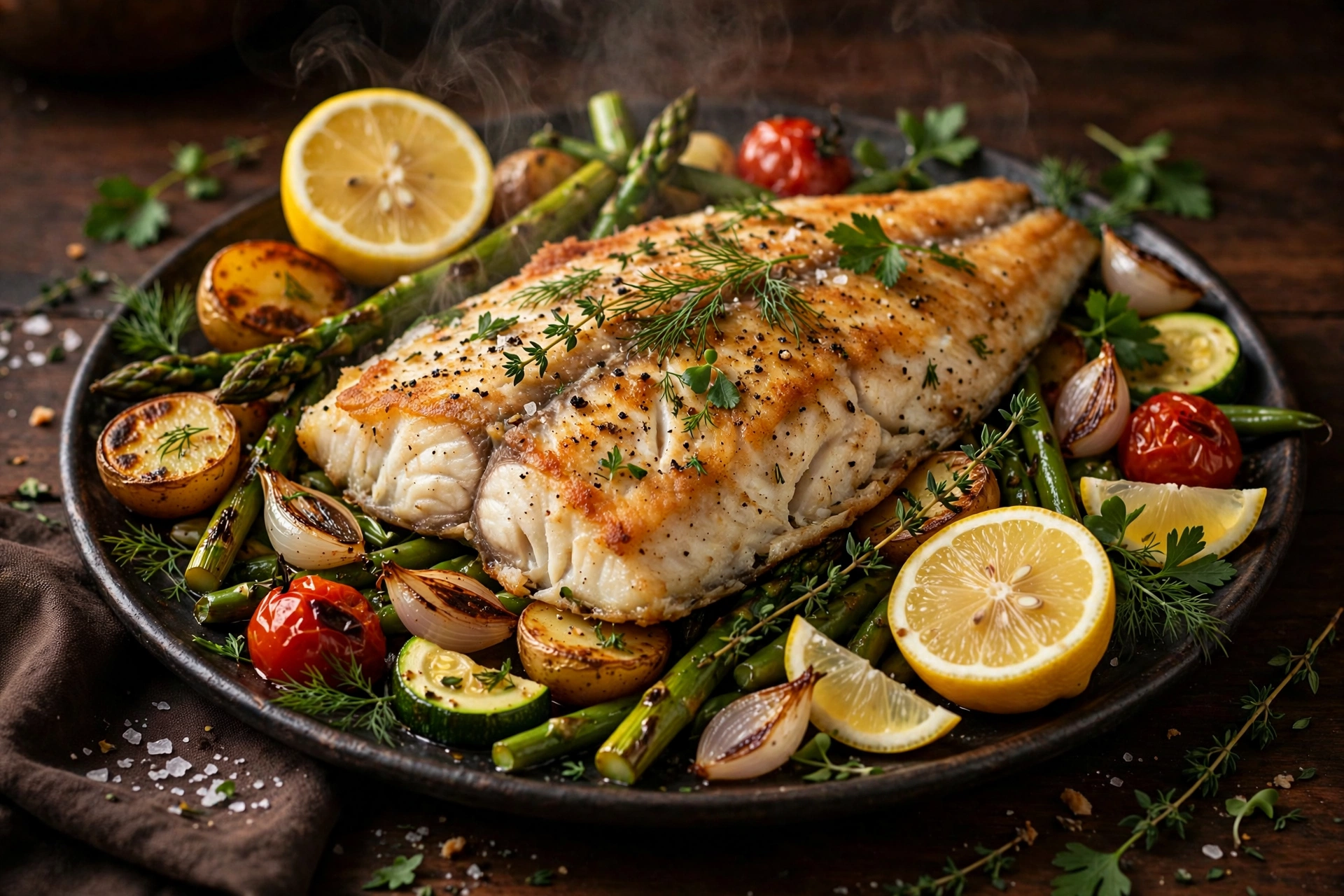
High-Protein Fish Recipes
The easiest way to eat more protein at dinner is already swimming: cook a firm fish, give it a proper portion, and cook it well. Canned light tuna brings about 25.5 grams of protein per 100 grams, salmon and tilapia about 20. Real figures, from USDA data, not package promises.
I am Wasim Abbas Bhatti, the Fish’s Chef, with more than twenty years cooking fish and eight years fishing local canals. Readers who train, readers feeding growing teenagers, readers who hate feeling hungry by nine o’clock: all ask me the same question. Which fish, cooked how, keeps a person full? This guide sits inside Fish Recipes for Every Diet and Lifestyle, Mahigar’s diet hub, and answers with dinner ideas rather than a supplement shelf.
One honest note: these are dinner ideas at principle level, not measured recipe cards and not a meal plan. How much protein you personally need is a question for your doctor or dietitian. What twenty years at the stove qualifies me to do is show you which fish carry the protein, and how to cook them so the plate satisfies.
Table of Contents
The Numbers Behind These Dinners (Read This First)
Every protein figure here comes from one place: the USDA-sourced chart in Fish Protein Content Compared by Species. Read them in bands, the way that chart teaches:
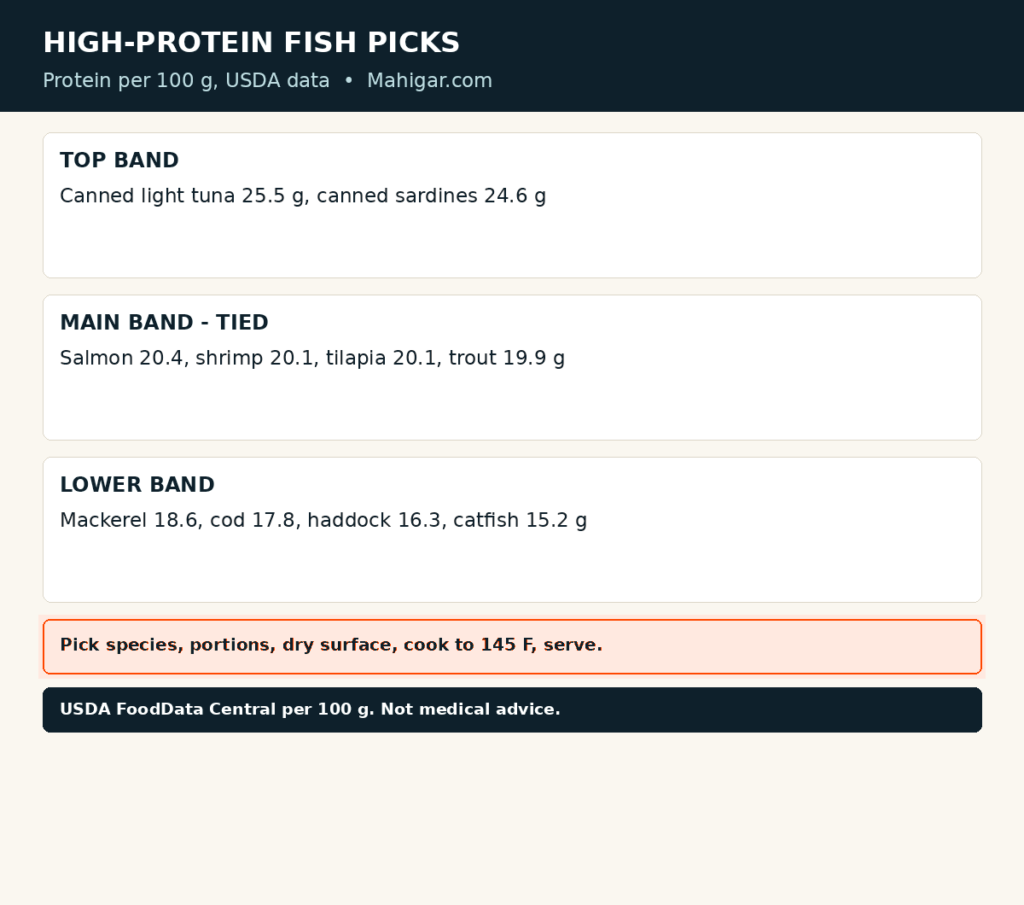
- Top band: canned light tuna, about 25.5 grams of protein per 100 grams drained, and canned sardines, about 24.6 grams.
- Main band, effectively tied: salmon (20.4), shrimp (20.1), tilapia (20.1), and rainbow trout (19.9), four fish within half a gram of each other.
- Lower band: Atlantic mackerel (18.6), cod (17.8), haddock (16.3), and catfish (15.2), a few grams lower, still honest protein foods.
Two things matter more than the ranking. First, the figures are per 100 grams (raw, or drained from the tin). Bigger portion, more protein; the portion is your lever. Second, a protein plate works because of what fish is: filling and savoury in a way that keeps people at the table instead of raiding the fridge later. That is kitchen experience, not a study, and it is why these dinners are built around a generous piece of fish, cooked properly.
Dinner Idea 1: Salmon Night, The Rich Plate
Salmon is the high-protein dinner people actually look forward to: about 20.4 grams of protein per 100 grams, with the richest fat of the main band riding along, and that fat is a feature. It keeps the fillet moist and carries the flavour.
My method stays boring on purpose. Portion the fillet evenly so every piece cooks at the same pace. Pat the surface dry. A dry surface is the difference between a proper crust and a pale, steamed top. Cook it skin-on in a hot pan, or bake it, and stop at opaque and just flaking. Serve beside vegetables or a salad, lemon over the top. Protein plus the omega-3 salmon is famous for, in a dinner nobody at the table experiences as “health food.”
Dinner Idea 2: Tilapia With a Spice Crust, The Lean Workhorse
Tilapia is the fish people apologise for, and the chart says they should stop: about 20.1 grams of protein per 100 grams at only 1.7 grams of fat, level with salmon on protein, far leaner on the plate. What tilapia lacks is not protein. It is boldness. So give it some.
This is where my South Asian kitchen earns its keep. A dry spice coat, the turmeric, chilli, and coriander family my home cooking runs on, turns a mild fillet into the plate’s main event. Portion evenly, dry the surface well so the spices grip instead of sliding, and pan-fry or bake until just done. Budget-friendly, freezer-friendly, and mild enough for cautious eaters: tilapia is the weekday protein I reach for when the week is winning.
Dinner Idea 3: The Tuna Tin Plate, Pantry Protein
The strongest protein on the whole chart never sees a fish counter: canned light tuna, about 25.5 grams per 100 grams drained, already cooked and waiting in the pantry. On tired days, this tin is the honest shortcut.
Build the plate around it plainly: flaked over rice with vegetables, folded through a chopped salad with eggs beside it, or piled into a sandwich with something crisp and sharp for contrast. The cooking is done; your job is assembly and appetite.
One caution rides with the tin: light tuna is an FDA/EPA Best Choice, fine two to three times a week. Albacore, white tuna, is a Good Choice at one serving a week. The name on the can changes the answer. The full chart is in Mercury in Fish: Safe Levels by Species.
Dinner Idea 4: Sardines, Simply Served, The Small Fish With Big Numbers
Canned sardines sit second on the chart: about 24.6 grams of protein per 100 grams, soft bones and all, with the strongest omega-3 story of any pantry fish. They are also the idea people resist, until the fish is good and the serving is honest.
Keep it simple and confident. Serve them warm or at room temperature over toast or rice, lemon squeezed hard over them, something fresh and green beside them, chilli if your table likes it. The bones in a proper tin are soft and edible, part of the point, not a flaw. A tin, a lemon, and bread: there are worse high-protein dinners, and most cost ten times more.
Dinner Idea 5: Shrimp, Fast and Careful, The Lean Sprinter
Shrimp matches the main band at about 20.1 grams of protein with almost no fat, 0.5 grams per 100 grams, close to pure protein. In the pan, it is the idea that punishes distraction.
Portion the shrimp evenly, dry them well, and cook them hot and briefly until just opaque and pearly. The window between perfect and rubbery is short, and no protein figure rescues a pan left too long. Serve over rice, folded through vegetables, or in a curry sauce built before the shrimp go in. The sauce waits for the shrimp, never the other way round.
Dinner Idea 6: Trout and the Lower Band, Rotation Fish
Rainbow trout (19.9 grams) is salmon’s gentler cousin: nearly the same protein, moderate richness, a fish for people who find salmon strong. Below it, the lower band, mackerel (18.6), cod (17.8), haddock (16.3), catfish (15.2), still delivers solid protein plates. Cod is the lean carrier, built for curries and sauces where the fish brings protein and the sauce brings richness. Catfish is my canal-side fish, softer, a little richer, magnificent with spice and a proper crust. A few grams lower on a chart makes neither a lesser dinner, and rotation needs the whole counter.
Building the Plate: The Five Habits That Make It Work
Every idea above runs on the same five habits. Learn these and you do not need my recipes at all.
- Pick the species by the job. Protein first? Start from the chart bands. Protein plus omega-3? Salmon, sardines, mackerel. Lean protein? Shrimp, cod, tilapia.
- Portion evenly. Pieces of the same thickness cook at the same pace, so nothing dries while the thick piece finishes.
- Dry the surface. Water is the enemy of crust. Pat the fish dry before the pan, the oven, or the spice coat.
- Cook it just done. Fin fish finishes at 145°F (63°C) in the thickest part, or opaque and flaking. The full chart lives in Safe Internal Cooking Temperatures for Every Type of Fish. Overcooked fish is dry fish, and dry fish is how protein dinners get their bad name.
- Give the fish company that earns its place. Vegetables, salad, eggs, lentils, rice, food with body, so the plate satisfies as a meal, not just a number.
A Week of Protein, Without a Spreadsheet
Two or three fish dinners across the week, mixed across the bands: a salmon night when you want richness, a tilapia or cod night when you want lean and fast, a tuna or sardine tin on the night nobody wants to cook. All ten fish named here sit in the FDA/EPA Best Choices, so the rotation repeats weekly without mercury arithmetic. The one name to watch remains albacore tuna, once a week at most. Pick by band, portion generously, cook carefully, rotate. That is the entire system, and it has fed my table for years.
Frequently Asked Questions
Which fish has the most protein?
By USDA figures, canned light tuna, about 25.5 grams of protein per 100 grams drained, with canned sardines close behind at 24.6. Among fresh fish, salmon, shrimp, tilapia, and rainbow trout all sit near 20 grams and are effectively tied. The full sourced chart is Mahigar’s Fish Protein Content Compared by Species.
Are these actual recipes I can follow step by step?
They are dinner ideas with methods, not measured recipe cards. No grams of spice or timed steps, because honest home cooking portions fish by eye and doneness, not by a supplement label. Portion evenly, dry the surface, cook to 145°F (63°C), and the ideas will carry you.
How much protein should I eat at each meal?
That is a personal number, and this article will not invent one for you. Your doctor or dietitian can set it from your health, training, and whole diet. What this guide gives you is the per-species figures, per 100 grams, from USDA data, so any target you already have can be met with real fish, not estimates.
Can I eat these fish every day?
Rotate instead. Every fish named here is an FDA/EPA Best Choice at two to three servings a week, and variety spreads both nutrients and any small risks. Albacore (white) tuna is the exception to watch: one serving a week. This is general information, not medical advice.
What to Check Next
This week, pick one idea above and cook it once, properly: even portions, dry surface, just done. Then let the rotation start, and when you want the numbers behind any fish on your plate, the Nutrition pillar’s protein comparison has them, sourced and open.