Best Meat Thermometers for Fish
The scene plays out in my kitchen at least once a month. A beautiful piece of fish comes off the heat, someone cuts in at the table, and the middle is still glassy. So next time I play it safe, five extra minutes, and serve a dry fillet nobody quite finishes. Both failures come from the same place: I was guessing at the middle of the fish instead of measuring it.
The fix is the cheapest tool I recommend to any fish cook: a simple instant-read thermometer. Not a lab instrument, not a drawer full of probes. One honest tool that tells you when the thickest part has reached its number. This guide is part of Essential Equipment for Cooking Fish at Home, and it exists for one reason, a purchase decision that ends in a safety outcome. No prices, no brand worship, no fake lab tests. Just which type, for which fish, and how to use it honestly.
Table of Contents
Table of Contents
First, the Numbers the Thermometer Must Protect
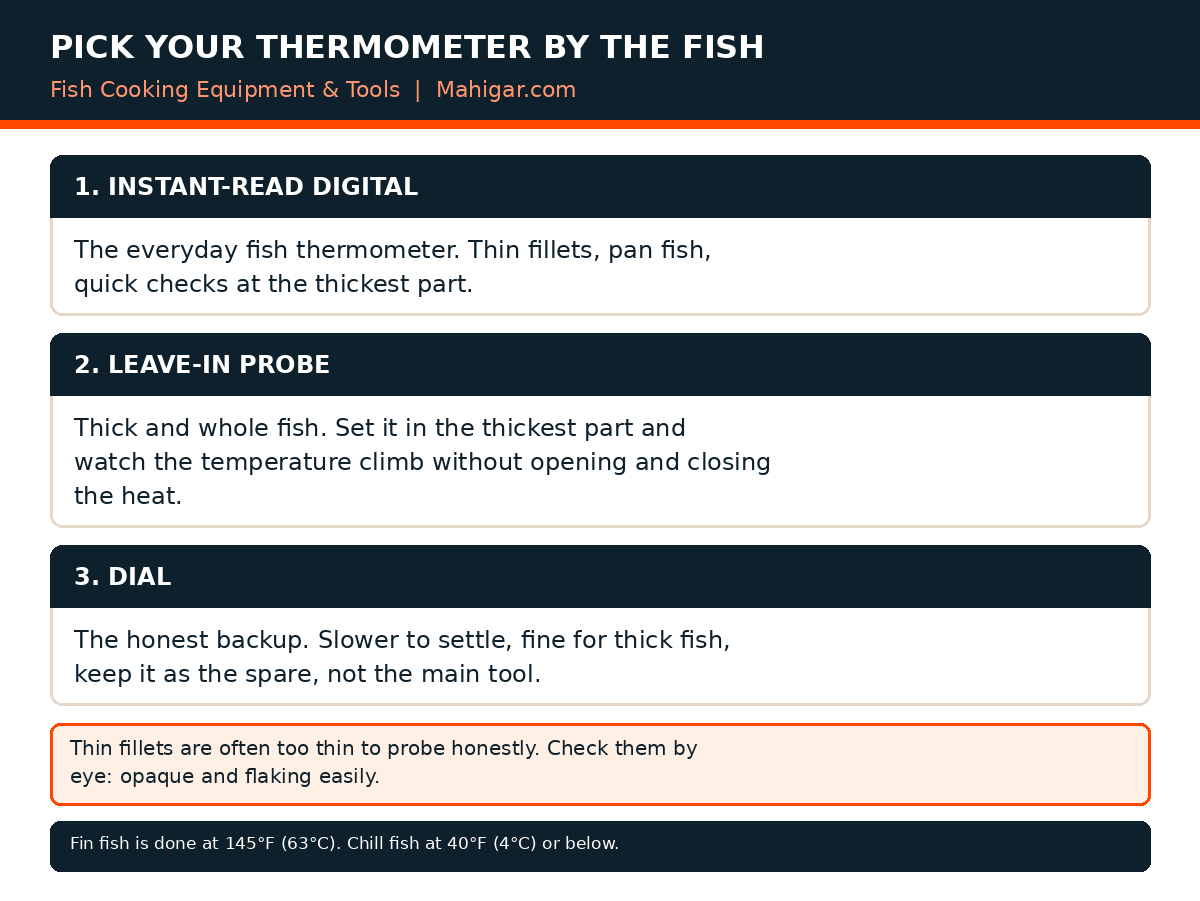
A thermometer is only as good as the numbers it serves, so here they are once, clearly, the way I keep them fixed in my own head. Fin fish is done at 145°F (63°C) in the thickest part, or when the flesh is opaque and flakes easily. Ground fish, cakes and burgers, goes to 155°F (68°C). Stuffed fish goes to 165°F (74°C). Reheated leftovers go to 165°F (74°C). Shrimp and scallops are cooked through until pearly, white, and opaque. And before any cooking starts, fish lives chilled at 40°F (4°C) or below.
The full chart, fish by fish, is in Safe Internal Cooking Temperatures for Every Type of Fish. I treat that page as the law and the thermometer as the way I read it. Keep the two together in your mind the same way.
The Three Types, Honestly Judged
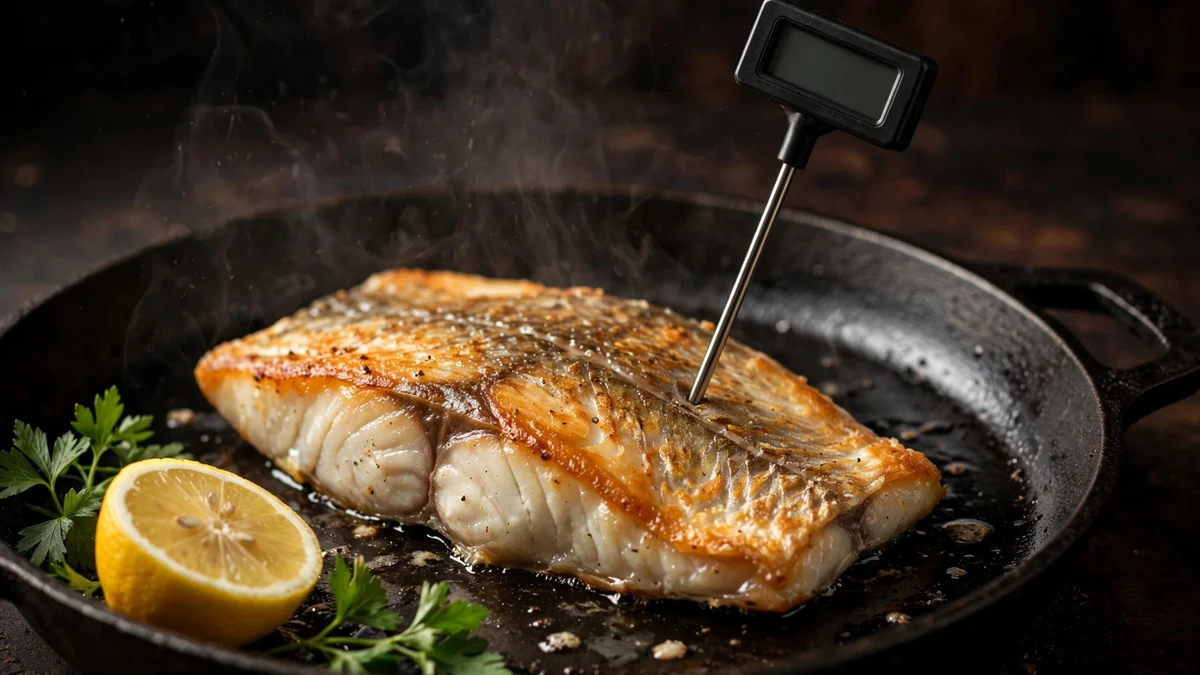
Instant-read digital, the everyday answer. You push the thin tip into the thickest part, wait a few seconds, and read the truth. For fish, this is the type that matters most, because fish changes fast and most pieces are small. The thin tip is the real virtue: it slips into a fillet without tearing a wide hole in flesh you are about to serve. If you buy one thermometer for fish in your life, buy this type.
Leave-in probe, for thick and whole fish. This type stays in the fish while it cooks, with the reading shown outside the oven or pan. It earns its keep when the piece is thick, a whole fish, a deep steak, a stuffed fish heading for 165°F (74°C), and opening the oven or lifting the lid every minute would cost you the gentle, even cooking you wanted. For a thin Tuesday-night fillet, it is more tool than the dinner needs.
Dial, the honest backup. The round-faced dial type is slower to settle and wants more of the probe buried in the food before it reads truly, which makes it clumsy on thin fish. On a thick whole fish it does the job honestly. I keep one as the spare in the drawer; I never make it my main fish tool and then blame the fish for dry dinners.
Thin Fillets: When the Thermometer Is the Wrong Tool
Here is the honest part most buyer’s guides skip: a very thin fillet is often too thin to probe truthfully. The tip passes through the flesh, reads the pan side or the air, and gives you a number with confidence it has not earned. I have watched more thin fish cooked into dryness by chasing that number than by any hot pan ever made.
For thin fillets, your eyes are the better instrument: flesh turned opaque all the way through and flaking easily at the thickest fold is done. That check, the flake, the opacity, the gentle give, is a skill, and it is taught properly in How to Tell When Fish Is Done Without a Thermometer. The thermometer rules the thick pieces; the eye rules the thin ones. A good fish cook owns both, and I reach for each one where it belongs.
How to Probe Fish Properly
However good the tool, placement is the skill. This is the routine I follow, and it has never lied to me:
- Go for the thickest part. That is the last place to finish, so it is the only reading that matters.
- Push in from the side on flat pieces. Sliding the tip in sideways, into the middle of the flesh, keeps it surrounded by fish instead of poking through to the pan.
- Touch neither bone nor pan. Bone reads hotter than flesh and pan metal hotter still; both will lie to you in the dangerous direction, telling you “done” too early.
- Check once, gently, near the end. Every hole lets juice out. One honest reading at the right moment beats five nervous ones.
- Judge the number and the look together. 145°F (63°C) and opaque, flaking flesh. If they disagree, trust the slower of the two signals and give it a little longer.
Reading fish this way is what keeps the two disappointments apart, the glassy undercooked centre and the dry overcooked edge. The side-by-side signs are laid out in Overcooked vs Undercooked Fish: How to Spot the Difference, and I still glance at them when a new species lands on my board.
Which Type for Which Fish
- Everyday fillets, pan fish, most weeknight cooking: instant-read digital. Fast, thin, done.
- Thick steaks, whole fish, stuffed fish: a leave-in probe if you cook them often; otherwise the instant-read, used patiently at the thickest part.
- Ground fish cakes and burgers (155°F/68°C): instant-read again. A cake is thick enough to probe honestly, and ground fish deserves the check.
- Shrimp and scallops: no thermometer at all. Pearly, white, and opaque is the whole test, and it is quicker than any probe.
- Leftovers (165°F/74°C): instant-read in the centre of the reheated portion.
What to Look For, and What to Skip
Look for a thin tip that does not tear delicate flesh, a display you can read at a glance in steam and poor light, numbers that settle quickly and hold still, and a body you can rinse, dry, and put away without a ritual. Buy the type that matches your thickest regular fish, not the biggest fish you cooked once.
Skip the theatre: multi-probe command centres for a home fish night, brand rankings nobody can verify, and accuracy boasts no home cook can honestly test at the stove. I will not quote response times or degree figures I have not measured in my own kitchen, and I am suspicious of any guide that does it casually. A simple, honest instant-read used properly beats a laboratory instrument used carelessly, every single dinner.
Frequently Asked Questions
Do I really need a thermometer for fish?
For thick and whole fish, yes. It is the difference between guessing and knowing, and it ends the dry “five more minutes to be safe” habit I fought for years. For very thin fillets, your eyes do the job better: opaque and flaking easily. Most fish cooks need one simple instant-read and the honesty to use each check where it belongs.
Which thermometer type is best for fish overall?
An instant-read digital with a thin tip. It reads small pieces quickly, tears the flesh least, and covers fillets, steaks, cakes, and leftovers. I only add a leave-in probe for cooks whose thick or whole fish is a regular habit at the table.
Where exactly do I probe a fish fillet?
Into the thickest part, pushed in from the side so the tip sits in the middle of the flesh. Never touch bone or the pan, because both read hotter than the flesh and will tell you the fish is done before it is.
Can a thermometer replace the flake test?
They work together, and I never let one overrule the other without a reason. The number, 145°F (63°C) for fin fish, and the look, opaque and flaking, should agree. On thin fillets the probe cannot sit honestly in the flesh, so the look wins. On thick fish the reverse is true: trust the probe, then confirm with the flake.
What to Check Next
Buy the simple instant-read first, learn the thickest-part habit, and keep the chart beside it: 145°F (63°C) for fin fish, 155°F (68°C) for ground fish cakes and burgers, 165°F (74°C) for stuffed fish and reheated leftovers, all set out in Safe Internal Cooking Temperatures for Every Type of Fish. The thermometer is cheap. The confidence, serving fish that is safe and juicy and never apologised for, is the actual purchase.
