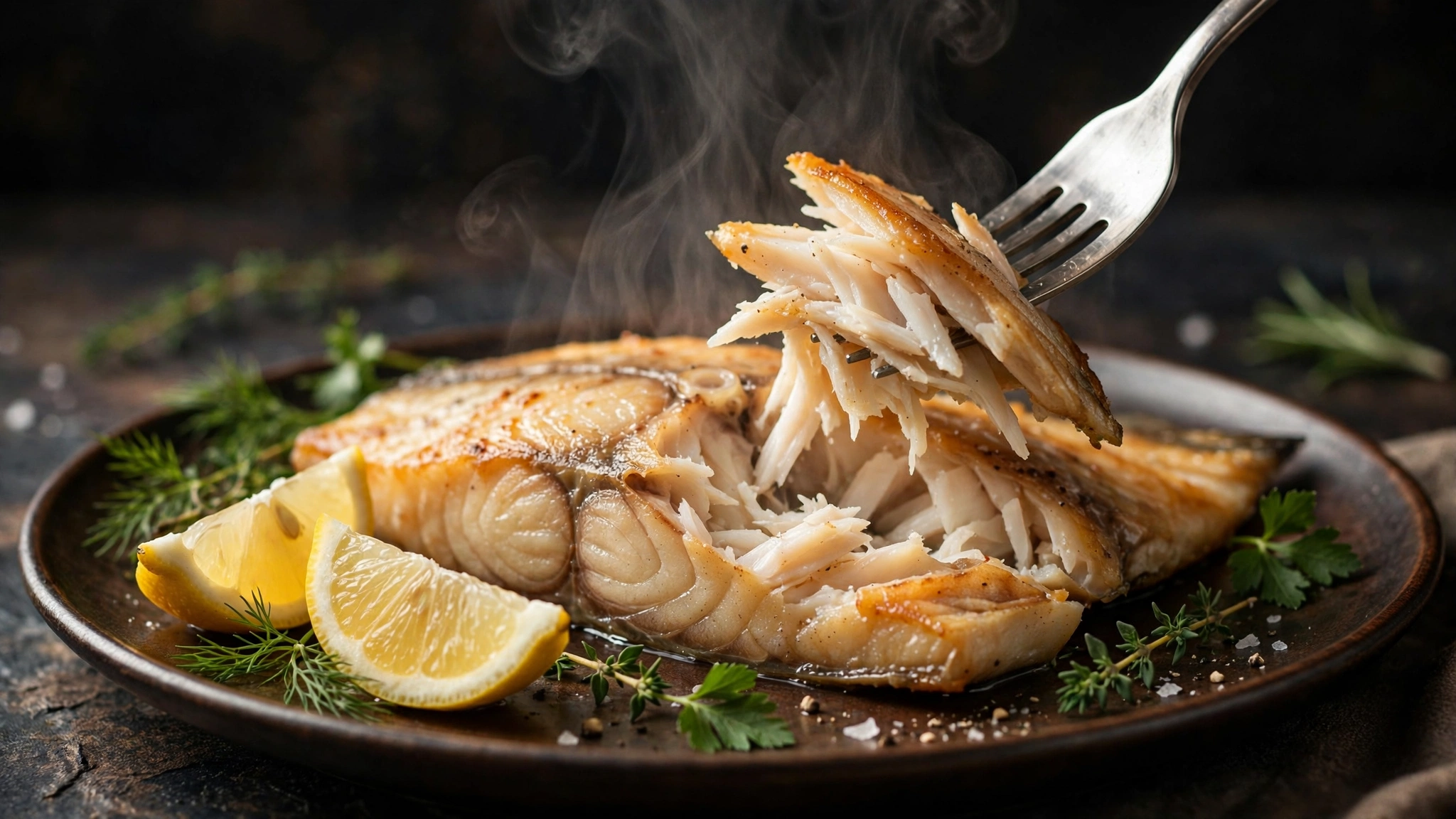
How to Tell When Fish Is Done Without a Thermometer
When I have no thermometer to hand, I go straight to the thickest part of the fish. That is the last place to cook, so that is where I judge. I look for flesh that has turned from translucent to opaque, and I test it with a fork. If it flakes gently, I am close. If it still looks glassy in the centre, I am not there yet. I am Wasim Abbas Bhatti, and this is my backup check only. A probe reading of 145°F (63°C) is still the reliable test. This guide sits inside my pillar, The Science of Cooking Fish: A Troubleshooting Guide, where I explain heat, sticking, mushy fish, and the other problems that show up at the stove.
Table of Contents
First: The Honest Rule
If I have a thermometer, I use it. I do not guess when a probe can answer. For fin fish, I cook to 145°F (63°C) in the thickest part, or until the flesh is opaque and flakes easily. That is the guidance I follow from FoodSafety.gov and the FDA, and I keep the full chart in Safe Internal Cooking Temperatures for Fish. I do not work by a minutes-per-inch rule, because thickness is only one part of the story. Pan heat, starting temperature, skin, bone, and portion shape all change the cook. The fork check in this guide is for the day the thermometer is missing, broken, or still in its box. It helps, but it does not replace the probe.
The Backup Check, Step by Step
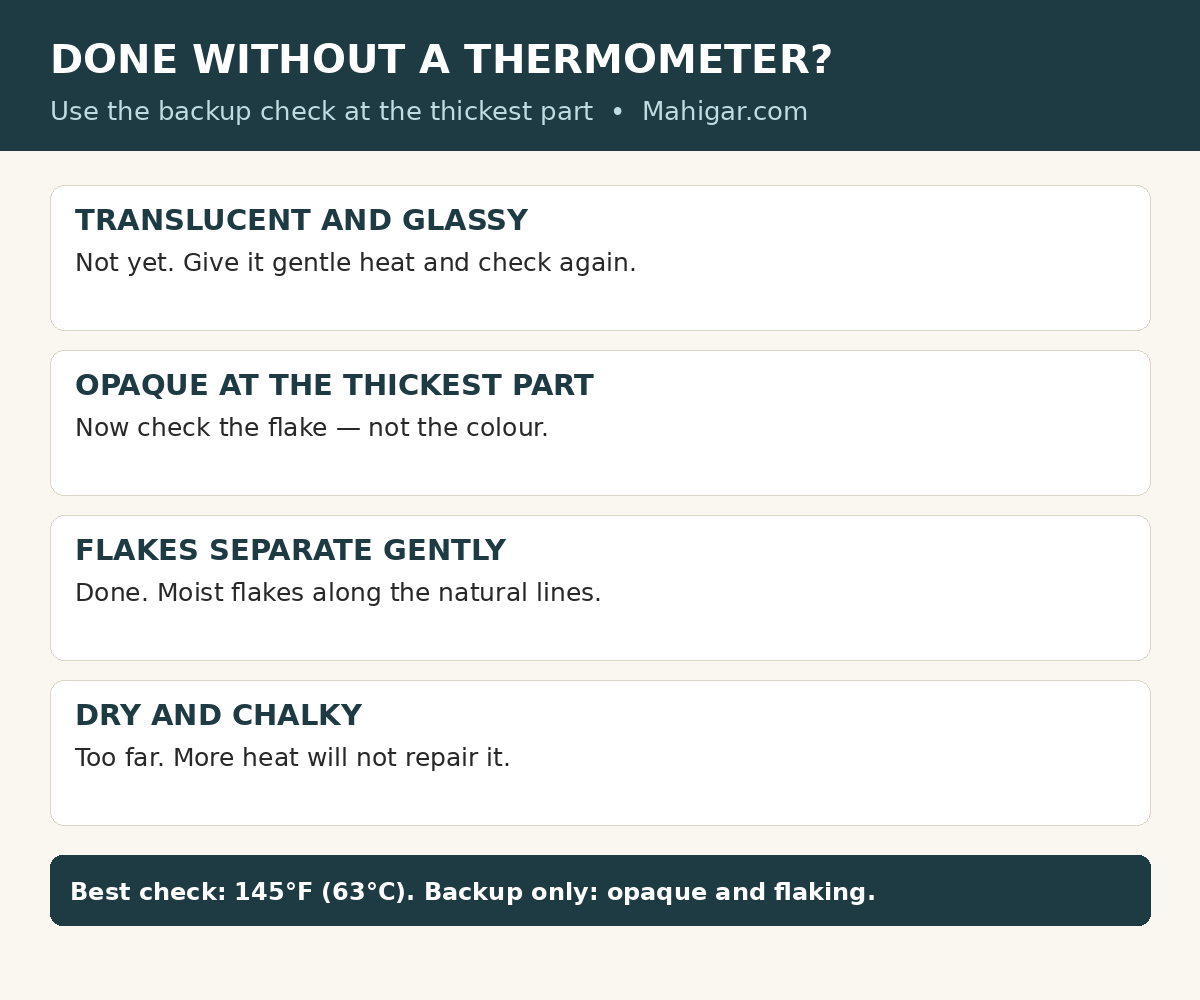
Use this backup check only when you have no thermometer. I check the thickest part for opacity and a gentle flake, and I still trust a probe more.
Find the thickest part
Judge the deepest centre, not the thin edge. That is the last place to turn opaque.
Look for the opacity change
The flesh should have turned from translucent and glassy to opaque at that thick spot.
Use the fork gently
Press lightly with a fork at the thickest part. Do not tear the fish apart.
Read the flake, not the colour
Done fish flakes along its natural lines and still looks moist. Colour can stay pink or look pale too early, so do not trust colour alone.
Treat juices as a supporting clue only
Let any juice support what you see and feel. Juice alone does not prove the centre is done.
What Done Fish Looks Like at the Thickest Part
I read three stages at the thickest part, and I try to stop in the middle one.
- Not yet: The centre is glassy and translucent. The flesh looks shiny and jelly-like, and a fork meets soft resistance without clean flakes.
- Done: The flesh is opaque through the thickest part, still moist, and flakes gently along its natural lines when I press lightly with a fork.
- Too far: The flesh looks dry and chalky. It breaks into tight, dry pieces, the surface feels firm, and the flakes no longer look juicy.
The surface can mislead me, so I always look where the fish is deepest. A thin edge will turn opaque early. The centre is the honest place to check.
Fillets, Steaks, and Whole Fish: Where to Check
- Fillets: I check the deep centre of the thickest end, not the thin tail. If the tail is done and the centre is glassy, the centre decides.
- Steaks: I check the centre beside the bone. Flesh near bone is often the last to turn opaque, so I look there before I serve.
- Whole fish: I check the deep flesh near the backbone, at the thickest part of the body. I lift a small flake there with a fork and look for opacity all the way to the bone.
- Pan fish: If the fish is cooking in a pan, I let it release first before I test it. Pulling early tears the surface and ruins the very flake I want to read. I explain that release point in Why Fish Sticks to the Pan (And How to Stop It).
Shellfish Answers Differently
I do not use the flake test on shellfish. Shrimp, scallops, and crab tell me with colour and firmness in another way: I look for pearly white, opaque flesh and take them off when they have just turned. For clams, oysters, and mussels, I watch the shells. They should open during cooking, and I discard any that stay closed after cooking. A shellfish cue is not a fin-fish cue, so I keep the two checks separate in my kitchen.
If You Are Not Sure
If the centre is still translucent, I give the fish more gentle heat and check again in the same thick spot. I do not move the test to a thinner edge just to get the answer I want. Resting does not cook a raw centre. At best, resting evens out heat after the fish has already reached doneness; it is not a safe finish for fish that is still glassy inside. If I have gone too far and the fish is dry or chalky, I serve it with moisture — lemon, a warm sauce, or good olive oil — and I make a note to check earlier next time. That note has saved more fish in my kitchen than any trick after the fact.
The Mistakes That Fool Good Cooks
- Trusting colour alone: Salmon can stay pink when it is cooked, and pale fish can look white at the surface while the centre is still raw. Colour is a clue, not the test.
- Checking the thin edge: The tail and edges finish first. If I judge there, I serve a raw centre.
- Reading only the surface: A dry, opaque surface can hide a translucent middle. I open the thickest part gently and look inside.
- Pulling the fish apart: If I tear at it, I destroy the flake and learn nothing. Gentle fork pressure is enough.
- Trusting juice alone: Juices can support my reading, but clear or milky juice by itself does not prove the centre is done.
- Cooking by the clock: Two pieces of the same fish can finish at different moments if one is thicker, colder, or closer to the heat. I check the fish, not only the time.
Frequently Asked Questions
Can you really tell when fish is done without a thermometer?
As a backup, yes. I look for opaque flesh at the thickest part and a gentle flake under light fork pressure. A probe is still the reliable test, because eyes cannot measure temperature.
Why is cooked salmon still pink?
Colour is not the test. Salmon can keep a pink colour when cooked, so I judge by opacity, a gentle flake, and a probe reading when I have one.
What if the centre is still translucent?
Give it more gentle heat and check again in the same thick spot. Do not rest it and hope the centre will finish safely on the plate.
Does resting finish fish safely?
No. Resting can even out heat only after doneness has been reached. A raw, glassy centre still needs cooking.
What to Check Next
Use a thermometer if you can, and your eyes and a fork if you must. Keep the full temperature chart in Safe Internal Cooking Temperatures for Fish near this backup method, and go back to The Science of Cooking Fish: A Troubleshooting Guide when heat gives you a different problem. If the texture is soft in the wrong way, read Why Is My Fish Mushy? Causes and Fixes. Then check the thickest part, trust opacity and a gentle flake together, and stop before dry and chalky.
Sources: FoodSafety.gov and the FDA for fish temperatures and doneness guidance. This guide is general kitchen information from my experience as Wasim Abbas Bhatti, not medical advice.
