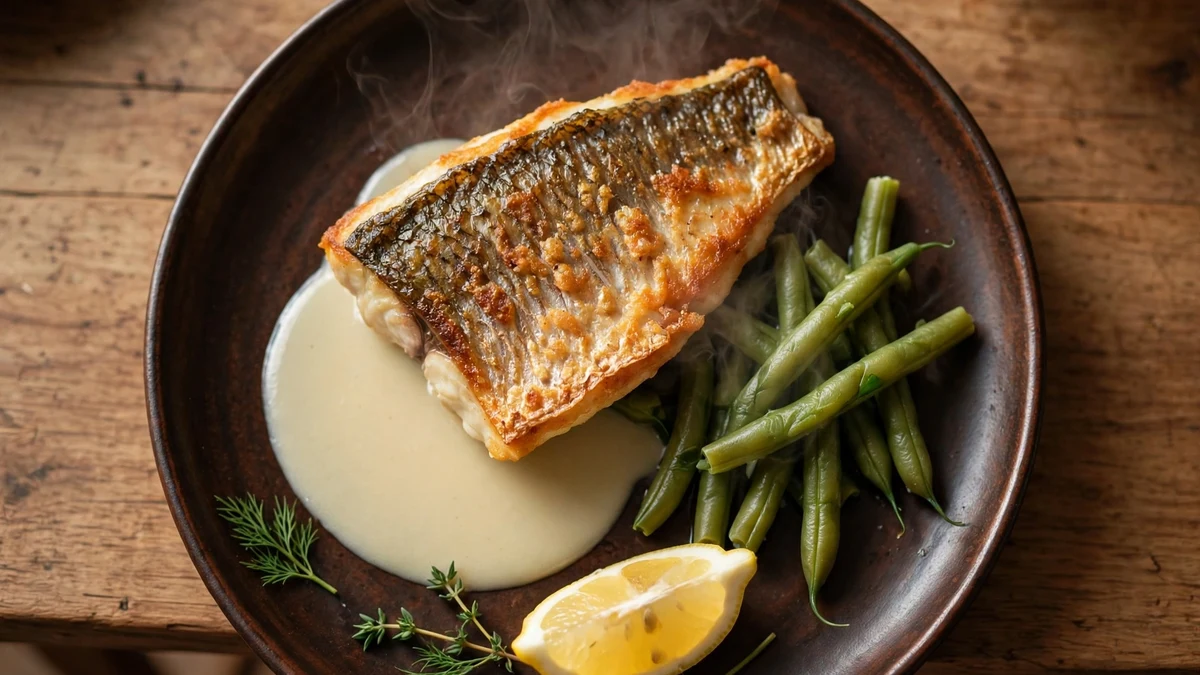
How to Plate Fish Like a Restaurant
Fish leaves my pan cooked exactly right, and then I ruin the moment at the plate. I have done it for years: sauce poured where it wanted, the fillet lifted twice and torn, the side mounded against the fish until the whole plate looked crowded and apologetic. The cooking was good. The meeting was not.
To plate fish like a restaurant, I now do less than I thought: I choose a plate with room, put the sauce down with purpose, set the fish down once with its best side showing, garnish only what I would happily eat, and serve it the moment it is ready. That is the whole secret. Restaurants are not doing magic. They are showing restraint, and restraint is free. I am not a fine-dining chef and this is not catering craft; it is how I make a home plate look calm and confident. This guide belongs to How to Serve Fish: Pairing and Presentation Guide, and it takes one part of that hub, the plating itself, down to the counter, step by step. One honest warning first: plating never rescues cooking. A dry fillet on a beautiful plate is still a dry fillet. I cook the fish properly first. Then I plate it like I meant it.
Table of Contents
Table of Contents
Plating Is an Order, Not a Talent
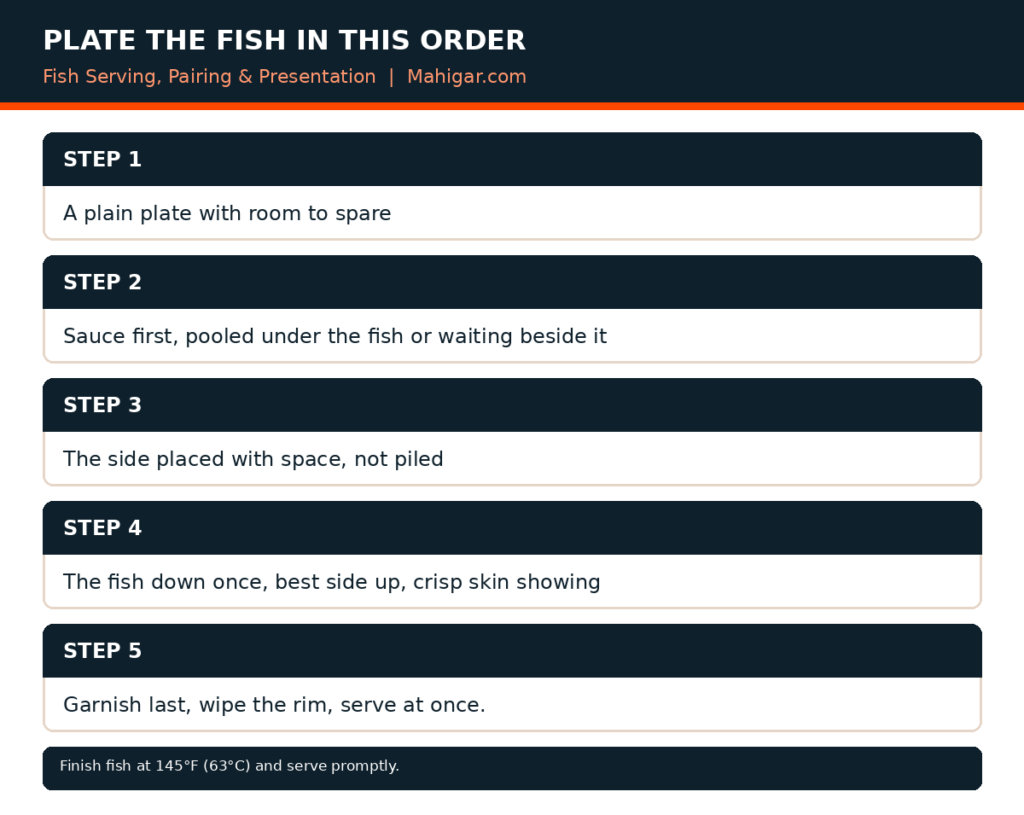
Good plating looks mysterious only because we see the finished plate, not the order behind it. At home, I plate in the same sequence every time, and the plate composes itself:
- The plate, chosen before the fish finishes cooking.
- The sauce, pooled where the fish will land, or waiting beside its place.
- The side, set down with space of its own.
- The fish, placed once, best side up.
- The garnish, last, small, and only what earns its place.
Notice what is not on that list: patterns, towers, or anything added for colour. That is theatre, and theatre is for stages. The sides themselves are chosen before any of this starts, and that choosing is its own guide, What to Serve with Fish: 30+ Side Dish Ideas. By plating time, my only job is arrangement. I cook the fish last, plate in this order, and stop second-guessing the plate.
Choose a Plate That Fits the Fish
The most common home plating mistake happens before any food moves: the wrong plate. Too small, and the meal is trapped, sauce runs to the edge and the side crowds the fish. Too large, and an honest portion looks lost in a field.
I choose a plate that holds the fish, its side, and a little calm empty space. A wide rim frames the food and gives me a clean border to keep sauce off. Plain plates show fish best, because the fish should bring the colour.
If the kitchen is busy, a warm serving plate helps the meal arrive calmly, but my honest rule is simpler: I plate hot fish and serve it at once, rather than trusting any plate to hold heat for me.
Set the Fish Down Once, Best Side Up
Lifting a cooked fillet is the dramatic moment of plating, and in my kitchen it happens exactly once. I decide where the fish will sit before I lift it. I slide a wide spatula or fish slice fully underneath, lift gently, and set it down. Every extra move risks a torn flake or a cracked crust, and a fish pushed around a plate looks tired, however good it tastes.
Best side up, always. For skin-on fish, that means the crisp skin facing the room, never pressed down into sauce where it will soften before the second bite. For skinless fillets, the smoother face goes up. This is not vanity; the face of the fish is the first thing tasted with the eyes.
If a flake does break, I do not rebuild the fish like a puzzle. I turn the plate so the best angle faces the eater and move on. Confidence is plating calmly, not plating perfectly.
Sauce With a Purpose: Under, Beside, or Lightly Over
Sauce is where home plates most often drown their fish. My rule is placement, not quantity.
Under the fish is my first choice for most plates: a modest pool, the fish set down on it, every bite picking up a little sauce while the top stays clean and crisp skin stays crisp. Beside the fish suits eaters who like to choose. Lightly over is right only when the fish honestly needs moisture, a lean, plain fillet, and even then I spoon gently so the fish still shows.
What I never do: pour sauce over crisp skin, flood the plate so the fish swims, or cover the fillet so nobody can see what they are eating. When the fish already cooked in a sauce or curry, it goes to the table in its own cooking liquor, with no second sauce.
After saucing, I wipe any splash from the rim with a clean cloth. That quick wipe is the cheapest difference between a home plate and a restaurant one.
A Little Honest Height
Height is fine when it is food the eater was going to eat together anyway. A fillet resting on its warm vegetables, or on the rice that will catch its juices, lifts the fish naturally. That is honest height: the first bite brings both foods together.
What I leave alone is the constructed tower, stacks that collapse at the first forkful and exist only for a photograph. Food should look like dinner, not architecture. I keep it low and stable, and stop.
Give the Plate Air: Space, the Rim, and Knowing When to Stop
The most expensive-looking thing on a restaurant plate is often nothing at all: empty space. A fillet with a little air around it reads as the point of the plate; a fillet hemmed in by side dishes reads as one item among many.
I leave the rim bare. I keep the side in its own area rather than mounded against the fish. And once the fish, sauce, side, and garnish are down, I stop. The urge to add one more thing, a drizzle, a sprinkle, a lemon it did not need, is the exact moment good home plating goes backwards. A finished plate is not one that cannot hold more. It is one that does not need more.
Garnish Last, and Only What You Would Eat
Garnish is the final hand on the plate, and I keep it small, edible, and missed if it were gone. A lemon wedge that will actually be squeezed. Herbs that belong to the fish’s own flavours. A crisp finish on a soft plate. If it is there only to look green in a photo, it is decoration, not cooking.
I keep garnish off crisp skin, because wet herbs over a crust will undo in a minute what the pan did with patience. I place lemon beside the fish, not on it. And sharp or hot garnishes can sit alongside the plate instead of on it, so children and cautious eaters choose for themselves. The whole craft of garnishing as flavour work gets its own guide in How to Garnish a Fish Dish.
Plate It Hot, Serve It at Once
Plating order is also a serving order. Fish waits for nobody, so the plate must be ready before the fish is: plates chosen, sauce waiting, side down, garnish picked, lemon cut. Then the fish cooks, lands once, and goes straight to the table.
This is not fussiness; it is food safety wearing a tidy shirt. Fin fish is finished at 145°F (63°C) in the thickest part, or when the flesh is opaque and flakes easily, and cooked fish is served promptly rather than sitting at room temperature while the table is arranged. I do the plating thinking early, do the plating itself quickly, and eat. A calm habit helps: I call everyone before the fish leaves the pan, not after it is plated.
Frequently Asked Questions
Does plating actually change how fish tastes?
It does not change the cooking, and I will not pretend otherwise. What it changes is the meeting: the first bite is taken with the eyes, and crisp skin stays crisp when sauce stays off it. Cook well first. Plating introduces good cooking; it never replaces it.
What plate size is right for a fish fillet?
One that holds the fish, its side, and a little empty space, with a rim you can keep clean. Sauce running to the edge means too small; a portion lost in the middle means too big. Plain and wide beats patterned and crowded in my kitchen.
Should sauce go over the fish or under it?
Under or beside, as my default. Under seasons every bite while the fish stays visible; beside lets the eater choose. I spoon lightly over only a lean fish that needs moisture, and never over crisp skin I worked to create.
How do restaurants make fish plates look so composed?
Mostly restraint: the right plate, the fish placed once, sauce with a purpose, a little natural height, a wiped rim, and empty space left empty. Simple steps done calmly, which is good news, because a home cook can do every one of them tonight.
What to Check Next
Before your next fish dinner, try my order once: plate chosen, sauce down, side placed, fish set down a single time, garnish last, rim wiped, straight to the table. If the drink is still undecided, Best Wine Pairings for Fish by Type pairs the glass by the same calm logic, richness first, rules last. Then stop adding things. A fish plate is finished when it looks like someone cooked dinner on purpose.
2 Comments