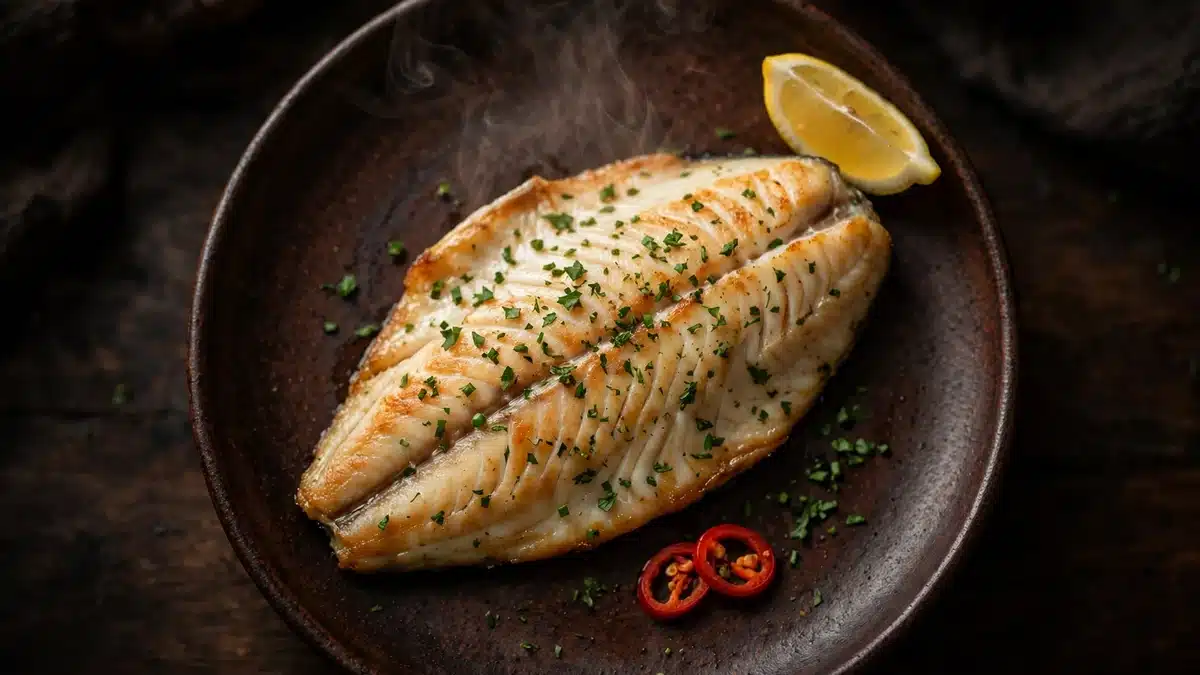
How to Garnish a Fish Dish
Fish is plated in my kitchen, it smells right, it flakes right, and my hand still hovers over it with a fistful of parsley. I have buried good fillets under handfuls of green more times than I will admit, then watched everyone scrape the garnish aside to find the dinner. The fish did not need decoration. It needed one small thing it was actually missing, or nothing at all.
To garnish a fish dish well, I add one small thing the eater will taste, a squeeze of lemon, a scatter of soft herbs, a little heat, a crisp finish, and then I stop. A garnish is not decoration. It is the last flavour decision on the plate, made in the last seconds, and it should be missed if it were not there. This guide belongs to How to Serve Fish: Pairing and Presentation Guide, and it takes the hub’s last step, garnish, on its own: what earns a place, what I leave in the kitchen, and how I add it without undoing the cooking. One rule before any of it: garnish is for cooked fish, served fish. Nothing below is a way to dress up a fillet that is still glassy in the middle. I cook the fish through first. Garnish is the full stop, not the sentence.
Table of Contents
Table of Contents

First: The Only Question a Garnish Must Answer
Every garnish in my kitchen must answer one question: what will this do in the mouth?
Brightness. Freshness. Aroma. Gentle heat. Crunch. A few drops of richness. If a garnish does one of those jobs, it belongs. If my honest answer is “it looks green,” it does not, and I put it back. Fish is delicate, and a plate of it goes quiet under decoration fast. A lemon wedge that nobody squeezes is not a garnish; it is set dressing.
I hold one more thought alongside it: the fish is already finished before garnish is even considered. Fin fish is done at 145°F (63°C) in the thickest part, or opaque and flaking easily. Garnish happens after that moment, on fish that is about to be eaten, never as a rescue, never as a disguise.
Lemon: Brightness That Earns Its Place
Lemon is the oldest fish garnish because it works, not because it photographs well. Acid wakes up rich fish, sharpens mild fish, and cuts through fried coatings. It earns its wedge at my table.
I serve it so it can be used: a proper wedge at the edge of the plate, cut side clean, not a thin slice balanced on the fillet where it steams and sulks. A little zest over a plain baked fish brings the lemon’s aroma without its full sourness; I keep it light, a whisper rather than a snowfall. A charred lemon half, cut side warmed in the pan, is deeper and gentler, and at my table it goes beside whole roasted fish.
And the honest opposite: if the fish already carries lemon in its sauce or marinade, the plate may not need more. Garnish answers a lack. No lack, no garnish.
Soft Herbs: Freshness, Added at the Last Moment
Parsley, dill, coriander, chives: soft herbs are freshness I can see. Their job is aroma and a clean green taste that lifts fish without covering it. Dill leans toward salmon and trout; coriander belongs beside the spiced fish of my own table; parsley is the quiet all-rounder; snipped chives bring a gentle onion sweetness that suits delicate fillets.
My rules are simple. I add herbs at the last moment, because their perfume is the first thing heat takes. I chop them shortly before serving, use a scatter, not a lawn, so the fish shows through, and keep wet herbs off crisp skin: a damp handful over a crackling fillet will soften in a minute what the pan built with patience.
Scallion and Chilli: Aroma and Gentle Heat
Scallion greens, sliced fine on an angle, sit between herb and garnish-crunch in my kitchen: mild onion aroma, a fresh bite, and a colour that reads clean rather than loud. They suit steamed and baked fish especially, where the plate can feel soft and pale without them.
Chilli is heat, so I treat it with respect for the people eating. A few fine slices of fresh chilli over a bold, rich fish can be exactly right; the same slices over a child’s mild fillet are a small cruelty. My habit at a family table is to serve chilli, slices, or a pinch of flakes, or a little chilli oil, alongside the fish rather than on it, so each eater takes the heat they want. Heat is the garnish most likely to be regretted; it is also the easiest to offer instead of imposing.
A Crisp Finish: For Soft Plates Only
Some plates need texture more than flavour. A softly poached, steamed, or sauce-carried fish can feel one-note and tender all the way through; a crisp finish, golden fried shallots or garlic from my own pan, toasted crumbs, a few crisped herb leaves, gives the mouth something to notice.
Two honest limits from my counter. First, I make crisp garnishes in small amounts and use them the same meal; they are a finishing touch, not a stored ingredient, in my kitchen. Second, and this one never bends: I never put a crisp or wet garnish over crisp skin. If the fish itself is crisp, fried, or skin-on and crackling, the plate already has its crunch. Adding crunch on crunch is noise, and adding anything damp on top of it is sabotage. Crisp finishes belong on soft fish only.
A Few Drops of Good Oil, and the Edible-Flower Question
A plain baked or steamed fish sometimes wants nothing but richness in miniature: a few drops of a good olive oil, or a little melted butter, spooned over at the table. That is garnish as seasoning in my kitchen, small, deliberate, and tasted in every bite.
Edible flowers come up whenever garnish is discussed, so here is my home-cook position: only with care, or not at all. If you use them, they must be flowers sold or grown for the plate, an edible variety, from a food source, clean and unsprayed, and they should still answer the question. Petals that taste of almost nothing are colour, and colour alone fails my test. Never pick decorative garden flowers on a guess. When in doubt, lemon and honest herbs beat a doubtful flower every time.
Garnish Last: The Order Protects the Fish
Garnish is the final step of plating, not an ingredient to be arranged early. The full order lives in How to Plate Fish Like a Restaurant: plate chosen, sauce pooled, side placed, the fish set down once, and only then the garnish, small and last, a wipe of the rim, and straight to the table.
The order exists for the fish’s sake. Herbs wilt, zest dries, crisp finishes soften, and cooked fish does not wait politely at room temperature while a plate is decorated. So I garnish in seconds, not minutes: lemon placed, herbs scattered, heat offered alongside, and serve. I do the thinking while the fish cooks; I do the garnishing after it lands.
Garnish Is Not the Sauce’s Job
One confusion is worth clearing at my counter: garnish and sauce are different tools. The sauce carries a flavour through the whole bite, moisture, brightness, richness, cooling, while a garnish is a small accent met in some bites and not others. A squeeze of lemon is a garnish; a lemon-butter spooned over the fillet is a sauce wearing garnish’s clothes.
If the plate already has a sauce doing brightness work, more lemon and herbs on top may only repeat it louder. Choosing the sauce’s one job properly is its own guide, Sauces That Pair Perfectly with Fish. I decide the sauce first, then ask whether a garnish still has anything to add. Often the answer is a plain wedge and nothing else, and that restraint is a skill, not a lack of one.
When the Best Garnish Is Nothing
Rich fish under a spice crust. A crisp fried fillet straight from the pan. A whole fish that arrived in its own curry. These plates are finished, and my last job is to recognise it.
I leave the fish alone more often than I garnish it, and the meals are better for it. If a plate wants company, it is usually a side’s job, not another scatter of green. I garnish when something is missing. I serve when nothing is.
Frequently Asked Questions
What is the simplest good garnish for fish?
A lemon wedge, served so it can actually be squeezed, plus a small scatter of a soft herb that suits the fish, dill, parsley, or coriander. Brightness and freshness cover most fish most nights at my table.
Should garnish go on before or after the fish is served?
After the fish is plated, in the last seconds before the plate moves. Herbs wilt, zest dries, and crisp finishes soften if they wait, and cooked fish should be eaten promptly, not held while a plate is decorated.
Can I put herbs over crispy skin-on fish?
Keep them off the skin. Wet herbs laid over crisp skin soften the crust almost at once. I scatter herbs on the flesh or beside the fish, and let the crackling stay dry.
Are edible flowers a good fish garnish?
Only with real care: an edible variety, from a food source, clean and unsprayed, and even then, most petals add colour more than flavour. Never guess with garden flowers. Lemon and herbs are the safer, tastier answer.
What to Check Next
At your next fish dinner, garnish by question, not by habit. What is missing, brightness, freshness, heat, or crunch? Add the one small thing that supplies it, keep it off the crisp skin, and serve the plate before you can think of a second garnish. One honest finish beats five decorations, every time.
