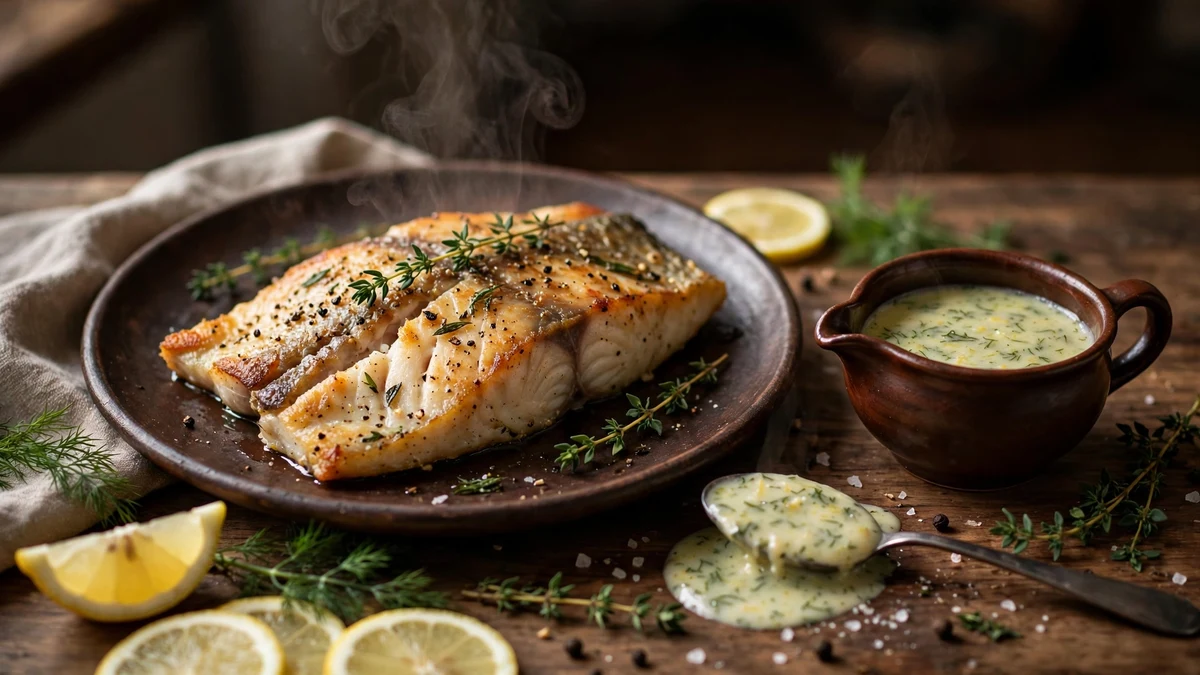
Sauces That Pair Perfectly with Fish
Fish comes off the heat in my kitchen and the questions start: butter sauce, something herby, or nothing at all? I learned sauces the hard way, by drowning good fish in heavy ones and wondering why dinner felt tired. A beautiful fillet under the wrong sauce is still a tired dinner, and I have served enough of them to know the sauce was my mistake, not the fish’s.
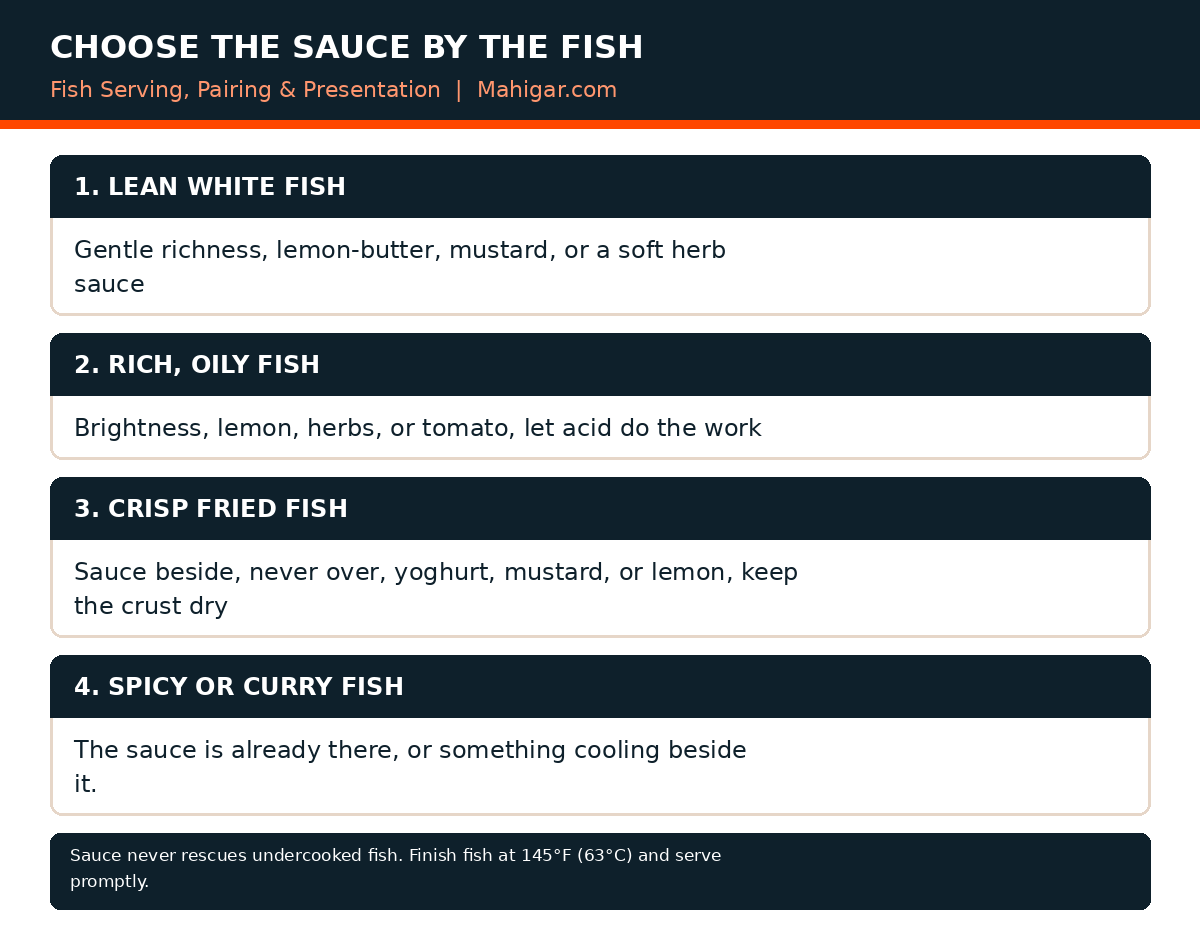
The sauce that pairs perfectly with fish is the one that gives the fish the single thing it is missing. A lean white fillet needs a little gentle richness. A rich, oily fish needs brightness. Crispy fried fish needs something cool and sharp beside it, never poured over the crust. I decide what the fish lacks, and the sauce chooses itself. This guide belongs to How to Serve Fish: Pairing and Presentation Guide, and it takes the hub’s sauce rule, one sauce, one job, through the families I actually use at home: lemon-butter, herbs, mustard, yoghurt, tomato, coconut, and curry-style. One honesty note before we start: these are sauce families and how to choose between them, not recipe cards. Your own lemon butter stays yours. I will tell you when it works and why, and your hand decides the rest.
Table of Contents
Table of Contents
First: A Sauce Has One Job
Every failed fish sauce I have made failed the same way: it tried to do everything. Rich and sharp and spicy and creamy at once, until the fish underneath disappeared. The fish is the main event. The sauce is staff.
So I give the sauce one job. Moisture, for a lean fish that can eat dry. Brightness, for a rich fish that coats the mouth. Gentle richness, for a plain fish that needs kindness. Cooling, for a spicy or crispy plate. When a sauce knows its job, a spoonful is enough. When it does not, no amount saves the plate.
And one safety line that never moves in my kitchen: sauce is a partner for cooked fish, never a cover for undercooked fish. Fish is done at 145°F (63°C) in the thickest part, or opaque and flaking easily. I cook it there first, then I talk about sauce.
Lemon-Butter: Gentle Richness for Lean Fish
This is the classic white-fish sauce for a reason. Melted butter, lemon, and something soft and green from the herb box, the family that includes the beurre-blanc style of the French kitchen, all lemon brightness held inside butter’s richness. I use it for lean, mild fish: cod, sole, tilapia, haddock, any white fillet that risks eating plain and dry.
Its job is gentle richness plus a little light. The butter rounds the fish; the lemon keeps the butter honest. I keep it kind, a spoon or two over the fish, not a bath, and serve it warm beside or lightly over the fillet. On rich fish, I skip it: salmon under butter sauce is two richnesses arguing, and both lose.
Fresh Herb Sauces: Salsa Verde and Its Cousins
The salsa-verde family, chopped green herbs bound with olive oil, lemon or a mild vinegar, a little garlic and salt, is brightness I can spoon. Italian salsa verde, the herb sauces of the Mediterranean table, and the green chutneys of my own cuisine are cousins in spirit: raw, green, sharp, alive.
This is my sauce for fish that needs waking up: rich fish that wants acid, plain grilled fish that wants a voice, whole fish that wants something fresh at the table. Because nothing in it is cooked, it tastes of the herbs themselves, so I use herbs I would happily eat on their own, and I make it when the fish is nearly ready, not hours ahead. I keep it off crisp skin, like every wet sauce, beside the fish, where it can be taken bite by bite.
Mustard: The Quiet Backbone
Mustard is my shortcut to depth without weight. Stirred into a little cream, yoghurt, or pan juices, or loosened with lemon and oil, it gives a sauce backbone: warmth, a gentle tang, and body that does not coat the mouth the way butter can. Mustard sauces suit baked and grilled white fish and plates where lemon alone feels thin. A little goes a long way; mustard should stand behind the fish, not in front of it.
Yoghurt and Cooling Sauces: For Spice and Crunch
When the fish is spicy or the coating is crisp, the kindest sauce in my kitchen is a cool one. Plain yoghurt loosened with lemon, salt, and herbs, or the raita-style cooling bowls of a South Asian table, does two jobs at once: it cools heat and refreshes the mouth between bites of fried fish.
I serve it beside, always beside. Yoghurt over hot batter is how crisp fish goes soft and a good fry is wasted. Kept in its own bowl at the plate’s edge, it stays cold, the fish stays crisp, and the eater decides each bite. The same rule covers any dip a family loves: the bowl is the sauce’s home at a fried-fish table.
Tomato: Sharp, Warm, and Honest
A simple tomato sauce, tomatoes cooked down with garlic, a little oil, and herbs, is the warm, sharp partner for fish that can take a voice. I use it for sturdy white fish, baked fish, and fish that would be lost under cream but stands up happily to a sauce with opinions.
Tomato does brightness work with warmth: it brightens like lemon, but it also fills the plate, so it belongs where the fish needs a sauce to eat with, not just a sauce to taste. Fish baked in a tomato sauce needs no second sauce and no apology. I serve something plain beside it to catch the sauce, and the plate is complete.
Coconut and Curry-Style: When the Fish Cooks in the Sauce
Some fish does not get a sauce at the table at all; it cooks in one. Coconut-based sauces and the curry-style sauces of South and Southeast Asian kitchens carry the fish from pan to plate, so the pairing question is answered before cooking begins: the fish must be sturdy enough to sit in the sauce without falling apart, and the sauce must be seasoned to the fish, not after it.
I will not print curry recipes here; every family’s is their own. My rule is simple: delicate fish goes in late and gently, firm fish can take the sauce’s full company, and once the fish has cooked in its sauce, the table needs no second sauce, just lemon, herbs, or a cooling side.
Under, Beside, or Over: Placement Is Half the Pairing
Choosing the sauce is only half my decision. Where it lands decides whether it helps.
Beside is the safe home of crisp fish, strong sauces, and cautious eaters: the fish stays itself, and the sauce is chosen bite by bite. Under the fish seasons every bite while the top stays clean, which is why it is my default for skin-on fillets. Lightly over belongs only to lean fish that honestly needs moisture, spooned gently so the fish still shows. Never over crisp skin: you worked for that crust, so do not soften it in the last seconds. The full placement craft, with the plate order around it, lives in How to Plate Fish Like a Restaurant.
Some Fish Needs No Sauce
Knowing when to leave the fish alone is the grown-up half of this guide. A rich, well-seasoned fish, crisp-skinned, spice-crusted, or cooked in its own curry, often needs nothing more than lemon and a good side. If the plate already has a sauce’s job covered, adding a sauce adds noise.
That is where the side earns its keep instead: rice or bread to catch juices, a salad to refresh, a cooling bowl to calm. Choosing that company is its own guide, What to Serve with Fish: 30+ Side Dish Ideas. I pick the side, skip the sauce, and let a good fish taste like itself.
Can a Sauce Rescue Dry Fish?
Partly, and honestly. A warm sauce beside an overcooked fillet makes the eating kinder, moisture at the bite, flavour to carry a dry flake. But sauce does not travel back into the flesh and undo the cooking. In my kitchen, dry fish usually does better flaked into rice or folded into cakes than enthroned under sauce.
That rescue work has its own Mahigar guide: How to Rescue Overcooked or Dry Fish. And the boundary never moves: sauce is for safe, fully cooked fish with a texture problem. Fish that smells off or is still glassy in the centre is not a sauce problem at all.
Frequently Asked Questions
What is the safest all-round sauce for fish?
Lemon-butter, gently made. It suits most lean and medium fish, forgives a plain fillet, and nearly every eater accepts it. If the fish is rich or oily, I trade the butter for a fresh herb sauce and let brightness do the work instead.
What sauce goes with strong, oily fish?
Something bright and alive: a salsa-verde-style herb sauce, lemon with herbs, or a warm tomato sauce. Rich fish plus a rich sauce makes the whole plate heavy; acid and green freshness are what an oily fillet is asking for.
Can I put sauce over crispy fried or skin-on fish?
Serve it beside, not over. Any wet sauce poured over batter or crisp skin softens the crust you worked for. A bowl at the side keeps the crunch and lets each eater choose.
My fish cooked in a curry sauce. Does it need another sauce at the table?
No. A fish that cooked in its sauce is already paired. Add lemon, herbs, rice, or a cooling side if the plate wants something, not a second sauce fighting the first.
What to Check Next
Before your next fish, ask one question: what is this fish missing? Moisture, brightness, gentle richness, or cooling. Pick that one job, choose the family that does it, and stop.