Cooking Freshly Caught Fish Simply: Salt, Heat and Nothing Else
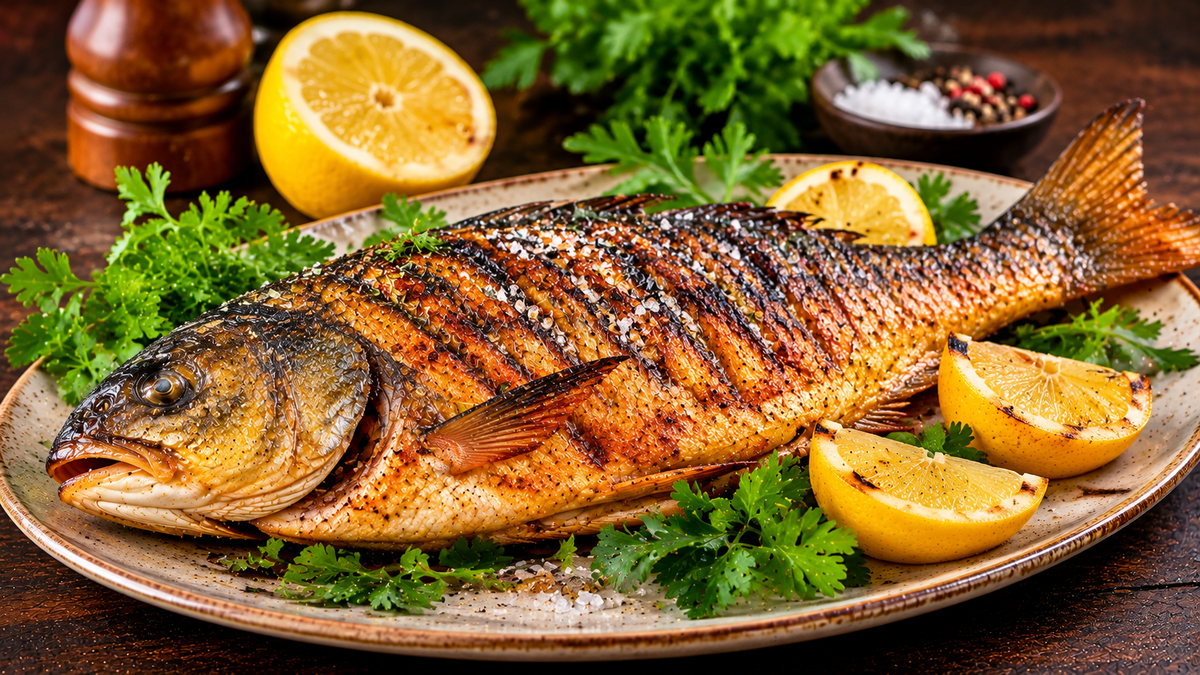
The best fish I have ever eaten did not come out of a marinade bowl. It came off a canal bank, was cleaned while the light was still good, and went into a hot pan with salt and nothing else, while everyone around me was still talking about the catch. No heavy spice crust hiding the flesh. No sauce doing the work. Just fish, treated with care in the few hours when it tastes most like itself.
That meal taught me the rule I still follow in my kitchen and beside my canals. Fish is the central subject here, and a fresh one needs restraint more than decoration. When the fish is truly fresh, my job is not to add flavour. My job is to protect the flavour that is already there, and to avoid the small mistakes that waste it, a wet surface, salt timed badly, a pan that is not hot enough, and a cook who keeps lifting the fish out of nerves.
This guide belongs to my Catch to Kitchen: How to Handle and Cook Fish You Catch Yourself pillar, where the whole journey from the water to the plate is the subject. Everything below is my own practice with the day’s catch, the way I cook fish for my family when we have caught it ourselves and we want to taste the fish itself, clean and sweet and unmistakable.
Table of Contents
The Short Answer: Salt, Heat and Almost Nothing Else
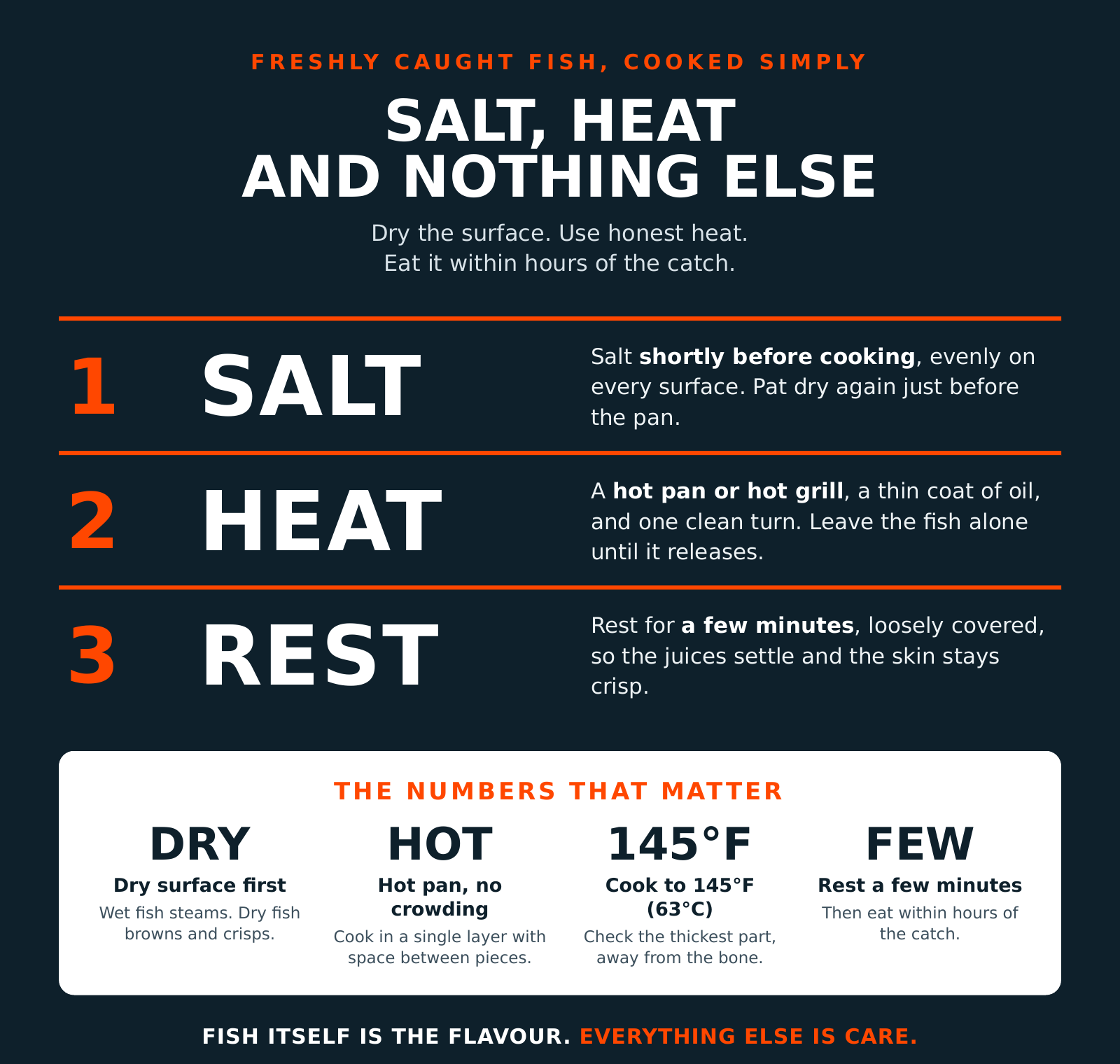
Dry the fish well, salt it at the right moment, cook it over strong heat to 145°F (63°C), rest it for a few minutes, and eat it within hours of the catch.
That is the entire method, and I have not found a complicated version that beats it for a fresh fish. Each step protects something real. Drying protects the crisp surface. Salt, timed well, seasons the flesh without pulling it dry. Honest heat cooks the fish quickly before its moisture escapes. Resting lets the juices settle. Eating it the same day is what makes the whole effort worth it. When I add anything beyond salt, it is a squeeze of lemon at the table or a little oil in the pan, and even those are supporting acts, never the main event.
Timing and Rigor: Do Not Rush a Stiff Fish
Wait until a freshly caught fish has relaxed out of rigor before you cook it, or cook it very soon after cleaning, but do not fight a fish that is stiff in the pan.
After a fish dies, its muscles tighten for a while. A fish in that stiff stage cooks unevenly, curls against the heat, and can eat tough even when the cook does everything else right. I read the fish with my hands. If the body is still flexible soon after cleaning, I cook it straight away and it eats beautifully. If it has gone stiff, I keep it cold and wait for it to relax again before the pan comes out. The flesh softens, the fish lies flat, and the cooking turns predictable.
My fuller guide to Rigor Mortis in Fish: When to Cook or Rest Your Catch explains that stage in detail. In short, there are two good windows in my practice. Cook soon, while the fish is still relaxed, or rest it cold until the stiffness passes and then cook it the same day. The bad window is the middle one, a stiff fish forced into a hot pan because everyone is hungry. I understand that impatience. I still wait, because forcing the stiff fish gives nobody the meal they were hoping for.
While the fish rests, I keep it cold and clean, covered, in a cool box with ice on the bank, or in the coldest part of my fridge at home.
Dry the Surface Before Anything Else
Pat the fish completely dry inside and out before it meets salt or heat, because a wet surface steams instead of browning.
This is the step I refuse to skip, even when I am hungry. I lay the cleaned fish on clean cloth or paper and pat every surface, the skin, the flesh, and the cavity of a whole fish. Then I leave it uncovered for a short while so the air can finish what the cloth started. On a whole fish I check the cavity twice, because water hides there and runs into the hot pan at the worst moment, dropping the temperature and spoiling the first crisp minute.
A dry surface does three things in my kitchen. It lets the fish brown and crisp instead of sitting in its own steam. It helps the fish release cleanly from the pan once the surface has set. And it keeps hot oil calm, because water in hot oil spits, and spitting oil beside a canal or in a small kitchen helps nobody.
I dry once more right before cooking, even if I dried the fish earlier. A rested fish gathers a little surface moisture as it sits, and ten seconds with a cloth fixes it. People ask me about special coatings, special pans, and special flours for crisp fish. My honest answer is that drying properly does more than all of those together. Do not press and squeeze the flesh to force water out, though. Pat it, do not crush it. Fresh flesh is delicate, and squeezing damages the texture you worked all day to catch.
Salt, and When I Put It On
Salt the fish shortly before cooking, or salt it and rest it briefly in the fridge, but do not leave a light salting sitting on the fish for a long, forgotten stretch.
Salt is my only seasoning in this method, so I treat it with respect. I use enough to taste, spread evenly over every surface, including the cavity of a whole fish, and I am more generous on thick parts than on thin tails, because thick flesh needs the help and thin flesh seasons fast. Coarse salt sits nicely on skin. Fine salt spreads more evenly on fillets and small fish. Either works in my kitchen, as long as the coverage is even and my hands are dry when I scatter it.
Timing is the part that matters. Salt draws moisture out of fish. Given a short time, that is useful, because the surface moisture that appears can be patted away and the fish goes into the heat seasoned and dry. Given too long with only a light salting, the fish can sit in its own juices and turn soft at the surface, which is the opposite of what I want. So my practice is simple. Either I salt and cook within a short window, patting the surface dry again just before the pan, or I salt and rest the fish uncovered in the fridge so the cold air keeps the surface dry while the seasoning settles in. Both work. Salted fish sitting warm on a counter never works, and I do not leave fish sitting warm at all, for flavour or for safety.
Heat: A Hot Pan or a Hot Grill, Nothing Halfway
Get the pan or grill properly hot before the fish goes on, use just enough oil to coat the surface, and then leave the fish alone until it releases.
Half warm pans have ruined more fresh fish in front of me than any other single fault. Fish put into a timid pan sticks, steams, and breaks when the cook tries to move it. Fish put onto honest heat sets quickly, browns, and lifts cleanly when its time comes. I heat the pan until it is fully hot, add the oil, let the oil heat through, and only then lay the fish in, gently and away from me. The sound tells me a lot. A confident sizzle means the surface is cooking. A weak spitting means moisture is winning, and I know I rushed the drying or the heating.
On oil, my rule is a thin, even coat, not a pool. The choice of oil matters for high heat work, which is why I keep Best Cooking Oils for Fish (Smoke Point Guide) in mind when I stock my kitchen, choosing an oil that can take a hot pan without smoking early and spoiling the clean taste of a fresh fish. A neutral oil that handles heat well is what this method wants. Strong flavoured oils fight delicate flesh, and I save those for dishes built around them.
Fish sticks mainly when the surface is wet, the pan is not hot enough, or the cook moves it too soon. My detailed guide to Why Fish Sticks to the Pan (And How to Stop It) covers that in full. In practice, I lay the fish down and I do not touch it. When the surface has set and browned, the fish releases with gentle help from a thin spatula. If it resists, I wait a little longer instead of forcing it. Forcing tears the skin and leaves the best crisp part welded to the pan.
On a grill, the same rules wear different clothes. I heat the grill well, oil the bars and the fish, and lay the fish down with confidence. Whole fish and skin on pieces are my first choice for the grill, because the skin protects the flesh and holds the fish together at the turn. I turn once, with a wide spatula supporting the whole piece. Every extra turn is a chance to break a fish that was doing fine without my help.
Crisp Skin Without Forcing It
Crisp skin comes from a dry, salted surface, strong heat, and patience at the turn, not from pressing or scraping the fish.
When I cook a fresh fish with its skin on, the skin is not packaging. It is the best part of the meal when it is crisp, and it protects the flesh while it cooks. The fish goes down skin side first, because that side needs the longest, steadiest contact with the heat. I let it cook mostly through from that side, watching the flesh change colour up the side of the piece, and I turn it only near the end for a brief finish on the flesh side. Most of the cooking happens on the skin. That habit gives me crisp skin and moist flesh together, instead of the usual trade where one is sacrificed for the other.
I do not press the fish flat with the spatula, except for one gentle moment at the very start if a whole fish curls slightly. Pressing squeezes out juices and sticks the skin in patches. I score thick whole fish lightly through the skin when I need to, because shallow cuts help thick flesh cook evenly and give salt a way in. I keep them shallow, because deep cuts open the flesh to the heat and dry it.
If the skin sticks despite everything, I do not scrape. I take the pan off the heat for a moment and try again. More often than not, the fish lets go once the crust has fully set. Patience rescues skin. Force never does. Skinless pieces follow the same discipline with a shorter clock.
Knowing When Fresh Fish Is Done
Cook fresh fish to 145°F (63°C), and without a thermometer, stop when the flesh turns opaque and flakes with gentle pressure while still looking moist.
Fresh fish cooks faster than people expect, and a fish caught the same day often finishes sooner than a thicker piece from a shop counter. That is why I start checking early, before I think it can possibly be ready. With a thermometer, I check the thickest part of the flesh, away from any bone, because bone reads hot and lies to you. At 145°F (63°C) the fish comes off the heat. Not a minute of extra cooking for luck. Luck is how fresh fish dries out.
Without a thermometer, I use the signs set out in my guide to How to Tell When Fish Is Done Without a Thermometer. The flesh turns from glassy and translucent to opaque. It flakes when I press it gently with a fork or the edge of a spoon, separating into clean layers instead of resisting or falling into mush. The surface still looks moist, not chalky. On a whole fish, the flesh at the thickest part near the backbone is the honest test, because the thin tail always finishes first and tells you nothing.
Rest It Briefly, Then Eat It Within Hours
Rest cooked fish for a few minutes before serving, then eat it the same day, ideally within hours of the catch, while the fresh flavour is at its peak.
Resting is the smallest step in this guide and the one guests notice without knowing why. I lift the fish onto a warm plate, cover it loosely, and give it a few minutes. The juices, which rush toward the surface during cooking, settle back through the flesh. The cover stays loose and the plate stays dry, because a tight cover traps steam and softens the crust I worked for.
Then we eat, and we do not wait around. The whole point of cooking a fish simply is the taste of freshness, and that taste is at its best within hours of the catch. I have eaten the same kind of fish cooked plain on the day and cooked plain the next day, and the day fish wins clearly, sweet, clean, and firm, while the next day fish is good but quieter. My comparison of Fresh-Caught vs Store-Bought Fish: Is There a Real Taste Difference? goes into that difference honestly, including where shop fish holds its own. With a simple method like this one, freshness shows more, because salt and heat add nothing to hide behind.
If the meal must wait, I keep the uncooked fish cold rather than cooking early and reheating. Cooked plain fish reheats poorly compared with curried or sauced fish, drying at the edges and losing its crisp skin. Keep your fridge at or below 40°F (4°C), and remember that fresh fish keeps for only 1 to 2 days in the fridge, so a caught fish is a plan for today or tomorrow at the latest, never a vague plan for the week. Cooked leftovers go into the fridge promptly, covered, and I often eat them cold the next day, flaked over a salad or into a simple sandwich, where their clean taste still shows.
Frequently Asked Questions
How soon after catching should I cook a fish?
Cook it the same day, ideally within hours of the catch, once it is either still relaxed or has rested cold through the stiff rigor stage. A simple salt and heat method depends on freshness, so the sooner the fish is eaten, the better it tastes.
Should I salt fish right before cooking or ahead of time?
Either salt shortly before cooking and pat the surface dry again just before the pan, or salt and rest it uncovered in the fridge so the surface stays dry. Avoid leaving lightly salted fish sitting warm, because salt draws out moisture and softens the surface.
How do I keep fresh fish from sticking to the pan?
Dry the surface well, heat the pan fully before adding oil and fish, and leave the fish untouched until the surface has set and browned. Fish that resists the spatula usually needs a little more time, not more force.
How do I know when freshly caught fish is done?
Cook it to 145°F (63°C) in the thickest part, away from the bone. Without a thermometer, look for flesh that has turned opaque, flakes with gentle pressure, and still looks moist. Fresh fish cooks quickly, so start checking earlier than you expect.
My Closing Advice on Cooking the Day’s Catch
A freshly caught fish asks very little of the cook, and that is exactly why it exposes every loose habit.
Dry it well. Salt it with timing in mind. Respect the stiff stage instead of fighting it. Use honest heat, turn once, finish at 145°F (63°C), rest it briefly, and sit down within hours of the catch. Do those plain things well and you will taste why I keep coming back to this method after all my years of spiced and sauced fish cooking. The fish itself is the flavour. Everything else is just care.
If your catch is a river fish and you want the fuller picture of cuts and methods for those species, my pillar Freshwater Fish Cooking: The Complete Guide to Carp, Catla, Catfish and River Fish is the companion I would point you to next. But for tonight’s fish, keep it simple. Salt, heat, and nothing else. That is not a shortcut in my kitchen. It is the highest compliment I know how to pay a fish I caught myself.

One Comment