Cajun and Southern-Style Fish Recipes
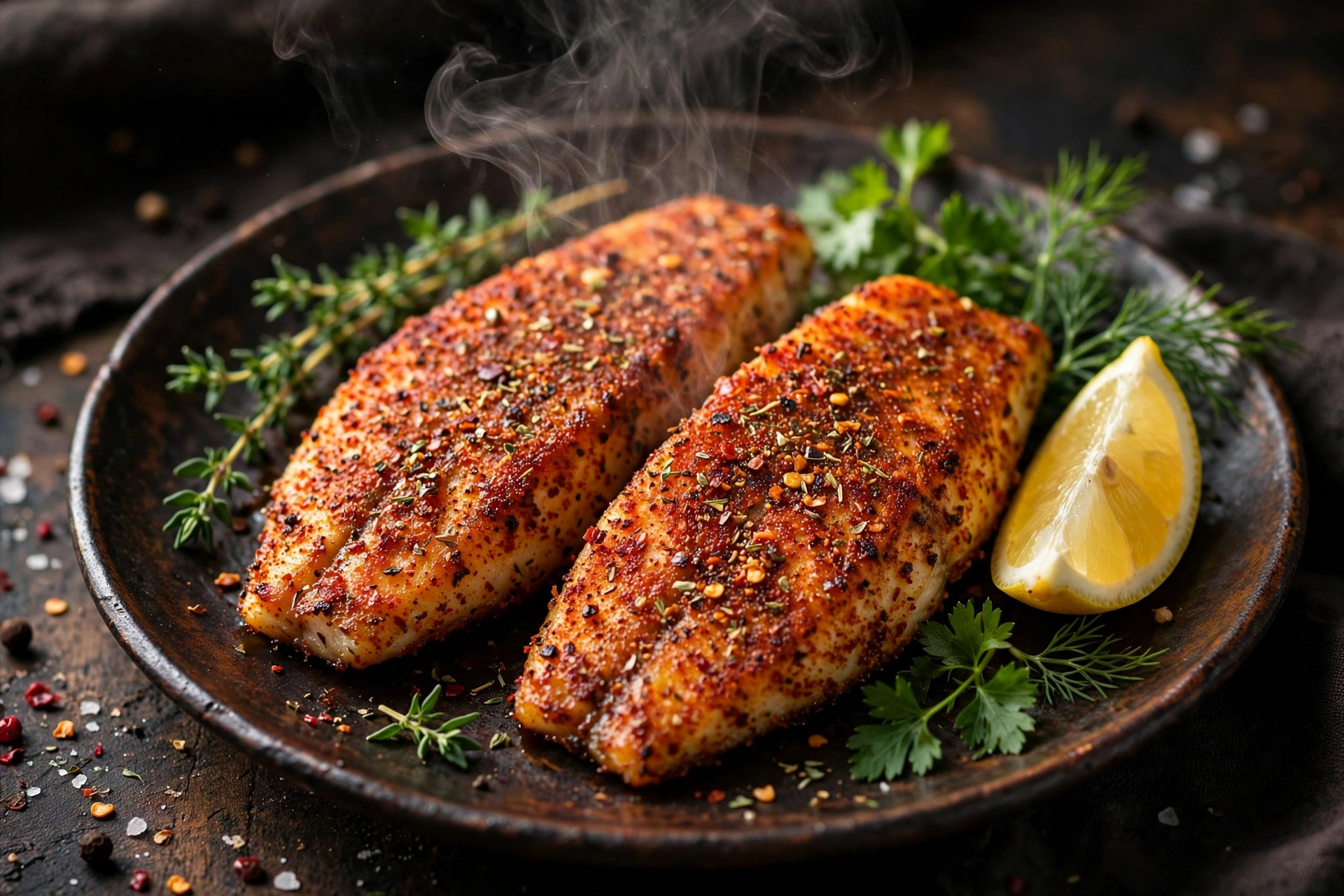
Cajun and Southern-style fish means one thing in my kitchen: firm fish in a bold spice coat, fried hot and left alone until the crust sets, then eaten the moment it leaves the pan. Some fish plates whisper. This one does not. It arrives dark and crisp at the edges, steaming inside, with lemon squeezed over it at the table.
I am Wasim Abbas Bhatti, the Fish’s Chef. My home ground is South Asian fish cooking, and I have spent more than twenty years at the stove and eight years netting fish from our local canals. Cajun and Southern cooking is not my home ground. I learned this style the way home cooks learn any bold fry, by cooking it and watching what the fish needs. This guide sits inside Fish Recipes from Around the World, and it teaches the method honestly, without pretending the cuisine is mine.
The honest surprise for me was how familiar the work felt. My own masala fry runs on the same discipline: dry fish, generous spice, honest heat, one patient turn. Only the voice of the seasoning changes.
Table of Contents
Why This Style Suits a Spice-Fry Cook
This style suits any cook who already fries spiced fish, because the discipline under the coat is identical. Dry surface, bold seasoning, hot pan, no early touching.
In my kitchen, a fry succeeds or fails before the fish ever meets the heat. The spice needs a dry surface to cling to. The crust needs time sitting against the pan. Crowded pieces steam each other pale. If you have cooked my Pakistani-Style Fish Fry: Authentic Desi Masala Recipe, your hands already know most of this article. That page is my home fry in my own spices. This page is the same discipline wearing a different coat, and the two are cousins, not copies.
One boundary, stated plainly. I will not hand you a measured blend formula or a history of this cuisine, because that knowledge belongs to the cooks of that region and I have not earned it. What I can give you from my own hands is the method that makes any bold spice coat fry crisp instead of soggy.
Choosing the Fish: Firm, Even, and Fresh
Bold spice and hot pans ask more of the fish than gentle cooking does, so choose for strength first: firm flesh, even pieces, and true freshness.
Firm flesh that can take a coat and a turn. The fish must hold together while a crust forms and survive one confident turn. Firm fillets and thick steaks are the natural fit. Catfish is the famous Southern example of a fish built for this treatment. Thin, delicate fillets punish hesitation, so save them for a gentler pan.
Even pieces, always. A thick centre beside a thin tail piece means the thin end dries while the thick end is still finishing. Cut or choose pieces of a similar thickness so the whole batch sets its crust and reaches done together.
Freshness before boldness. This is the rule spice cooks must be hardest about. A strong coat must never hide a tired fish. Fresh fish carries bold seasoning beautifully: moist flesh, a clean sea smell, flesh that springs back when pressed. A fish that smelled sour before the spice went on will taste sour under the spice. Choose another fish and cook this style proudly.
Skin and bones settled at the board. Most home cooks serve this fish as fillets, checked by fingertip for pin bones, so eaters can cut straight through. An adult should still check children’s portions, whatever fish you chose.
Prep: Dry, Coat, Fry, in That Order
Everything that matters in this dish happens before the pan heats, and the order is fixed in my kitchen: dry the fish, coat it, fry it, with no pause between the coat and the heat.
Scale and gut whole fish properly if that is tonight’s plate. Fillet cleanly, portion evenly, and run a fingertip along every piece for pin bones. Every board skill behind this, from scaling and gutting to filleting, pin-boning, and portioning, is taught step by step in Fish Prep and Butchery: Every Skill You Need.
Then comes the step this whole style stands on: pat the fish dry, and keep it dry. Do it at the last moment, right before the coat goes on. A wet fillet under a spice coat is a small disaster with a simple cause. The surface steams, the coat slides into patches, and the crust that should have set dark and crisp turns soft and pale. Seasoning wet fish and letting it stand makes things worse, because salt keeps pulling moisture to the surface while it waits.
My Spice-Fry Sequence
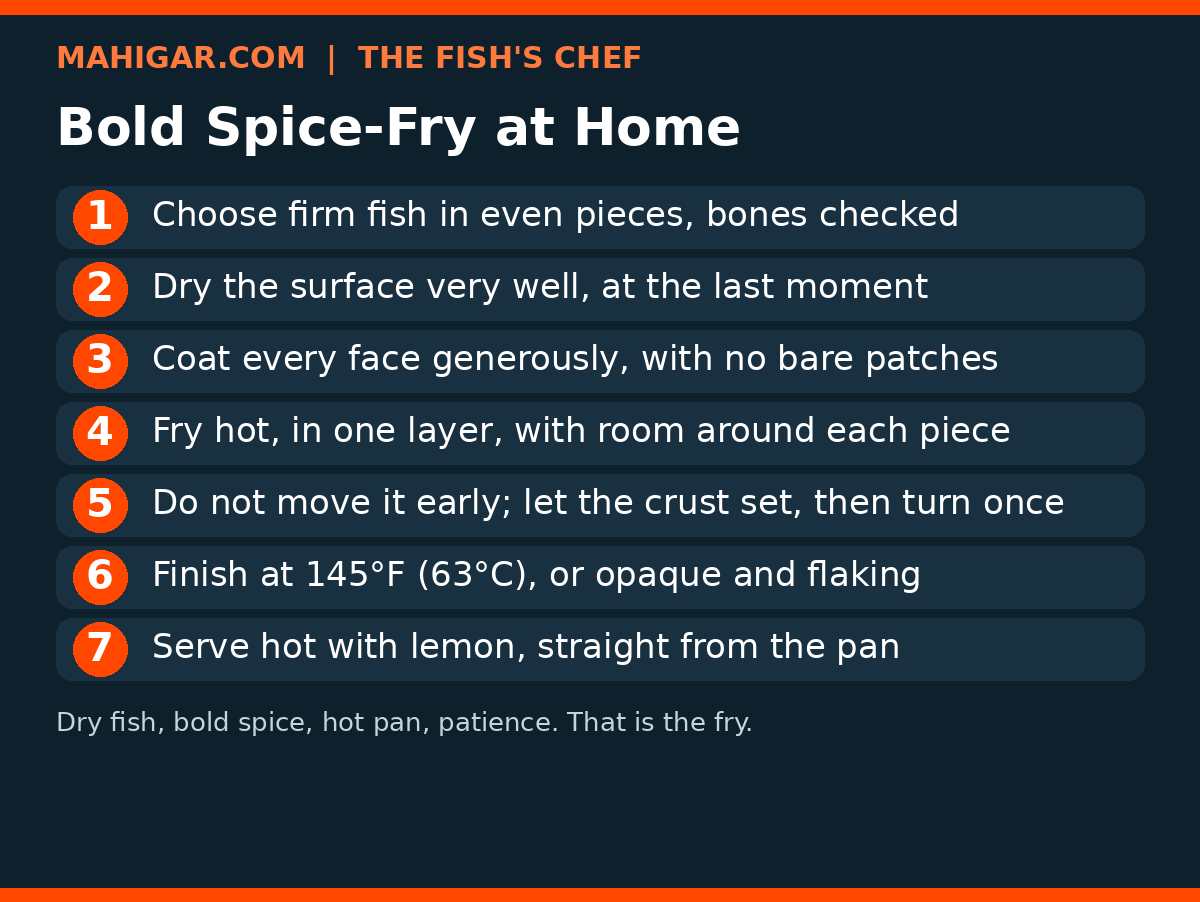
Wasim Abbas Bhatti’s method for Cajun and Southern-style fried fish: dry fish, a bold spice coat, a hot pan, and one patient turn, in seven steps.
-
Choose firm fish in even pieces
Choose firm fish in even pieces, of a similar thickness, with bones checked by fingertip.
-
Dry the surface very well
Dry the surface very well, at the last moment, right before the coat goes on.
-
Coat every face generously
Coat every face with your bold spice mix, generously and without bare patches. Use the blend your household keeps; the method matters more than any formula.
-
Fry in a hot pan with room around each piece
Fry in a hot pan with room around each piece, in one honest layer. Crowded fish steams; spaced fish fries.
-
Do not move it early
Do not move it early. Let the first side sit against the heat until the crust has truly set. A piece that releases easily under the spatula was ready. A piece that sticks and tears was touched too soon.
-
Turn once and finish to done
Turn once and finish to done, at 145°F (63°C) in the thickest part, or when the flesh is opaque and flakes easily.
-
Serve hot with lemon
Serve hot, with lemon squeezed over at the table, after only a brief drain. This fish waits for nobody.
Notice what the sequence never asks for. No second fry to rescue a soggy first one. No stirring the fish around to help it brown. No extra minutes past done to feel safe. Past 145°F you are not buying safety; you are selling moisture. The check at the thickest part is the stop sign, in this kitchen as surely as in my own.
What to Avoid: How This Fry Fails
Almost every failure in this fry comes from moisture or impatience. Fix those two and the plate fixes itself.
Wet fish under the coat. The commonest failure, and the easiest to prevent. The coat slides, the crust never sets, and the pan steams instead of frying. Dry at the last moment, every time.
Moving the fish too early. A spice crust needs contact and time. Touch the fish before the crust sets and you leave the best part of the coat behind in the pan. Patience is an ingredient here.
A crowded pan. Pieces pressed together leak moisture into the shared space and fry pale and soft. A small pan means two honest batches, never one crowded batch.
Cooking past done. Bold seasoning cannot rescue dry flesh. Once the thickest part is opaque and flaking, or at 145°F (63°C), the fish comes off. The crust stays crisp precisely because the flesh inside was not cooked to chalk. The full temperature chart for every fish type lives in Safe Internal Cooking Temperatures for Every Type of Fish, and on dark-coated fish it settles arguments the eye cannot.
Spice used as a disguise. If the raw fish failed the smell check, extra spice only seasons the problem. Buy fresh, then be as bold as you like.
Serving It Hot and Bright
This plate wants contrast at the table: the dark, hot crust against something cool, sharp, and fresh.
Lemon is squeezed over at the last second, never earlier. Sliced onion, a crisp salad, plain rice, or warm bread to catch the pan juices all keep the sides quiet and let the fish be loud. Serve straight from the pan if you can. The crust softens minute by minute, and the whole drama of this style, crisp coat and steaming flakes with spice and lemon together, lives in the first bites.
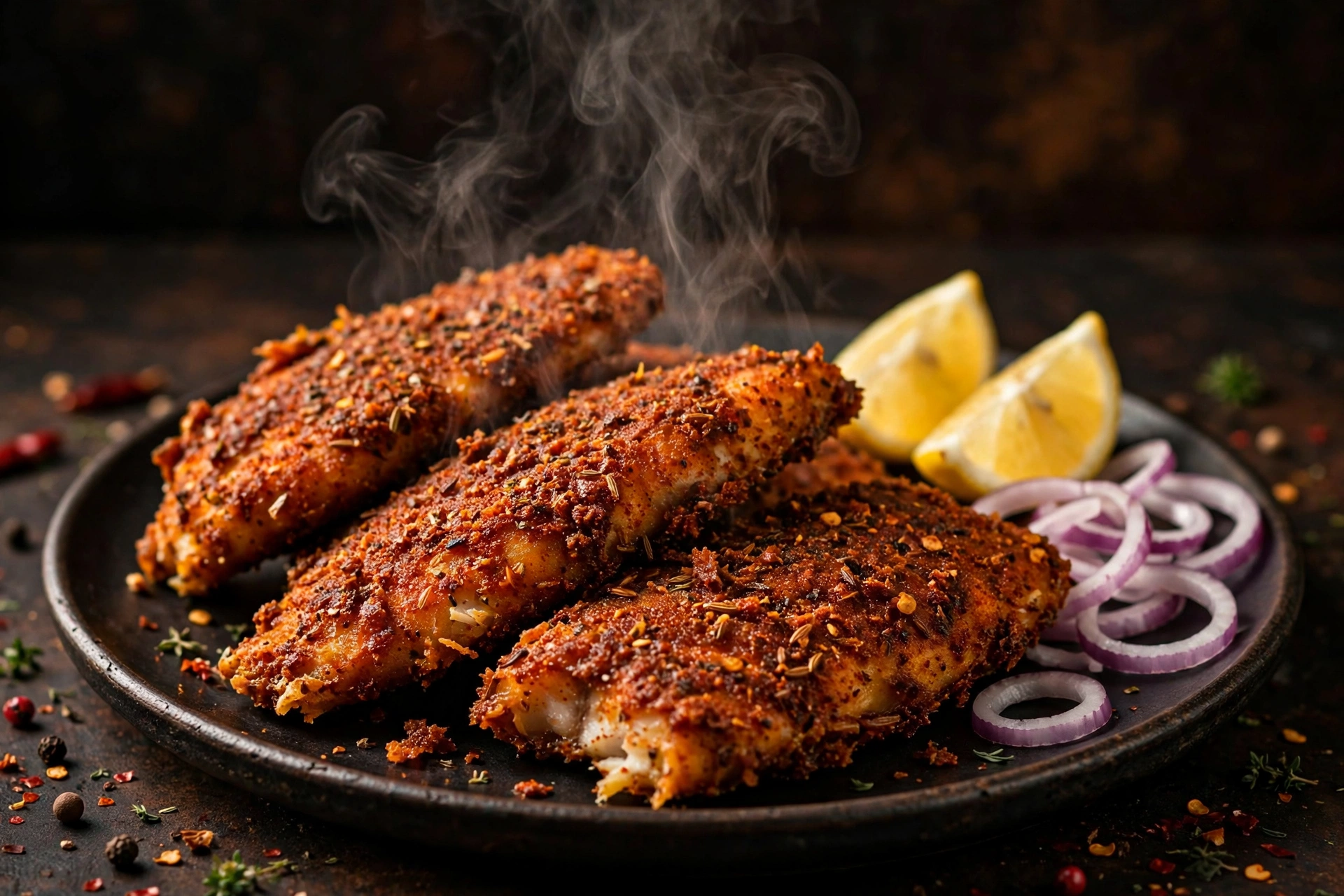
A small note from my own table. When I serve this fry beside my masala fish, nobody asks which cuisine is which. They ask for another piece. A method learned properly travels.
Frequently Asked Questions
What fish works best for Cajun and Southern-style frying?
Firm fish in even pieces works best: fish that can carry a bold coat, set a crust, and survive one turn without breaking. Catfish is the famous Southern choice for this treatment. Any firm fillet or thick steak with the same traits behaves the same way in the pan.
Why does my spice crust fall off or turn soggy?
Almost always it is moisture, or impatience. Either the fish went in wet, so the coat steamed instead of setting, or it was moved before the crust formed. Dry the fish at the last moment, give each piece room, and do not touch it until the first side releases on its own.
Do I need a special Cajun spice blend for this to work?
You need a bold blend your household likes, applied evenly to dry fish. I will not print a measured formula, because a real blend card should come from proper research into this cuisine, not from my guess. The method, dry fish, even coat, hot pan, patience, is what makes any honest blend fry crisp.
How do I know the fish is safely done under a dark crust?
Do not judge by the coat, because dark spice hides the flesh. Check the thickest part instead: 145°F (63°C) on a thermometer, or flesh that is opaque all the way through and flakes easily. On thick pieces, check a second spot before serving.
What to Check Next
Start with firm fish, dry it like you mean it, and let the crust set in peace. The Prep pillar gets any fish board-ready, the Temperature guide holds the one number that ends every argument, and my Pakistani fry shows this same discipline wearing my own home spices.
Then travel on through the hub. Right fish, dry surface, hot pan, one patient turn: learn it once, and a whole family of bold fish plates is yours, mine and this one alike.

One Comment