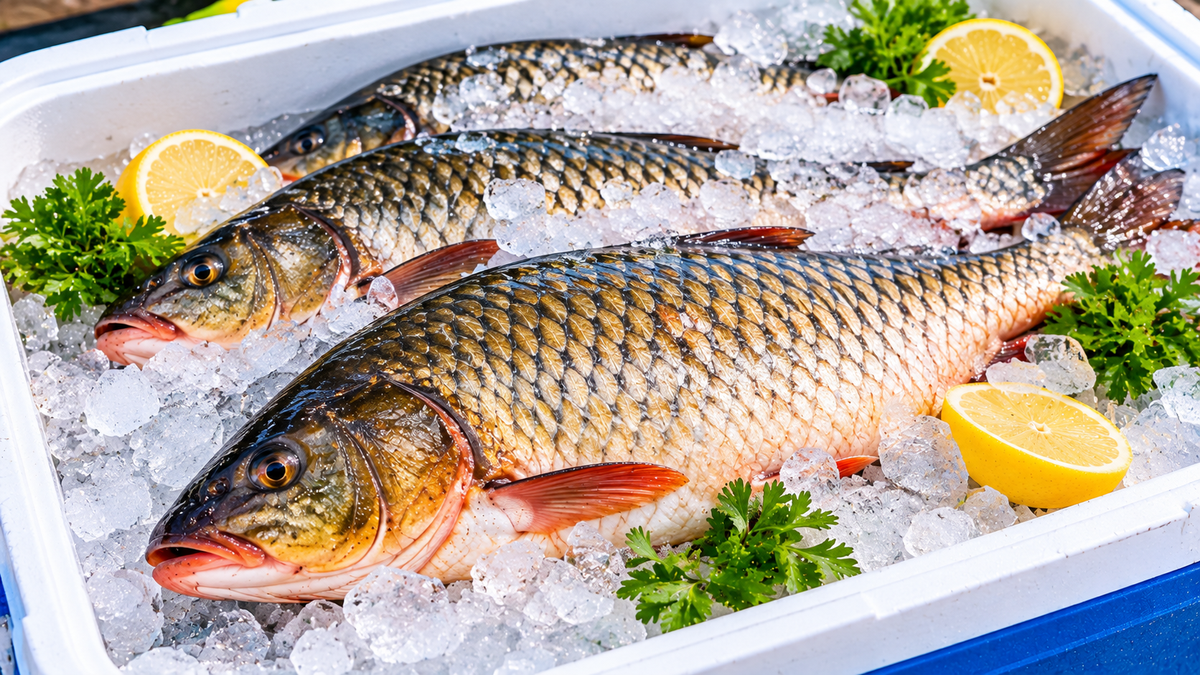
How to Keep Fish Fresh After Catching
The best fish I ever lost never made it to my kitchen. It was a fine canal fish on a hot afternoon, firm and bright when I landed it, and I was proud enough to keep fishing beside it instead of putting it on ice at once. By the time I got home the flesh had softened, the smell had turned, and a fish that should have fed my family well was not worth cooking. I have never made that mistake again.
Freshness after catching is not luck and it is not a trick you add at home. Fish is the central subject here, and fish starts to lose quality the minute it leaves the water. Warm air, sun on the bank, and delay are the enemies. Cold, cleanliness, and speed are the whole answer, and every step in this guide is built on those three words from my eight years fishing canals and cooking what I catch.
This guide belongs to my Catch to Kitchen: How to Handle and Cook Fish You Catch Yourself pillar, where I cover the full path from the catch in your hands to the fish on your table. What follows is the part I guard most carefully in my own practice, because no recipe, no spice, and no cooking skill can bring back freshness once the cold chain breaks.
Table of Contents
The Short Answer: Get It Cold, Keep It Cold
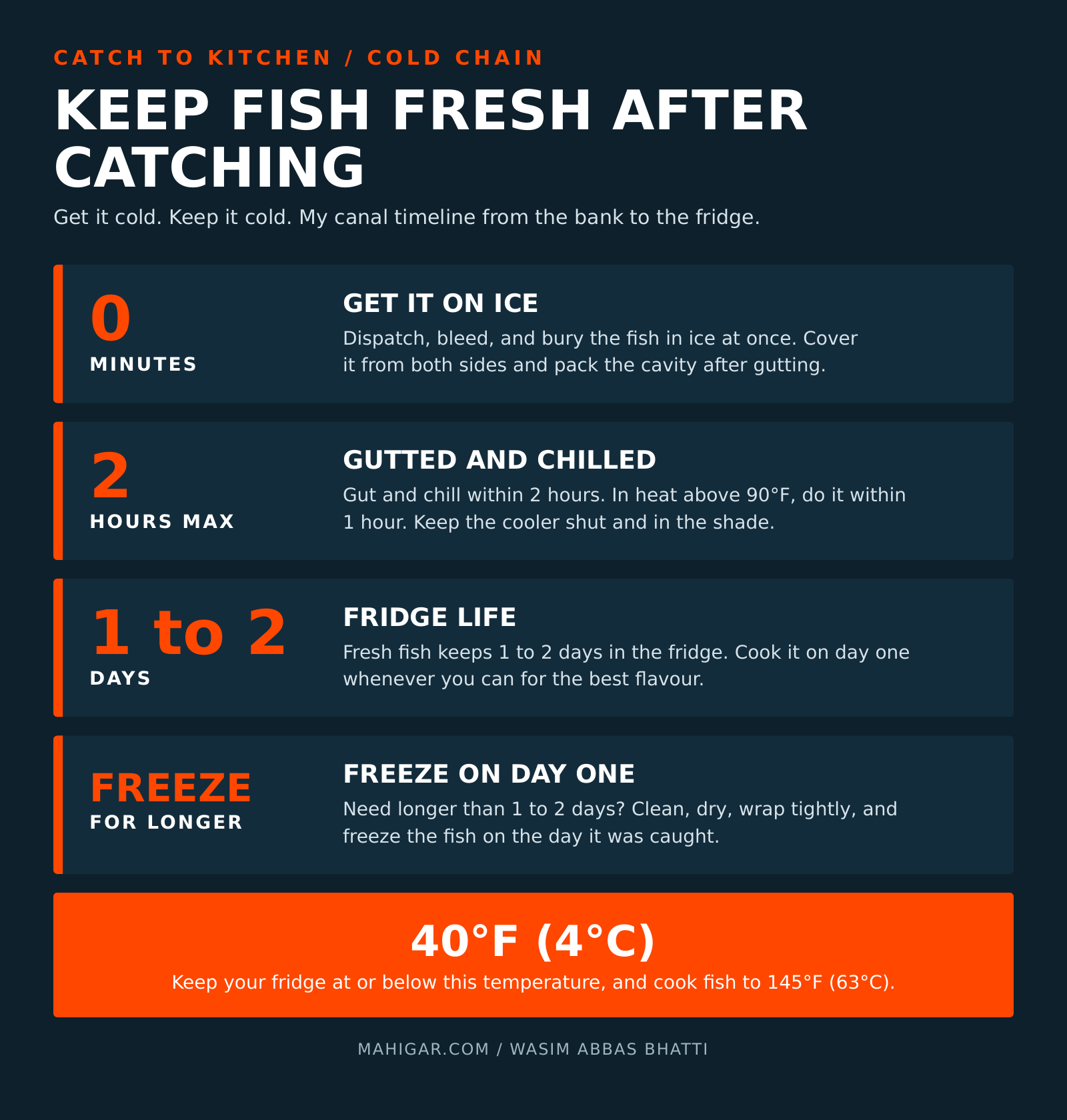
Get the fish on ice at once, gut and chill it within 2 hours, and keep it cold all the way to a fridge at or below 40°F (4°C).
That one line is the whole method, and I will spend the rest of this guide showing you how I actually do it on a canal bank with real gear and real heat. Ice at 0 minutes, not when you feel like it. Gutting and proper chilling inside the safe window, sooner in hot weather. A cooler that stays shut on the trip home. Then a clean handoff to the fridge for 1 to 2 days of fresh life, or to the freezer if you need longer. Break any link in that chain and the fish pays for it in texture, smell, and flavour. Keep the chain whole and a river fish eats like it should, clean and sweet.
The First Minutes on the Bank
Dispatch the fish quickly, bleed it, and put it on ice in the first minutes, because the first minutes decide more than any later step.
On my canals the work starts the moment the fish is in hand. I do not leave a caught fish flapping on the hot bank while I cast again, and I do not drop it into a dry bucket to warm in the sun. A quick, humane dispatch stops the struggle that bruises flesh and builds up heat in the body. Bleeding right after dispatch matters just as much for flavour and keeping quality, and I cover that step in full in How to Bleed and Dispatch a Fish for Better Flavor, including how I do it cleanly on the bank.
Then the fish goes straight onto ice. I open the cooler, lay the fish on the ice, and cover it with more ice so the cold touches it from both sides. If I have more than one fish, each one gets buried in ice, not stacked warm on top of the last. The belly cavity, once gutted, gets packed with ice too, because a fish chills from the inside as well as the outside and the cavity is where spoilage starts fastest.
I set my cooler up before my first cast, with ice bought on the way, the cooler in the shade, and a clean knife and bag ready. When the fish comes in there is no hunting for gear. Delay is warmth, and warmth is the one thing a dead fish cannot afford.
Ice Is the Whole Job: My Cooler Setup
Use more ice than you think you need, keep the fish buried in it, and keep the cooler shut and in the shade.
My rule is simple to say and worth following exactly. The fish should be surrounded by ice, not resting on a thin layer at the bottom of the box. I put a bed of ice down first, lay the fish on it, then cover the fish completely. Crushed ice and small cubes pack around a fish better than a few large blocks, because contact is what pulls the heat out. Blocks last longer on a long day, so on a summer canal trip I often use both, blocks for staying power and crushed ice for contact around the fish itself.
I keep the drain in mind as well. Meltwater that pools warm around the fish does no good, but a fish sitting dry on a rack above the ice does not chill as fast either. My compromise, worked out over many trips, is to keep the fish in direct contact with ice and drain the cooler when a pool of water builds up, then top the ice up again. I never let the fish sit in warm meltwater for hours.
Two more habits protect the cooler. I keep the lid shut, because every opening lets cold out and hot air in, so drinks live in a separate bag. The fish cooler is for fish. And I keep the cooler in shade, never in full sun or a closed hot car. Where ice is hard to get, I freeze bottles of water at home the night before and use them alongside loose ice, not instead of it.
Live Wells, Stringers, and What I Stopped Using
Ice beats a stringer or a crowded live well for keeping quality, because a stressed, warm fish loses freshness even while it is still alive.
I used stringers in my early years and I stopped, for reasons you can taste. A fish on a stringer in warm canal water is stressed, injured, and sitting in water well above fridge temperature on a summer day. It may still be alive at the end of the day, but its texture softens and its flavour dulls. A live well or keep net is a step better only if the water is cool, clean, and moving and the stay is short. I use a keep net only for a brief hold while I sort my gear. The moment I decide a fish is for the table, it leaves the water, gets dispatched, and goes on ice. A wet sack in the shade is a last resort that slows drying but does not chill. If you plan to keep fish to eat, plan to bring ice.
Gutting: When and How I Time It
Gut the fish as soon as you cleanly can within 2 hours of catching, and within 1 hour when the heat is above 90°F.
The gut is where spoilage begins fastest, because the digestive contents and the bloodline carry the bacteria and the strong flavours that move into the flesh if they are left sitting warm. That is why gutting is not a job to leave until you feel like it tomorrow. My timing follows the same safety anchor I use for all perishable food. Keep fish on ice or refrigerated promptly after catching, and work inside the FDA 2 hour rule for perishable food, which shortens to 1 hour when the temperature is above 90°F. On a hot canal afternoon that 1 hour window is the one I watch, and I gut even sooner when I can.
On a long trip I gut on the bank, rinse the cavity clean, pat the fish dry, and pack the cavity with ice before it goes back in the cooler. On a short trip I sometimes ice the whole fish hard and gut it at my kitchen sink within the same safe window. Both ways work. What never works is leaving the gut in for hours in a warm cooler. While I gut, I keep the work clean, with a sharp knife and the contents out in one tidy removal. I take the bloodline along the backbone out, and the gills too for any fish that will sit in the fridge. Then a clean rinse, never a long soak, which washes flavour away. Rinse, drain, ice.
The Trip Home: Transport Without Breaking the Cold Chain
Keep the cooler cold, shut, and out of the heat for the whole trip home, and go home by the direct route.
More good fish are spoiled in cars than on banks, in my experience. The cooler sits in a hot boot through a long drive home with stops along the way, and every warm hour is an hour taken off the life of the fish. My rules are plain. The cooler rides in the coolest part of the vehicle, out of direct sun. I top up the ice before I leave the bank on a long trip, and I drive home directly when I am carrying fish. At home the fish comes out first and goes straight into the fridge or final cleaning. The cold chain ends only when the fish is under proper refrigeration, and until that moment the fish is my first job.
At Home: Fridge and Freezer Handoff
Put the cleaned fish in a fridge at or below 40°F (4°C), use it fresh within 1 to 2 days, and freeze it the same day if you need longer.
The handoff at home is where bank discipline turns into kitchen quality. I set my fridge cold and I check that it stays at or below 40°F (4°C). The fish goes in on a clean tray or plate, covered, on the coldest shelf, not in the door where the temperature swings every time the fridge opens. If the fish is still on melting ice for a very short hold, it sits on ice over a tray so it never pools in water. For the full chart I use for every fish in my house, my guide How Long Does Fish Last in the Fridge? (Storage Times Chart) sets out the times plainly, and the headline for fresh fish never changes. Fresh fish keeps 1 to 2 days in the fridge. I plan my cooking inside that window and I cook the catch on the first day whenever I can, because day one fish is the best fish.
Before the fish goes into the fridge I check it the way I check market fish: clear eyes, clean gills, firm flesh that springs back, and a mild smell of water. My checklist in How to Tell if Fish Is Fresh: The Buyer’s Checklist is written for buyers, but I run the same tests on my own catch, and any fish that fails them does not get cooked and hoped for.
If I cannot cook the fish within 1 to 2 days, I freeze it on the day it was caught, cleaned, dried well, and wrapped tightly so air cannot reach the flesh. My comparison in Fresh vs Frozen Fish: Which Is Actually Better? explains why well frozen fish holds its quality. Decide early: fresh tonight or tomorrow, or freeze today. And when you cook it, cook fish to 145°F (63°C).
How Long You Actually Have
You have hours to get the fish cold, 1 to 2 days of fresh fridge life, and longer only in the freezer, and no step stretches those limits.
The honest answer is a set of windows that depend on each other. Heat early in the day cannot be undone by cold later. I go through the full timing question in How Long After Catching Can You Eat Fish?. My working version is this. Get it on ice at 0 minutes. Gut and chill it within 2 hours, or within 1 hour above 90°F. Keep it buried in ice until it reaches a fridge at or below 40°F (4°C). Eat it fresh within 1 to 2 days, or freeze it on day one. If a fish has sat out beyond the safe window in the heat, I let it go.
The Mistakes That Spoil Good Fish
The mistakes I see most are delay before ice, too little ice, gutting left too late, and a warm trip home.
Delay before ice is the worst, because it happens when the fish is warmest. Set the cooler up first and ice every kept fish at once. Too little ice is its close partner. A handful of cubes under a large fish is a gesture, not a method. The fish should be buried, and the ice should outlast the trip. Gutting left too late spoils fish from the inside while the outside still looks fine. Watch the clock and the temperature, not your appetite for one more cast. The warm trip home quietly undoes perfect bank work. And washing and seasoning cannot rescue a spoiled fish. If the flesh is soft and the smell is strong and wrong, let that fish go and ice the next one at 0 minutes.
Frequently Asked Questions
How soon should I put a caught fish on ice?
Put it on ice at 0 minutes, as soon as it is dispatched. In my practice the cooler is set up before I cast, and every fish I keep is buried in ice straight away. Delay in the first minutes costs more freshness than any later step can repay.
How long do I have to gut a fish after catching it?
Gut it within 2 hours of catching, and within 1 hour when the temperature is above 90°F, keeping the fish on ice in the meantime. The gut spoils fastest, so on hot canal days I gut on the bank, rinse the cavity clean, and pack it with ice.
How long does a caught fish keep in the fridge?
Keep your fridge at or below 40°F (4°C) and use fresh fish within 1 to 2 days. I cook my catch on the first day whenever I can. If you need longer than 1 to 2 days, clean the fish and freeze it on the day it was caught instead of stretching the fridge.
Is a stringer or live well as good as ice for freshness?
No. A fish on a stringer or in a crowded live well in warm water is stressed and warm, and its flesh loses quality even while it lives. I may hold a fish briefly in clean, cool, moving water, but a fish kept for the table goes on ice as soon as I decide to keep it.
My Closing Advice From the Canal Bank
Fresh fish is made on the bank, not in the kitchen, and the making of it is mostly a matter of respect for the catch.
Ice at once, gut inside the window, keep the cooler cold and shut, drive home directly, and hand the fish to a cold fridge with a clear plan to cook it within 1 to 2 days or freeze it today. Do those plain things and the fish you worked for on the canal will reward you at the table, whether it ends up in a simple fry, a curry, or one of the river fish dishes I cook from my Freshwater Fish Cooking: The Complete Guide to Carp, Catla, Catfish and River Fish pillar. I lost one good fish to a hot afternoon years ago so I could learn this. Ice the next one at 0 minutes, and you will not have to learn it the same way.

2 Comments