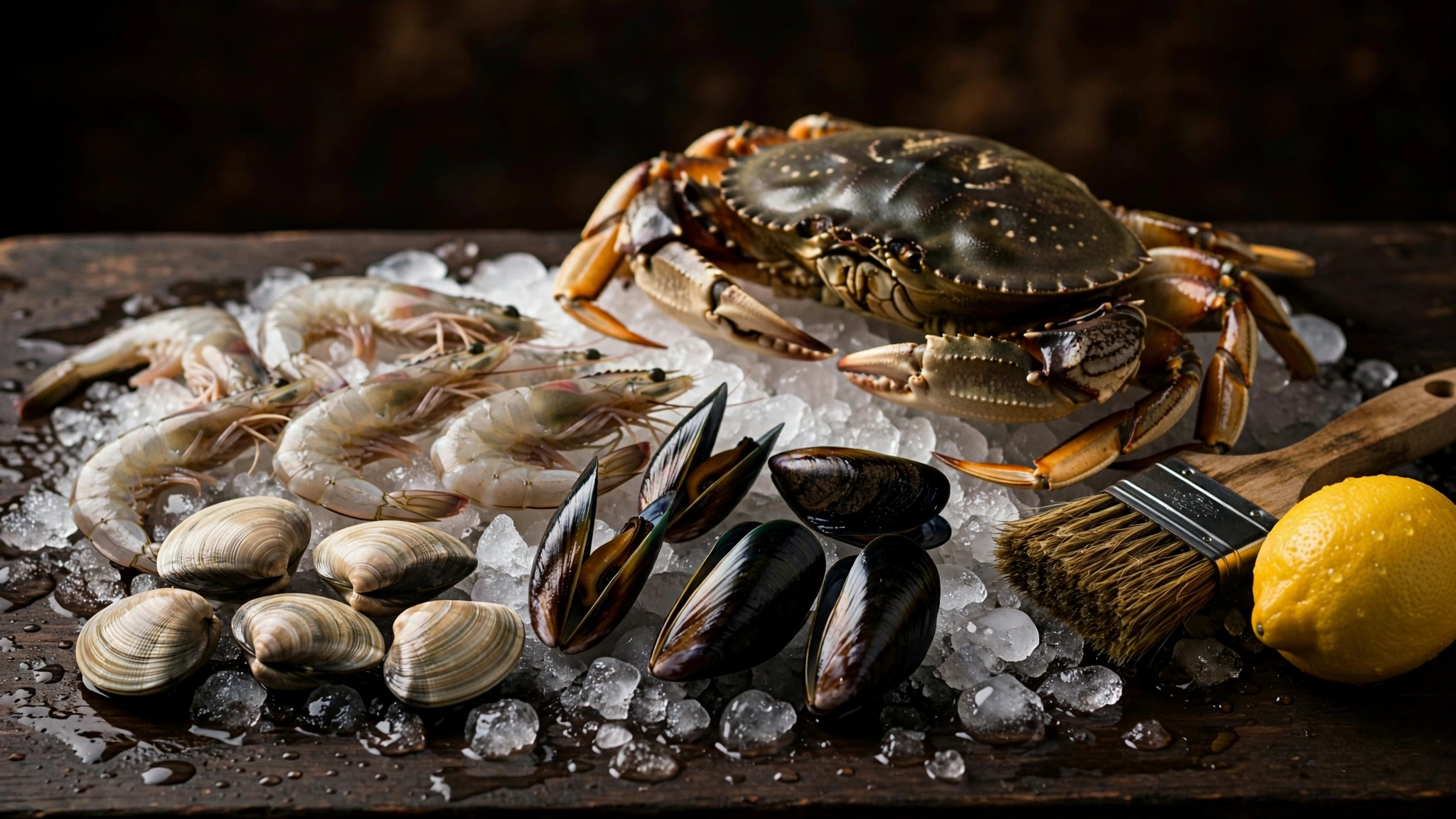
How to Prep Shrimp, Crab, and Shellfish at Home
Shellfish rewards speed and a cold sink. Keep everything chilled, then clean each kind its own way: peel and devein shrimp, scrub clams and mussels, debeard mussels, rinse crab, and shuck oysters slowly with a towel and the right knife. None of it is hard once the order is clear.
This guide is the shellfish chapter of the whole-fish sequence in Fish Prep and Butchery: Every Skill You Need, and it assumes one rule from start to finish: cold, clean, and cooked promptly.
Table of Contents
First: Keep It Cold and Check It Fresh
Work over a cold tray and deal with one kind at a time, returning the rest to the fridge as you go. Keep shellfish at 40°F or below. Same-day cooking is best, and raw shellfish carries the usual 1 to 2 day raw window in the fridge, no more.
Freshness is easy to check. Live clams, mussels, and oysters should be tightly closed, or close when tapped. Everything should smell clean, like the sea. A sour or ammonia-like smell is a warning to bin it, not cook it. The full signs are in How to Tell If Fish Has Gone Bad.
A Short Note on Shellfish Allergy
Shellfish allergy is common and can be serious, and handling counts too, not just eating. This article is general kitchen information, not medical advice. Someone without the allergy can do the prep for a household that needs care, and anyone with an allergy should follow their own doctor’s guidance on handling and cross-contact.
What You Need at the Sink
- A stiff brush for scrubbing shells
- A small knife for shrimp
- A proper oyster knife, only if you are shucking
- A folded towel to guard your hand
- A scrap bowl, a colander, and a cold tray
Shellfish Prep, Type by Type
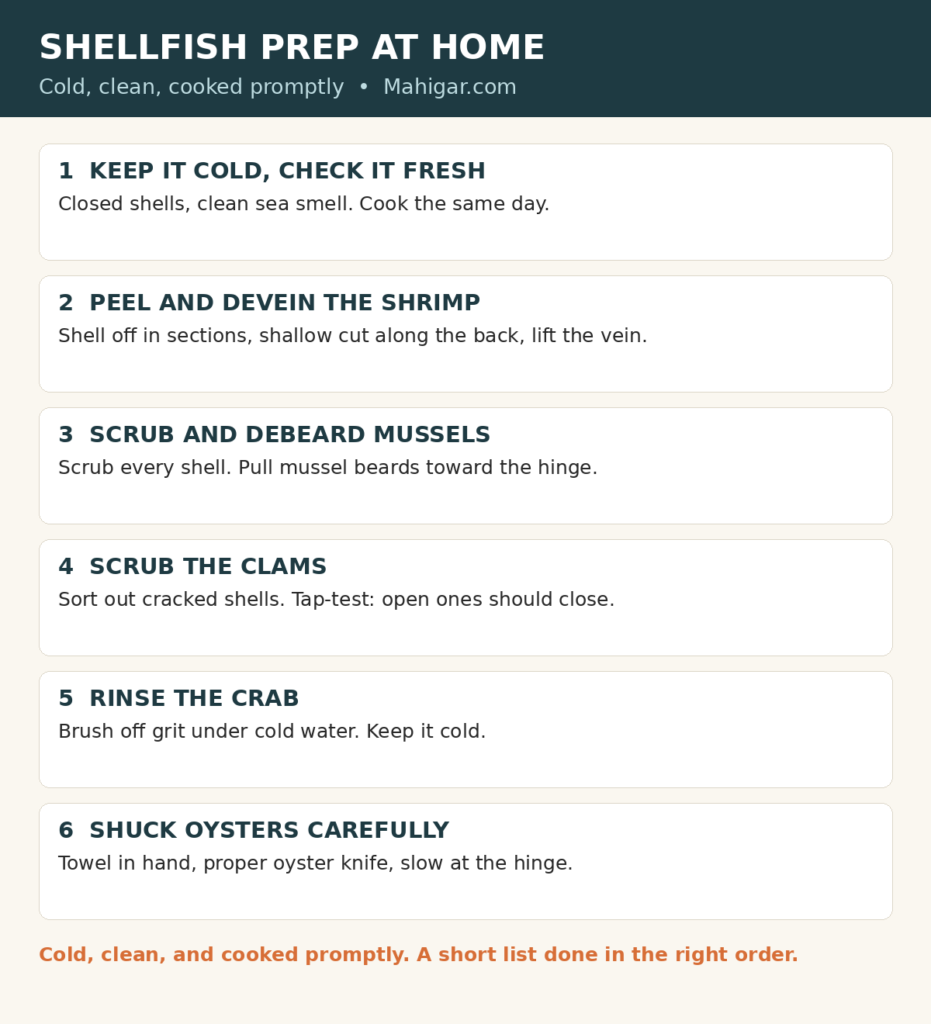
Keep it cold and sort it
Work over a cold tray, one kind at a time, at 40°F or below. Bin anything cracked, broken, or sour-smelling.
Peel and devein the shrimp
Rinse briefly, peel from the legs, make a shallow cut along the back, and lift the vein out.
Scrub clams and mussels; pull mussel beards
Scrub shells under cold water and pull each mussel beard toward the hinge, close to cooking time.
Rinse the crab and keep it cold
Rinse, brush off grit, and return the crab to the cold while the pot heats.
Shuck oysters slowly, towel in hand
Guard your holding hand with a folded towel and work a proper oyster knife at the hinge with small, controlled movements.
Chill covered, or cook straight away
Cook promptly, or cover and chill at 40°F or below and cook the same day where possible.
Shrimp: Peel and Devein
Rinse the shrimp briefly under cold water, then peel from the legs upward so the shell comes away in a few pieces. Leave the tail on for pick-up dishes and take it off for a curry or stir-fry. Make a shallow cut along the back and lift the vein out with the knife tip or a toothpick. On the smallest shrimp the vein is optional; on medium and large shrimp, always take it out for a cleaner bite.
Clams and Mussels: Scrub, Debeard, and Sort
Discard any shell that is cracked or broken. Scrub the rest under cold running water with the stiff brush. Debeard mussels close to cooking time by pulling the beard firmly toward the hinge. As common kitchen practice, tap any open shell: if it does not close, discard it. Keep everything cold in a colander and do not leave shellfish soaking on the counter in tap water. At cooking, the shells should open; discard any that stay closed. The doneness cues are covered in Safe Internal Cooking Temperatures for Every Type of Fish.
Crab: Rinse, Keep Cold, and Keep It Simple
Buy crab from a trusted source, rinse it, brush off any grit, and keep it cold until cooking. Then use your usual cooking method and watch for the simple cue: the flesh turns pearly and opaque when it is done. Crab prep really is that short, and it should stay that way.
Oysters: Slow Hands and a Towel
Shucking at home is a job for adults only. Fold a towel over the hand holding the oyster, work a proper oyster knife at the hinge, and use small, controlled movements. Never use a thin kitchen knife, which can snap or slip. If the hinge will not give, stop. Asking a fishmonger to shuck them is an honest alternative, not a defeat.
After Prep: Chill Cold or Cook Now
Cook prepped shellfish promptly. If there is any wait, keep it covered at 40°F or below inside the 1 to 2 day raw window, with same-day cooking the better choice. Keep raw shellfish separate from ready-to-eat food, and clean boards, knives, and hands with hot soapy water. Judge doneness simply: shrimp and crab turn pearly white and opaque, and bivalves cook until the shells open, with any that stay closed discarded.
The Mistakes That Ruin Shellfish Prep
- Letting shellfish sit warm on the counter
- Debearding mussels hours ahead of cooking
- Leaving clams or mussels standing in tap water
- Forcing an oyster that will not open
- Keeping broken or cracked shells
Frequently Asked Questions
Do you have to devein shrimp?
On the smallest shrimp the vein is optional. On medium and large shrimp, always take it out. It is a cleaner bite and a good quality habit.
How do you know if a clam or mussel is bad before cooking?
Bin cracked or broken shells. An open shell should close when tapped. A sour smell means it is never cooked.
Can you prep shellfish the day before cooking?
Same day is better. If you must prep ahead, cover and chill at 40°F or below and stay at the short end of the 1 to 2 day window.
What temperature should shrimp and crab be cooked to?
Cook until the flesh is pearly or white and opaque. Bivalves cook until the shells open, and any that stay closed are discarded.
What to Check Next
For doneness in detail, read the doneness temperature guide. Before you buy or cook, run through the freshness guide. For the full sequence of skills, return to the pillar, Fish Prep and Butchery: Every Skill You Need.
Sources: FoodSafety.gov and FDA seafood guidance. This article is general kitchen information, not medical advice.
