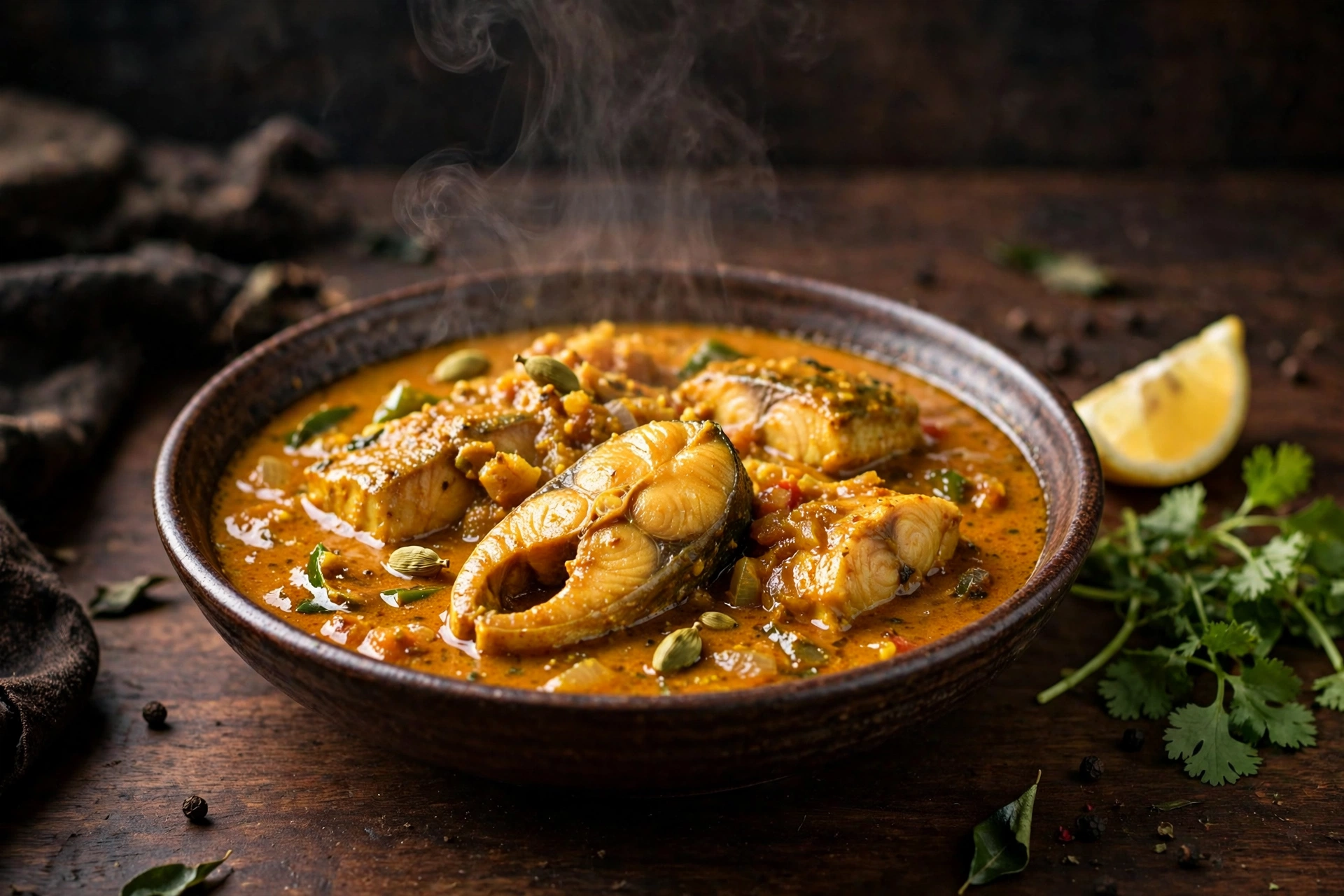
Thai-Style Fish Curry Guide
Thai-style fish curry for a home cook means one simple order: the curry is built first and gets all the time it needs, and the fish goes in near the end for the shortest, gentlest stay. Get that order right and you get whole, soft pieces of fish carrying a bold sauce. Get it wrong and the fish dissolves into the pot.
I am Wasim Abbas Bhatti, the Fish’s Chef. Thai cooking is not my home ground, and I will not pretend to training I do not have. My home ground is South Asian fish cooking, with twenty years of curries, fries, and river fish behind me. What I bring to this dish is the part our kitchens share: firm fish, even pieces, gentle handling in hot sauce. This guide sits inside Fish Recipes from Around the World, and it teaches the method honestly, without a fake paste recipe.
Table of Contents
Why the Fish Goes In Late
Fish goes into a curry late because fish keeps cooking in hot sauce and then breaks apart. The sauce can wait. The fish cannot.
A curry sauce holds its heat happily while you set the table. A piece of fish sitting in that same sauce goes past done, loosens, and spreads through the pot in threads. By serving time there is flavour everywhere and fish nowhere. So build the sauce first, taste it, and let it become the sauce you actually want to eat. Only then does the fish enter, into heat that is ready for it. That is not a secret from any one cuisine. It is the respect every curry kitchen learns, mine included.
Choosing the Fish: Firm, Even, Fresh
The best fish for curry is firm fish that holds its shape in hot sauce, cut in even pieces, and bought fresh. Delicate, thin fish belongs in gentler dishes.
Firm flesh. The fish must survive a hot sauce bath and still arrive on the spoon in pieces. Thick, meaty fillets are the safe home choice. The species-by-species matching of fish to jobs lives in Fish Species Guide: What to Buy and How to Cook Each One. In this pot the rule is short: if it cannot hold together in sauce, it does not go in the curry.
Even pieces. A thick chunk beside a thin tail piece cannot finish together. One breaks while the other is still cooking. Cut pieces to a similar size, because in curry, shape is timing.
Fresh, always. A bold sauce must never be asked to hide tired fish. Fresh fish takes strong flavour beautifully. Fish that smelled sour before it met the sauce will taste sour under it. And settle bones before the pot: fingertip-check every piece for pin bones, so nobody hunts bones inside hot sauce, and let an adult check children’s portions.
Prep: Calm Board Work Before the Pot
Good fish curry starts calmly at the board: clean the fish, portion it evenly, bone-check it, and keep it cold while the sauce is built.
If the fish is whole, scale and gut it properly, fillet it cleanly, and portion it. Every one of those board skills is taught step by step in Fish Prep and Butchery: Every Skill You Need. Then keep the pieces cold. Raw fish belongs at 40°F (4°C) or below and is best used within 1 to 2 days. Cooked fish keeps 3 to 4 days in the fridge. Any fish that smells sour, feels slimy, or stays dented when pressed is thrown out, never curried into dinner. Bring the fish out only when the sauce is nearly ready. The pot waits for the fish, not the other way round.
The Curry Itself: Principles, Not a Fake Paste
A home curry around fish works when the sauce is finished before the fish arrives, the heat stays gentle, and the fish suits the sauce. Quantities are not what make it work. Order and handling do.
Let me be plain about what this page will not do. It will not hand you a curry paste recipe with neat quantities I have not earned, or ratios presented as tradition. That knowledge belongs to Thai cooks and to properly researched recipe work. What I can teach is how a curry behaves around fish.
Finish the sauce first. Taste it and settle its heat before the fish goes in. Once the fish is in the pot, there is no time to fix a sauce that still tastes raw or thin.
Keep the heat calm. Fish poaches in curry. It is not boiled in it. A hard, rolling boil knocks pieces against each other and tears them. A hot, calm sauce carries them.
Match fish and sauce. A bold, rich curry wants firm fish that can stand in it. Do not force a delicate fillet through a heavy sauce and then blame the fish.
Hold those three principles and you can use a curry base you already trust, while the fish handling stays exactly right.
My Late-Addition Fish Curry Method
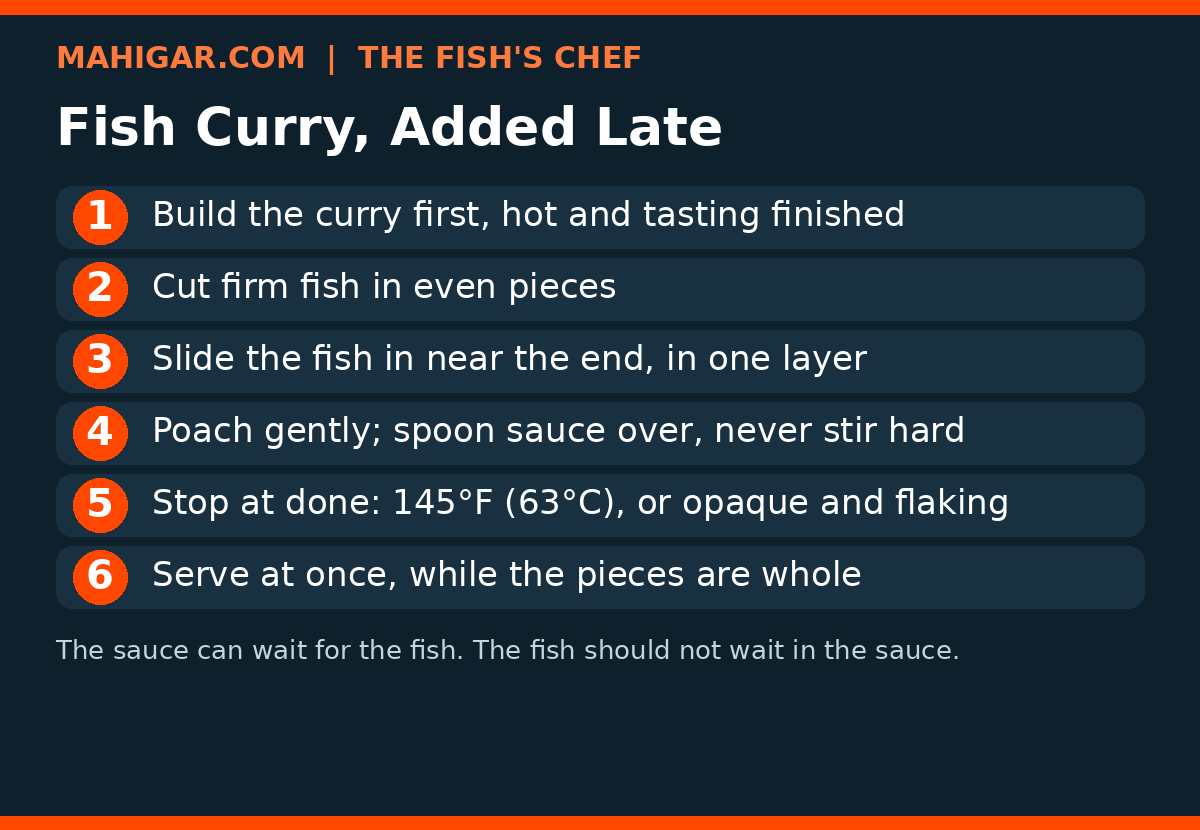
Build the curry first and add firm fish late, poaching it gently to 145°F (63°C).
Build the curry first
Build the curry first, hot, settled, and tasting finished, before any fish goes near the pot.
Cut firm fish evenly
Cut firm fish in even pieces so every piece finishes at the same moment.
Slide the fish in near the end
Slide the fish in near the end, gently, in a single layer where you can.
Poach gently
Poach gently and do not stir hard. Spoon sauce over the pieces or swirl the pot instead.
Stop at done
Stop at done: 145°F (63°C) in the thickest piece, or flesh that is opaque and flakes gently, as set out in Safe Internal Cooking Temperatures for Every Type of Fish.
Serve at once
Serve at once, while the pieces are whole and the flesh is soft.
Notice what this sequence has no room for: waiting. A fish curry is at its best in the first minutes after the fish reaches done, and it falls away from there.
Serving and Leftovers, Honestly
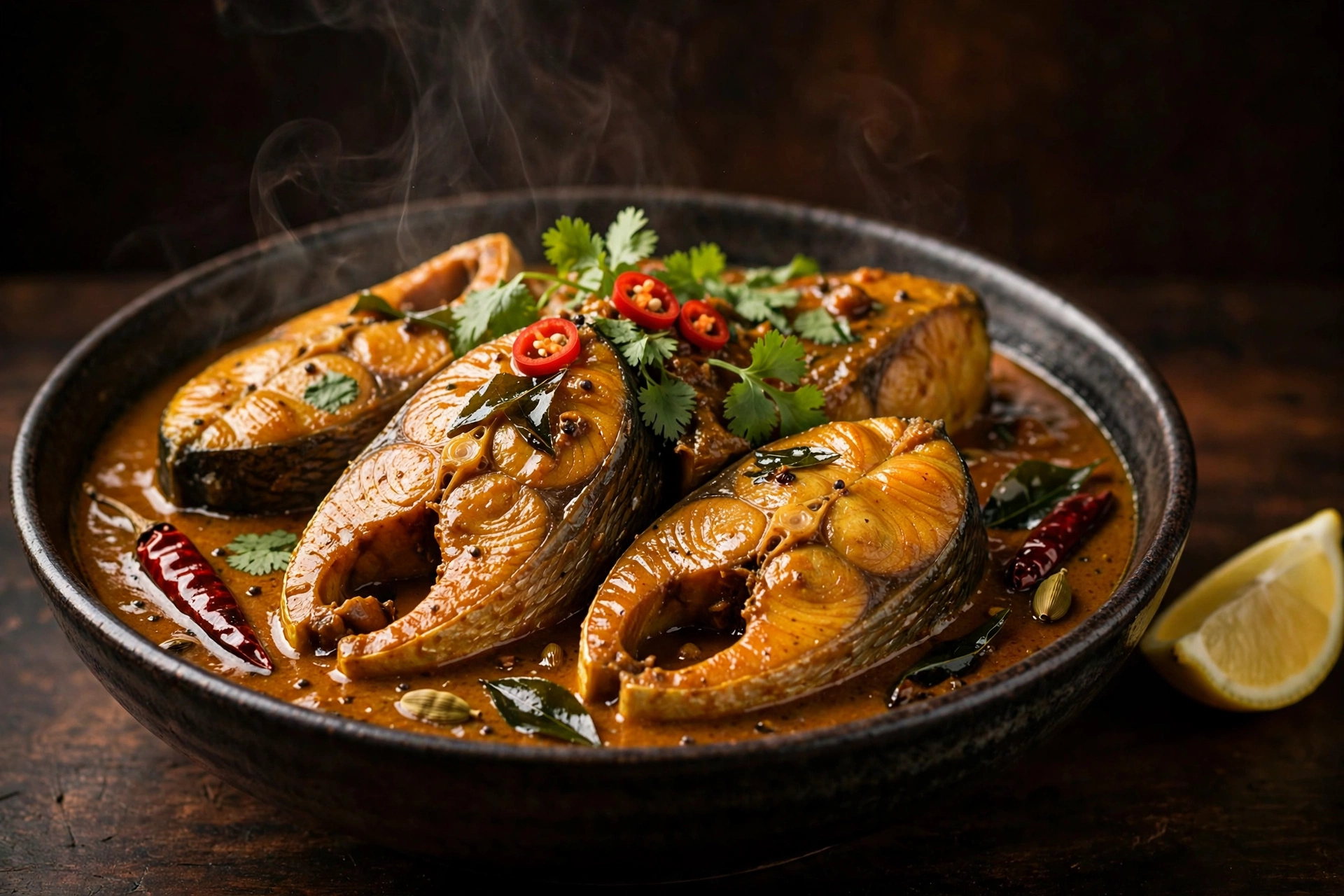
Fish curry should be served hot and straight from the pot, with the pieces lifted gently so they reach the plate whole. A spoon of hot sauce over a finished piece is this dish at its best.
Leftovers are honest food too. Chill them promptly, use cooked fish within 3 to 4 days, and reheat until steaming hot. Just know the second serving will be firmer than the first. That is the nature of reheated fish, and I would rather tell you that than promise you the same plate twice. If you make this curry often, make the sauce ahead by all means. Cook the fish fresh each time.
Mistakes That Break Fish Curry
Five habits break this dish. Every cook I know has done at least two of them, including me.
Adding the fish too early. The pieces dissolve by serving time. Flavour comes from the sauce around the fish, not from long minutes inside it.
Stirring like a stew. A spoon dragged through fish curry is a breaking tool. Swirl the pot or nudge gently.
Boiling instead of poaching. Violent heat tears flesh. Keep the sauce hot and calm.
Mixed sizes. Thick and thin pieces cannot finish together. Even cutting is timing, not neatness.
Letting it sit hot. A curry held warm on the stove keeps cooking its fish. Serve it, then chill what is left.
Frequently Asked Questions
What fish is best for Thai-style fish curry?
Firm fish that holds its shape in hot sauce. Thick, meaty pieces are the safest home choice. Delicate, thin fish tends to flake apart before serving, so save it for gentle pan or steam dishes.
When should I add the fish to a curry?
Near the end, once the sauce is hot and tasting finished. The fish poaches gently for the shortest honest stay, and then the pot goes straight to the table.
How do I stop fish from breaking up in curry?
Use firm, even pieces, keep the sauce hot but not violently boiling, and never stir hard. Spoon sauce over the pieces instead. And stop at done, because overcooked fish breaks no matter how careful the spoon is.
How do I know the fish in a curry is done?
Check the thickest piece. It is done at 145°F (63°C), or when the flesh is opaque and flakes gently. The colour of the sauce tells you nothing about the fish.
What to Check Next
You have the whole method now: sauce first, fish late, gentle heat, honest doneness check, served at once. For the fish itself, the Species Guide matches each species to the jobs it does best. For the board work under every curry, the Prep pillar teaches each cut in order. And for the whole world tour, the cuisine hub holds everything from masala fries to Mediterranean whole fish.
One last word from my own stove. The first time I made a fish curry this way, I still stirred it like a lentil pot and broke half the fish. The sauce was fine. My patience was the problem. Learn from my pot: hands off, fish late, table ready.
