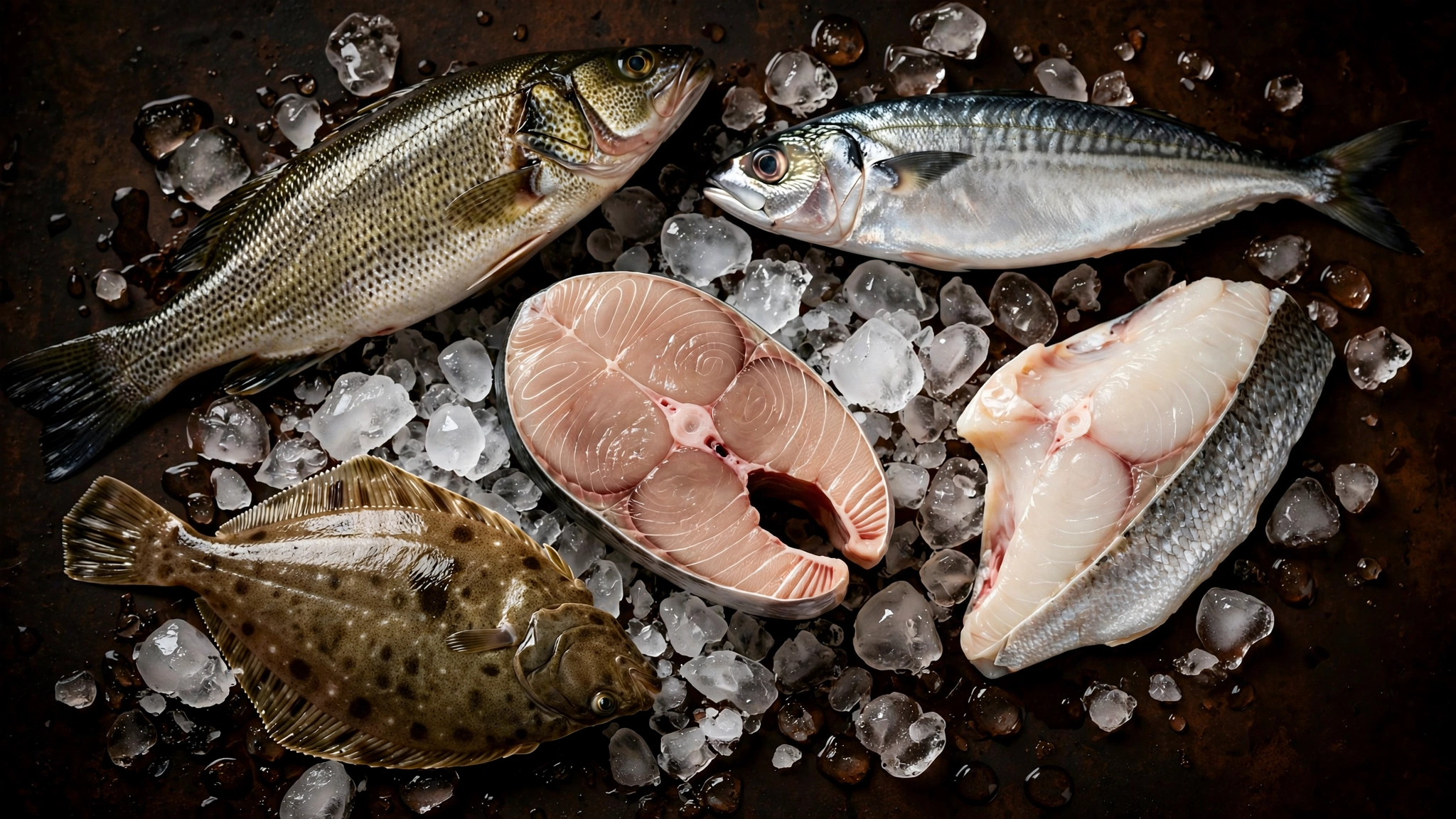
Fish Species Guide: What to Buy and How to Cook Each One
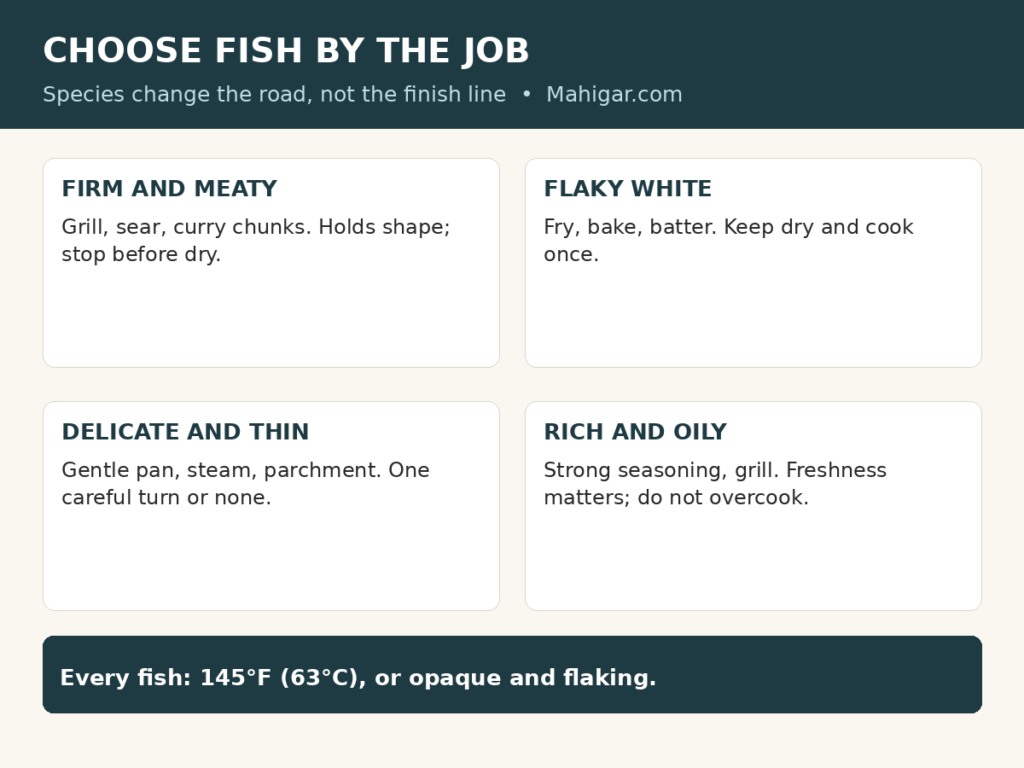
Every fish at the counter is asking you one question: do you know what I am good at? A firm, meaty fish wants the grill. A delicate, thin fish wants a gentle pan and a quick hand. A rich, oily fish wants strong seasoning and respect. Buy the wrong species for the dish and you can cook perfectly and still be disappointed. Buy the right one and even a simple method tastes like you knew a secret.
I am Wasim Abbas Bhatti, the Fish’s Chef. I have cooked fish for more than twenty years — the salmon and cod of the big supermarkets, and the rohu, catla, tilapia, pomfret, and pangasius of my own South Asian markets and canals. This page is Mahigar’s species hub. It teaches you how to read any fish by its traits, groups the species by the jobs they do best, and links down to a full buying and cooking profile for each fish as those guides publish.
If you already own the fish and need to clean and cut it, start with Fish Prep and Butchery: Every Skill You Need. If the fish is bought and the pan is hot, this page is where you decide what it should become.
Table of Contents
First, the Safety Frame for Species
Species choice is not only about taste. It is also where mercury lives on my site, so let me set the frame once, honestly.
Mercury builds up in a fish over its life. Small, short-lived fish collect very little. Large, old predators that eat other fish collect the most — that is why the FDA and EPA place fish into groups you can eat often, groups to eat less often, and a short list to avoid, and why you cannot wash, trim, or cook mercury out of a fillet. Choosing the species does the work that no kitchen trick can.
I will not repeat that chart species by species on this page, and I will never guess mercury numbers. The full FDA/EPA guide, including servings for children and pregnancy, is in Mercury in Fish: Safe Levels by Species. Read it alongside this hub: it tells you how often a fish belongs on your table; this page tells you what to do with it when it gets there.
One more frame, quickly. Whichever species you choose, the finish line is the same: 145°F (63°C) in the thickest part, or flesh that is opaque and flakes easily. The full chart is in Safe Internal Cooking Temperatures for Every Type of Fish. Species change the road. They never change the destination.
How I Read Any Fish: Five Traits
Forget memorizing fifty species. At the counter, I read five traits. They tell me how a fish will behave before I ever light the stove.
Firm or delicate? Firm fish — swordfish, mahi mahi, monkfish — hold their shape on a grill and in a curry without falling apart. Delicate fish — sole, flounder, thin pomfret — tear if you treat them roughly. Firmness decides how brave your method can be.
Lean or oily? Lean white fish taste mild and take seasoning politely. Oily fish carry a stronger, richer flavour of their own. Lean fish forgive a sauce; oily fish argue with one. Neither is better — they are different jobs.
Bones: frame, pin bones, or fine bones? Some fish fillet cleanly with a tidy line of pin bones. Carp-family fish like rohu and catla carry fine intramuscular bones that no filleting removes — you manage them at the table, not at the board. Knowing the bone pattern before you buy saves surprises at serving.
Skin: shield or obstacle? Good skin, dried well, protects a fillet in a hot pan and crisps beautifully. On a delicate steamed or poached fish, skin mostly gets in the way. Whether a skin is worth eating is a separate question, answered in Is Fish Skin Safe to Eat?.
Thickness and shape. A thick steak and a thin flat fish never finish together. Even pieces cook evenly; odd shapes need honest checks at the thickest part. Portioning for evenness is a whole step in the Prep pillar for a reason.
Hold those five traits and you can read a species you have never cooked before. Now let me walk the groups.
Firm and Meaty Fish: The Grill and Curry Fish
Some fish are built like steak. Their flesh is dense, their flakes are big, and they forgive a fierce method. Swordfish is the famous one — sold in thick steaks that take direct heat and strong flavours without complaint. Mahi mahi is firm and leaner, sweet-tasting, and ideal for grilling and tacos — with one warning: its firm texture has a short road from juicy to dry, so the cook who walks away loses. Monkfish is the odd one, dense and meaty enough that cooks compare it to lobster; the honest comparison, and where it stops holding up, gets its own profile.
These are the fish I hand to nervous cooks who fear breaking a fillet. They also suit South Asian cooking better than visitors expect: firm chunks hold together in a curry where a delicate fish would dissolve into the sauce. The heat science — why firm fish still dries when you pass the point — is in The Science of Cooking Fish: A Troubleshooting Guide.
Flaky White Fish: The Everyday Middle Ground
Cod and haddock live here: mild, white, flaky fish that suit almost everyone and almost every batter. They are the backbone of fish and chips, of simple baked trays, of the first fish many people ever cook. Their flakes are tender rather than firm, so they ask for a confident hand — coat them, chill them, fry them once, and do not stir them around.
Because the two are constantly compared, substituted, and confused at the counter, they get a dedicated side-by-side profile rather than a paragraph here. What matters at this level is the family trait: gentle whiteness, honest flakes, and a fish that carries seasoning, batter, and sauce without fighting any of it.
One habit protects every flaky white fish: keep it dry and keep it cold until the moment it cooks. These fillets weep moisture as they sit, and a wet surface steams instead of browning, whether the heat is a fryer or a pan. Pat them dry at the last minute, season late, and cook once. A cook who masters that sequence can hand almost anyone a good plate of white fish; a cook who skips it blames the species for a handling mistake.
Delicate and Thin Fish: Gentle Hands Only
Sole and flounder are the thin, flat, delicate end of the counter — sweet, fine-flaked, and finished almost before you have settled at the stove. They are also the fish most often ruined by kindness misplaced: too much heat, too much turning, too much time. Names confuse buyers here too, since “sole” on a label is not always the fish you think; the profile sorts the naming honestly.
My own table adds pomfret to this group — the flat, silver South Asian favourite, thin enough to cook whole in a pan, delicate enough to punish a cook who over-handles it. For all of these, the method rule is the same: dry surface, room in the pan, one careful turn or none, and gentle heat over heroic heat. Parchment and steam are not defeat with delicate fish. They are respect.
Rich and Oily Fish: Strong Flavour, Strong Opinions
Oily fish announce themselves. The flesh is darker, the flavour fuller, and the smell stronger if the fish is anything less than fresh. These are the fish that reward bold seasoning — spice blends, citrus, sharp marinades in honest recipes — and punish overcooking by turning heavy and tired.
Two honest habits matter here. First, buy oily fish as fresh as you can and cook it soon; rich fish does not improve in the fridge. Second, stop on time. The same opaque-and-flaky check applies; oily flesh can look deceptively coloured when done, so judge by flake and probe, not by tint. What to do when a piece has already gone too far lives in the Cooking Science pillar, linked above.
Oily fish is also where your own spice hand matters most. My blends were built on these fish: a mild fish accepts a whisper of seasoning, but a rich fish can carry turmeric, mustard, chilli, and citrus in real quantity and taste balanced rather than buried. That is a South Asian kitchen truth the big generic guides, written around delicate white fillets, rarely have the palate to teach. Match the seasoning weight to the fish’s own weight — that is the whole skill.
Whole-Fish Favourites: Snapper, Sea Bass, and Branzino
Some species are best bought whole and cooked whole. Red snapper is the celebration fish — firm, sweet, handsome on the table, and worth knowing how to check for honest labelling, since snapper is one of the most substituted fish in the market; its profile teaches the freshness checks that protect you. Sea bass is the gentle whole fish, delicate and clean-tasting. Branzino — European sea bass — is its close relation, most often sold whole and roasted whole; the two profiles cross-refer so nobody buys one expecting the other.
Whole fish follows the oldest rule on my site: judge doneness near the backbone, where the flesh is thickest. Scale it, gut it, score it if the recipe asks, and give it the respect of a clean board — the Prep pillar walks every one of those steps.
South Asian Staples: My Home Ground
This is the section most species guides on the internet cannot write, because they have never stood in my markets. Rohu is the great carp of our rivers and ponds — the fish of family curries and wedding feasts, firm-fleshed, full-flavoured, and carrying the fine Y-bones every South Asian eater learns to manage from childhood. Catla, its big-headed cousin, shares that bone pattern and that table skill. Tilapia is the mild, affordable everyday fish, gentle enough for children and quick weeknight pans. Pangasius — sold widely as basa — is the soft, mild, budget fillet that deserves an honest conversation about what you are actually buying, which its profile gives with real sourcing reporting.
I have fished our local canals with a net for eight years, and wallago attu is the fish those waters are famous for — a large river catfish that deserves respect both as sport and as food. These are not exotic entries in a list to me. They are Tuesday fish. When a rohu profile elsewhere reads like a translated encyclopedia entry, you will taste the difference here: this hub is written from the market, the canal, and the stove.
The Species Hub: Read by Fish
Thirteen profiles belong to this pillar. Each one covers buying, flavour, bones, skin, and the cooking methods that suit that fish. They will link back here; I will link down to each as it publishes.
- First-time pan fish, mild and forgiving? Go to Tilapia: Buying,. Flavor, and Best Cooking Methods
- A gentle whole fish for a quiet dinner? Go to Sea Bass: How to Buy and Cook It Well.
- The celebration whole fish? Go to Red Snapper: A Complete Buying and Cooking Guide.
- Firm, sweet fish for the grill or tacos? Go to Mahi Mahi: How to Buy, Prep, and Cook It.
- A steak fish that behaves like meat? Go to Swordfish: Buying and Cooking Guide.
- The thinnest, sweetest fillets? Go to Sole and Flounder: What to Know Before You Cook.
- Settling the counter argument? Go to Haddock vs Cod: What’s the Difference?.
- Whole-roasted European sea bass? Go to Branzino: How to Buy and Cook European Sea Bass.
- A salmon alternative worth trying? Go to Arctic Char: A Home Cook’s Guide.
- The dense, meaty curiosity? Go to Monkfish: The ‘Poor Man’s Lobster’ Explained.
- The South Asian family staple? Go to Rohu Fish: Buying and Cooking Guide (South Asian Staple).
- The flat silver favourite? Go to Pomfret: How to Buy and Cook This South Asian Favorite.
- The budget fillet, honestly examined? Go to Basa and Basa and Pangasius: What You’re Actually Buying.
Frequently Asked Questions
What is the best fish for a beginner to cook?
Start with a mild, forgiving fish: tilapia for a quick pan, or a firm fish like mahi mahi if you fear breaking a delicate fillet. Even pieces, a dry surface, and the opaque-and-flaky check matter more than the species name.
Which fish is best for frying?
Flaky white fish like cod and haddock are the classic frying fish — they take batter well and flake tender. Firm fish fry well too. The real rule is dry fish, one layer, and stopping at done; the species profiles give the per-fish detail.
How do I know which fish to buy at the counter?
Read the five traits: firm or delicate, lean or oily, the bone pattern, the skin, and the thickness. Match them to tonight’s dish — grill, curry, batter, or gentle pan — and let the Mercury guide tell you how often that species belongs on your table.
Does every species cook to the same temperature?
Yes for fin fish: 145°F (63°C) in the thickest part, or opaque and flaking easily, whatever the species. What changes is how fast each fish gets there — thin, delicate fish arrive early; thick, firm steaks take longer. Check the thickest part, not the clock.
What to Check Next
Bookmark the ordersI use: safety first, species second, method third. Check the Mercury guide for how often a fish belongs on your table, use this hub to choose the species for tonight’s dish, then walk its profile for buying and cooking detail.
And when the fish comes home whole, the Prep pillar takes it from board to pan. Right species, right prep, right heat — that is the whole game.

2 Comments