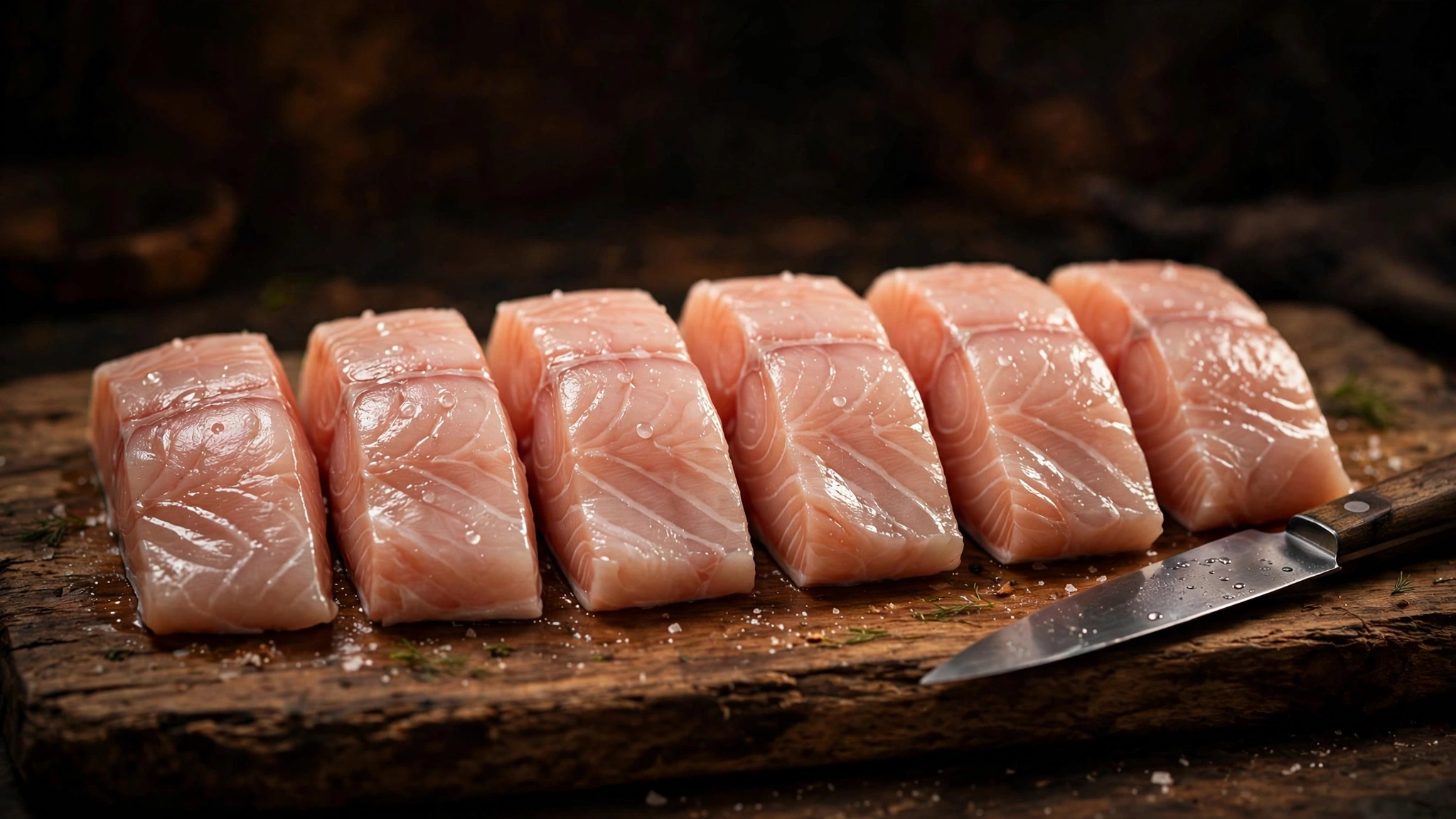
How to Portion Fish Fillets Evenly
If you portion fish by length, you can end up with neat-looking pieces that cook at completely different speeds. Portion by thickness instead. Cut across the fillet, group pieces of the same thickness together, and fold the thin tail under itself so it can cook alongside the thicker pieces rather than drying out ahead of them.
This is step seven in the full prep sequence in
Fish Prep and Butchery: Every Skill You Need
Table of Contents
Why Thickness Decides Everything
A fillet is not one even slab. The head end is thick, the middle is steadier, and the tail tapers thin. Heat has to travel to the centre of each piece, so thickness decides when it is done.
That is why a thin tail piece can dry out while the thick head piece is still translucent in the middle. Pieces of matching thickness finish together, so you are not pulling one portion out early and leaving another behind, or guessing which piece the temperature reading belongs to.
Portion the fillet while it is cold and firm, when the knife moves cleanly and the flesh holds its shape. If you are starting from a whole fish, work through
How to Fillet a Fish: Step-by-Step for Beginners
What You Need on the Board
You do not need special tools, but you do need control. Set out a sharp chef’s knife or fillet knife, a steady board, a cold tray, and kitchen paper before the fish comes out of the fridge.
- A sharp chef’s knife or fillet knife that cuts in one stroke, not a blunt knife that tears
- A steady board held firm with a wet towel underneath so it does not slide
- A cold tray lined with kitchen paper to receive the portions
- Dry hands and a dry fillet surface, so the fish does not slip while you cut
How to Portion Fish Fillets Evenly, Step by Step
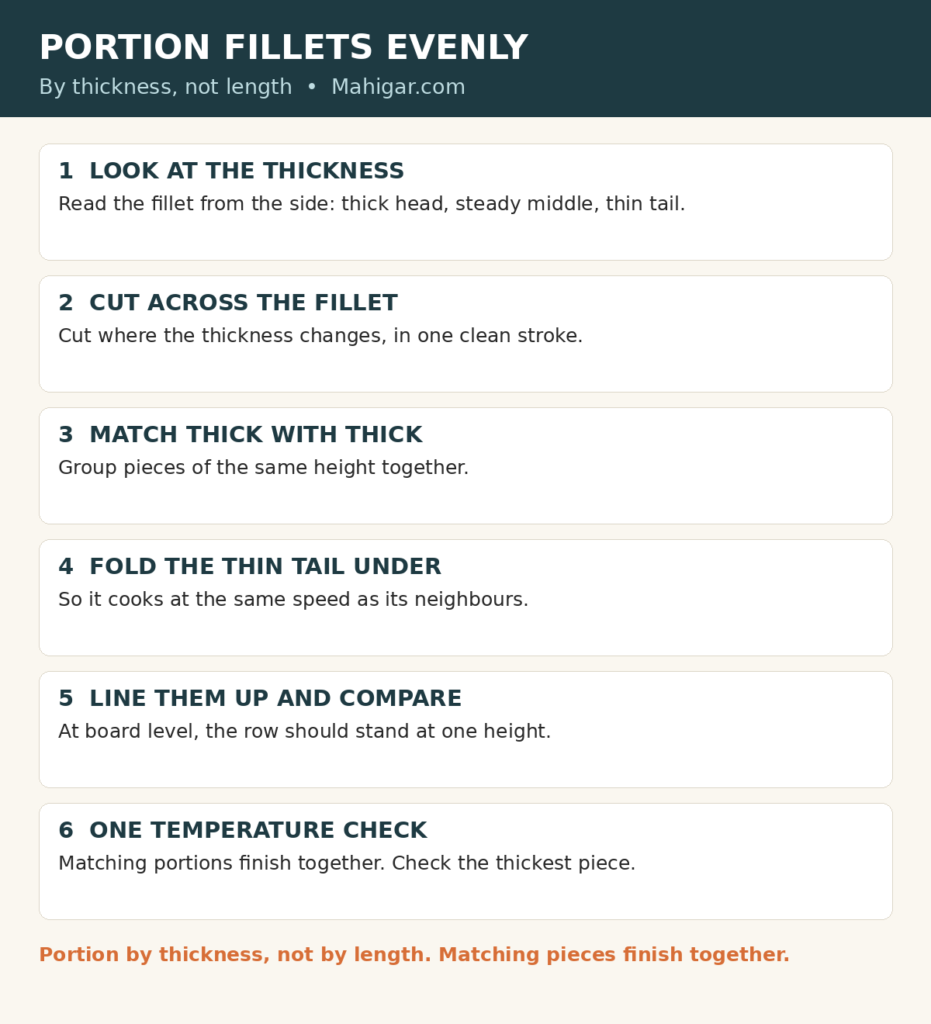
Portion the fillet by thickness in six steps: read its shape, plan the cuts, cut cleanly, group matching pieces, fold the tail, and compare the finished portions side by side.
Lay the fillet flat and read its shape from the side
Lay the fillet flat on the board and look at it from the side, not just from above. Find the thick head end, the steadier middle, and the thin tail, and keep that shape in mind before you cut.
Decide the portions by thickness
Decide where each portion will be cut by thickness, not by equal length. Allow roughly one fillet section per person, adjusted to the size of the fish and the appetite at the table, and plan thicker and thinner pieces as separate groups.
Cut across the fillet in one clean stroke
Cut straight across the fillet in one clean stroke. Do not saw back and forth, which tears the flesh and leaves ragged edges that cook unevenly.
Group pieces of matching thickness together
Set the cut pieces into groups of matching thickness: thick with thick, middle with middle, thin with thin. Each group can go into the pan together and finish at the same time.
Fold thin tail pieces under
Take each thin tail piece and fold it under itself so its thickness roughly doubles and matches the rest of its group. The fold should sit underneath, pressed gently into place.
Line the portions up and compare them at board level
Line all the portions up in a row and get down to board level to compare their height. Trim a piece that stands too tall, fold one that sits too low, or move a piece into a better-matching group before anything goes near the pan.
The Thin Tail: Fold It, Don’t Fight It
The thin tail is where most batches fall apart. Left flat, it is half the thickness of the rest of the portion, so it finishes minutes earlier and dries out while everything else is still getting there. Folding it under solves the problem at the board instead of at the stove.
Fold the tail under itself and you roughly double its thickness, bringing it in line with the middle of the fillet. If the fillet is skin-on, the skin helps hold the fold in place while the piece cooks. For very tiny tail ends that would fold into almost nothing, group them together as their own small batch and take them out of the pan first.
Decide About the Skin Before You Portion
Decide whether the skin stays on before you make the first cut. Skinning one whole fillet in a single piece is far easier than skinning small portions one by one, where each little piece slips, curls, and tears under the knife.
So work in this order: skin first, while the fillet is still one manageable piece; check for any remaining bones at the same stage; then portion. For the skinning technique itself, follow
Bone-In Fish? Cut Steaks Instead
Not every fish should be filleted. Bone-in fish such as rohu and catla are traditionally cut into steaks, eaten with care around the bones, and valued for exactly that way of eating. If your fish is bone-in, do not fight it into fillets; cut steaks instead.
The rule that matters is the same across the steaks: cut them to an even thickness. A thin steak and a thick steak from the same fish will never finish together, so keep the thickness steady from one end of the fish to the other, and each steak will cook like its neighbour.
Even Portions Make One Temperature Check Honest
One temperature check only tells the truth if the pieces it speaks for are the same thickness. Cook fish to 145°F (63°C) in the thickest part, and with even portions that single reading stands for the whole pan.
With uneven portions, that same check lies: the thick piece you probed may be ready while a thinner piece is already overdone, or the easy piece you checked gives you confidence the thickest one has not earned. Match the portions first and one honest check covers the batch. For the temperatures themselves, see Safe Internal Cooking Temperatures for Every Type of Fish
After Portioning: Chill, Freeze, or Cook
Once the portions are cut, keep them cold, covered, and moving towards one of three outcomes: the pan, the fridge, or the freezer. Do not leave cut fish sitting on the board while you tidy up around it, and do not pile portions on top of each other while they wait.
If you are freezing the fish, portion it first and then freeze it, so you can take out exactly what you need later without thawing a whole fillet. For the full freezing method, follow
How to Freeze Fresh Fish at Home
In the fridge, hold fresh fish at 40°F (4°C) or below and cook raw fish within 1 to 2 days at most. Keep the portions covered, on a cold tray, and away from ready-to-eat food.
When you have finished, wash your hands, the knife, and the board in hot, soapy water, and keep raw fish and its juices separate from other food throughout preparation. Clear the board down before anything else takes its place.
The Mistakes That Ruin an Even Batch
Most uneven batches go wrong in the same five ways:
- Cutting by length instead of thickness, so equal-looking pieces cook at different speeds
- Ignoring the thin tail instead of folding it under, so it dries out first
- Mixing skin-on and skinless pieces in the same batch, so they cook and crisp differently
- Portioning warm, soft fish, which tears and cuts ragged instead of clean
- Checking only the easiest, thinnest piece and trusting it to speak for the thickest one
Frequently Asked Questions
How do I know if my fish portions are even?
Line them up in a row and get down to board level to compare their height. Pieces standing at the same height are even. Trim a piece that stands too tall, fold one that sits too low, or move a piece into a better-matching group.
Should I portion fish fillets before or after cooking?
Before cooking. Portion the fillet while it is cold and firm, so the pieces are even before they go into the pan and cook at the same rate. Portioning after cooking tears the flesh and gives you broken, uneven pieces.
What should I do with the thin tail piece of a fillet?
Fold it under itself so its thickness roughly doubles and it can cook alongside the rest of the fillet. If it is very tiny, group it with other tail ends as its own small batch and take that batch out of the pan first.
Can I portion fish fillets before freezing them?
Yes. Portion the fillets first, wrap each piece well, and freeze them promptly, so you can take out exactly what you need later. For the best texture, fish cooked on the day it is bought still beats frozen fish, so freeze only what you will not cook fresh.
What to Check Next
With your portions even, the last checks are quick. If the skin is on, pat each piece dry and cook it in a hot pan so the skin can crisp without the flesh overcooking underneath. If the fish is skinless, those even pieces are ideal for a curry or the steamer, where gentle, even heat matters most. Whichever way you cook them, run a fingertip over each portion for pin bones before it goes near the pan — portioning is the last easy moment to find them.
Portioning is step seven in the full pillar order, after the fillet is prepared and checked, so keep to that order each time: prepare the fillet, portion it evenly, then move straight to cooking or proper chilling. Working in that sequence keeps cold fish cold, keeps the board clean, and keeps every batch consistent.
Sources: Handling guidance in this article follows FDA seafood handling guidance and FoodSafety.gov principles on chilling, separation and cooking temperatures. This is general kitchen information, not medical advice.
