How to Skin a Fish Fillet
Skinning well is mostly about what stays still. Lay the fillet skin-side down with the tail nearest you, grip that tail skin through a dry towel, and slide a flexible knife almost flat between skin and flesh while pulling the skin gently toward you. The blade barely moves; the skin travels, and the flesh stays put. This is step six in the full prep sequence in Fish Prep and Butchery: Every Skill You Need.
Table of Contents
Should This Fillet Be Skinned at All?
Keep the skin on for crisp skin and protection in a hot pan or on the grill. Take it off for poaching, steaming, or a smooth curry where soft skin would spoil the texture. Decide by the dish first. For background on eating the skin itself, see Is Fish Skin Safe to Eat?.
What You Need on the Board
Set out a sharp, flexible fillet knife, a dry towel just for gripping the tail skin, and a large board steadied on a damp towel. Add a cold tray for the finished fillet and a small scrap bowl for skin and trimmings. The fillet in front of you is where filleting ends; the full method is in How to Fillet a Fish: Step-by-Step for Beginners.
Do the Pin Bones Before the Skin
Pull pin bones first, while the fillet sits stable skin-side down. Once the skin is gone the fillet slides and tweezer work turns fiddly. Keep the order fixed: pin bones first, skin second. The detailed method is in How to Remove Pin Bones from Fish.
Step-by-Step: Skin the Fillet
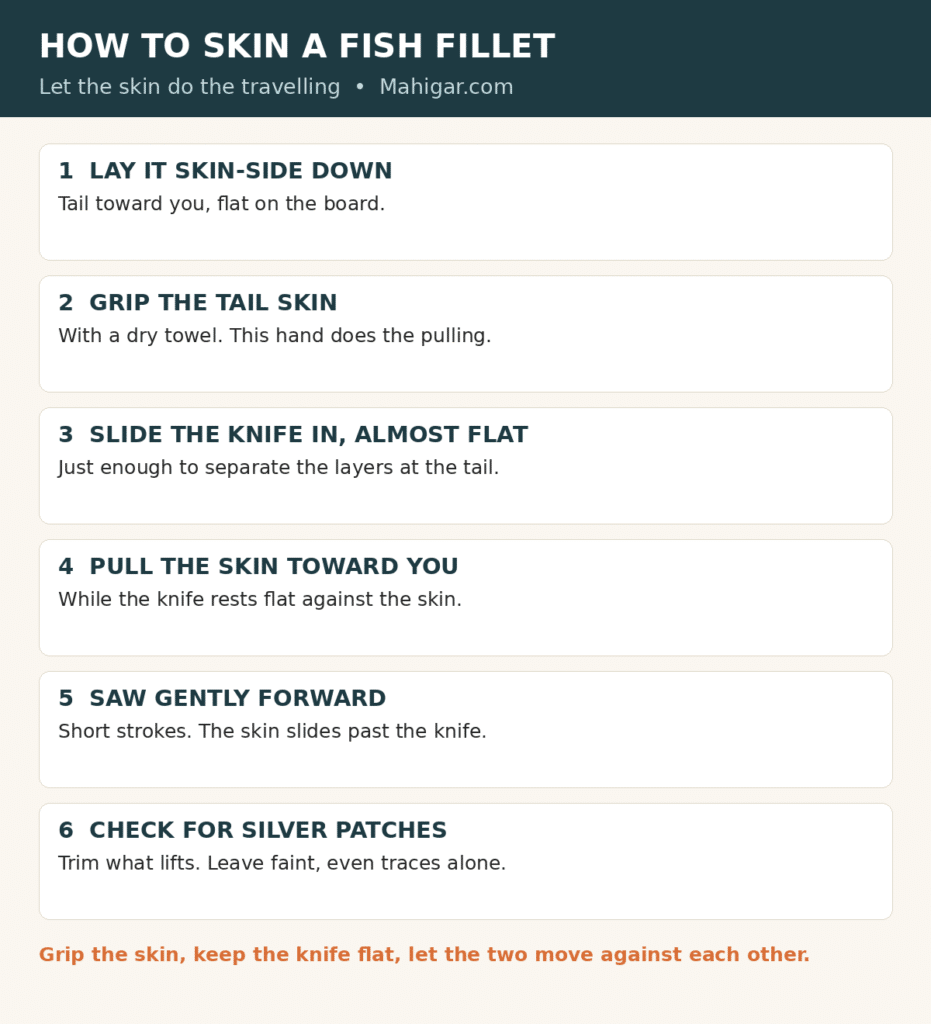
Lay the fillet skin-side down, grip the tail skin with a towel, and work a flexible knife almost flat between skin and flesh while pulling the skin toward you.
Lay the fillet skin-side down
Place the fillet skin-side down with the tail end pointing toward you.
Grip the tail skin with a towel
Pinch the tail end of the skin firmly through a dry towel so it cannot slip.
Make the first small cut at the tail
Cut a small starter notch at the tail to separate skin from flesh and give the blade a doorway.
Rest the blade almost flat on the skin
Angle the blade almost flat, resting lightly on the skin rather than digging into the flesh.
Pull the skin toward you while sawing gently
Pull the skin steadily toward you while the knife saws gently forward; let the skin travel, not the knife.
Lift and check your angle
Peek underneath. Flesh clinging to the skin means the angle is too steep, so flatten the blade more.
Look the fillet over in good light
Turn the finished fillet over in good light and check for torn patches or thick silver film.
Firm Fillets and Delicate Fillets Are Not the Same Job
The flat-knife method is the same; only hand pressure changes. Match tension to the flesh and even thin fillets release in one clean sheet.
Firm Fillets: Catla, Sea Bass and Snapper
Firm fillets such as catla, sea bass and snapper tolerate steady, even tension and longer sawing strokes. Stay flat, keep the pull consistent, and slow down near your gripping fingers.
Thin, Delicate Fillets: Tilapia, Pomfret and Sole
Thin fillets such as tilapia, pomfret and sole tear under a hard pull. Use a light grip and short strokes, and trim any stuck patch afterwards with the blade flat instead of tearing it free mid-stroke.
That Thin Silver Layer Left Behind
The shiny film left after skinning is silverskin, the thin membrane between flesh and skin. Shave off loose or thick patches with the blade almost flat, but leave a thin, even trace alone. Chasing every glint wastes flesh, so treat this as a quick tidy, not a second skinning.
After Skinning: Chill, Portion, Cook
Cut even portions so they cook at the same rate, then chill covered promptly at 40°F (4°C) or below. Use raw fish within 1 to 2 days at most, ideally the same day, and cook to 145°F (63°C) at the thickest part. Wash hands, knife and board in hot, soapy water, and keep raw fish away from ready-to-eat foods.
The Mistakes That Waste Good Flesh
A blade tipped too steep cuts through the skin and stalls; held too upright it shaves meat away. Pulling before the blade is flat, losing the towel grip, and hurrying thin fillets all waste flesh. Slow down, flatten out, and let the skin travel.
Frequently Asked Questions
Do you skin a fish fillet before or after removing pin bones?
Skin after removing the pin bones. With the skin still on, the fillet sits flat and stable skin-side down, so tweezer work is easier. Once the skin is off, the fillet slides and the job turns fiddly.
Can you skin a fillet with a regular kitchen knife?
Yes, but a short, flexible fillet knife is easier to keep almost flat between skin and flesh. Sharpness matters more than a fancy blade, so hone whatever knife you use before you start.
What is the silver stuff sometimes left on the fillet after skinning?
It is a thin silverskin film that sat between flesh and skin. Trim loose or thick patches with the blade almost flat, but leave faint, even traces alone. It is a trimming detail, not a safety problem.
Is it better to cook fish with the skin on or off?
It depends on the dish. Keep the skin on for frying and grilling, where it crisps and protects the flesh. Go skin-off for poaching, steaming and smooth curries. Decide by the dish, not by habit.
What to Check Next
Next, portion evenly for even cooking. For fillets kept skin-on, dry the skin well and use a properly hot pan. For the full order of scaling, gutting, filleting, pin-boning and skinning, follow Fish Prep and Butchery: Every Skill You Need.
Sources: chilling, storage and cooking temperatures follow U.S. FDA seafood handling guidance and FoodSafety.gov principles. General kitchen information only, not medical advice.
