Why Fish Sticks to the Pan (And How to Stop It)
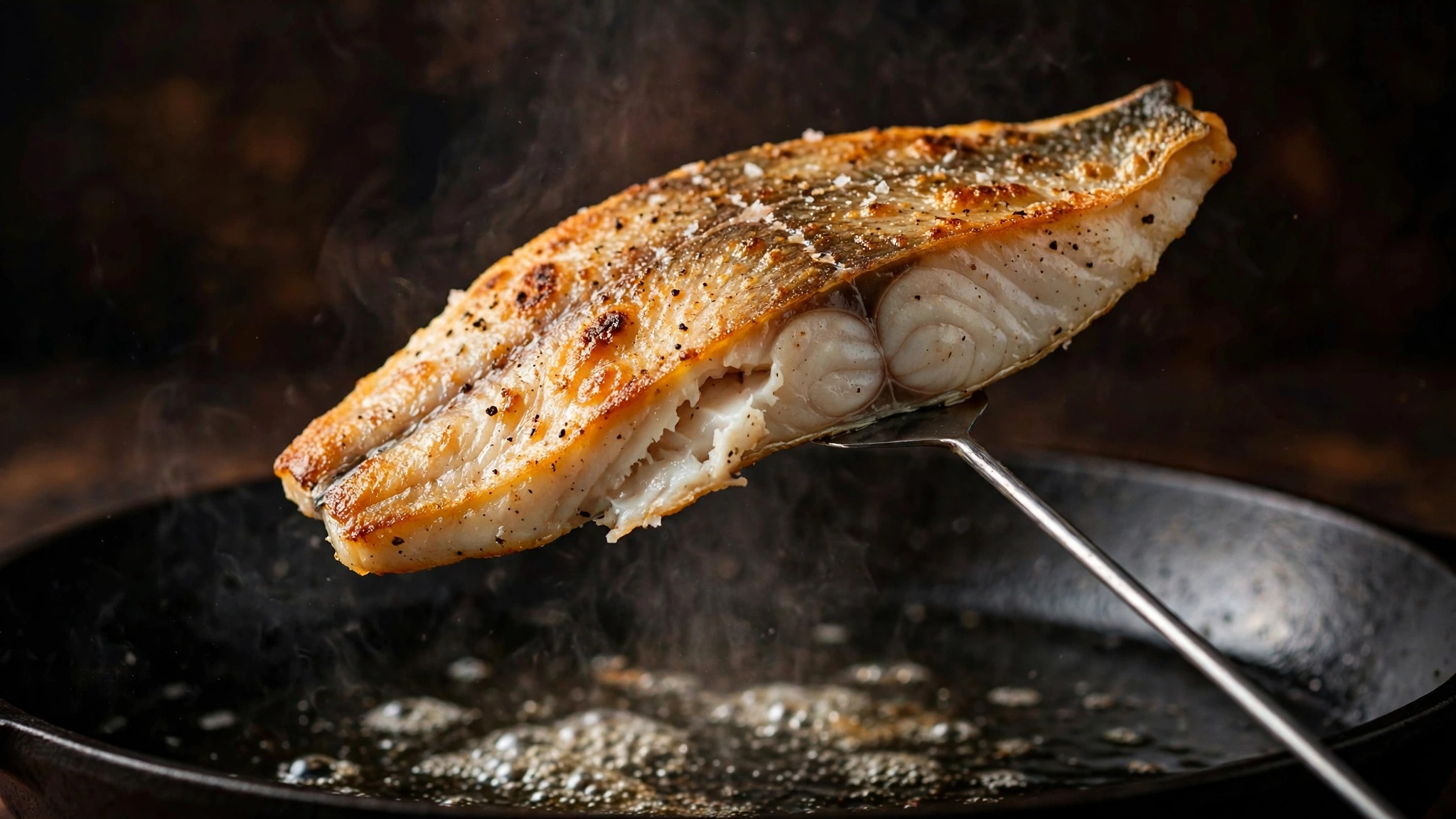
Fish sticks to the pan when it goes in wet, the pan is not hot enough, there is too little fat, or you move it before its surface has cooked and let go. Fix those four things and most fillets release on their own: pat the fish dry, heat the pan, let the fat shimmer, lay the fish down, and then leave it alone.
I am Wasim Abbas Bhatti, the Fish’s Chef, and this is the pan problem I meet more than any other. It sits inside the bigger map of heat problems in The Science of Cooking Fish: A Troubleshooting Guide. The causes are humble: a dry surface, a ready pan, and patience.
Table of Contents
Why Fish Sticks in the First Place
In plain kitchen words, a raw fillet is soft and wet. When it meets metal, the surface settles against the pan and starts to set there. Pull too early and the fish tears, leaving its best layer behind. Give it time and the same surface often lets go cleanly.
It went in wet
This is the biggest cause I see. Water on the fish has to boil away before the surface can brown. While it boils, the fish is steaming against the metal instead of searing, and it sits there longer in the sticky stage. A fillet straight from a marinade, a rinse, or a damp tray is already in trouble. I pat fish dry with paper just before it cooks — top, bottom, and especially the skin.
The pan was not ready — or was wildly too hot
A cool pan lets fish slump and settle before any surface forms, so it clings. A pan heated until it is smoking hard can scorch the outside while the centre is still raw. I want the middle road: pan hot first, then fat, then a short wait until the fat shimmers and moves easily.
There was too little fat
Fat is the thin cushion between fish and metal. Too little of it and delicate flesh meets bare pan in too many places. You do not need to drown the fish — a light, even film is enough for most pan work. The dry spots are where it grabs first.
You moved it too early
Every cook knows this moment. The fish lands, nerves start, and a spatula nudges it “just to check.” That nudge is usually what tears it. Early on, the surface has not set. Later, after it has cooked against the pan, the same fillet often releases with almost no force. If it still resists, it usually wants a little more time, not a stronger pull.
The fish itself is delicate
A thin, skinless fillet has nothing to protect it. It is all soft flesh against hot metal, and it breaks if handled roughly. Skin-on fish is more forgiving: the skin takes the pan’s heat first and holds the fillet together. That is one reason I often start skin-on fish skin-side down and leave the skin question until serving — the safety side of that choice is in Is Fish Skin Safe to Eat?.
My Fix: Dry, Hot, Patient
This is the order I use at home. The prep half matters as much as the pan half: even, well-handled pieces from Fish Prep and Butchery: Every Skill You Need give you a fillet that lies flat and cooks at one speed.
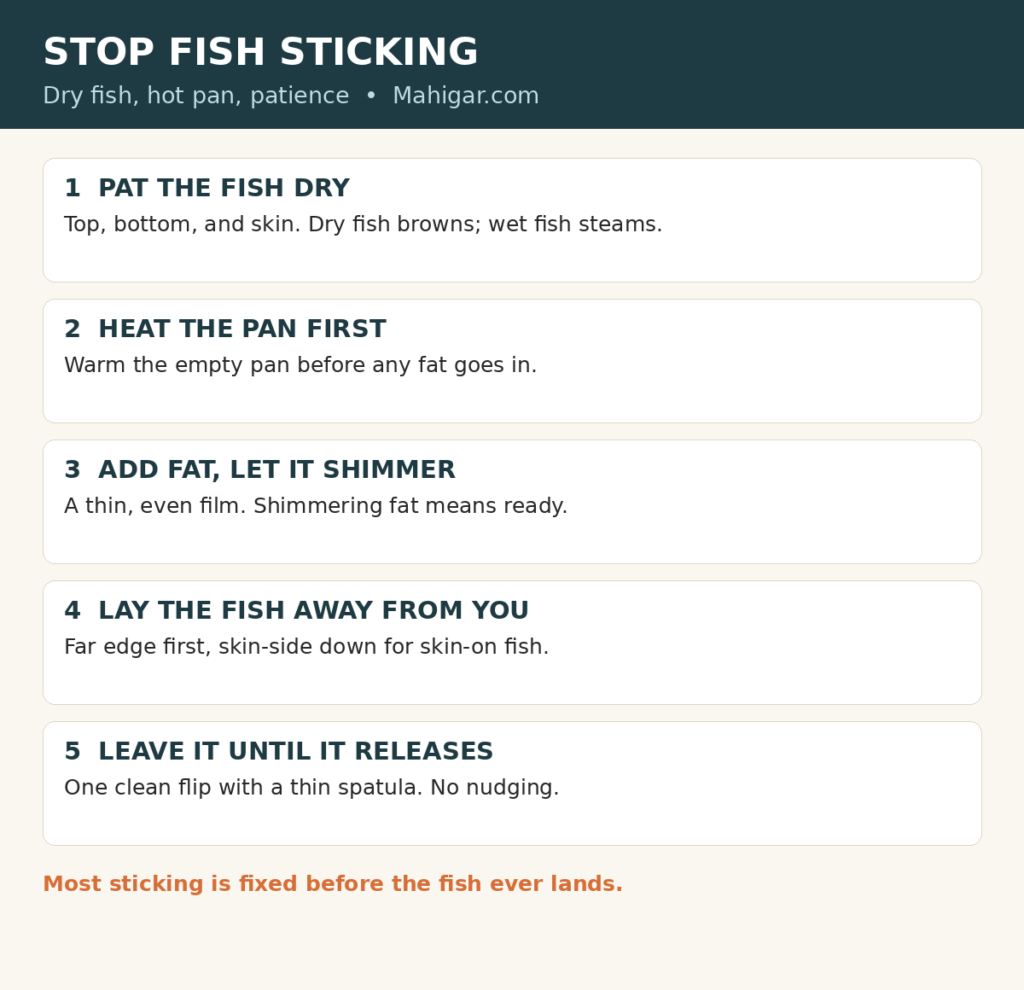
- Pat the fish dry. Both sides, and the skin especially. Season after drying, so salt is not sitting in surface water.
- Give the fish room. Choose a pan where the pieces lie in one layer without crowding. Packed fish steams, and steaming brings the wet surface back.
- Heat the pan first. Let the empty pan warm over the heat before any fat goes in.
- Add fat and let it shimmer. A thin film over the base. When it shimmers and slips easily across the pan, it is ready.
- Lay the fish away from you. Lower it in gently, far edge first, so hot fat splashes away from your hand. For skin-on fish, start skin-side down.
- Leave it alone. This is the hard step. Let the surface cook, firm, and brown. Do not slide it around to prove it is free.
- Flip once, with a thin spatula. Slide the thin edge under the fish with confidence. If it resists hard, give it a little more time and try again. One clean flip beats five nervous ones.
- Check the finish. For fin fish, cook to 145°F (63°C) in the thickest part, or until the flesh is opaque and flakes easily. The full chart is in Safe Internal Cooking Temperatures for Every Type of Fish.
If the Fish Is Already Stuck
Do not hack at it. First, wait a little longer unless the underside is browning too fast; a surface that is nearly ready often releases if you stop fighting it. If the heat is racing, lower it and let the fish settle. Then work a thin spatula gently under one edge, keeping the blade flat against the pan so it lifts the fish instead of digging into it.
If a fillet still breaks, it is not ruined. Broken fish flakes beautifully into rice, folds into a sauce, or fills a taco. Serve it honestly and fix the order next time: drier fish, hotter pan, more patience.
When I Do Not Fight the Pan at All
Some fish should not be asked to sear. Very thin, delicate, skinless fillets are kinder on a parchment-lined baking tray, where they cook gently and lift off whole. On a grill, I use a clean, hot, well-oiled grate and still handle delicate fish gently. Picking the kinder method is not defeat — it is how the fish reaches the plate in one piece.
Frequently Asked Questions
Why does fish stick even in a nonstick pan?
Nonstick helps, but wet fish, a pan that was not properly hot, too little fat, or moving the fish before its surface sets can still make it cling and tear.
How do I know when the fish will release?
The edges look firmer and lightly browned, and a thin spatula slides under with little resistance. If you have to force it, the surface is usually not ready.
Does skin-on fish stick less than skinless?
Yes, most days. Dry skin in a hot, lightly oiled pan crisps and holds the fillet together, so it lifts as one piece.
What temperature tells me the fish is done after flipping?
Fin fish is done at 145°F (63°C) in the thickest part, or when the flesh is opaque and flakes easily.
What to Check Next
Next time fish lands in your pan, run the chant before it touches the metal: dry fish, hot pan, shimmering fat, then hands off. If it sticks anyway, you now know which of the four causes to fix first.
For the wider picture — mushy fish, curling fillets, and doneness without a thermometer — go back to the Cooking Science pillar, and keep the temperature guide beside the stove. Calm pan work is a skill, and it is learned one clean release at a time.
Sources and standards used: The only temperature stated (fin fish to 145°F/63°C in the thickest part, or flesh opaque and flaking easily) follows the FoodSafety.gov Safe Minimum Internal Temperature Chart and U.S. FDA seafood guidance, as set out in Mahigar’s Article 02. The sticking explanation and fixes are Wasim Abbas Bhatti’s home-kitchen experience, written in plain language — not laboratory claims. This is general kitchen information, not medical advice.
