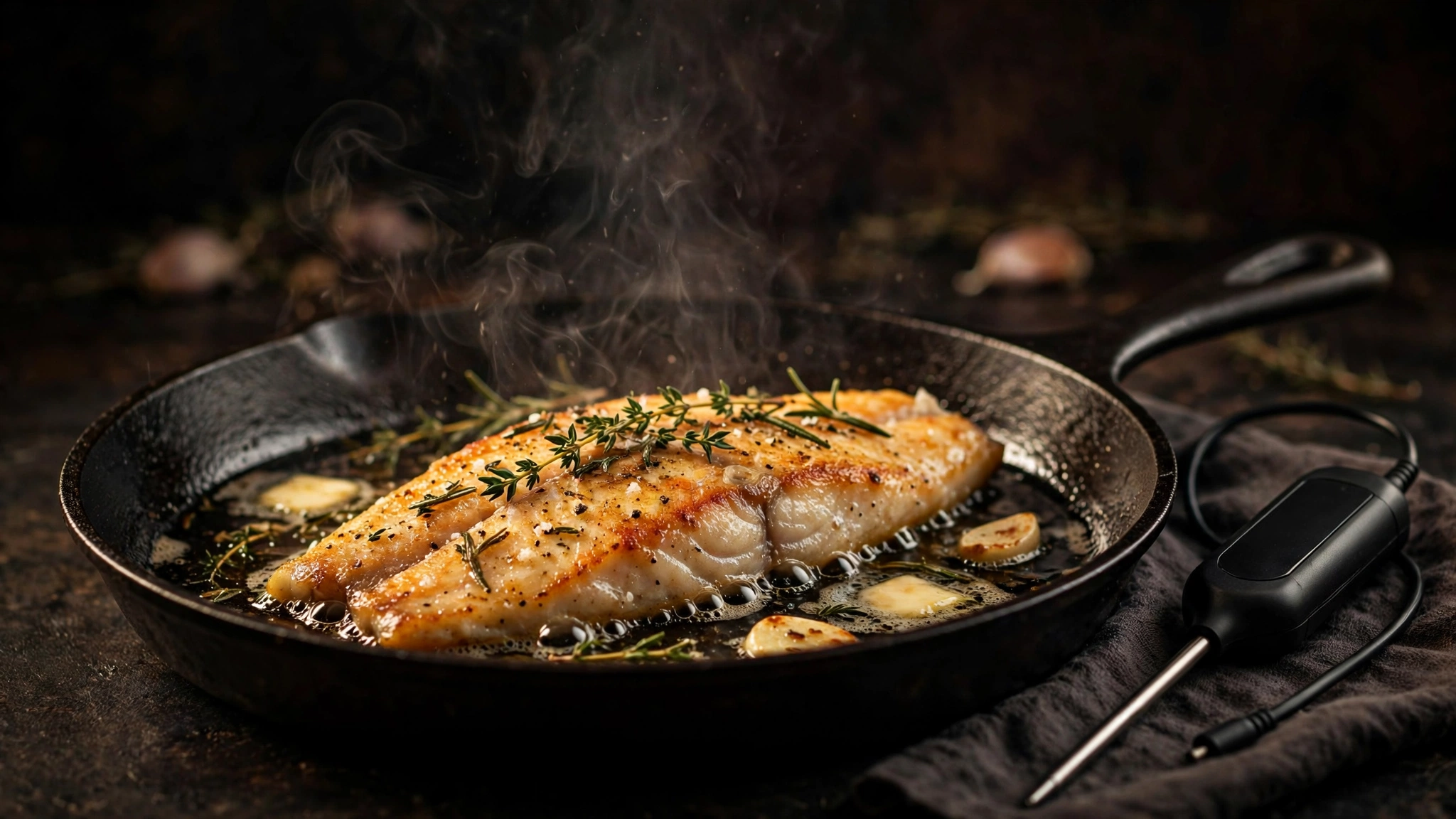
The Science of Cooking Fish: A Troubleshooting Guide
Most fish cooking problems are heat problems, not talent problems. Fish sticks when the pan or the fish is not ready. It turns mushy after a bad thaw, long acid, or overcooking. It curls when one side tightens faster than the other. It dries after “a few more minutes to be safe.” I am Wasim Abbas Bhatti, the Fish’s Chef. This hub explains what heat does to fish and where to go next. If your fish is whole, prep first via Fish Prep and Butchery: Every Skill You Need.
Table of Contents
First, the Only Safety Number on This Page
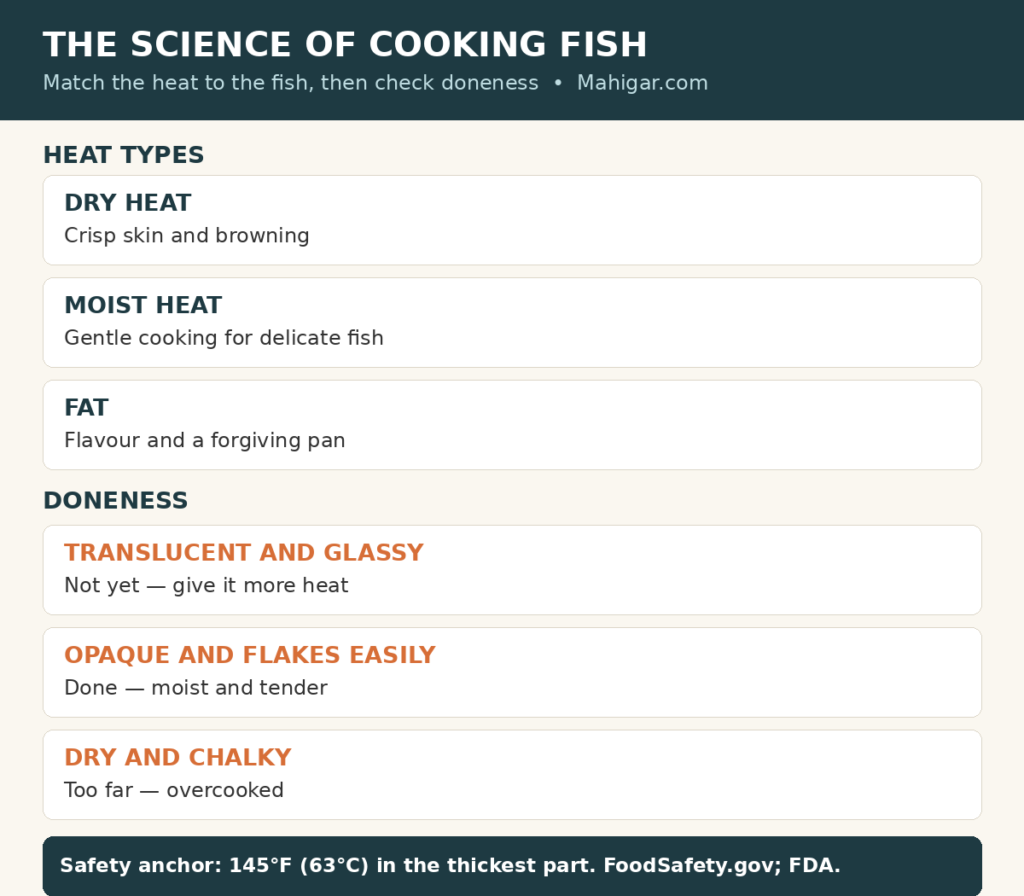
For fin fish, cook to 145°F (63°C) in the thickest part, or cook until the flesh is opaque and flakes easily. This is the guidance from FoodSafety.gov and the FDA. You can read the full chart here: Safe Internal Cooking Temperatures for Every Type of Fish. A restaurant may serve softer fish as a texture choice below the safety minimum. That is not what I teach for home cooking.
Heat, in Plain English
Heat moves from the outside in. Fish starts translucent. Then it turns opaque and flaky. If heat keeps going, it becomes dry and chalky. Dry heat, moist heat, and fat decide this journey. Dry heat can brown and crisp. Moist heat is gentle and does not brown. Fat helps heat reach the fish in an even way and carries flavour. My job in this guide is to help you match the heat to the fish and stop at the right moment.
1. Dry Heat: Browning, Crisping, and the Sticking Problem
Dry heat is good for browning and crisping. Start with dry fish. Use a hot pan. Add fat and wait until it shimmers. Lay the fish away from you and leave it alone. Most sticking comes from wet fish, a cool pan, too little fat, or moving the fish too early. When the fish is ready, it will release more easily. I cover this problem in full in Why Fish Sticks to the Pan (And How to Stop It).
2. Moist Heat: Gentle Cooking for Delicate Fish
Moist heat means poaching, steaming, cooking in sauce, or a covered bake. There is no browning here. The goal is calm liquid, one layer of fish, and removing the fish on time. This is a kind method for delicate fish. If skin is part of your meal, read Is Fish Skin Safe to Eat? so you know when skin is a good choice and when it is not.
3. Fat: Flavour, Forgiveness, and a Better Pan
Fat carries flavour. It evens contact between fish and pan. It is also forgiving, because it helps stop harsh, uneven cooking. More fat is not always better. You need enough for good contact, not so much that the fish fries in a pool when you wanted a gentle pan cook. I explain the choices in Best Cooking Oils for Fish (Smoke Point Guide).
Why Fish Turns Mushy
Mushy fish often comes from overcooking, poor thawing, a long acid marinade, or old fish. Acid can change texture if fish sits in it too long. Bad thawing can break the flesh. Old fish will not become fresh again in the pan. I go deeper in Why Is My Fish Mushy? Causes and Fixes. If fish smells sour or like ammonia, or feels slimy, do not try to rescue it. Throw it away.
The Doneness Cues That Actually Work
Use a probe and check for 145°F in the thickest part. Use opaque and flaky flesh as your backup check. Cut even portions when you can, so thin and thick pieces do not finish at very different times. For shellfish, look for pearly, opaque flesh. Shells should open during cooking, and you should discard closed shells after cooking. I share the no-tool method in How to Tell When Fish Is Done Without a Thermometer.
Why Fish Curls, and What It Is Telling You
Fish curls when skin tightens or when heat is uneven. The skin side pulls, and the fillet bends. Cooking skin-side down first can help. Light scoring on the skin can also help in some cases. Curling is a sign to check heat and contact, not a sign to press the fish hard and force it flat for the whole cook. I explain this in Why Does Fish Curl Up When Cooking?.
Overcooked, Undercooked, and the Fish in Between
Undercooked fish can look translucent or glassy in the centre. Overcooked fish is dry and chalky. The target is opaque, moist, and just flaky. There is no universal time rule that works for every fish and every pan. Use the cues, not only the clock. For help after a mistake, read How to Rescue Overcooked or Dry Fish. To learn the signs side by side, read Overcooked vs Undercooked Fish: How to Spot the Difference.
Skin On or Skin Off? It Changes the Cooking
Skin protects fish and can crisp in a hot pan. Skin off often suits poaching, steaming, or curry, where crisp skin is not the goal. Your choice changes heat, timing, and texture. If you are unsure about eating skin, read Is Fish Skin Safe to Eat? again. I compare the methods in Skin-On vs Skin-Off: Does It Change How You Cook Fish?.
“Why Does It Taste Fishy?”
Fresh fish should have a mild sea smell. A sour smell or ammonia smell means you should discard the fish. Do not cook it and hope the taste will go away. I explain causes and simple steps in Why Fish Tastes ‘Fishy’ and How to Reduce It.
The Cross-Pillar Map
Use the right pillar for the right job. Prep work lives in the Prep pillar, starting with Fish Prep and Butchery: Every Skill You Need. Safety numbers live in the temperature guide, Safe Internal Cooking Temperatures for Every Type of Fish. Species guides will come later and will link back here for heat and doneness. Name your problem first, then choose the guide that fixes that problem.
The Troubleshooting Hub: Read by Problem
- Why Fish Sticks to the Pan (And How to Stop It)
- Why Is My Fish Mushy? Causes and Fixes
- How to Tell When Fish Is Done Without a Thermometer
- Why Does Fish Curl Up When Cooking?
- Overcooked vs Undercooked Fish: How to Spot the Difference
- Why Fish Tastes ‘Fishy’ and How to Reduce It
- Best Cooking Oils for Fish (Smoke Point Guide)
- How to Rescue Overcooked or Dry Fish
- Skin-On vs Skin-Off: Does It Change How You Cook Fish?
Frequently Asked Questions
What temperature should fish be cooked to?
Cook fin fish to 145°F (63°C) in the thickest part, or until opaque and flakes easily. Ground fish should reach 155°F (68°C), and stuffed fish should reach 165°F (74°C).
Why does my fish stick to the pan?
Fish sticks when the fish is wet, the pan is not hot, there is too little fat, or the fish is moved too early. Dry the fish, heat the pan, add fat, lay the fish away from you, and leave it alone until it releases more easily.
How can I tell fish is done without a thermometer?
Look for opaque flesh with no glassy centre. The fish should flake under gentle fork pressure. This is a backup check and is not equal to a probe reading.
Why does fish go from perfect to dry so fast?
Fish flesh is thin and delicate. Extra minutes can squeeze out moisture. Use even portions and check early so you stop at opaque and just flaky.
What to Check Next
Bookmark this simple check: 145°F, opaque, and flaky. Use this hub by problem when something goes wrong. If your fish is whole, prep first, then come back here for heat and doneness.
Sources: FDA and FoodSafety.gov for temperatures and doneness. The heat explanations in this guide are from my kitchen experience as Wasim Abbas Bhatti. This is general kitchen information, not medical advice.

3 Comments