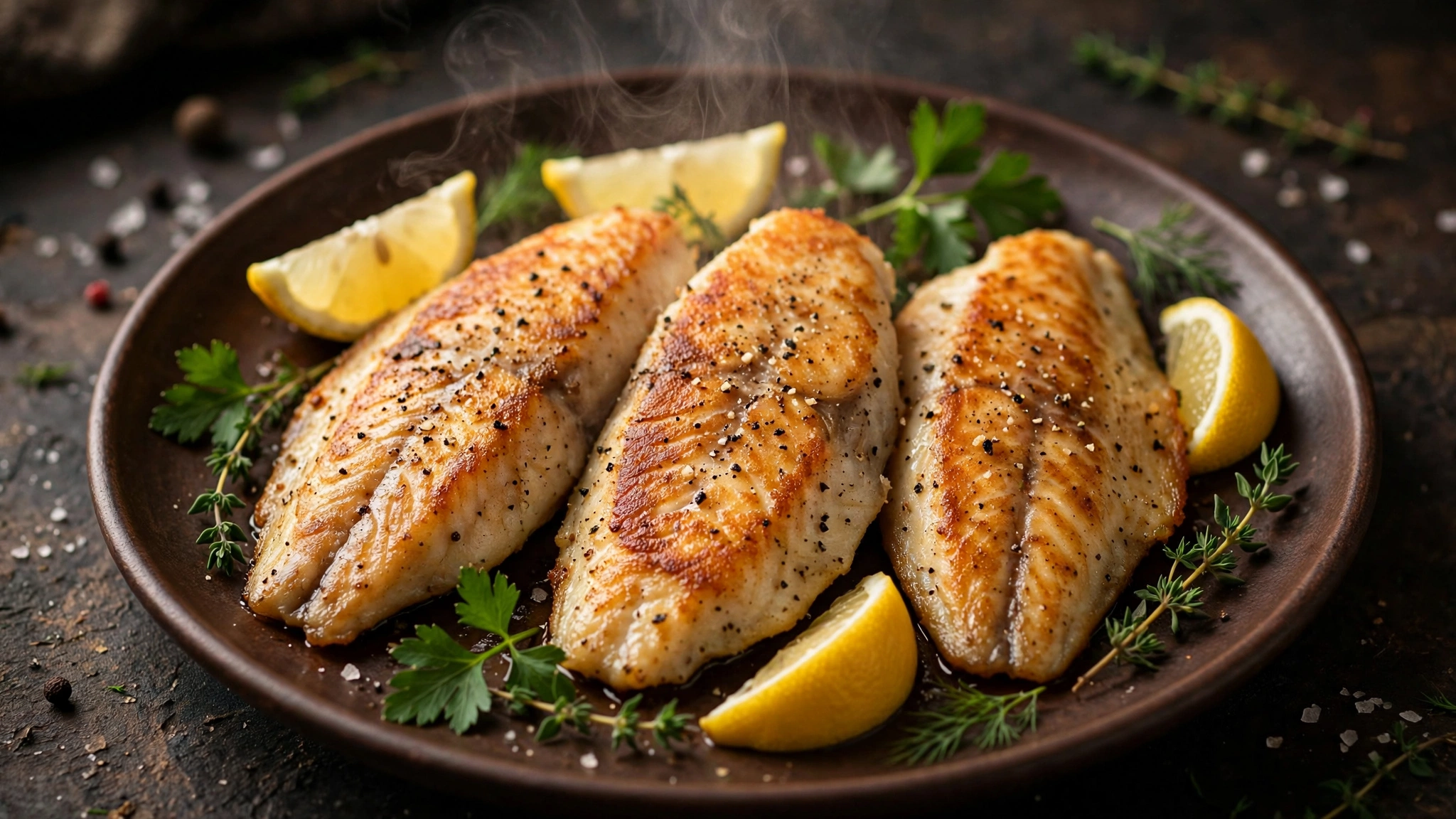
Tilapia: Buying, Flavor, and Best Cooking Methods
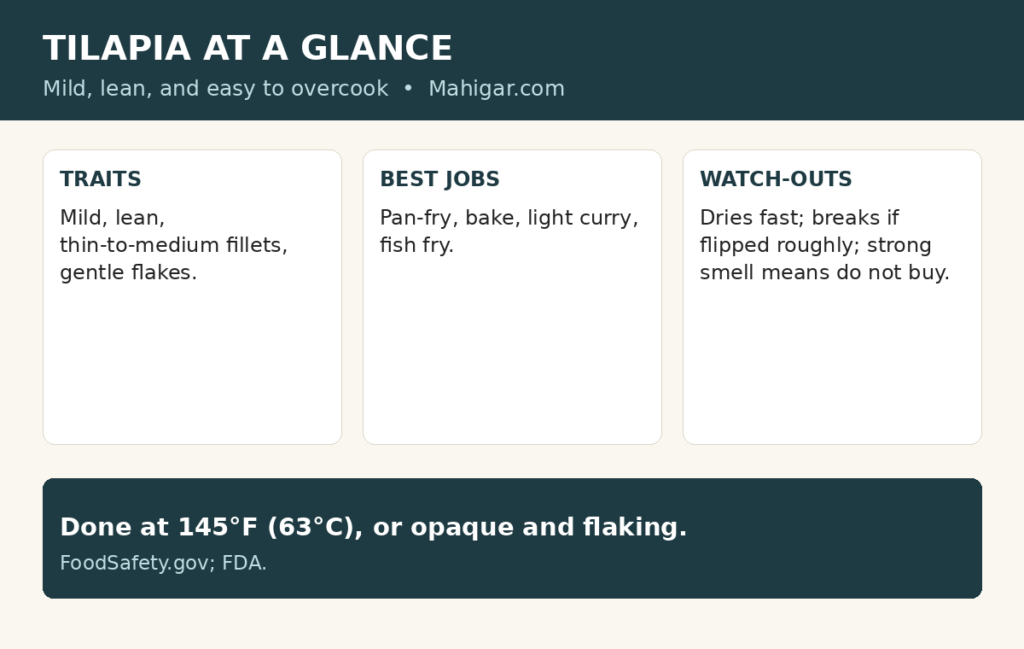
Tilapia is the mild, lean, everyday fish I recommend when someone wants dinner to be easy. It does not shout. It takes seasoning politely, cooks in thin-to-medium fillets, and flakes gently when you stop on time. Cook it too long and it turns dry. Buy it tired and no spice blend can save it. Treat it fresh, dry, and quick, and tilapia becomes very useful.
I am Wasim Abbas Bhatti, the Fish’s Chef. In my South Asian markets, tilapia is the weeknight fish: whole for a family fry, fillets for a quick pan, pieces for a light curry. This profile sits inside Fish Species Guide: What to Buy and How to Cook Each One, where species are sorted by the jobs they do best.
Table of Contents
What Tilapia Is Like at the Counter
Most tilapia you meet is farmed, sold whole or as skinless fillets. The flesh is white to pale pink before cooking, mild in smell, and lean rather than oily. A fillet is usually thinner than a salmon portion, which is why beginners like it: the shape is easier to read, even if the cooking still needs care.
The flavour is gentle. Tilapia will not give you the deep taste of an oily fish. Its strength is that it carries other flavours — turmeric, chilli, garlic, lemon, mustard, herbs — without fighting them. If you want a clean plate where your spice hand shows, tilapia is honest material.
Look for a clean, mild smell, never sour or heavy. Whole fish should look moist and bright, with flesh that springs back when pressed. Fillets should look fresh, not chalky, gaping, or dried at the edges. If it smells strong through the wrapping, leave it.
Bones, Skin, and Shape
Tilapia is kinder than carp-family fish at the table. It does not ask you to manage the same fine Y-bone problem that rohu and catla bring. A fillet still needs a fingertip check for stray bones before cooking, especially for children, but the eating is simpler.
Whole tilapia is often cooked with the skin on. Scaled and dried well, the skin helps it hold together and can crisp. Fillets are commonly skinless and more delicate: they season directly, but stick, tear, and dry faster if handled roughly.
Shape matters too. A thin tail finishes before a thicker centre. Keep pieces close in thickness so they come off the heat together; that habit is taught in Fish Prep and Butchery: Every Skill You Need.
The Safety Frame: Mercury and Freshness
On mercury, I stay with the official frame used across Mahigar: in the FDA/EPA categories set out in Mercury in Fish: Safe Levels by Species, tilapia is listed among the Best Choices, the lower-mercury group. I will not invent a mercury number here, or turn one species into a health promise.
Freshness is the next check. A mild fish should smell mild. Sour, ammonia-like, or heavy odour, slimy flesh, or flesh that stays dented means choose another fish. Frying harder does not fix it.
The third check is cooking. Like every fin fish on my site, tilapia is done at 145°F (63°C) in the thickest part, or when the flesh is opaque and flakes easily. The full chart is in Safe Internal Cooking Temperatures for Every Type of Fish.
Best Ways to Cook Tilapia
Pan-fried: the weeknight answer
This is where tilapia earns its place. A dry fillet, seasoned well, laid into a hot pan with a thin film of fat, then left alone until it releases — that is the whole skill. Skin-on fish can crisp if the skin is dry. Skinless fillets need room, one gentle flip with a wide spatula, and a prompt finish.
In my home style, tilapia takes a South Asian spice coat beautifully: turmeric, salt, chilli, garlic, and lemon at the end. Keep acid mostly at serving. A long lemon soak can soften the delicate surface before cooking, and fresh lemon tastes brighter anyway.
Baked: for even pieces
Baking suits tilapia when the fillets are close in thickness. Lay them in one layer, season simply, and check early. A tray is kinder than a fierce pan because the heat is gentler and the fish is not being moved around.
Light curry and whole fry
Tilapia pieces can work in a light curry if the sauce cooks first. Add the fish near the end and let it rest in the heat instead of stirring it like potatoes. The flakes are gentle; firm curry chunks belong to firmer species.
A whole tilapia, cleaned, dried well, and fried carefully is a happy family fish. The skin protects the flesh and the bones are easier to see than in broken fillet pieces. An adult should check pieces for children.
My Simple Tilapia Pan Routine
My simple tilapia pan routine: fresh fish, a dry surface, a hot pan, one gentle flip, and an on-time finish.
Start with fresh fish
Clean mild smell, moist flesh, no sour or heavy odour.
Pat it very dry
Top, bottom, and skin. A wet surface steams before it browns.
Season for the dish
Salt, turmeric, chilli, garlic, or your own blend.
Heat the pan, then add fat
Let the fat shimmer in a thin film. Give the pieces room.
Lay the fish down and leave it
Let the surface set and release.
Flip once, gently
Use a wide, thin spatula that carries the whole piece.
Check the thickest part
Done at 145°F (63°C), or opaque and flaking easily. Take it off then.
What to Avoid With Tilapia
Do not cook it until it looks hard and chalky. Tilapia is lean, so it has less fat to forgive extra heat. Once the flakes look dry and cottony, more cooking will not bring them back.
Do not crowd the pan. Packed fillets steam in their own moisture, pale instead of browning, and break when you move them. One layer, with space, cooks cleaner.
Do not buy it on price alone. A cheap packet that smells strong is not a bargain. Freshness is the value: a clean, mild fish from a seller you trust beats a tired fish that needs heavy spice to hide it.
If Tilapia Is Not Available
Choose by job, not by name. Cod or haddock are natural stand-ins for a mild white fillet, with a more traditional fish-and-chips character. Sole or flounder are thinner and need gentler handling. Pangasius or basa can work as another mild, soft fillet, but do not assume every white fillet behaves the same.
In a curry that will be stirred and simmered, a firmer fish may serve you better. Tilapia is best with a quick pan, gentle tray, late entry into sauce, and an on-time finish.
Frequently Asked Questions
Is tilapia bad for you?
That worry is bigger than the evidence I use on this site. For mercury, the FDA/EPA frame in my Mercury guide places tilapia in the Best Choices, the lower-mercury group. The more useful home question is simpler: is this fish fresh, from a seller you trust, and cooked properly? Strong smell, slime, or warm handling are the warnings I act on. I do not make nutrition promises for any species without sourced figures in front of me.
Why does my tilapia taste bland?
Because tilapia is naturally mild and lean. That is not a fault; it is an invitation to season well. Salt it properly, use spices that suit the dish, finish with lemon or herbs, and do not overcook it. Dry tilapia tastes blander than juicy tilapia because the texture has gone tired.
Should I cook tilapia with the skin on or off?
Both work, for different dishes. Whole tilapia and skin-on pieces hold together better and can crisp if the skin is scaled and dried. Skinless fillets season directly and suit gentle pans, trays, and light curries. Either way, the finish is the same: opaque flesh that flakes easily, or 145°F (63°C) in the thickest part.
Why did my tilapia turn dry or break apart?
Usually it cooked past done, went into the pan wet, or was flipped before the surface set. Pat it dry, give it room, leave it alone until it releases, flip once with support, and check the thickest part early.
What to Check Next
Keep the tilapia order beside the stove: fresh first, dry surface, room in the pan, one gentle flip, off at opaque and flaky. If you are choosing between species tonight, go back to the Species Guide and read the five traits — firm or delicate, lean or oily, bones, skin, and thickness. Tilapia is the mild, lean, gentle one. Cook it like you know that, and it will reward you.
