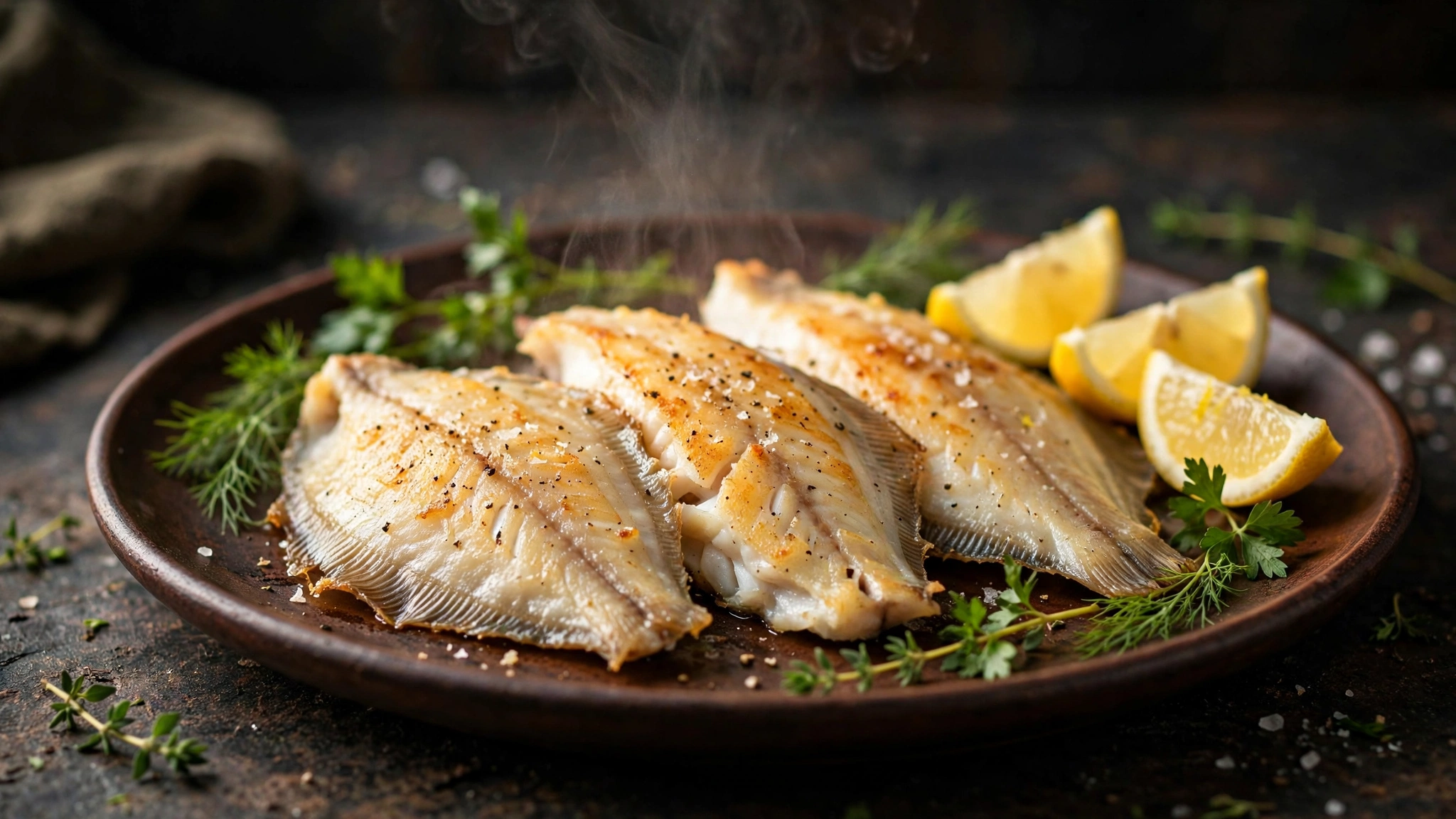
Sole and Flounder: What to Know Before You Cook
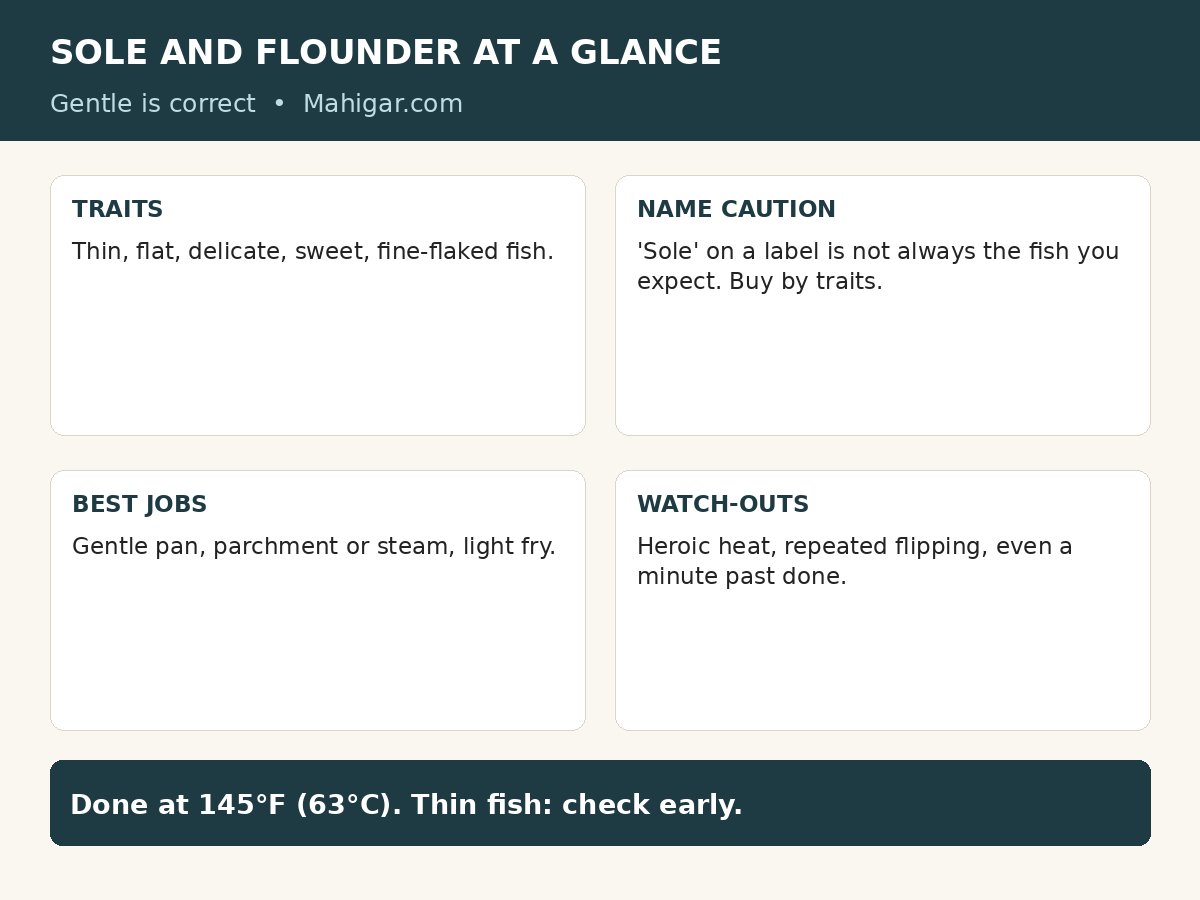
Sole and flounder are the quiet fish at the counter: thin, flat, delicate, and sweet, with flesh that flakes in fine layers and finishes almost before you have settled at the stove. They do not want heroic heat. They want a dry surface, a gentle pan, and a cook who checks early.
I am Wasim Abbas Bhatti, the Fish’s Chef. This profile sits inside Fish Species Guide: What to Buy and How to Cook Each One, where species are sorted by the jobs they do best. Sole and flounder’s job is the gentle plate.
Table of Contents
What Sole and Flounder Are Like
A flat fish is built wide and thin, so even a good-sized fillet has very little thickness to heat through. The flesh is white, lean, and mild — sweeter than a plain everyday fillet, softer than a firm steak fish. Cooked on time, it separates into fine, moist flakes. Cooked past time, it dries and tightens fast; in a fillet this thin, a mistake has nowhere to hide.
You will meet them as skinless fillets most often, sometimes whole. A whole flat fish is a kind first whole fish: one flat frame, flesh that lifts in broad sheets. Buy them fresh, handle them little.
The Name Problem: “Sole” Is Not One Promise
The word “sole” on a label is not always the fish you think it is. Names for flat fish are used loosely from market to market, and a fillet labelled sole may be a different flat fish from the one another counter sells under the same word. Flounder is used the same loose way.
What protects you is simpler than a species list: buy by flat-fish traits, not by the name. Thin, flat, white-fleshed, fine-flaked, mild when cooked gently — then it cooks like the fish in this profile, whichever name the counter gave it. And ask the plain question: what flat fish is this? A good fishmonger answers without irritation. If the name is vague, check the exact name you were sold against any official advice you rely on. The name starts the conversation; the fish in front of you ends it.
Buying Checks: Thin Fish Show Tiredness Fast
For fillets, look for moist flesh in one piece — not dry, curled edges, gaping flakes, or a chalky surface. The smell should be mild and clean, never sour or heavy through the wrapping.
For a whole flat fish: clear, bright eyes, clean-looking gills, shining skin, flesh that springs back lightly. A dent that stays or a tired smell means choose another fish.
Buy pieces that match in thickness so they finish together, and cook them soon; no sauce gives an old flat fish its sweetness back.
Bones, Skin, and Gentle Prep
A flat fish carries one central flat frame, and the flesh lifts away in broad, thin sheets — why these fish feel kind at the table. Kinder is not boneless. Fine bones can sit along the edges and near the belly, so run a fingertip over any fillet before serving, and let an adult check children’s portions first.
The skin is thin, and fillets are usually sold with it removed. On a whole fish, skin helps it hold together — and it must be dried very well, because a wet thin fillet steams, sticks, and tears. Cutting your own fillets follows the honest sequence in How to Fillet a Fish: Step-by-Step for Beginners: work cold, follow the flat frame, handle the flesh little.
Pat both sides very dry — this fish browns only if it arrives dry. Season close to cooking, gently; a thick spice coat belongs on a firm curry fish.
The Safety Frame: Mercury and Doneness
On mercury, these two names are among the clearer ones. In the FDA/EPA categories set out in Mercury in Fish: Safe Levels by Species, both flounder and sole sit among the Best Choices — the lower-mercury group. If your counter sold a different flat fish under a loose label, check the name you were actually given against that guide. This is general information, not medical advice.
Doneness needs an early hand, not a brave one. Sole and flounder are done at 145°F (63°C) in the thickest part, or opaque and flaking easily; the full chart, which names these two as thin delicate fillets, is in Safe Internal Cooking Temperatures for Every Type of Fish. Check early — by gentle flake, and by probe only where the flesh is thick enough. Judge at the thickest spot, never by the browned edge.
Best Ways to Cook Sole and Flounder
Gentle pan: the lead method
Where thin flat fish taste best. A dry fillet, a pan with room, enough heat to set the surface without bullying it, one careful turn — or none, finished under a lid. It should come off opaque, fine-flaked, and still moist. If your instinct says “one more minute,” distrust it with this fish.
Parchment and steam: the kind methods
Folded in parchment with lemon and herbs, or steamed gently, a thin fillet cooks in its own moisture with no flipping at all. Not a lesser method — often the most honest one for delicate fish.
Light fry: a thin coat, a quick hand
For a delicate crisp edge. Keep the coat thin, the fish dry going in, cook it once, do not move it around. A heavy batter belongs on a sturdier white fish; here it would swallow the fish.
My Gentle Pan Routine for Thin Flat Fish
A gentle pan routine for thin flat fish: dry, lightly seasoned fillets in a roomy pan, checked early and served at once.
What to Avoid With Sole and Flounder
Do not use heroic heat. A fierce, unattended pan tightens a thin fillet before the centre catches up, and fine flakes go from silky to dry in a breath.
Do not flip again and again. Every turn tests flesh with very little strength to spare. Turn once with support, or choose parchment and skip the turn.
Do not cook past done “to be safe.” Safe means 145°F (63°C) or opaque and flaking — not five extra minutes. With fish this thin, that extra time is the whole difference. And do not buy on the name alone: cloudy eyes, dry edges, or a heavy smell mean walk away.
If Sole or Flounder Is Not Available
Choose by job, not by name. For the same flat, delicate whole-fish job, pomfret is the South Asian favourite in this pillar. For a mild weeknight fillet, tilapia is plainer and sturdier, so it takes a quick pan happily. For a gentle fish with more substance, sea bass cooks whole or as fillets with a firmer flake. Same freshness checks, same gentle hand.
Frequently Asked Questions
What is the difference between sole and flounder?
At the counter, less than the labels suggest. Flat-fish names are used loosely across markets, and “sole” on a label is not always the fish you expect. Buy by the traits — thin, flat, white, fine-flaked, mild — and ask what fish you are being sold.
How do I stop thin fillets breaking in the pan?
Dry both sides well, give the pan room, let the first side set, and turn once with a wide spatula and full support — or finish under a lid or in parchment and skip the turn.
Are sole and flounder low in mercury?
In the FDA/EPA categories used across Mahigar, both flounder and sole are listed among the Best Choices, the lower-mercury group. Check the exact name you were sold in my Mercury guide if the label was vague. General information, not medical advice.
Why did my flounder turn dry and tight?
It cooked past done, started wet, or was heated too fiercely. Check early for opaque, fine flakes at the thickest spot, and take it off the moment it is ready.
What to Check Next
Keep the flat-fish order beside the counter and the stove: ask what fish it is, buy by traits and freshness, dry both sides, check early. For the wider map of species by cooking job, go back to the hub. Right fish, right prep, right heat — and with sole and flounder, the lightest hand of all.
