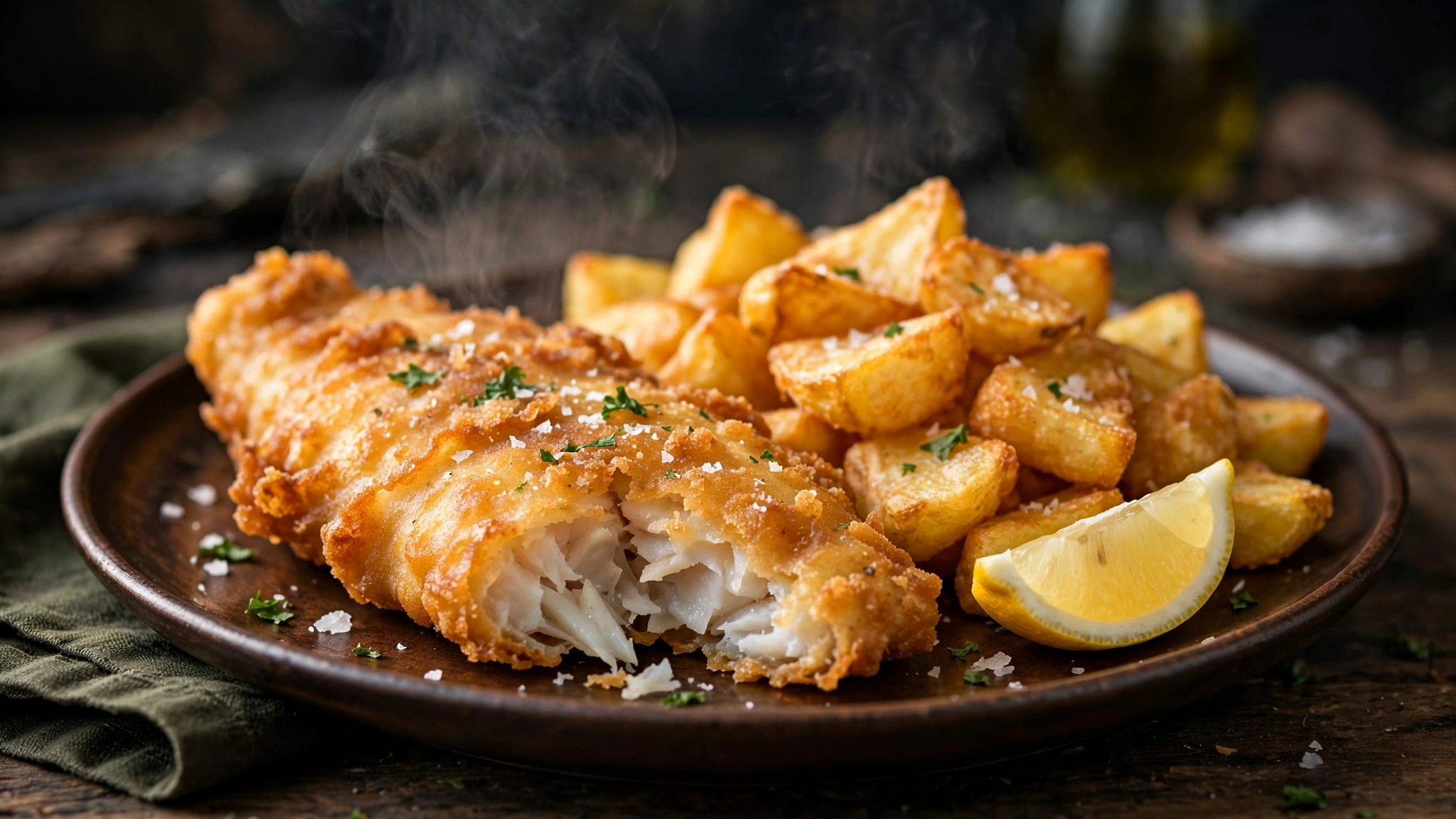
British Fish and Chips at Home
British fish and chips is a simple plate with no place to hide: flaky white fish in a crisp golden coat, hot chips beside it, lemon over the top, eaten at once. When it is right, the crust shatters, the fish steams, and the flakes fall apart clean. When it is wrong, everybody knows in one bite.
I am Wasim Abbas Bhatti, the Fish’s Chef. Honest place first: I am not a British chip-shop cook, and I will not pretend to training I do not have. I am a fish cook with twenty years at the stove, and battered fish is battered fish in any kitchen — dry surface, clinging coat, honest heat, one fry, no waiting. This is a home method guide inside Fish Recipes from Around the World, not a chip shop’s recipe card.
Table of Contents
Choosing the Fish: Flaky, White, and Fresh
This dish stands or falls on the fish, so choose by traits, not by habit.
Flaky white fish is the job. You want mild, white flesh that separates into clean flakes inside the crust. That is the cod-and-haddock family of flesh, and any firm white fillet that flakes in honest pieces will behave. My full side-by-side of the two classic choices lives in Haddock vs Cod: What’s the Difference? — cod milder with bigger, softer flakes, haddock a little sweeter with finer, tighter flakes — and my rule there is my rule here: buy whichever is fresher that day. A bright haddock beats a tired cod, and a fresh cod beats a haddock that has waited too long.
Even pieces, honest thickness. A thick piece beside a thin tail end means one is still glassy in the middle while the other is drying out. Cut or choose pieces that match, so the whole batch finishes together.
Freshness first. Moist flesh, a clean sea smell, no sour or heavy note. Batter will not rescue tired fish; it will only give tired fish a coat.
Skin and bones, decided before batter. Most home cooks serve this fish skinless and bone-checked, because eaters expect to cut straight through. Run a fingertip along every fillet, pull the pin bones you feel, and portion calmly — every one of those board skills is taught in Fish Prep and Butchery: Every Skill You Need. An adult should still check children’s pieces, whatever fish you chose.
The Dry Rule: Why Batter Lets Go
If I could give a home cook only one sentence for this dish, it would be this: dry the fish, then batter it.
A wet fillet steams under its coat. The batter slides, patches lift, and the crust turns soft and greasy instead of crisp. A dry surface lets the batter grip, and grip is what makes the coat stay where you put it through the whole fry.
So treat drying as a real step, not a wipe. Pat the fish dry, let it sit uncovered for a short moment while the pan heats if your kitchen allows, and batter it at the last moment. Do not season wet fish and leave it standing; salt and spice pull moisture to the surface, and you will be drying it all over again. Dry, coat, fry — in that order, without a pause in the middle.
This is the same rule my masala fry runs on, in a different coat. Kitchens change their spices. Fish does not change its nature.
Batter Behaviour, Without a Fake Recipe
Home cooks ask me for “the batter recipe,” and here is my honest answer: I will not print a measured batter card I have not given you properly, with exact flour ratios, liquid quantities, and timings worked out as a tested recipe. That card needs to be supplied and tested as a recipe, not invented as decoration.
What I can teach you — and what actually decides success at home — is batter behaviour:
Cold batter behaves better. A batter kept cold while the pan heats tends to hold together as a coat instead of running thin and patchy. Keep the bowl cold, mix it late, and use it promptly.
A coat, not a blanket. The batter should cling in one even layer. Too thick and it eats like a jacket of dough with fish somewhere inside; too thin and it leaves bare spots that fry harsh and dry. You are dressing the fish, not hiding it.
Batter at the last moment. Coated fish left standing goes wet from underneath as the fish releases moisture, and the coat softens before it ever meets the heat. Coat each piece just before it goes in.
Room in the pan. Crowded pieces drop the heat, bump into each other, and tear each other’s coats. Fry in honest batches, even when the family is hungry and standing behind you. I know that pressure. Resist it.
Those four habits matter more than any secret ingredient. Get them right and a simple home batter behaves like it means business.
My Home Fish-and-Chips Method
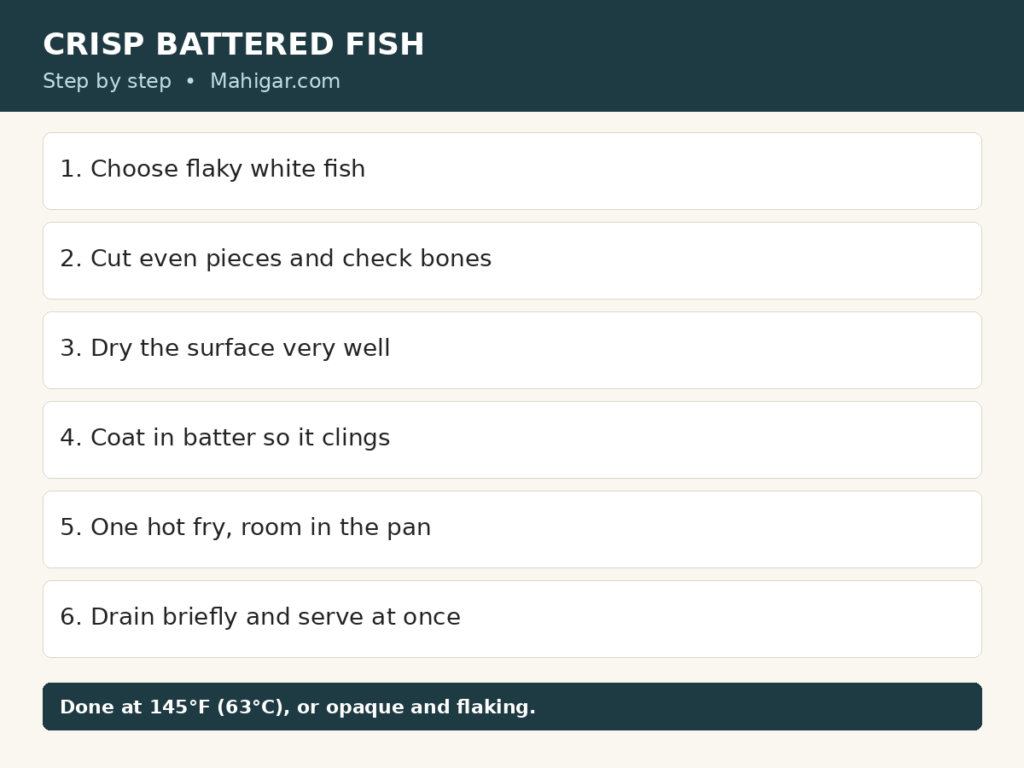
Choose flaky white fish, and buy the fresher piece.
Cod, haddock, or any firm white fillet that flakes cleanly. Freshness beats the name.
Cut even, bone-checked pieces.
Match thickness so the batch finishes together. Fingertip-check every piece for pin bones.
Dry the surface very well.
Pat dry and keep it dry. This is the step the crust is decided on.
Coat in batter so it clings.
Cold batter, one even layer, coated at the last moment — a coat, not a blanket.
One hot fry, with room in the pan.
Honest batches, no crowding, one confident fry. Do not keep lifting and checking the coat.
Drain briefly and serve at once.
A short drain, lemon ready, chips already waiting. This plate does not hold.
Done Means Done: Check the Thickest Part
A golden crust is not a doneness certificate. Thick battered fish can be beautifully browned outside and still glassy in the middle, so judge the fish, not the coat.
Fin fish is done at 145°F (63°C) in the thickest part, or when the flesh is opaque and flakes easily — the full chart is in Safe Internal Cooking Temperatures for Every Type of Fish. On a battered piece, check where the flesh is thickest, and read flake and opacity once the crust is cut. If the centre is still translucent and shiny, it needs a little more gentle heat; if it is opaque, moist, and separating into flakes, serve it. Dry and chalky means it went too far, and more frying will not bring it back.
Colour of the flesh is the weakest witness of all, and under a crust you cannot see it anyway. Trust the thickest-part check.
The Chips: Kept Simple, Served Hot
I will keep the potato side where this guide can be honest: at serving level. Cut your potatoes into chunky pieces, cook them until tender inside and golden outside by the method your own kitchen trusts, salt them while they are hot, and have them ready before the fish fries — because the fish will not wait for the chips, and chips that sit going cold while batter is mixed make a sad plate.
What matters on my table is the order of service: chips ready and hot, lemon cut, plates warm if you can, then the fish fries last and lands straight on the plate. A measured chip recipe — cuts, soaks, and timings as a tested card — belongs to a proper recipe page, not to this method guide, and I will not invent one here.
Serving: Lemon, Salt, and No Waiting
Serve this fish the way it asks to be served: immediately.
A squeeze of lemon over the hot crust, salt where it belongs, and everybody eating while the coat is still crisp and the fish is steaming inside its flakes. Let it sit under a cover “until everyone is ready” and the steam you worked for turns back on the crust and softens it. Battered fish is a small piece of theatre with a short run. Cook it last, call the family before it leaves the pan, and let the plate do its work hot.
If a piece has gone a little too far and eaten dry, do not send it back to the fryer. Serve it with lemon and something moist beside it and learn the batch for next time. Honest notes beat heroic rescues.
Frequently Asked Questions
Which fish is better for fish and chips, cod or haddock?
Neither, by name alone. Cod is milder with bigger, softer flakes; haddock is a little sweeter with finer, tighter flakes. Buy whichever is fresher that day — freshness decides this dish more than the label does.
Why does my batter fall off or go soggy?
Usually the fish was wet, the batter went on too early, or the pan was crowded. Dry the surface well, coat at the last moment, and fry in batches with room around each piece.
How do I know battered fish is done inside?
Check the thickest part of the flesh, not the crust: 145°F (63°C), or opaque flesh that flakes easily. A browned coat can hide a glassy centre on a thick piece.
Can I keep fish and chips warm while I finish the batch?
Only briefly, and it costs you crispness. Steam softens the coat as it waits. Fry in honest batches, serve each batch hot, and let the last batch land to applause rather than making the first batch wait in silence.
What to Check Next
Start with the fish choice: the fresher of cod and haddock, cut even and dried like you mean it. If your pieces keep sticking, curling, or drying out in other dishes, the Cooking Science side of Mahigar reads those problems one by one. And when the battered plate has you hungry for the sharper end of the fish world again, go back to the world-cuisine hub and pick the next kitchen — twelve regional guides hang off it, and this crisp British fry is only one stop on the tour.
