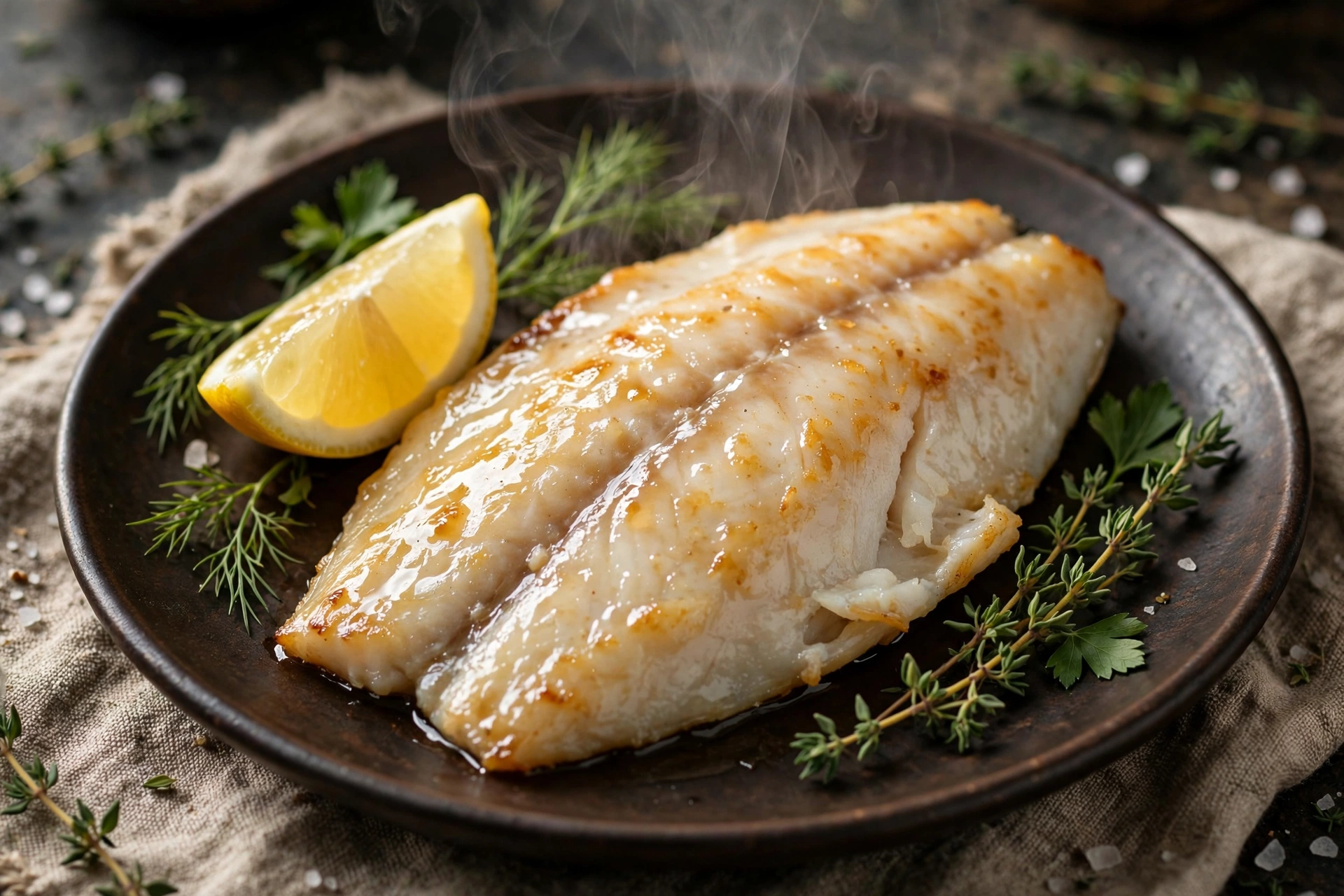
Japanese-Style Fish for Beginners
Japanese-style fish for a beginner means one thing in my kitchen: mild fish, cooked gently, seasoned lightly, and served the moment it is done. No raw fish, no special knives, no hard words to learn first. If you can buy a fresh fillet and watch a pan, you can cook this tonight.
I am Wasim Abbas Bhatti, the Fish’s Chef. Japanese cooking is not my home ground and I have not trained in it. I learned this style the way most home cooks do, by cooking gentle fish at my own stove for twenty years and paying attention. This guide belongs to Fish Recipes from Around the World, and it teaches the cooked, beginner-safe end of this cuisine.
Table of Contents
What Makes Fish “Japanese-Style” at Home?
Japanese-style fish at home is fish cooked with restraint. The fish stays the main flavour, the seasoning stays light, and the cooking stays gentle. Freshness does the heavy lifting.
Think of it as three habits. First, buy the freshest mild fish you can. Second, cook it kindly, in a pan, an oven, or steam. Third, add any glossy or savoury finish at the very end, in a thin layer, and serve at once. Raw dishes like sushi and sashimi are the famous end of this cuisine, but everyday Japanese-style eating is full of cooked fish. That cooked end is where a beginner should start, and it is the only end this page teaches.
The Best Fish to Start With
The best beginner fish for this style is a fresh, mild fillet that flakes gently and takes light seasoning without fighting it. Freshness matters more than the exact species.
Lean white fillets are forgiving and cheap to practise on. Gentle oily fish also works well and stays moist if you stop a little early by mistake. What does not work is tired fish. This style hides almost nothing, so a fish that already smells strong will taste strong, only warmer.
Buy pieces of the same thickness so they finish together. A thick chunk beside a thin tail piece means one is glassy while the other is dry. The full species-by-species guide lives in Fish Species Guide: What to Buy and How to Cook Each One. For tonight, one rule is enough: fresh, mild, and even.
How to Buy Fresh Fish for Gentle Cooking
Fresh fish for gentle cooking should look moist, smell like clean sea water, and spring back when you press the flesh. If it fails any of those three checks, choose another fish.
Look at the surface first. It should have a clean sheen, not a dull or sticky look. Smell it next. Fresh fish smells mild, almost like nothing. A sour smell, an ammonia smell, or slimy flesh means leave it at the counter. Press it last. Good flesh pushes back. Flesh that keeps your fingerprint has waited too long.
Keep the fish cold on the way home, keep it at 40°F (4°C) or below in the fridge, and cook it within 1 to 2 days. With gentle cooking there is no strong sauce to cover a mistake, so the buying is half the recipe.
Prep: Dry Surface, Even Pieces, No Bones
Good prep for this style is calm and simple: check for bones, portion evenly, and pat the surface dry before any heat touches the fish.
Run a fingertip slowly along each fillet and pull out the pin bones you feel. A single bone in a clean, quiet plate feels louder than anywhere else. If a fillet needs skinning or trimming, do it cold and slowly. Every board skill behind this, from scaling to portioning, is taught step by step in Fish Prep and Butchery: Every Skill You Need.
Then dry the fish. Beginners skip this and wonder why the surface steams pale instead of taking a light colour. A dry surface cooks. A wet surface sulks. Salt lightly at this stage if you use it at all. Anything sweet or glossy belongs at the end, where it can shine instead of burn.
My Gentle Cooked Fish Sequence
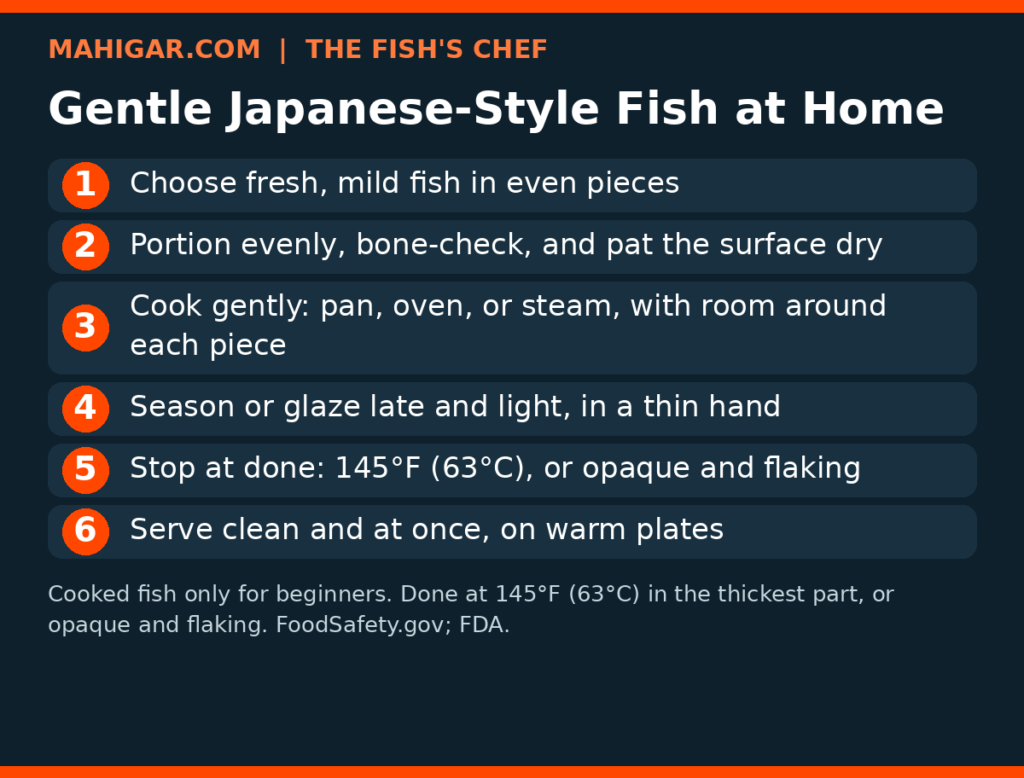
A gentle cooked sequence for beginners, in order.
Choose fresh mild fish
Pick even, fresh mild pieces with a clean sea smell.
Check bones and dry the surface
Check each fillet for bones and pat it dry.
Cook gently with space around each piece
Use a pan, oven or steamer and do not crowd the pieces.
Season or glaze lightly at the end
Add seasoning or a thin glaze only at the end.
Stop when just done
Stop at 145°F, or when opaque and gently flaking.
Serve at once
Serve immediately on warm plates, lightly finished.
- Choose fresh, mild fish in even pieces, with a clean sea smell and flesh that springs back.
- Bone-check every fillet and pat the surface dry.
- Cook gently in a pan, an oven, or steam, with room around each piece.
- Add seasoning or a light glaze at the very end, in a thin hand.
- Stop at done: 145°F (63°C) in the thickest part, or flesh that is opaque and flakes gently.
- Serve at once, on warm plates, with nothing heavy piled on top.
Pan, Oven, or Steam: Three Gentle Roads
A beginner only needs one of these three roads. Pick the one that suits your fish and your evening.
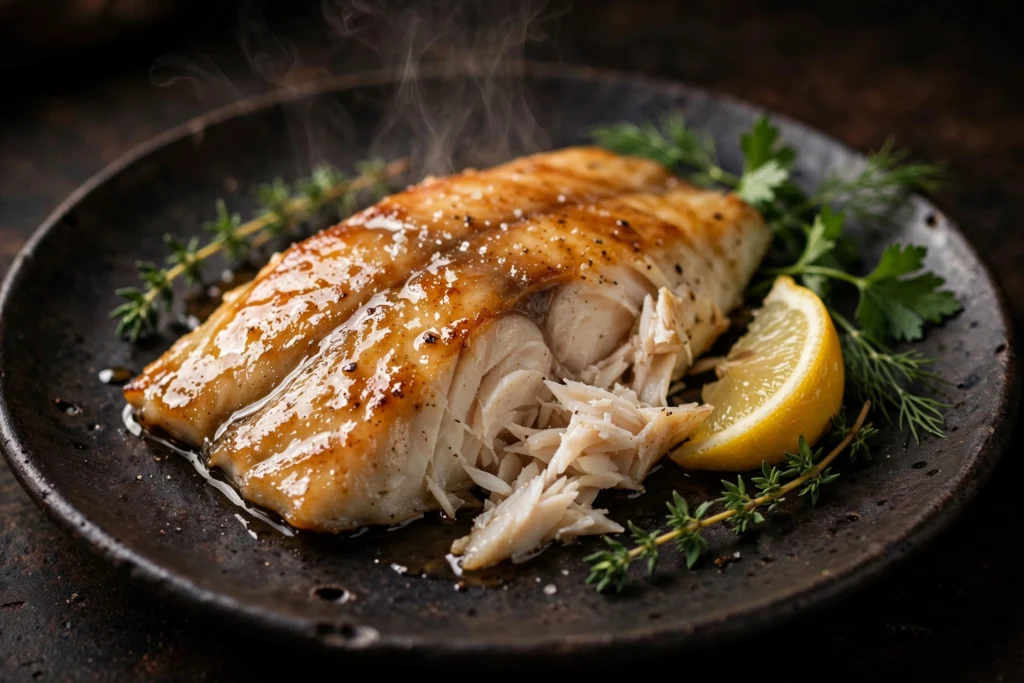
The gentle pan. Use light oil and patient heat, and leave the fish alone until it releases from the pan by itself. This road gives you a lightly crisp edge with a tender middle. Do not chase dark colour. Chase even cooking.
The oven. Baking is the calmest road. Even pieces on a tray, room around each one, light seasoning, and one honest check near the end. It suits a cook who does not want to stand over a pan.
Steam. Steaming is the purest road and the least forgiving. It keeps delicate fish silky and shows freshness exactly as it is. Use your freshest fish here, season simply, and check whole small fish near the backbone. Serve the moment it turns opaque and flakes.
All three roads end at the same finish line. Only the route changes.
Glazes and Seasoning: Late, Light, and Honest
In this style, seasoning supports the fish instead of covering it. A light brush of a savoury-sweet glaze at the very end gives the glossy look home cooks love, without hiding the fish under sauce.
You will see names like miso glaze and teriyaki style on menus and in shops. For a beginner, use a ready glaze or simple seasoning lightly, taste, and let the fish lead. I will not hand you ratios and call them tradition, because the habit matters more than any formula: late, light, and thin. Put sweet finishes on early and they burn and turn bitter. Put them on at the end and they shine.
The Finish Line: How to Tell It Is Done
Fish cooked this way is done at 145°F (63°C) in the thickest part, or when the flesh is opaque and flakes easily with a fork. Gentle heat is a cooking level, not permission to serve fish undercooked.
This is the point that makes beginners nervous, so let me say it plainly. A steamed fillet can look pale and quiet and still be raw in the middle. Pretty is not done. Translucent and shiny means wait. Opaque and gently flaking means serve. On thick pieces, a thermometer removes all doubt. The full temperature chart for every fish type is in Safe Internal Cooking Temperatures for Every Type of Fish.
And serve at once. Gentle fish dries and dulls while it waits for the table. Set the table first, cook last.
Mistakes That Make Gentle Fish Sad
Most beginner failures in this style come from six small habits. Fix these and the plate fixes itself.
Starting with tired fish. Clean flavours have nowhere to hide. If the fish is not fresh, cook a bolder style that day.
Skipping the drying. Wet fish steams grey and sheds its seasoning. Thirty seconds with a clean cloth changes everything.
Glazing too early. Sweet finishes burn over a full cook. Late and light is the whole rule.
Crowding the pan or tray. Packed pieces steam each other and finish unevenly. Room is a seasoning too.
Judging by colour. Pale fish can hide a raw centre, and dark fish can be perfectly done. Judge by flake and temperature.
Serving late. Gentle fish waits badly. Cook it last and carry it straight to the table.
Frequently Asked Questions
Is Japanese-style fish always raw?
No. Cooked fish is a large part of everyday Japanese-style cooking, and this guide stays with cooked fish.
What fish should a beginner buy first?
Buy the freshest mild fillet in even pieces; lean white fish is forgiving to start with.
Why does my gentle fish taste bland?
Usually it was tired, wet, overcooked or served late; buy fresher, dry it, season lightly and serve promptly.
Is cooked Japanese-style fish safe for beginners to make at home?
Yes; buy fresh, keep it cold, use it promptly and cook it to the safe temperature.
Is Japanese-style fish always raw?
No. Raw fish dishes are the famous part, but cooked fish is a large part of everyday Japanese-style eating: gently pan-cooked, baked, steamed, and lightly glazed fish. Beginners should start with cooked fish, because it is safe, learnable, and still full of the style’s clean character.
What fish should a beginner buy first?
Buy the freshest mild fillet at your counter, cut or chosen in even pieces. Lean white fish is forgiving for practice, and gentle oily fish stays moist. Freshness and even thickness matter more than the species name on the label.
Why does my gentle fish taste bland?
Usually the fish was tired, wet, overcooked, or served late. Buy fresher, pat it dry, keep seasoning light but present at the end, stop at 145°F (63°C), and serve immediately. Gentle does not mean unseasoned. It means the seasoning arrives late and does not shout.
Is cooked Japanese-style fish safe for beginners to make at home?
Yes. Cooked fish is the beginner-safe road. Buy fresh, keep it at 40°F (4°C) or below, use it within 1 to 2 days, and cook it through to 145°F (63°C) or until opaque and flaking. Raw fish dishes need specialist sourcing and handling, which this page does not teach.
What to Check Next
Learn the sequence once and you own the beginner’s version of this style: fresh fish, dry surface, gentle heat, light finish, honest doneness check. For choosing species that suit gentle cooking, the Species Guide matches each fish to its best job. For the board skills under every fillet, the Prep pillar teaches each cut in order.
Then travel on. The World Cuisine hub holds the full map, from bold masala fries to a whole Mediterranean baked fish, and the rules travel with you: fresh fish, right heat, served on time.

One Comment