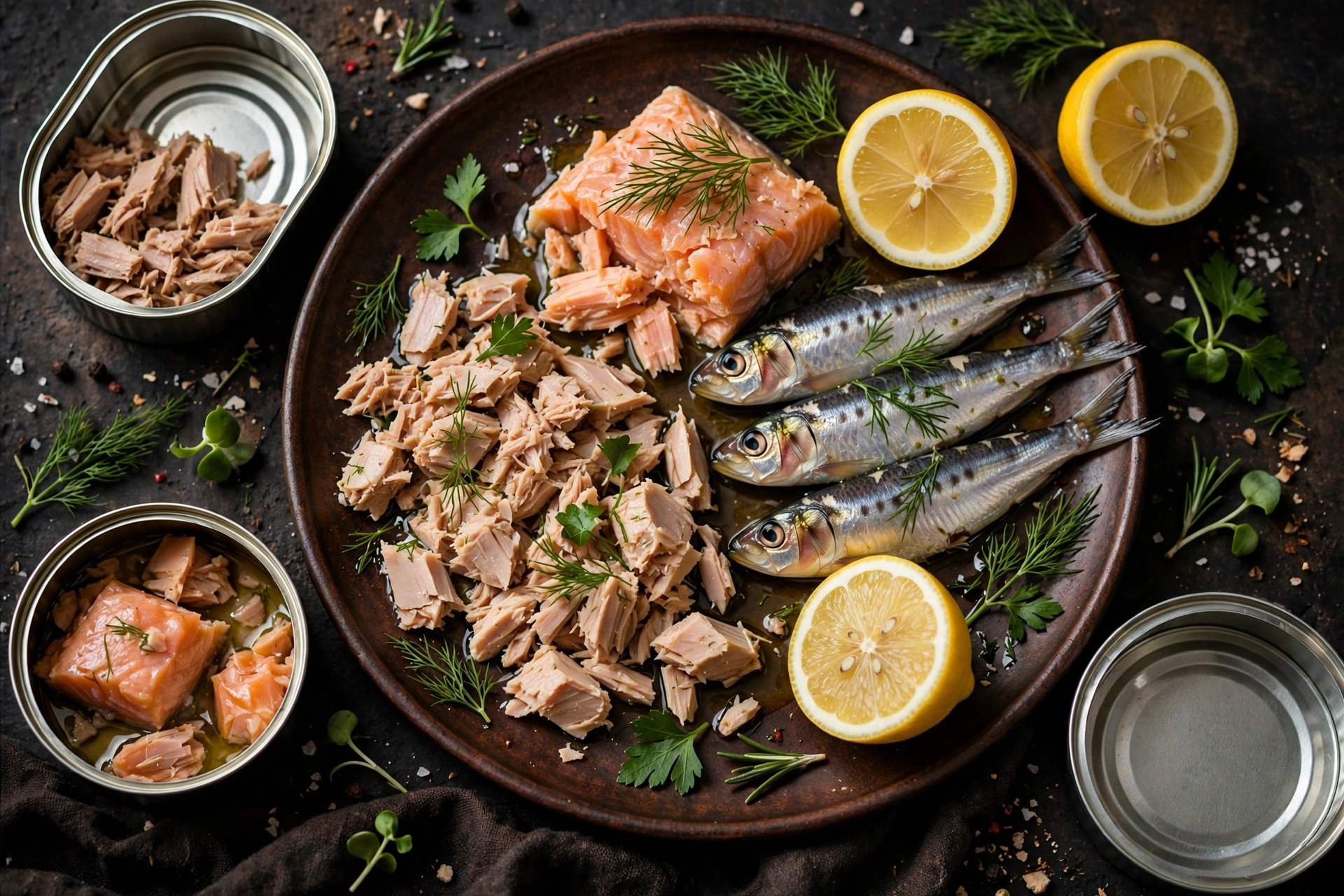
Canned Fish Nutrition Compared: Tuna, Salmon, Sardines
The best canned fish depends on the job you are hiring it for, and the USDA numbers make the hiring easy. For pure protein, all three famous tins deliver: tuna about 25.5 grams per 100 grams, sardines about 24.6, canned salmon about 23.1. For omega-3, salmon and sardines pull ahead at roughly a gram of EPA and DHA, with tuna far lower. For calcium, the bone-in tins, sardines and salmon, are in a different league from tuna. I did not write any of this from the side of a tin. Every number below comes from USDA FoodData Central, opened entry by entry.
I am Wasim Abbas Bhatti, the Fish’s Chef. I have cooked fish for more than twenty years, and I keep all three of these tins in my own pantry. They are how fish survives a busy week in most homes. This guide sits inside Fish Nutrition and Health: The Complete Guide, Mahigar’s nutrition hub, and it closes the hub’s cluster list.
One note before the chart: this is general information, not medical advice. If a doctor or dietitian is guiding your eating, their guidance comes first.
Table of Contents
How I Compared These Tins (Read This Before the Numbers)
Three rules kept this comparison honest.
One source. Every figure comes from USDA FoodData Central (fdc.nal.usda.gov), SR Legacy entries, opened one by one in this session. No brand websites, no tin labels copied from memory.
One basis. All values are per 100 grams of drained solids, the fish itself, poured off, labelled with the exact packing form the USDA entry names. That matters: the tuna entry is light tuna canned in water, without salt; the sardines are canned in oil, with their soft bones; the salmon is pink salmon, drained. Different forms would give different numbers, so I name the form every time.
A small fourth tin. Anchovies appear as a side note, not a fourth contestant. They are a flavouring eaten a few fillets at a time, and their numbers only make sense in that role.
The Chart: Canned Fish Nutrition per 100 Grams
| Per 100 g, drained | Protein | Omega-3 EPA+DHA | Calcium | Cholesterol | Sodium |
|---|---|---|---|---|---|
| Canned light tuna (in water, no salt added) | 25.5 g | 0.27 g | 11 mg | 30 mg | 50 mg |
| Sardines (canned in oil, with bone) | 24.6 g | 0.98 g | 382 mg | 142 mg | 307 mg |
| Canned salmon, pink (drained) | 23.1 g | 1.08 g | 283 mg | 83 mg | 381 mg |
| Anchovies (canned in oil), flavour tin | 28.9 g | 2.06 g | 232 mg | 85 mg | 3,668 mg |
That tuna sodium figure belongs to a no-salt-added entry. A regular salted tin from a shop shelf will carry more. The label on your tin is the final word, as the sodium section below explains.
Protein: The Honest Surprise Is How Close They Are
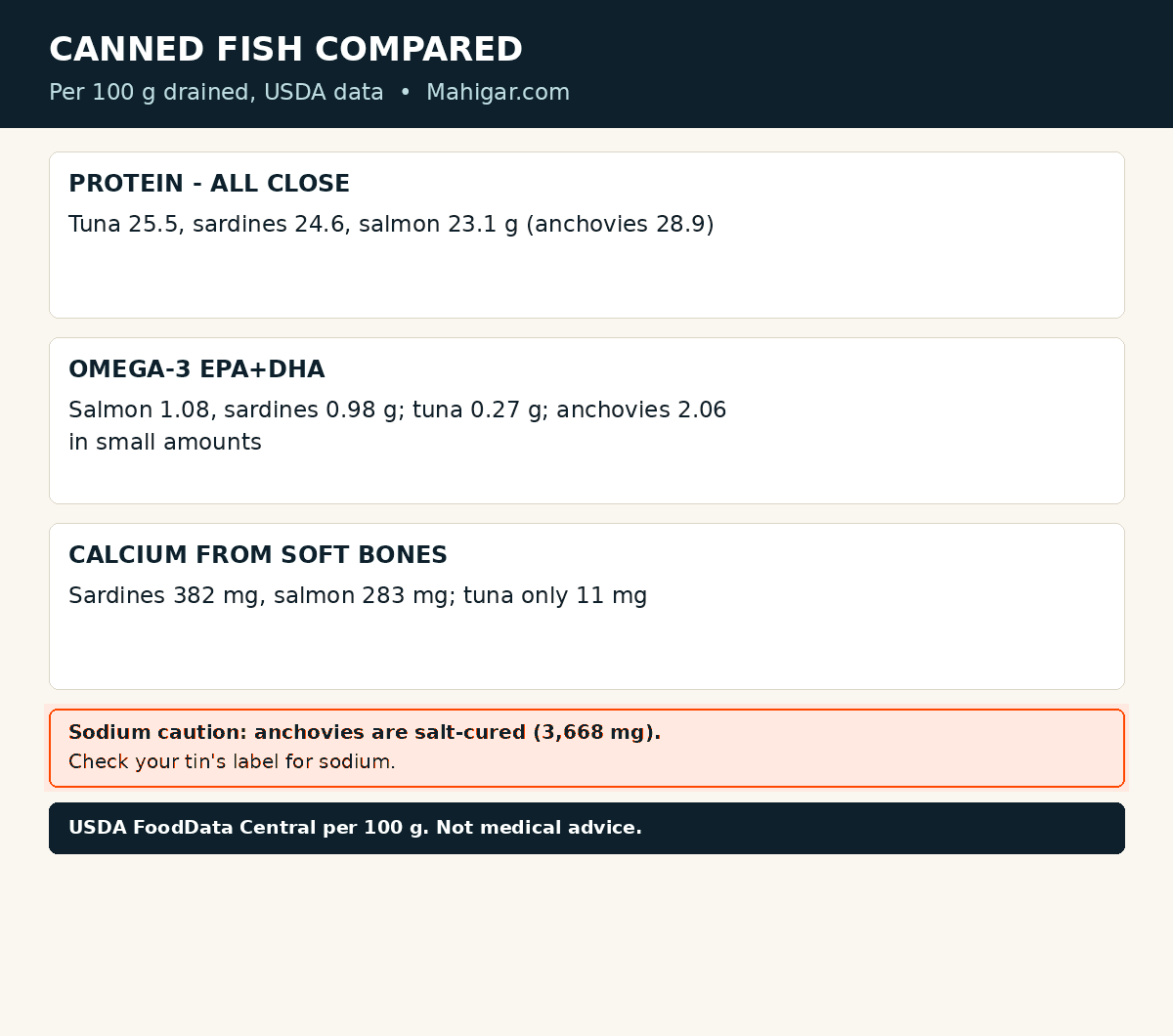
If you buy tins for protein, the race is nearly a tie. Canned light tuna leads at about 25.5 grams per 100 grams, sardines follow at about 24.6, and canned pink salmon gives about 23.1, a spread small enough that your choice can rest on taste, price, and the job on the plate. Even the anchovy, at about 28.9 grams, wins a race nobody should run: you would have to eat flavouring by the spoonful to collect it.
This matches what the fresh-fish chart showed in Fish Protein Content Compared by Species: most fish live in the same protein neighbourhood, and the canned forms keep that habit. Tuna’s small lead comes with a weakness the next section shows. Protein is nearly all it brings.
Omega-3: Where the Tins Separate
Here the tins genuinely part company. Canned pink salmon gives about 1.08 grams of EPA and DHA per 100 grams, and sardines about 0.98, close enough to call them equals, and both well ahead of tuna at about 0.27 grams. That is not an insult to tuna; light tuna is a lean fish, and lean fish simply carry less of the oily omega-3 fats. It does mean a tuna-only pantry is leaving the omega-3 job half done.
Two honest footnotes. First, my Omega-3 Rich Fish, Ranked by Species chart put these same sardines at about a gram and farmed Atlantic salmon fillet higher still. A tin of salmon is a good omega-3 servant, not the champion. Second, the anchovy’s 2.06 grams is real but theoretical: anchovies season a dish in fillets, not in 100-gram servings, and their sodium, below, explains why.
Calcium: The Bone-In Tins Do a Job Fillets Cannot
This is the canned fish advantage nobody puts on the poster. Sardines canned with their soft bones give about 382 milligrams of calcium per 100 grams, and the canned pink salmon entry gives about 283, because traditional canned salmon, like sardines, is packed with bones that the canning process cooks soft. Tuna, a boneless fillet fish, gives about 11 milligrams. There is no contest, and there cannot be: the calcium lives in the bone, and only the bone-in tins bring it.
Kitchen honesty about those bones: they are not the bones of a fresh fish. Canning cooks them soft and crumbly, made to be eaten as part of the fish. Mash sardines and they disappear into the flesh. They are not a choking hazard in the way a fresh pin bone is, but ordinary care still applies: serve children thoughtfully, mash for the youngest eaters, and let nobody rush a mouthful.
Sodium: Read This Column by Label, Not by Species
Sodium is where tin labels mislead the careless reader, so here is the column with its warning attached. The anchovy entry sits at 3,668 milligrams per 100 grams. It is a salt-cured flavouring, and that number is exactly why it is used by the fillet, not the serving. Sardines at about 307 and pink salmon at about 381 are ordinary canned entries. And the tuna’s 50 milligrams belongs to a no-salt-added form: buy a regular salted tin and your number will be higher.
So the rule is label-first. The USDA forms I opened tell you how these fish compare; the printed label on the tin in your hand tells you what you are actually serving. If sodium is a number your doctor watches, that label, and rinsing or choosing no-salt-added tins where they exist, matters more than which of these three fish you picked.
Mercury: The Category Travels With the Species
Canning does not remove mercury, and it does not add any. The FDA/EPA category attaches to the species, and the tin inherits it. Canned light tuna sits in Best Choices, at 2 to 3 servings a week. Salmon and sardines are Best Choices too, which is one more reason the salmon and sardine tins earn their pantry space. The one name to watch is albacore, white tuna, which is a Good Choice at 1 serving a week. Light and white tuna sound like cousins; on the mercury chart they are not, and the full chart lives in Mercury in Fish: Safe Levels by Species.
Once the Tin Is Open
An opened tin is cooked, ready-to-eat fish, and in my kitchen it gets the same respect as any cooked fish: out of the tin and into a clean covered container, into a fridge at 40°F (4°C) or below, and used inside the cooked-fish window of 3 to 4 days that runs across Mahigar. Half a tin forgotten at the back of the fridge for a week is not a saving; it is a discard. Fish you will not finish in that window is better left in its sealed tin until you will.
My Pantry Verdict
If I could keep only one tin, it would be sardines: near-top protein, near-top omega-3, the calcium no fillet offers, and a Best Choices mercury category, the most complete tin on this page. Canned salmon is the gentler everyday twin, the one I serve people who find sardines strong. Tuna keeps its job honestly: the protein tin, the salad and sandwich worker, so long as “light” is the name on the can and an oily tin rotates in for the omega-3 work. And anchovies stay where they belong, a few fillets that make a whole dish taste like more.
Frequently Asked Questions
Which canned fish is the healthiest overall?
On these USDA figures, sardines make the strongest all-round case: protein near the top, omega-3 near a gram per 100 grams, 382 milligrams of calcium from their soft bones, and an FDA/EPA Best Choices category. Canned salmon matches them closely with a milder flavour. “Healthiest” still depends on your own doctor’s guidance where that applies.
Is canned fish as nutritious as fresh fish?
For the nutrients compared here, the tins hold their own: canned salmon’s omega-3 (about 1.08 grams per 100 grams) sits in the same band as many fresh oily fish, and the bone-in tins add calcium fresh fillets cannot offer. What a tin cannot copy is a just-caught fish’s texture. Nutrition and eating pleasure are different questions.
How often can I eat canned tuna?
Canned light tuna is an FDA/EPA Best Choice, at 2 to 3 servings of 4 ounces a week in the joint advice; albacore (white) tuna is a Good Choice at 1 serving a week. Which tuna is in the can decides the answer, which is why my Mercury guide carries the full chart.
Are the bones in canned sardines and salmon safe to eat?
They are part of how these tins are made: canning cooks the bones soft and crumbly, and they are eaten with the fish. That is where the calcium in the chart comes from. Ordinary care still applies: mash them into the flesh, and serve young children thoughtfully rather than in a rush.
What to Check Next
You now hold the whole Nutrition pillar: the hub, the benefits, the omega-3 and protein charts, the weekly amounts, the farmed-versus-wild answer, the allergy guide, the cholesterol chart, and these tins. The practical follow-ups are the Species pillar’s profiles of these same fish fresh, and the Diet and Lifestyle pillar to come. Budget-Friendly Fish Recipes will carry this pantry thinking into full plates when it publishes. Until then: read the tin’s label and rotate the tins.
This article is general information based on USDA FoodData Central entries and the FDA/EPA fish advice. It is not medical advice. For personal dietary guidance, follow your own doctor or dietitian.
