Gluten-Free Fish Recipes
A reader once asked me whether my fish fry was gluten-free, and I had to answer honestly: the fish was. The kitchen was not. The flour tin stood open beside the board, the oil had fried something coated an hour earlier, and the spice blend came from a jar I had never read. That confession is the whole of this guide in miniature.
Most gluten-free fish cooking fails exactly there. Not on the fish, because plainly cooked fish needs no flour and asks nothing of your diet. It fails on everything habit adds around the fish: the dredge of flour, the breadcrumb crust, the marinade from a bottle, the oil that fried something coated an hour earlier, the board still dusty white. Cooks either banish fish from the table or serve the gluten-free eater a sad separate plate while everyone else eats the good stuff. Both are failures of habit, not of cooking, and habits are fixable.
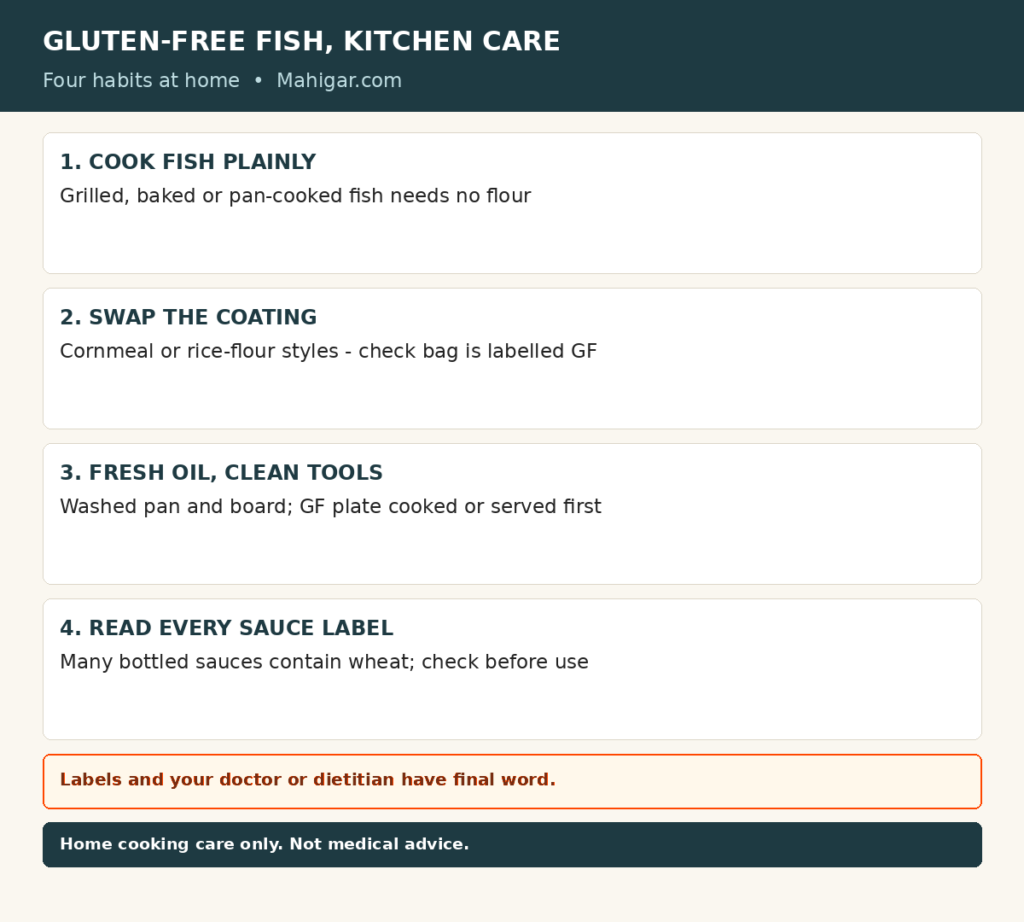
The fix is kitchen care, not a new cuisine. Cook the fish plainly. When you want a coating, swap it for one from a bag labelled gluten-free, and check that bag every time. Fry in fresh oil with clean tools. Read every sauce label. This guide sits inside Fish Recipes for Every Diet and Lifestyle, Mahigar’s diet hub, and it teaches those habits one by one.
One honest note, and it matters: I am a cook, not a clinician. What follows is home cooking care, not medical advice, and it certifies nothing. If you cook for someone with coeliac disease, their doctor or dietitian, and the labelled products they trust, outrank everything on this page, including my habits.
Table of Contents
The Fish Itself Needs Nothing
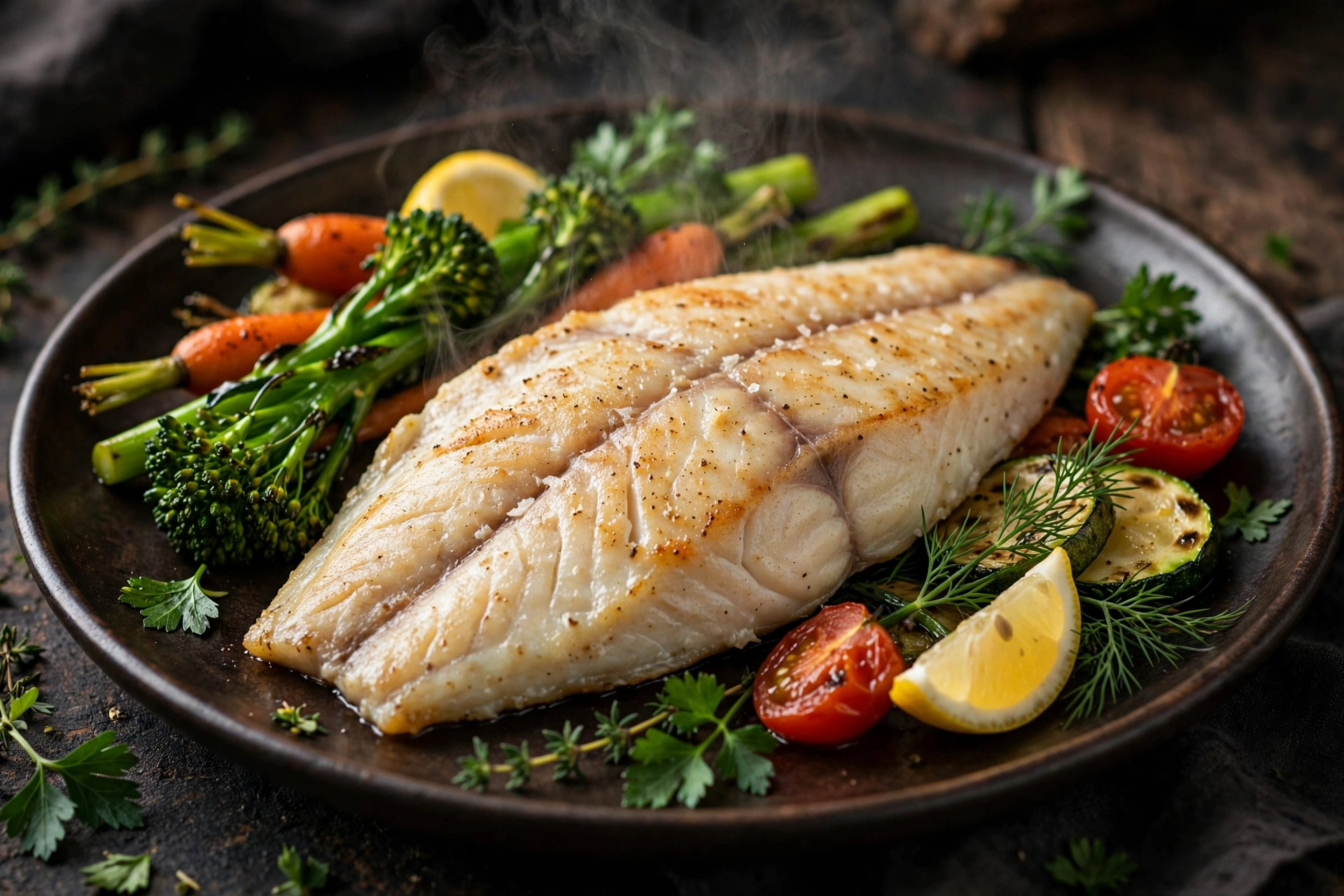
Start from the strong ground. Fish, plainly cooked, is the easiest protein you will ever serve at a gluten-free table. Grill it, bake it, steam it, pan-fry it skin-on or skin-off: no flour is required at any step, and no special shopping trip either. Salt from your own hand, lemon, herbs, spices you trust, a little oil or butter: that is a complete seasoning shelf.
The finish line is the same one every diet shares. Fish is done at 145°F (63°C) in the thickest part, or when it turns opaque and flakes. Gluten-free cooking bends nothing about food safety, and the full chart lives in Safe Internal Cooking Temperatures for Every Type of Fish.
Mild species like tilapia and cod suit almost every table and sit inside the lower-mercury choices my diet hub’s safety base is built on. If the plate stopped at plain fish and vegetables, this guide would be one short page. The rest of it exists because of everything we habitually put on the fish.
Where Gluten Actually Hides
The obvious two are easy to spot: batter and breadcrumbs. Most cooks looking at a gluten-free table already suspect them. The value of a shared family kitchen is the quieter list, the places gluten hides where nobody thinks to look.
Bottled sauces and marinades: many bottled sauces contain wheat, so read the label. Soy-sauce-based marinades are the classic example at my table. The bottle in the cupboard looks innocent, and it decides the whole plate. Glazes, dip sauces, and ready-made marinades all live under the same rule.
Thickeners: sauces and curries are often thickened with wheat flour, and a spoonful of convenience sauce can carry more gluten than the coating you skipped. The label on the pot’s helper matters as much as the fish.
Spice blends with fillers: some ready-mixed blends carry fillers or anti-caking extras. I am not naming or shaming any brand here. I am telling you the jar needs the same one-second label check as the sauce bottle.
Shared oil and shared surfaces: oil that fried coated food carries crumbs, and a board dusted white with flour passes that flour to the next thing sliced on it. Cross-contact is just a formal word for crumbs travelling, and crumbs travel well.
Look at the pattern: not one item on that list is the fish. Every one is a habit with a clean fix.
The Coating Question: Swap It or Skip It
Fried fish night is where gluten-free tables usually break, and it does not have to. You have two honest answers.
First answer: skip the coating. Crisp skin, a dry surface, and a hot pan give you the crunch most people actually miss. It is the same discovery my low-carb guide makes from the other direction: in Keto and Low-Carb Fish Recipes the batter is the problem, not the fish, and that sentence is twice as true at a gluten-free table.
Second answer: swap the coating. Coatings in the style of cornmeal or rice flour can carry a fish fillet beautifully, cooked exactly the way you already fry. But hear the rule clearly, because it does not bend: check the bag is labelled gluten-free, and do not take my word for any brand. Mills differ, bags differ, and labels change. The bag in your hand today is the only authority in your kitchen, and for a coeliac table a labelled product is the only authority there is. I am deliberately printing no coating recipe here. The swap is a shopping habit, not a formula.
Clean Tools, Fresh Oil: The Habits That Carry the Table
Everything in this section is ordinary kitchen discipline, the same care you would take cooking for any guest whose needs you respect.
If you fry, give the gluten-free plate fresh oil, or cook it first, before anything coated goes into the pan. Wash the pan, the spatula, and the board. Wash them, do not just wipe them, when the same tools have touched flour. Keep the flour tin across the kitchen, not open beside the fish board. Cook the gluten-free plate with clean tools and serve it on a clean plate, not the one that carried the breaded batch.
I will not print the words “100% safe” anywhere near these habits, and you should be suspicious of any page that does. Careful habits, labelled products, and your clinician’s guidance, in that order, is the honest sentence. What I can tell you as a cook is that these habits cost almost nothing and hold up at real family tables, week after week.
Dinner Ideas the Whole Table Can Share
Because the fix is habit rather than a separate menu, the gluten-free plate can simply be the family plate.
Grilled or baked fish with vegetables and lemon. Nothing to swap, nothing to check beyond your seasoning shelf. This is the anchor dinner. Serve it on the nights nobody wants a project.
Pan-fried fish with crisp skin and no dredge. The coating problem, answered by the fish itself. Mild fillets, dry surface, hot pan, patience.
Coated fish night, with the swap. The household favourite survives: a labelled-bag coating, fresh oil, clean tools, and everyone eats the same dinner at the same table. Nobody gets the sad separate plate.
Steamed or baked whole fish with herb oil. Sauces and any bottled extras stay on the side, label-checked, so each person chooses for themselves.
Fish in sauce, where the label check earns its keep. The fish stays innocent here too; the curry base, the thickener, and the blend decide everything. Read first, cook once.
Every one of these sits comfortably inside the wider diet hub, and mild species keep mercury where the safety base wants it. A gluten-free table, handled with habit, is not a restricted table. It is just a careful one.
Gluten-Free Is Not Fish Allergy
One confusion deserves clearing up before the questions, because the two topics are often tangled. Gluten-free cooking is about wheat and its relatives turning up in coatings, sauces, and kitchens. Fish allergy is a different thing entirely: the body’s own reaction to fish itself. Mixing the two up serves nobody.
Fish allergy has its own guide on Mahigar: Fish Allergies: Symptoms and Safe Alternatives. If eating fish itself brings on hives, swelling, or breathing trouble, that is a doctor-and-emergency matter, not a coating matter, and nothing on this page should be read as allergy advice. Keeping the topics in their own rooms is part of how a food site stays trustworthy.
Frequently Asked Questions
Is plain fish gluten-free?
Fish cooked plainly, grilled, baked, steamed, or pan-fried in clean oil, needs no flour at any step, so the fish itself is not your problem. The risks are what surrounds it: coatings, bottled sauces and marinades, thickeners, and crumbs carried by shared oil or tools. Labels on products, and your clinician’s guidance if you have coeliac disease, have the final word. This page teaches kitchen care; it certifies nothing.
Can I still eat fried fish at a gluten-free table?
Yes, in one of two honest ways. Skip the coating and let crisp skin do the work, or swap to a coating from a bag labelled gluten-free. Never take any writer’s word, mine included, for a brand. Either way, fry in fresh oil with clean tools, or cook the gluten-free plate first. The method you already know stays exactly the same.
What should I check on a sauce or spice label?
Read the ingredients list, not the front of the bottle. Many bottled sauces contain wheat, so read the label, especially on marinades, glazes, and dips. Check thickeners and curry bases the same way, and give spice blends the same one-second check for fillers. When a label is unclear, the careful choice is a different bottle, and your doctor or dietitian’s advice outranks any label-reading habit of mine.
Is eating gluten-free the same as having a fish allergy?
No. Gluten-free eating avoids wheat and its relatives; a fish allergy is a reaction to fish itself. They need different care, and they are handled in different guides on this site. If fish itself causes hives, swelling, or breathing difficulty, treat that as a medical matter and see a doctor. This page’s coating and kitchen habits are not allergy management.
What to Check Next
Tonight, take one fish dinner you already cook and check three things only: the coating, the sauce bottle, and the oil. Swap one, read one, refresh one, and the whole table eats the same dinner. Then browse the rest of Mahigar’s diet hub as its guides publish, one pattern at a time.