Keto and Low-Carb Fish Recipes
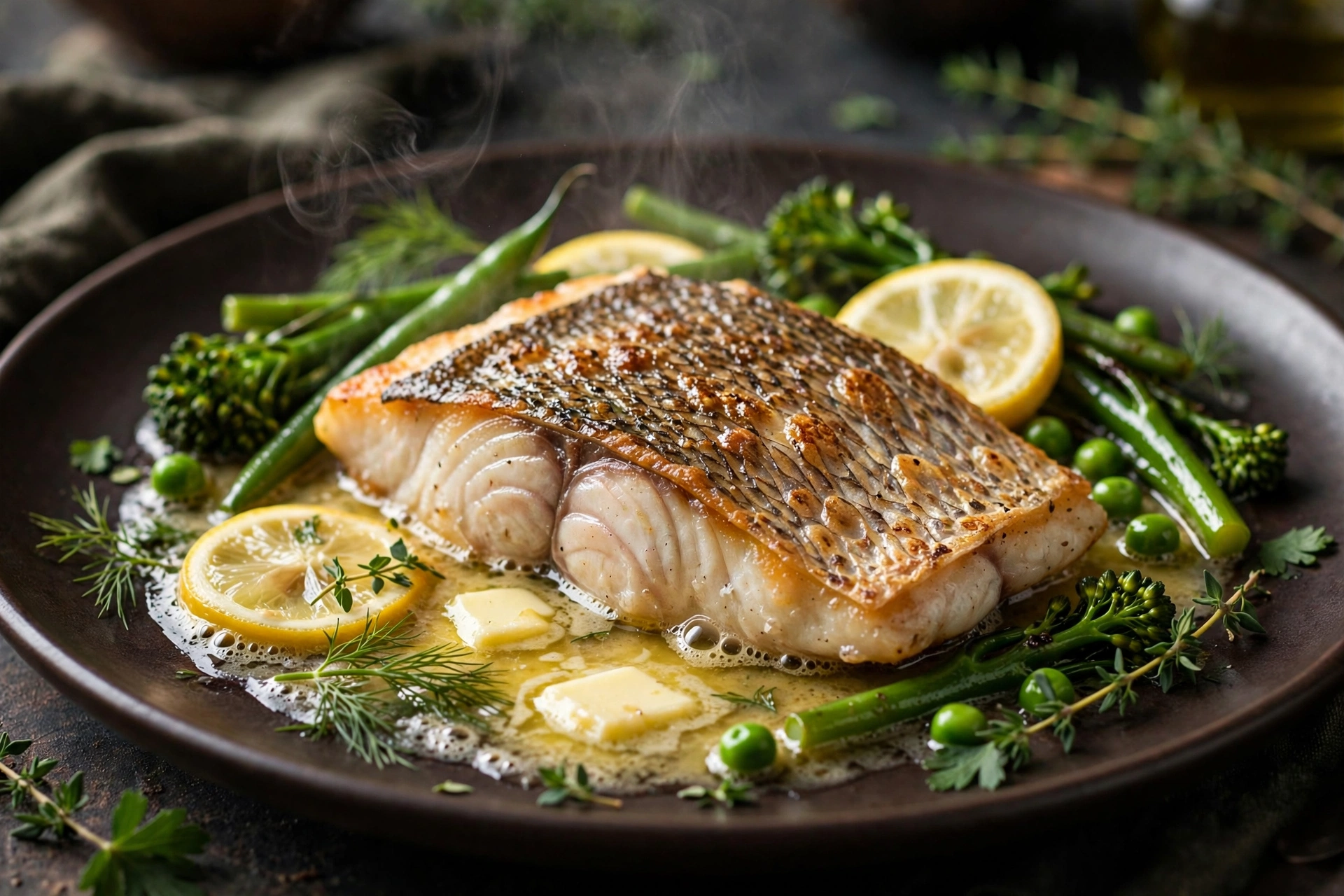
The crunch you miss on a low-carb plate was never really about the batter. In my kitchen, the crispiest fish I know wears no coating at all: skin dried well, laid into a hot pan, and left alone until it turns golden and crisp. That plate never needed flour, and it never missed it.
Most low-carb fish dinners fail before the fish even hits the pan. The problem is not the fish. Fish on its own is not a starchy food. The problem is the plate built around it from habit: the flour dredge, the breadcrumb crust, the sweet glaze, the heap of rice underneath. Cooks either give up fish as not allowed, or eat it boiled and joyless. Both are wrong.
The fix is simpler than any recipe. Cook the fish plainly and let the skin be the coating. Fill the plate with vegetables instead of starch. Read the labels on your sauces. This guide sits inside Fish Recipes for Every Diet and Lifestyle, Mahigar’s diet hub, and it teaches those three moves through dinner ideas, not measured recipes.
One note before the ideas: this is general kitchen information, not medical advice, and I print no carb grams or daily limits anywhere on this page. Every low-carb plan sets its own rules, and plans change. Your plan’s current guidance, and the label on the bottle in your hand, has the final word, not a food blog.
Table of Contents
Why the Fish Was Never the Problem
Think about where the starch actually sits on a normal fish plate. It is not in the fillet. It is in the flour the fish was dredged in, the breadcrumbs pressed onto it, the sugary sauce brushed over it, and the potatoes or rice it lands on. The fish itself asks for almost nothing: salt, heat, and a dry surface.
That is why low-carb fish cooking is less about finding special recipes and more about un-learning four habits: the flour dredge, the crumb coat, the sweet glaze, and the automatic starchy side. Everything in this guide is those four habits, replaced.
My Method: Plain Fish, Honest Plate
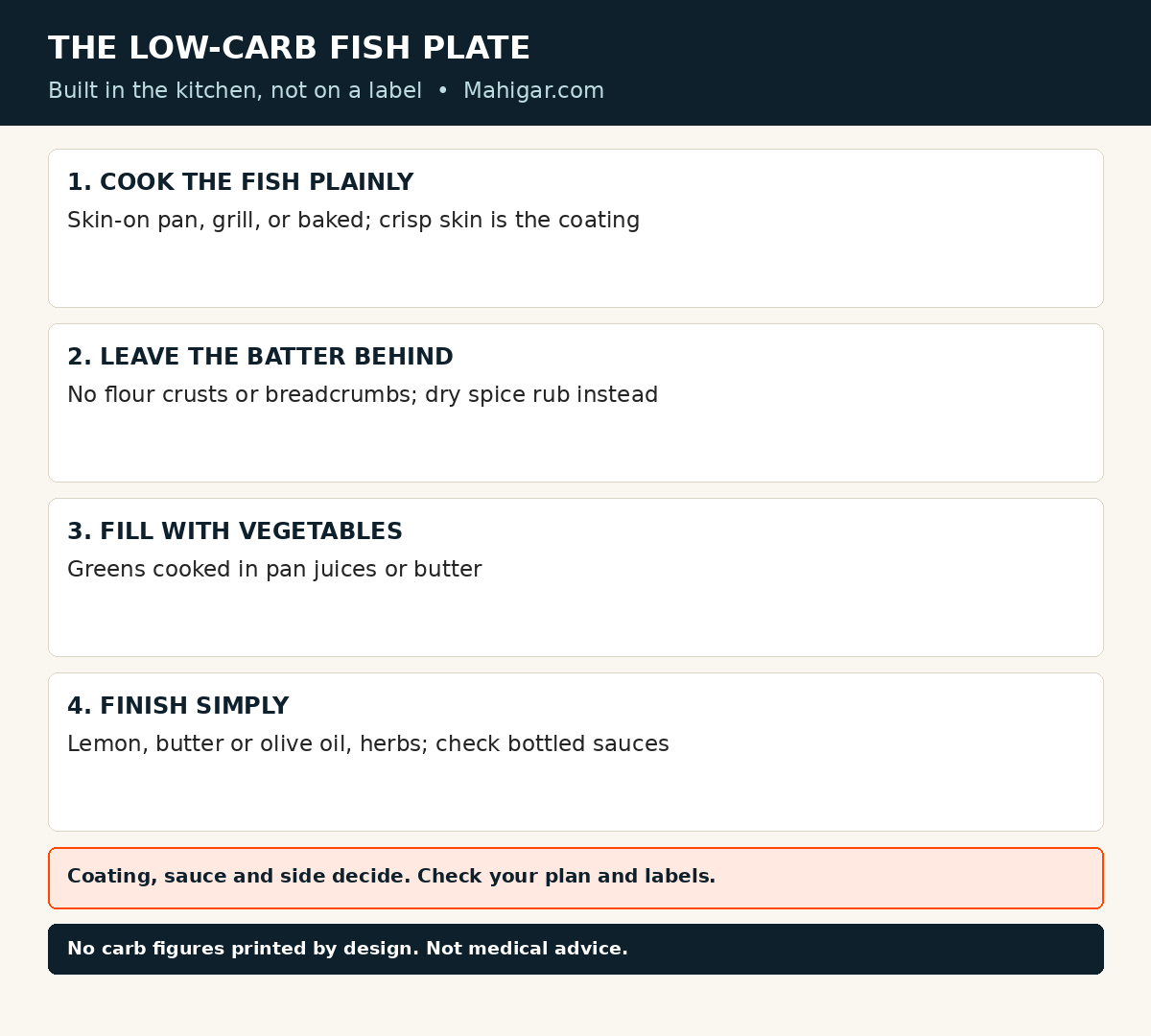
Cook the fish plainly. Skin-on fillets fried in a hot pan until the skin crisps. Whole fish on the grill with salt and lemon. Fillets baked with herbs and oil. The skin is not a problem to solve. Crisped properly, skin is the coating: golden, savoury, and satisfying in a way breadcrumbs only imitate. A dry surface, a properly hot pan, and patience before turning will do more for your dinner than any coating ever did.
If you want a crust, keep it thin and honest. A dry spice rub, the way I season fish for my masala fry at home with the spices straight on the fish, gives colour and flavour without a flour coat. Some low-carb kitchens use a thin layer of finely ground nuts or seeds as a crust. I offer that only as a principle: check that your plan allows it, check the label or source you trust, and never serve a nut crust at a table where anyone has a nut allergy. When in doubt, plain skin-on fish needs no crust at all.
Fill the plate with vegetables. This is where the plate becomes generous again. Greens, cauliflower, cabbage, beans from the garden. Vegetables cooked in a little butter or oil, or in the pan juices left by the fish, carry the meal the way rice used to. Nothing about this is a substitute food. It is simply a plate built on purpose instead of by habit.
Finish simply. Lemon squeezed at the table. Butter melted over a hot fillet. Olive oil, herbs, garlic, chilli. These finishes are the soul of fish cooking in half the world, and they ask nothing of your plan. The finishes to interrogate are the bottled ones. Sweet chilli sauces, glazes, and sticky marinades can carry more sugar than the dessert. Read the label, or make the finish fresh.
Species to Reach For
Low-carb cooking rewards two kinds of fish. The rich, oily species, salmon, sardines, Atlantic mackerel, bring their own fat to the plate, which makes them deeply satisfying cooked plainly. The firm lean species, tilapia, cod, catla, rohu in my home waters, take spice, skin-crisping, and butter-lemon finishes beautifully and keep the plate light without feeling thin.
Eating the same rich fish every week still has one limit that has nothing to do with carbs: mercury. Salmon, sardines, tilapia, and cod sit in the FDA/EPA Best Choices in Mahigar’s mercury guide, which means two to three servings a week. Atlantic mackerel is also a Best Choice, but its big cousin king mackerel is a Choice to Avoid. The name on the fish matters. The full species chart lives in Mercury in Fish: Safe Levels by Species.
If you arrived here from the protein side of the kitchen, the same species serve both patterns. Mahigar’s High-Protein Fish Recipes guide builds plates from the same counter. And when your week turns to the heart-conscious version of this pattern, see Heart-Healthy Fish Recipes for the gentle-sauce, oily-fish-once-a-week approach.
Five Plates I Actually Cook
These are dinner ideas, not measured recipes: species, method, and company. Your plan decides the rest.
Crispy-skin salmon with greens. Skin-on salmon, dried well, into a hot pan skin-side down and left alone until the skin crisps; served with green vegetables cooked in the same pan and a squeeze of lemon. Rich enough that nobody asks what is missing.
Spice-crusted fried fish, Desi style. Firm fish, tilapia, catla, or rohu pieces, rubbed with turmeric, chilli, ground coriander, salt, and lemon, rested briefly, then fried dry-surfaced. This is my home masala fry with the flour coat simply left off; the spice does the work. One caution from my kitchen: check rohu and catla pieces for children before serving, because frying never removes the fine bones.
Grilled whole fish with salad. A whole sea bass or pomfret, scaled, gutted, scored shallow, grilled and served whole with a chopped salad and lemon. Nothing on that plate is hiding anything.
Tin plate: sardines or tuna with eggs. On the tired evenings: sardines or canned light tuna on a plate with boiled eggs, cucumber, tomato, onion, and lemon. No cooking beyond the eggs, and the tins are doing honest work.
Baked cod with herb butter. A thick cod fillet baked and finished with butter, herbs, and lemon, with cauliflower or greens beside it. Proof that the lean fish plate does not have to feel lean.
Done Is Still Done
A diet never changes the safety floor. Fin fish is cooked to 145°F (63°C) in the thickest part, or until it turns opaque and flakes; shrimp are cooked through until pearly and opaque. Diet cooking is often gentler cooking, but gentle still ends at cooked. The full chart is in Safe Internal Cooking Temperatures for Every Type of Fish. Keep raw fish at 40°F (4°C) or below, use it within one to two days, and let fish that smells sour, feels slimy, or does not spring back go without regret.
Frequently Asked Questions
What to Check Next
This week, take one fish dinner you already cook and remove exactly one thing: the flour dredge, the crumb coat, or the sweet glaze, and crisp the skin properly instead. Then read your sauce labels once, honestly. Those two small audits will do more for your low-carb fish cooking than a month of new recipes.
