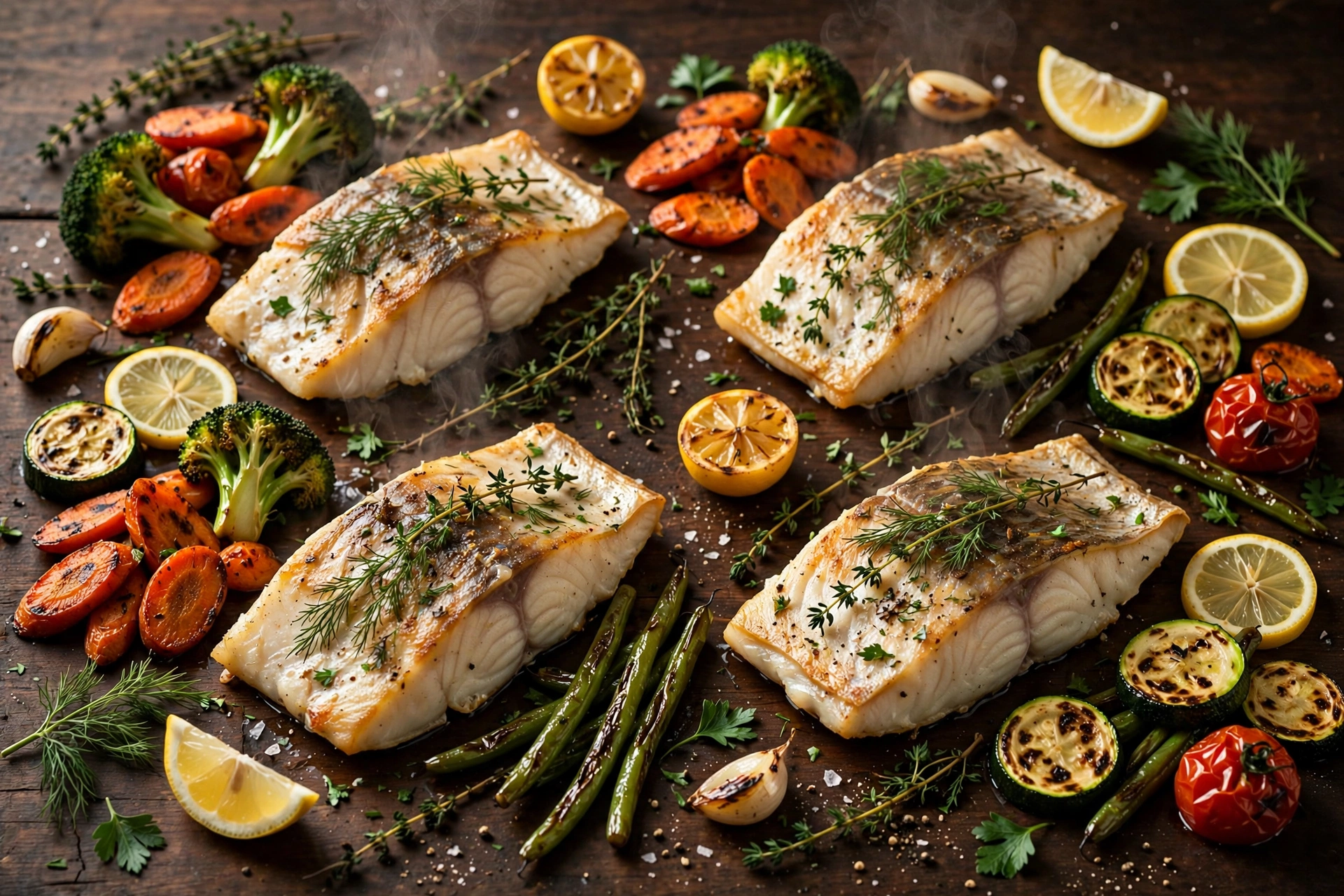
Fish Meal Prep Recipes for the Week
I got the same message three Sundays in a row from three different readers: they had cooked a proud batch of salmon for the week, and by Thursday it tasted like a memory of fish. The recipe was fine. The cook was fine. The problem was the plan: fish was treated like chicken, and fish will not pretend to be chicken.
Yes, you can meal prep fish for the week, but fish plays by a shorter clock than chicken or beef, and the whole method is built around respecting it. Cook a firm fish once, portion it, chill it fast, and eat those cooked portions inside three to four days. Whatever the week cannot finish goes to the freezer on day one, and the last nights of the week belong to tins. Done that way, one honest cook feeds several dinners without a single sad, tired fillet. This guide sits inside Fish Recipes for Every Diet and Lifestyle, Mahigar’s diet hub. The fish was never the problem in those Sunday batches. The clock and the reheat were.
Table of Contents
The Storage Clock Runs the Whole Week
Meal prep with fish is not really a cooking skill. It is a storage discipline with a dinner at the end of it, so here are the figures that run my fridge, the same established figures used across Mahigar’s storage guides.
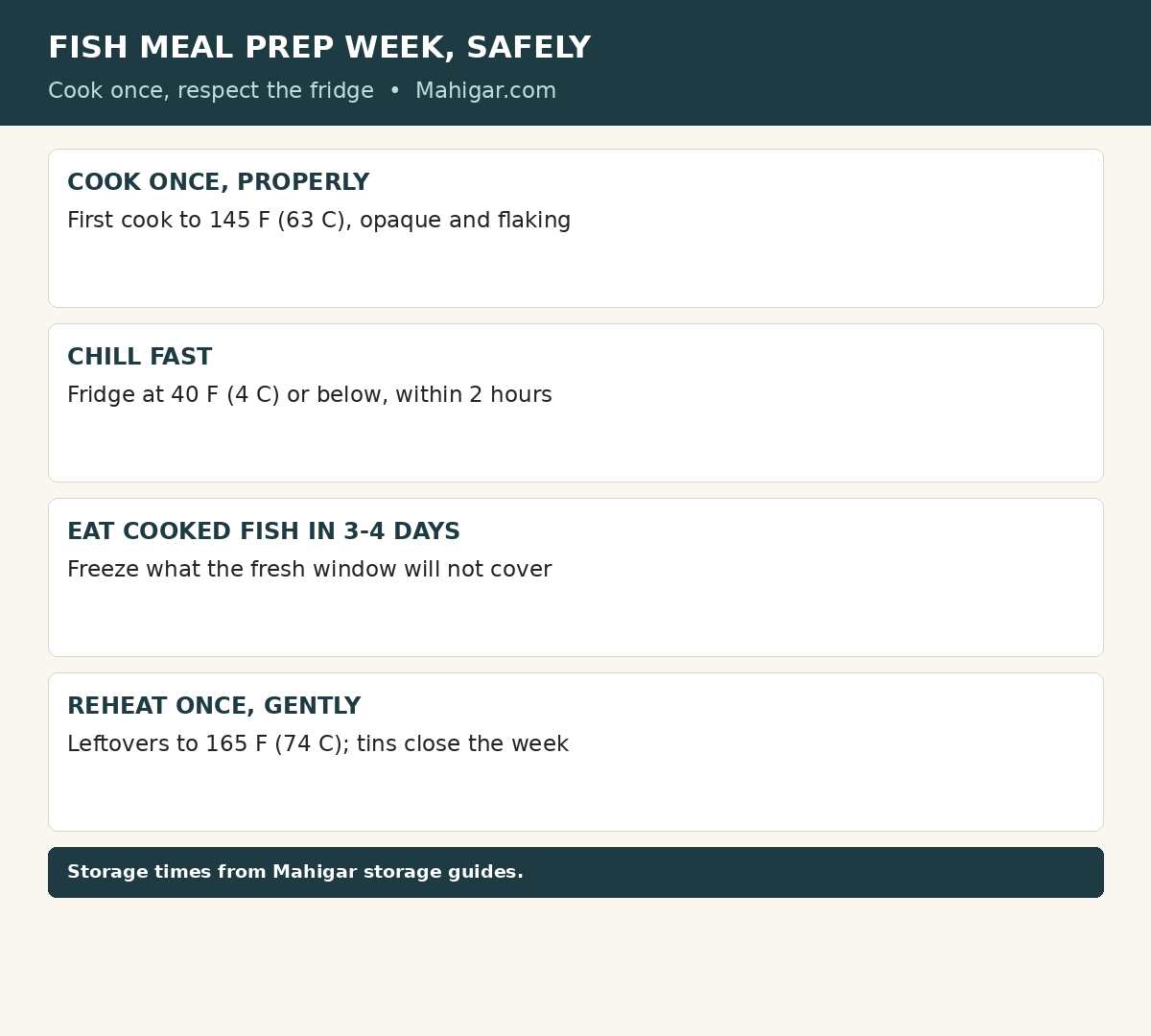
Cooked fish keeps three to four days in a fridge at 40°F (4°C) or below. Raw fish gets one to two days, so raw fish is cooked early in the week, never saved for Friday. Cooked portions go into the fridge promptly: food sitting out more than two hours is finished, and on a hot day, above 90°F (32°C), one hour is the limit. These are not cautious extras; they are the plan itself.
The full day-by-day chart for every kind of fish lives in How Long Does Fish Last in the Fridge? (Storage Times Chart), and I will not rebuild it here. What matters for meal prep is the shape it forces on your week: the fresh-cooked portions are eaten first, the freezer carries the middle, and tins close the week. Plan in that order and the clock stops being an enemy.
One more figure, because meal prep lives or dies by it: leftovers are reheated to 165°F (74°C). That is the reheating standard from the temperature guide, and it applies to every portion, every night. No lukewarm exceptions for fish you cooked yourself.
Choose Fish That Forgives a Reheat
Not every fish wants to be cooked twice. A long kitchen life of leftovers has taught me the honest split.
Fish that preps well: firm fish that holds its shape (salmon, firm white fish like cod) and fish cooked in something: a curry, a sauce, a formed fish cake. Sauce is a reheated fish’s best friend; it returns the moisture the second heating takes away, and a fish cake reheats as a complete, tidy portion. Fish you plan to flake cold into salads or onto rice also preps kindly, because it never faces the second heat at all.
Fish to cook fresh instead: delicate, thin fillets and anything with crisp skin. Crisp skin does not survive the fridge: it softens, and no reheat brings the crackle back. Thin delicate fish dries at the edges on the second cooking. There is no technique that fixes this, and any guide that promises you one is selling something. Cook those on the night, and enjoy them properly.
Whichever fish you choose, the first cook is a real cook: fin fish to 145°F (63°C) in the thickest part, opaque and flaking. There is no “cook it halfway now, finish it later” in honest meal prep. Half-cooked fish waiting in a fridge is a risk, not a shortcut.
Cook Once, Portion, Chill Fast
The prep session itself is simple. Cook the fish plainly and a little generously seasoned. Strong marinades keep working in the fridge and can turn harsh by day three, so keep flavours you can adjust at the table.
Portion before you chill. A whole cooked fillet reheated three times is three times damaged; separate portions are each reheated once, gently, and only once. Portioning also means tonight’s dinner never waits on tomorrow’s.
Then chill fast. Cooked fish goes into shallow covered containers and into the cold fridge promptly. Remember the two-hour limit, one hour on a hot day. Deep containers cool slowly in the middle; shallow ones let the cold reach everything. This is the least glamorous step in meal prep and the one that decides whether Wednesday’s dinner is good or regrettable.
Freeze What the Week Cannot Cover
If your week wants five fish dinners, the honest answer is that the fridge will not carry all five from one Sunday cook. It carries three to four days’ worth. The rest is frozen on day one, while the fish is at its best, not on day four when it is already tired.
Freeze the extra portions properly wrapped, and thaw them in the fridge the night before you want them. For best quality at 0°F (-18°C), fatty fish like salmon keeps about 2 to 3 months and lean fish about 4 to 8 months: those are quality windows, not safety deadlines, from the federal storage chart. The full wrapping method lives in How to Freeze Fresh Fish at Home; the meal-prep point is simply to freeze early and thaw gently.
So a real fish week shapes itself: fresh-cooked portions in the first days, a thawed portion midweek, and the pantry waiting at the end. Nothing is stretched past its honest window, and nothing is wasted.
Reheat Once, Gently, and Be Honest About Texture
Here is the truth this whole guide stands on: reheated fish is never the same as fresh-cooked fish. The flesh firms, the edges dry a little, and delicate fish suffers most. Meal prep fish is good food; it is just not the same food, and planning around that fact beats pretending otherwise.
Reheat once, and reheat gently. Bring the portion up to 165°F (74°C) (the standard in Safe Internal Cooking Temperatures for Every Type of Fish) using low, patient heat rather than a blast. Blast heat is how reheated fish turns to rubber: it squeezes the moisture out of flesh that has little left to give. Fish in sauce reheats kindest, since the sauce protects it; plain fillets forgive you more if they are not cooked a minute beyond the mark. Then serve at once. A reheated portion that sits and cools and gets warmed again has been heated twice, and the second trip is where texture goes to die.
My favourite rescue for a portion that reheated dry: flake it. Flaked into warm rice, folded into a curry, or broken over a salad, a dry portion stops being a dry fillet and becomes an ingredient. Nothing is wasted, and nobody at the table can tell which night it was cooked.
The Shape of a Fish Week, and the Rotation Rule
Put together, the week looks like this: a shape, not a menu. The first dinners come from the fresh cook, eaten while the portions are at their best. Midweek belongs to a frozen portion, thawed in the fridge overnight. The last nights belong to the pantry: canned tuna, sardines, or canned salmon, which were cooked long ago in their tins and ask only to be opened and served well. Every night is fish; no night is a gamble.
One last discipline: do not eat the same fish every day of the week. Mercury is a weekly conversation, not a daily one. The FDA/EPA categories in Mahigar’s mercury guide sort fish into Best Choices a few times a week, Good Choices once a week, and fish to avoid entirely. A meal-prep week built on one species eaten seven times ignores that arithmetic. Rotate within the lower-mercury fish (salmon one cook, a white fish the next, tins to finish), and the week stays inside the guidance while tasting more varied anyway.
That is the whole method: cook once, chill fast, respect the three-to-four-day window, freeze early, reheat once and gently, and let tins close the week. Fish will not pretend to be chicken, and it does not need to.
Frequently Asked Questions
What to Check Next
Start where this guide starts: the storage clock. The full chart lives in Mahigar’s fridge-life guide above, the wrapping method in the freezing guide, and the temperatures behind the cook and the reheat in the cooking-temperatures guide. Then go back to the diet and lifestyle pillar linked at the top of this page and let your week choose its next fish.
