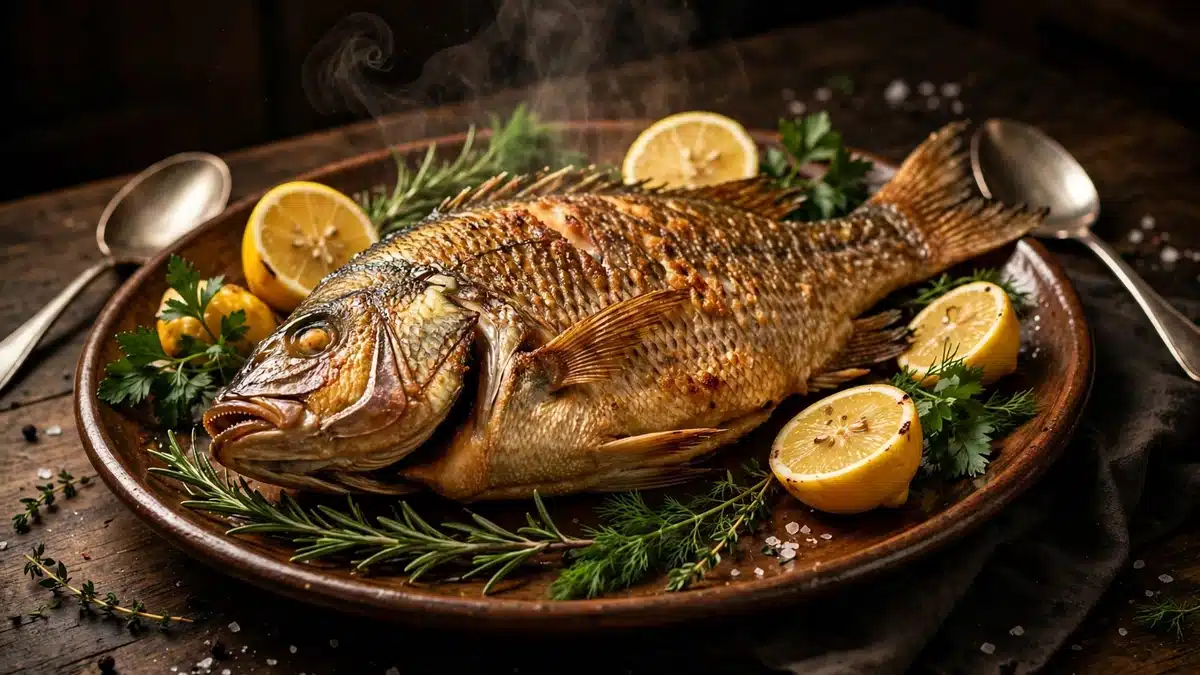
How to Serve Whole Fish at the Table
Fish arrives whole at a table and the room changes. I have watched it happen at my own table for years: the platter comes in, everyone sits up, and then the quiet worry starts. Who cuts it? What about the bones? A beautiful whole fish can turn stressful in ten seconds if nobody takes charge of serving it.
So I take charge, calmly, and the stress never starts. I bring the fish out whole on a roomy platter, let everyone see it for one proud moment, then portion it myself in clear sections, after one kind, honest word about the bones. That is the whole ritual. A fillet is convenient; a whole fish is a gift. But it has a head, a backbone, and fine bones that do not care about my dinner plans, so serving it well is less about cooking and more about manners. This guide sits inside How to Serve Fish: Pairing and Presentation Guide, and it covers the one job the hub gives its own page: taking a whole cooked fish from platter to plate without stress.
Table of Contents
Table of Contents

First: Cooked Through, Rested a Moment, Served Promptly
Before ceremony comes the cooking, and it is non-negotiable at my table. A whole fish is served cooked through: fin fish is finished at 145°F (63°C) in the thickest part, or when the flesh is opaque and flakes easily. There is no rare whole fish at my table, and no “it will finish on the platter” guessing. I check the thickest part, beside the backbone, where a whole fish is always last to cook.
Off the heat, I give it a brief rest, a short pause while I carry it in, settle the platter, and let the juices calm down. I will not hand you invented minutes for that pause; fish size and ovens differ, and my honest instruction is simple: a moment to settle, not a nap on the counter. Cooked fish does not wait politely at room temperature. Once it is portioned and eaten, leftovers go to the fridge, and anything left out for more than two hours is discarded, more than one hour if the room is above 90°F (32°C).
Warm plates, lemon cut, sides ready: all of that happens before the fish lands, so the fish itself is never the thing left waiting.
A Platter With Room to Work
The serving tool that matters most in my kitchen is space. A whole fish on a too-small plate forces me to portion over the rim, spill juices, and fight the fish in front of an audience. I choose a platter clearly bigger than the fish, with a rim that will hold the juices the fish gives up as I work.
I lay the fish down once, in the position it will be portioned, head to one side, the side I will serve first facing up. I set two large spoons, or a spoon and a fork, beside the platter before the fish arrives; serving tools fetched mid-portion are how calm leaves the table. Lemon halves, herbs, and any sauce wait at the platter’s edge, not on the fish.
This is plating, and the same calm rules apply as on an individual plate: How to Plate Fish Like a Restaurant is really about room, purpose, and stopping. On a platter, room is not decoration; it is where the backbone will go when it comes out, and where portions wait their turn.
One Kind Word About the Bones
I say it early, I say it kindly, and I say it before the first portion moves: “This fish has fine bones. I will portion it and check every piece. Eat slowly at the edges, and tell me if you find one I missed.”
That one sentence does three jobs at my table. It warns without alarming. It tells guests the checking is my job, not theirs. And it gives everyone permission to eat at a relaxed pace instead of performing confidence. Children and nervous guests get an extra word from me: their portions come last, after the most careful check. I never tell a table a whole fish is boneless; its frame is right there on the platter telling the truth, and a guest who finds a bone after being told there are none will not relax again that evening.
If some guests would truly rather not risk it, that is fine too. I portion the top section for the confident eaters, and I know that choosing fillets next time is not failure. A good host reads the table, not just the fish.
Portion in Sections, Not in Pieces
I work down one side of the fish at a time, in clear sections, instead of letting everyone dig into the middle. I ease a spoon along the natural seam of the top fillet and lift the flesh down in two or three large sections. I lay each section on the platter’s spare room, then turn it gently so I can see it. When the top side is served, the backbone sits exposed; I lift it out cleanly in one piece, head end to tail, and the second fillet is waiting underneath, already free of the frame.
I check every portion before it leaves the platter. I run the spoon lightly over the flesh; fine bones announce themselves as tiny resistance and pale points. I pick out what I find, and I say so as I serve: “this one is checked.” That small narration is the etiquette half of the job: guests relax because they can hear the care happening. The deep technique, the spoon-and-fork method, the rib bones, the sections near the head, is taught in full in How to Debone a Whole Cooked Fish at the Table. Read the two together: that guide is the deboning; this one is the service around it.
I portion onto warm plates as I go, and hand each plate over as soon as it is ready rather than building a queue of cooling fish.
Keep the Crisp Skin Crisp, and the Plate Calm
If I cooked the fish for crisp skin, I protect that work at the table. I serve skin-side up, keep portions out of the pooled juices on the platter, and put any sauce beside the fish on each plate, never poured over the skin I crisped. A sauce spooned at the table also lets each eater choose, which suits a mixed table better than one decision made in the kitchen.
I keep the company quiet. A whole fish is already the loudest thing on the table, so the sides should support, not compete: something fresh, something starchy to catch the juices, perhaps something cooling if the fish is spiced. What to Serve with Fish: 30+ Side Dish Ideas chooses those sides by the job each one does, and for a whole fish one fresh side and one plain one is honestly enough at my table.
Leftovers, Handled Honestly
If the evening leaves fish behind, I strip what is left from the frame while it is still easy, and get it into the fridge. Cooked fish keeps 3 to 4 days refrigerated, and when I reheat it, I bring leftovers back to 165°F (74°C). Flaked over rice or folded into a quiet lunch, yesterday’s whole fish has a second life. It simply should not find it by sitting on the table all evening.
Frequently Asked Questions
Should I portion the whole fish in the kitchen or at the table?
At the table, if the fish can travel on its platter. The arrival is half the pleasure, and portioning in view lets guests see the checking happen. I portion in the kitchen only when the table is too crowded to work at, then bring the checked portions out on the platter, frame removed, and say so.
How do I keep the skin crisp while serving?
Keep the fish skin-side up, lift portions instead of sliding them through the platter’s juices, and put sauce beside each portion on the plate rather than over it. Serve as you portion, instead of letting cut pieces sit in liquid while the rest is served.
What if a guest is nervous about bones?
I serve them last, from the thickest part of the top fillet, and check their portion twice in front of them. I offer the honest sentence, “I have checked this piece carefully,” rather than a claim no whole fish can keep. Confidence comes from watching the care, not from being told not to worry.
Can I set the portioned fish out and let guests help themselves?
For a family table, yes, once the backbone is out and the sections are checked. Move the checked sections to the platter’s centre, put serving spoons in, and let people take fish. Keep the frame and the unchecked parts apart, so nobody accidentally serves themselves from the unchecked side.
What to Check Next
Next time a whole fish is on my menu, I decide the service before the cooking: platter chosen, spoons waiting, sides decided, and my one kind sentence about bones ready. Cook it through to 145°F (63°C), bring it out whole, portion in sections, check every piece out loud, and hand over calm plates. The ceremony is the easy part; it is the care that guests remember.

One Comment