Small River Fish: How to Cook Roach and Other Little Fish Whole
A basket of little fish from the canal looks like hard work to a lot of cooks. I know that look. Roach and the other small river fish I bring home are no longer than my hand, full of fine bones, and easy to dismiss as too fiddly for the table. The first time I cooked them badly, I proved that point to myself. The skin stayed soft, the bones stayed sharp, and picking through them at the table felt like a chore instead of a meal.
Fish rewards a different approach when it is small. Cooked whole and cooked crisp, those same little fish change completely. The skin turns golden and lacy, the flesh stays sweet, and the fine bones soften so much in the heat that you can eat them with the flesh, no picking, no fuss. That is the whole secret I have learned on my canals over eight years of fishing them, and in my kitchen over many more years of cooking what I catch.
This guide sits inside my Freshwater Fish Cooking: The Complete Guide to Carp, Catla, Catfish and River Fish pillar, where river fish is the central subject from the water to the plate. Everything here is hands on practice with roach first, and the same method works for the other little river fish that turn up in a mixed catch.
Table of Contents
The Short Answer: Fry Them Crisp and Eat Them Whole
Cook small fish whole, well cleaned, salted, lightly coated, and fried hot until deeply crisp, and the fine bones soften enough to eat with the flesh.
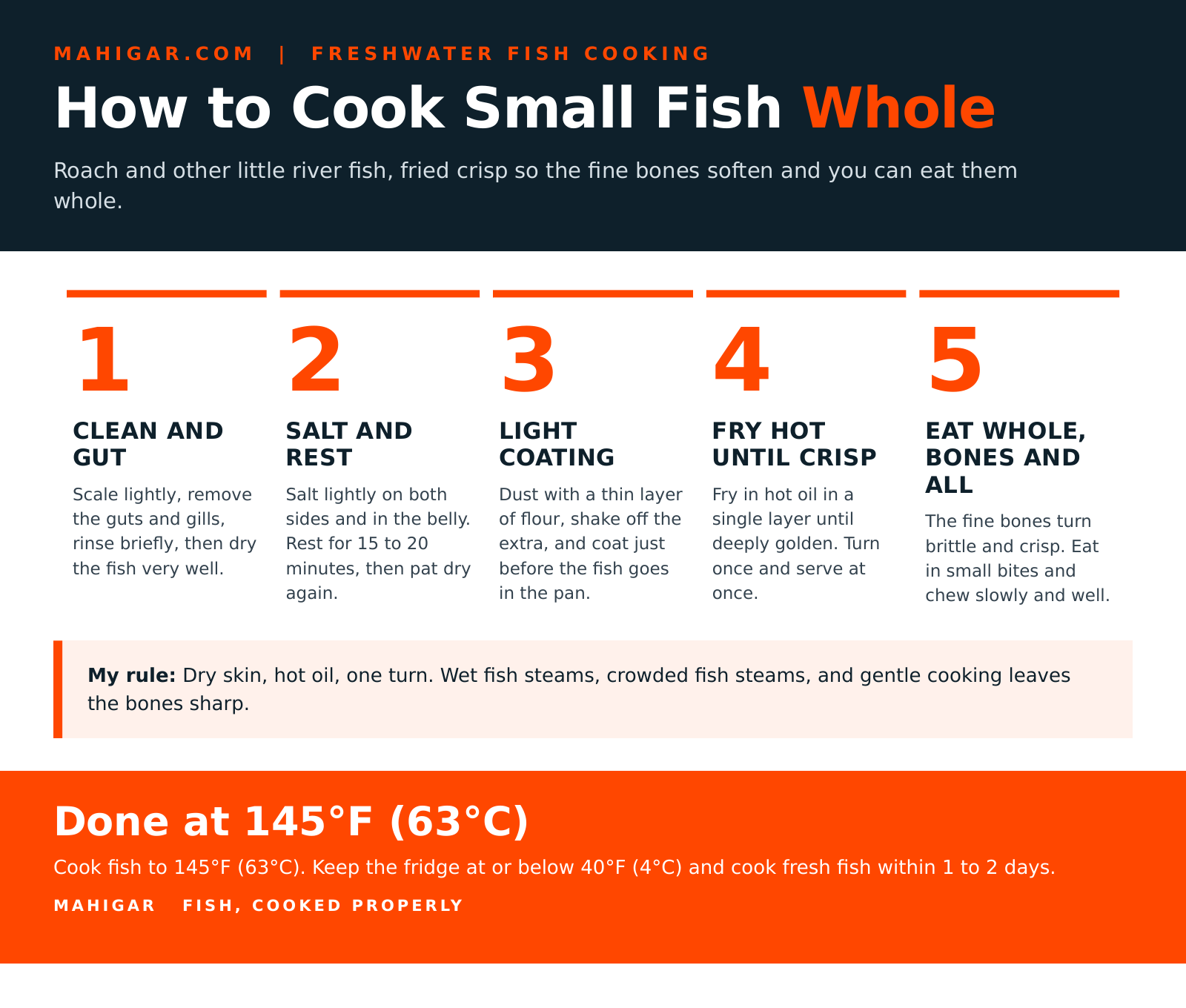
Keep that order in your head and the rest of this guide is just detail. Clean and gut, salt and rest, light coating, fry hot until crisp, eat whole, bones and all. Five steps, no waste, and a plate of fish that tastes like the river in the best way.
Why Little Fish Are Worth Cooking Whole
Little fish are worth cooking whole because the skin, the flesh near the bone, and the crisped fins carry the best flavour and texture, and nothing is wasted.
Whole cooking also protects the flesh. The skin holds the moisture in, the bone keeps the flesh sweet, and the small size means the fish cooks evenly from both sides without a thick centre lagging behind. When the fish is crisp, you get contrast in every bite, crunchy skin and fins, soft sweet flesh, and bones so fine and brittle they add a gentle crunch instead of a warning.
Cleaning Little Fish Without Fuss
Clean little fish by scaling lightly, opening the belly, removing the guts and gills, and rinsing briefly, then dry them very well before any seasoning touches them.
Small fish need gentle hands, not less care. I work with a small pile at a time, laid out on a tray so I can move in a rhythm. The scales on roach and similar fish come away easily with the back of a knife or a spoon, worked from tail to head in short strokes. I do this under a thin trickle of water or in a bowl of water when I can, because little scales travel everywhere in a dry sink and I have learned that lesson the hard way in my kitchen.
I open the belly with the tip of a small sharp knife or kitchen scissors, from the vent up to the throat, keeping the cut shallow so I do not tear the flesh. The guts come out in one pinch in a fish this size. I remove the gills as well, because gills carry a bitter taste that has no place in a clean tasting fish. A quick rinse inside and out is enough. If you want the full careful method for whole fish, my guide to How to Gut and Clean a Whole Fish walks through the same steps in detail, and the habits scale down to little fish without any change in principle.
River fish can carry a muddy note, especially fish from still or slow water. If your catch smells earthy before cooking, the cleaning and rinsing steps in How to Remove Muddy Taste from Freshwater Fish are the ones I trust, simple washing, proper gutting, and a short salted rest, before you go anywhere near the pan. What I never do is soak little fish for hours in water. They are too small and too delicate, and a long soak washes away the sweet flavour I am trying to keep.
Salt, Rest and Simple Seasoning
Salt the cleaned fish lightly on both sides and inside the belly, rest them for 15 to 20 minutes, and keep the seasoning simple so the sweet river flavour stays in front.
Salt does three quiet jobs for me here. It seasons the flesh through, not just on the surface. It draws out a little surface moisture, which helps the crisp finish. And it firms the delicate flesh slightly, so the little fish hold together better when they meet the hot oil. I use fine salt and a light hand, because a small fish has a high ratio of surface to flesh, and heavy salting that would suit a big steak will overpower a roach.
For seasoning, my rule with little river fish is restraint. Salt, a little black pepper, and a pinch of turmeric for colour is my everyday mix. Sometimes I add ground cumin or a touch of chilli when the table wants heat. I rub the seasoning over the fish and into the belly cavity, and I score nothing. Scoring suits bigger fish. On a fish this small, cuts only tear the flesh and let the juices escape. Lemon goes on at the table, hot and crisp from the pan, never before cooking in my kitchen, because the acid softens the crisp skin I worked to build.
The Light Coating That Makes Them Crisp
Use a thin, dry coating of flour or fine rice flour, dusted on and shaken off, so the skin crisps and protects the flesh without hiding the fish under batter.
One warning from my own mistakes. Coat the fish just before they go into the oil, never in advance. A coated fish left sitting will draw moisture into the flour and turn gummy, and gummy coating steams in the pan. I set up in order, clean fish rested and dry, flour plate beside the stove, pan heating, and only then do I coat, fish by fish, straight into the heat.
Frying Whole, Hot and Once
Fry small fish in hot oil in a single layer, undisturbed until deeply golden and crisp, turn once, and finish to 145°F (63°C) so the flesh is cooked and the fine bones are brittle and edible.
This is the heart of the method, and it is simpler than people expect. I use a wide, heavy pan and enough oil to come partway up the sides of the fish, not a deep bath and not a dry smear. The oil needs to be properly hot before the first fish goes in. I test it the way I always do, with a tiny pinch of flour. It should sizzle at once and turn golden in seconds. If the oil is too cool, the coating drinks it up and the fish come out greasy and pale. If it is smoking hard, the outside burns before the bones have time to crisp through, so I aim for hot and steady.
Then I leave them alone. The fish go in and they stay in, until the underside is deep golden and the fish releases easily when I nudge it with a spatula. Turning too early tears the skin and the coating, and turning often breaks a delicate fish apart. One turn, with a wide spatula that supports the whole fish, is all a small fish needs. The second side takes a little less time than the first.
The doneness rule is the same rule I use for every fish in my kitchen. Cook fish to 145°F (63°C). On a fish this small, I rarely push a thermometer into the flesh, because there is so little of it and the crisp finish tells the story clearly. When the skin is deeply crisp on both sides and the flesh at the thickest part, just behind the head, looks opaque and flakes when pressed gently, the fish is done and the fine bones have had the heat they need. Drain the fish briefly on a rack or clean paper, sprinkle a final pinch of salt while they are hot, and serve them at once. Crisp fish waits for nobody.
Eating Them Whole, Bones and All
Eat crisp fried small fish whole, starting from the top side, chewing the softened fine bones with the flesh, and working calmly so the experience stays relaxed and enjoyable.
This is the part that needs a little trust the first time. When little fish are fried truly crisp, the thin rib bones and the fine bones through the flesh turn brittle and break down as you chew, much like the bones in a well cooked small sardine. I eat the fish in small bites, I chew properly, and I keep the crisp tail and fins for the crunch they are. The backbone on a roach sized fish also crisps well when the frying is thorough, though I still lift it out on any fish at the larger end of small if it feels firm rather than brittle. Use your judgement at the table, not a rigid rule.
If whole eating is new to your table, serve the fish with that simple guidance and let people build confidence bite by bite. The method in How to Debone a Whole Cooked Fish at the Table is the right approach for larger whole fish, where the frame should be lifted away cleanly, and it is a useful contrast. Little crisp fish are the opposite case. The bones are the point, softened by heat until they belong in the bite.
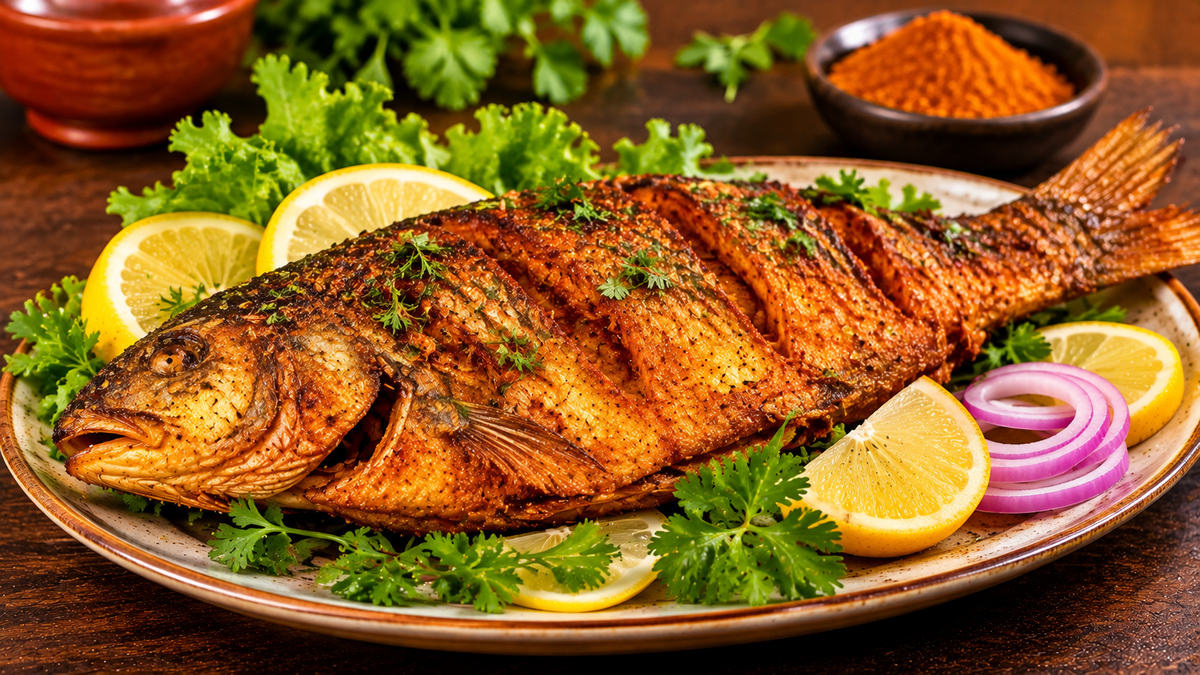
A small whole fish also deserves a calm plate. I serve them piled simply on a warm platter with lemon wedges and sliced onion, and the full table method in How to Serve Whole Fish at the Table covers the larger occasion fish. For little fish, keep it direct. Fingers are welcome at my table for these, the fish are picked up, eaten whole, and the pile goes down fast. A simple green salad, flatbread, or plain rice on the side is all they need. Rich sauces bury them.
A note of care, because I always give it at my own table. Crisp bones are softened bones, not vanished bones. Small children and anyone who struggles to chew well should be served the flesh lifted off the fish instead, and everyone should eat slowly the first time. Good food and good sense sit at the same table in my house.
The Flavour of Little River Fish
Roach and other small river fish taste mild, sweet and delicate, with a finer texture than most saltwater fish, and that delicacy is exactly why simple cooking suits them best.
Freshwater fish live differently from sea fish and they eat differently too, a point I explore in Freshwater vs Saltwater Fish: Taste, Texture and Cooking Differences. In my experience, a fresh caught roach has a clean sweetness that heavy marinades only hide. The flesh is soft and fine flaked, the skin crisps beautifully, and there is a gentle richness near the belly that reminds you this fish was alive in cold canal water that morning.
Other Ways I Cook Small Fish
Grilling over coals in a basket and roasting in a hot oven both work for small whole fish, as long as the fish are dry, oiled and cooked until crisp at the edges.
On evenings when my catch comes home and the family is gathered outside, I grill little fish in a hinged basket over steady coals. The basket lets me turn a whole row of fish in one movement without breaking a single one. I oil the fish and the basket, season the same simple way, and cook until the skin blisters and crisps. The bones soften slightly less than in frying, so I choose my smallest fish for the grill, where the thin bones crisp through most completely.
What I avoid for little fish is wet cooking. Poaching, steaming and curries keep every fine bone firm and fiddly, and the delicate flesh falls apart in sauce before it can be served neatly. Those methods have their fish, and small river fish are not among them in my kitchen. Crisp and whole is the rule, and I keep it.
Storage and Leftovers
Keep raw small fish in the fridge at or below 40°F (4°C) and cook them within 1 to 2 days, and chill fried leftovers promptly and eat them the next day, recrisped in a hot pan or oven.
My storage rules do not change for little fish. The fridge stays at or below 40°F (4°C). Fresh fish keeps for 1 to 2 days in the fridge, and with small river fish I treat that as an outer limit, not a target. I clean them soon after I get home, dry them, lay them in a single layer on a tray or plate, cover them loosely, and keep them in the coldest part of the fridge until the pan is ready.
The Mistakes I See With Small Fish
The mistakes I see most are wet skin going into the pan, a crowded pan, a heavy batter, turning the fish too often, and gentle cooking that leaves the bones sharp.
Heavy batter hides a fish that did not need hiding and slows the crisping of the bones, which is the whole point of the dish. Turning too often breaks delicate fish and tears the coating before it sets. Lay the fish down, trust the heat, turn once. And gentle cooking, the low slow fry or the careful poach, is the deepest mistake of all for little fish, because it cooks the flesh while leaving the fine bones exactly as sharp as they started. This is one dish where confidence with heat is not recklessness. It is the recipe.
Frequently Asked Questions
Can you really eat the bones of small fish like roach?
Yes, when the fish are small and fried hot until deeply crisp, the fine bones turn brittle and can be chewed and eaten with the flesh. Chew slowly and in small bites, and lift out any backbone that still feels firm on a larger fish.
How do I stop small fish from sticking to the pan?
Dry the fish well, use a light coating, heat the oil properly before the fish goes in, and leave the fish undisturbed until the crust sets and it releases on its own. A crowded or cool pan causes most sticking in my experience.
What size of fish suits this whole cooking method?
Fish about the length of your hand or smaller suit it best, including roach and other little river fish from a mixed catch. The thinner the fish, the more completely the fine bones crisp. Larger fish are better portioned or deboned at the table.
How long do small river fish keep in the fridge?
Keep the fridge at or below 40°F (4°C) and cook raw small fish within 1 to 2 days, sooner if you can, because their delicate flesh fades quickly. Cook fish to 145°F (63°C) when you serve it.
My Closing Advice on Small River Fish
A basket of little fish from my canals is not a poor catch. Cooked with care, it is one of the best meals the river gives.
Clean them gently, dry them like you mean it, salt them simply, coat them lightly, and fry them hot and crisp without fussing over them in the pan. Then eat them whole and relaxed, the way these fish have been eaten by river people for generations. If you catch your own, the full journey from water to table is covered in Catch to Kitchen: How to Handle and Cook Fish You Catch Yourself, and it is the perfect companion to this little fish method. Small fish, honest cooking, no waste. That is a plate I am always proud to put on my table.

2 Comments