How to Debone a Whole Cooked Fish at the Table
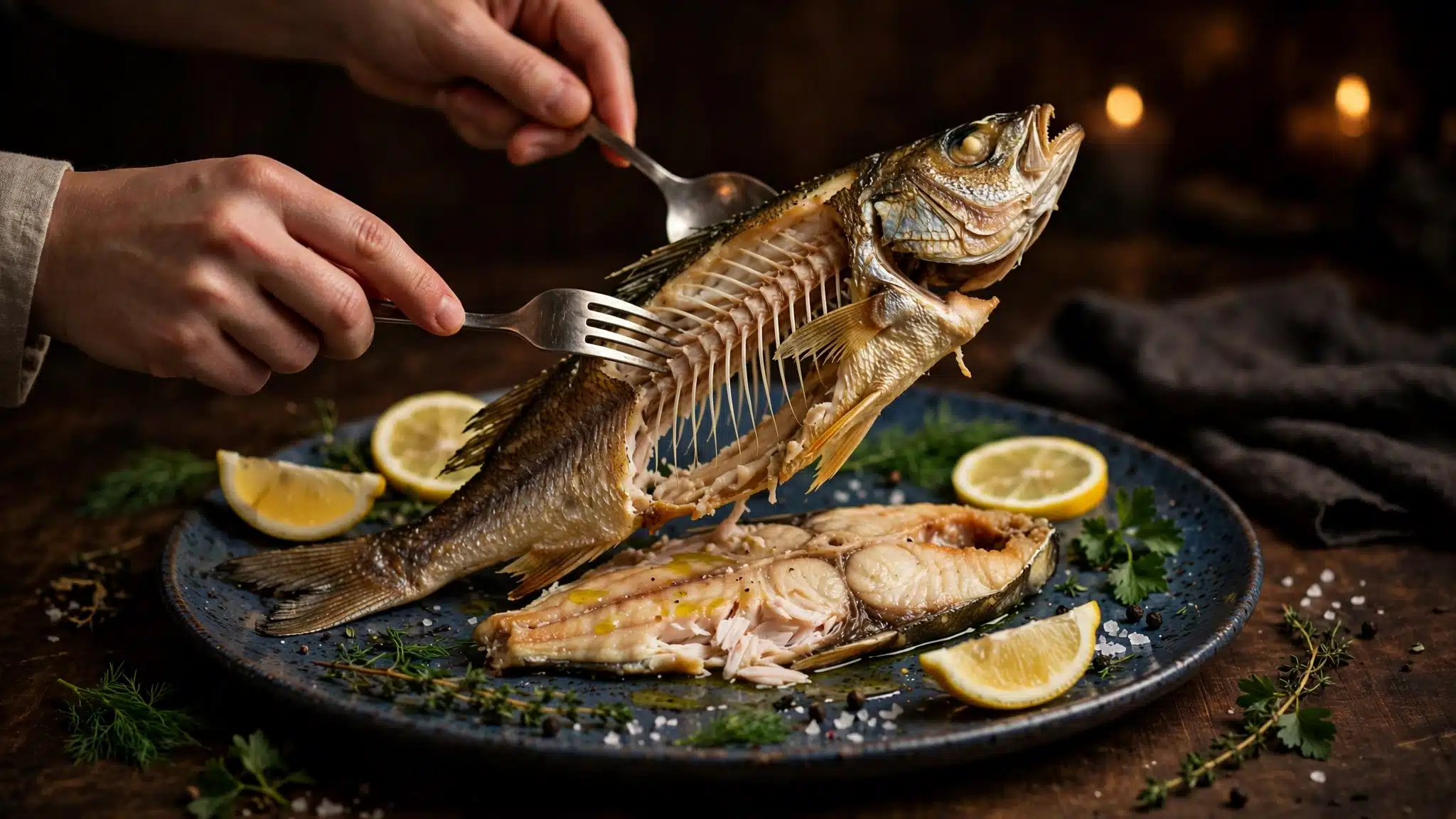
Debone the fish where everyone can see the result: at the table, with a spoon and fork. Lift the top fillet away in sections, ease along the backbone, and the whole skeleton — head, spine and ribs — can come out in one piece. What stays behind is the lower fillet, ready to check with a fingertip and serve in calm sections. This is the serving end of the sequence in Fish Prep and Butchery: Every Skill You Need
Table of Contents
What You Need at the Table
Keep the table kit simple and calm. Blunt, steady tools do the work here — nothing sharp needs to travel from the kitchen.
- A large spoon and a fork for lifting and guiding the fillets
- A blunt dinner knife to open the fish along the top
- A roomy serving platter with space around the fish
- A small bone bowl for the skeleton and stray bones
- A spare plate for flesh that has been checked and is ready to serve
Leave sharp knives in the kitchen. They belong to raw prep at the board, not to a hot fish in front of guests.
First: Cooked Through, Hot, and Steady
A whole fish is ready when the thickest part reaches 145°F and the flesh is opaque and lifts in clean sections. If you are unsure about temperatures for different fish, check them before the fish leaves the kitchen in Safe Internal Cooking Temperatures for Every Type of Fish.
Bring the fish to the table hot, then let the steam settle for a minute. Dry your hands, steady the platter, and make sure the fish will not slide when the spoon slides under the first section.
How to Debone a Whole Cooked Fish, Step by Step
Work in order and do not rush the skeleton. The top fillet comes off first, in a few large sections, and only then does the frame lift.
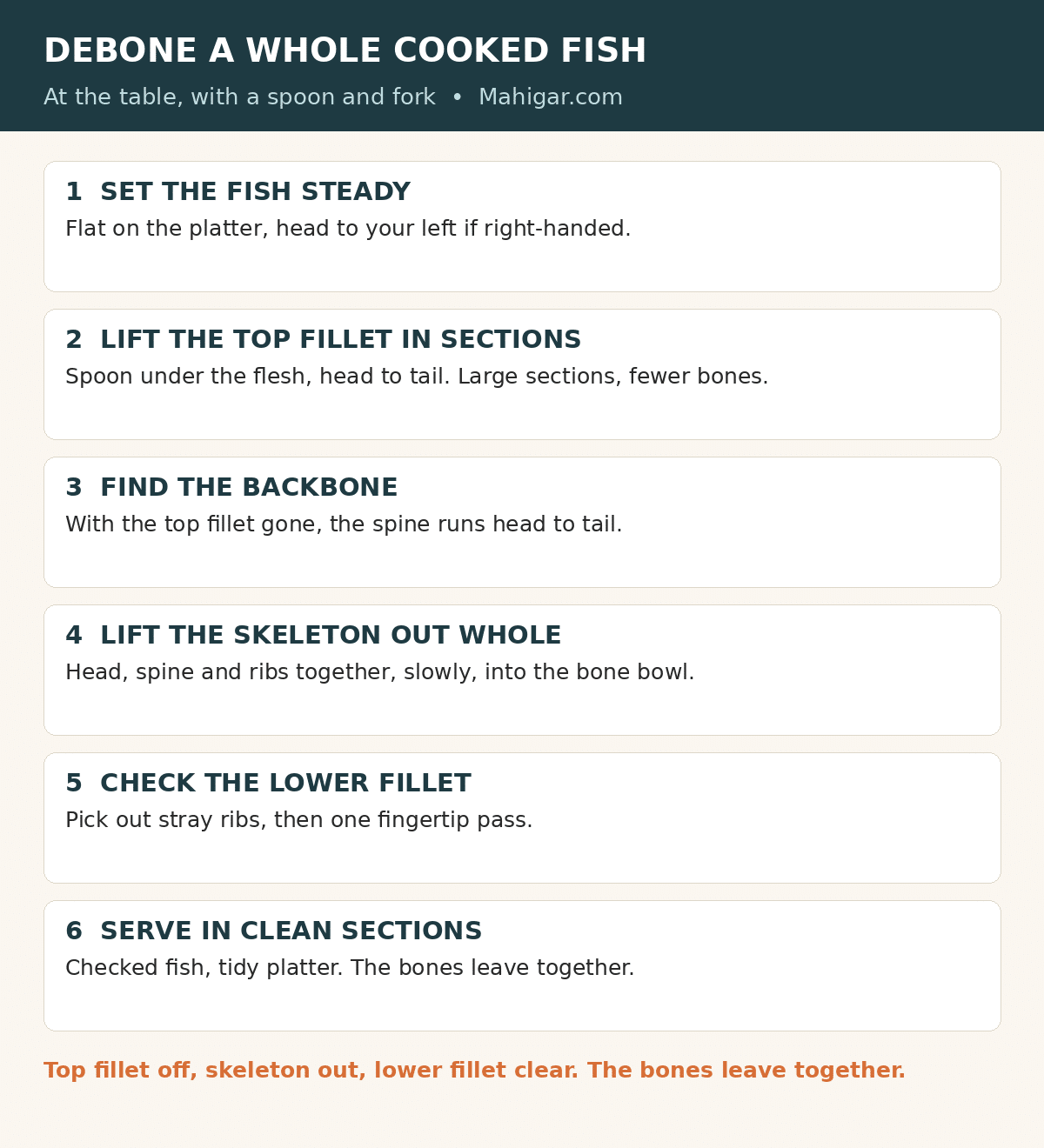
Debone a whole cooked fish at the table with a spoon and fork: top fillet off in sections, skeleton out in one piece, lower fillet checked and served.
Set the fish steady
Set the fish steady on the platter, with the head to the left if you are right-handed.
Open along the top
If the fish is skin-on, open along the top with a blunt knife or the edge of the spoon.
Lift the top fillet
Lift the top fillet away in a few large sections and move them straight to serving plates.
Check each section
Give each section a quick glance and fingertip check before it is served.
Expose the backbone
Ease any remaining flesh aside until the backbone is fully exposed.
Lift the skeleton out
Lift the skeleton slowly in one piece, head and all, and lay it in the bone bowl.
Clear the lower fillet
Pick any stray rib bones from the lower fillet and run a fingertip over it.
Serve the lower fillet
Serve the lower fillet in sections, checking as you go.
Why the Skeleton Lifts Out Whole
The bones of a fish form one connected frame — head, spine and ribs joined together. Once the cooked flesh has been lifted away, that frame is barely held by anything, so it can rise in a single slow movement. Pull too early, while flesh still grips the ribs, and the frame snaps and leaves rib tips behind. Flesh first, skeleton second: that order is the whole trick. For the raw version of this work at the board, see How to Fillet a Fish: Step-by-Step for Beginners.
Rohu and Catla at the Table: The Honest Method
With rohu and catla, be honest about what this method can and cannot do. The main frame lifts out much as it does with any whole fish, but the fine Y-bones stay threaded through the flesh — cooking does not remove them, and neither does a spoon. Serve these fish in clear sections, eat slowly, and expect to find small bones as you go. The raw-fillet side of that check is covered in How to Remove Pin Bones from Fish. For children and nervous guests, choose an easier fish such as tilapia or pomfret instead.
Serving Children and Guests: Care Without Fuss
Let one adult do the deboning and keep the pace easy. Serve only flesh that has been checked — glance and fingertip — from the spare plate, never straight from the fish. Match the fish to the crowd: tilapia or pomfret for young children and anyone who worries about bones, and save rohu and catla for confident eaters who are happy to slow down.
Leftovers: Chill and Reheat Safely
Chill leftovers promptly, covered, in a fridge at 40°F or below. Cooked fish keeps for 3 to 4 days. When you reheat it, bring it back to 165°F, and pick the flesh over once more while it is cold — bones are easier to feel and remove before reheating than during a second meal.
The Mistakes That Break the Skeleton
Most broken skeletons come from hurry, not from the fish. Watch for these:
- Pulling at the skeleton before the top fillet is fully off
- Shredding the fish into flakes instead of lifting large sections
- Working without a bone bowl, so bones drift back onto plates
- Serving unchecked flesh to children
- Rushing a hot, sliding fish instead of steadying the platter first
Frequently Asked Questions
Is it easier to debone a fish before or after cooking?
Both work. Raw fish is deboned in the kitchen; a whole cooked fish lifts its skeleton willingly at the table.
How do you get the whole skeleton out in one piece?
Take the top fillet fully off first, then lift slowly from the end that loosens, letting a spoon free the frame rather than forcing it.
What if a few bones stay in the flesh?
Pick out what you can see, fingertip-check the lower fillet, and serve in sections. With rohu and catla, small bones remain — eat slowly.
Can children eat whole cooked fish?
Yes, when an adult debones it and serves only checked flesh. Tilapia or pomfret are better choices for young children.
What to Check Next
For the raw-fillet check that happens before cooking, use How to Remove Pin Bones from Fish. For the full market-to-table sequence — buying, storing, prepping and serving in order — follow Fish Prep and Butchery: Every Skill You Need.
Sources: FoodSafety.gov and FDA seafood guidance. General kitchen information, not medical advice.

One Comment