Arctic Char: A Home Cook’s Guide
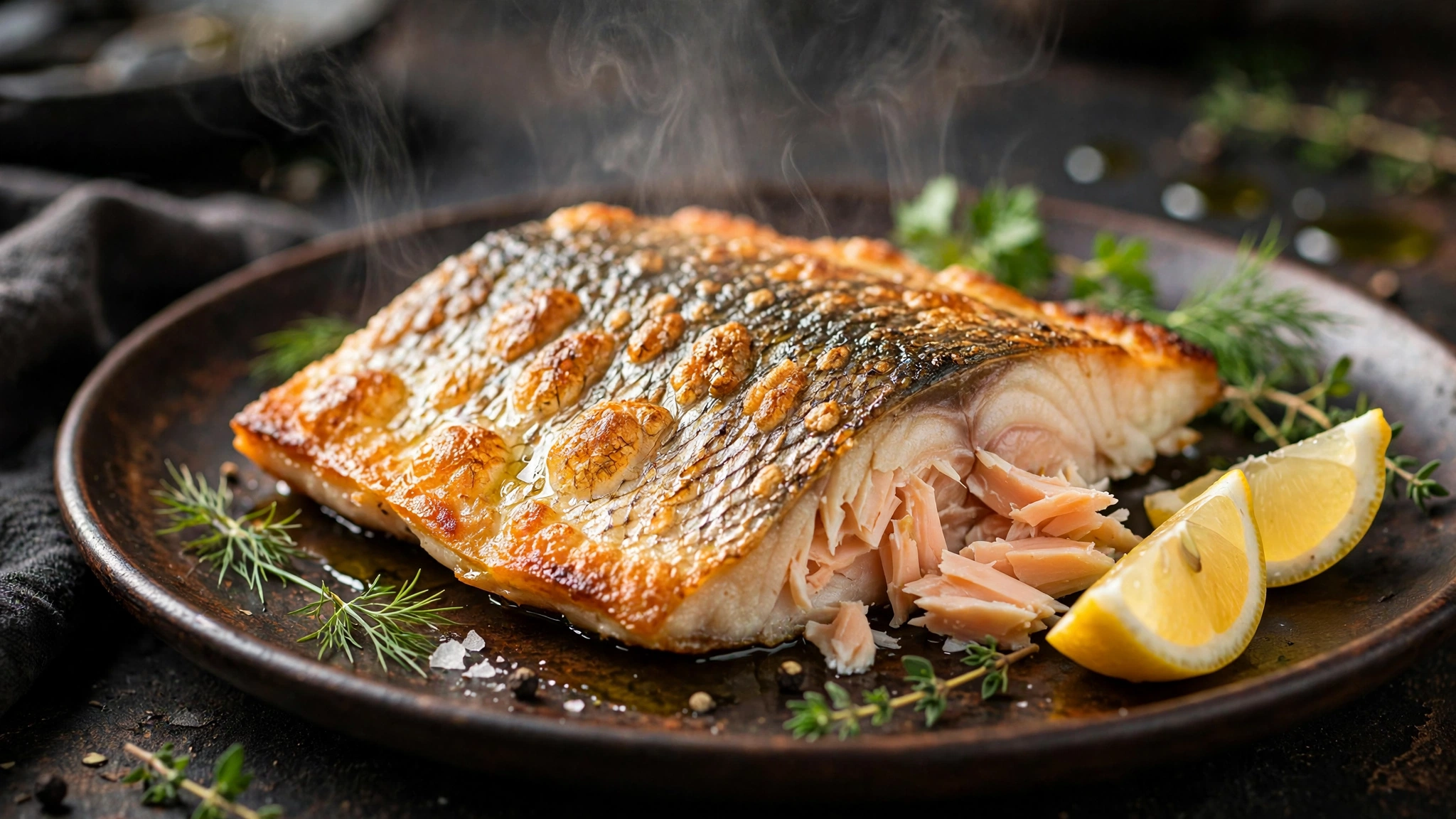
Arctic char is the fish I hand to a cook who loves salmon but wants something a little gentler. It is rich, it carries that salmon-family comfort, but it feels calmer in the pan: the flavour is softer, the flesh is kind, and the skin crisps beautifully if you dry it well and leave it alone.
I am Wasim Abbas Bhatti, the Fish’s Chef. This profile sits inside Fish Species Guide: What to Buy and How to Cook Each One, where each species is matched to the work it does best. Arctic char’s best work is simple: a crisp-skinned fillet, cooked with steady heat and stopped on time.
Table of Contents
What Arctic Char Is Like
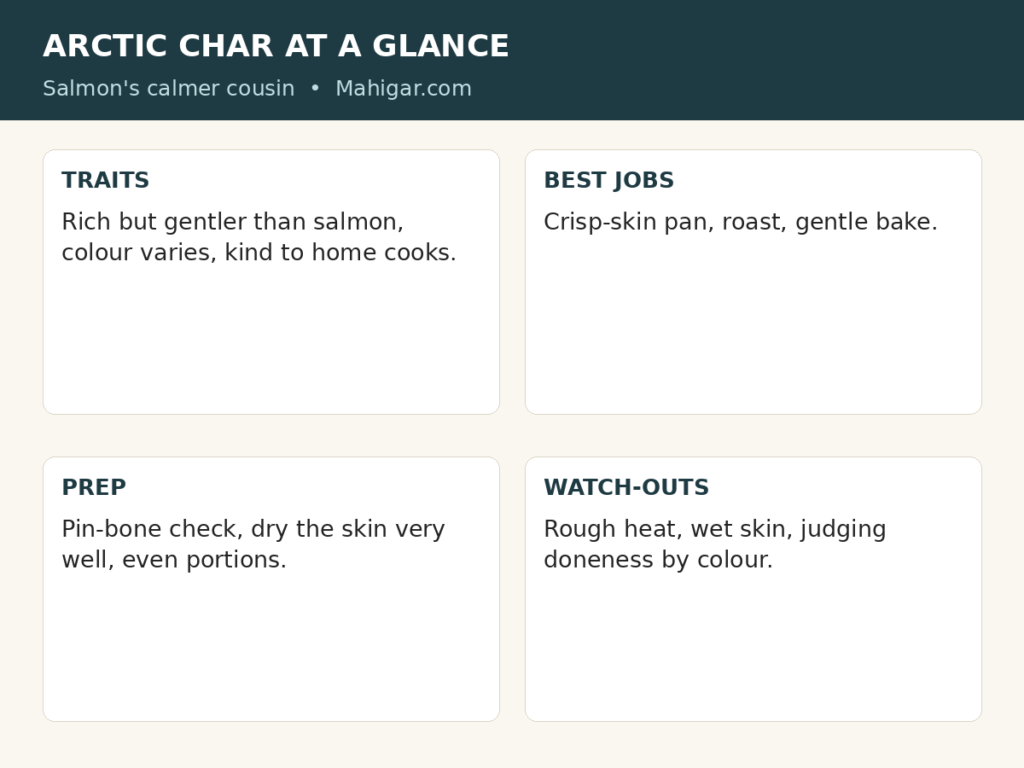
At kitchen level, think of Arctic char as salmon’s milder cousin — that is exactly how the fish earns its place in this pillar. It has the rich, oily comfort of the salmon family, but the flavour sits a step softer. Where salmon can be bold, char feels rounded and gentle. For a home cook, that makes it forgiving: it tastes generous without needing strong sauce to balance it.
The flesh flakes in soft, moist layers when it is cooked on time — rich enough to feel special, mild enough for eaters who find salmon a little strong.
One honest warning before we go further: the colour of Arctic char varies. One fillet may look deep and salmon-like; the next may be paler. That variation is normal for this fish. Colour tells you very little here — not freshness by itself, and never doneness. I will keep coming back to that, because it is the mistake char punishes most.
Buying Checks for Arctic Char
Buy char the way you buy any good fish: with your eyes, your fingers, and your nose.
Look for moist flesh with a clean sheen. Dry, dull edges or flesh that looks tired and separated are reasons to choose another piece. Press gently with a fingertip: the flesh should feel firm and spring back, not hold a dent or feel mushy. On skin-on fillets, the skin should look bright and sit tight against the flesh.
Then smell it. Fresh Arctic char smells mild and clean, like cold sea water. A sour, heavy, or strong “fishy” smell means the fish has waited too long, no matter what the label says. And if you are choosing between char and salmon at the same counter, let freshness decide — a bright char beats a tired salmon, and the reverse is also true.
Skin, Bones, and Prep
Arctic char usually reaches the home kitchen as fillets, often skin-on. That skin is an asset. Dried well and started in a properly heated pan, it turns crisp and protects the soft flesh while it cooks. If a recipe truly needs skinless fish, skin it cold and carefully — the method is in my prep teaching — but for most home cooking, keep the skin and let it work for you.
Like its salmon relatives, char carries a line of pin bones along the fillet. They are easy to manage if you expect them: run a clean fingertip slowly along the centre of the fillet, feel for the small tips, and pull them out one by one. Portioning, pin-boning, skinning, and drying are all taught step by step in Fish Prep and Butchery: Every Skill You Need. Do that calm prep before the pan heats, and the cooking itself becomes easy.
Dry the skin very well. This fish carries moisture on its surface, and a wet skin steams instead of crisping. Pat it dry, then pat it again. That one habit is worth more than any special pan.
My Crisp-Skin Arctic Char Routine
Bring out the fillets and dry them.
Pat the flesh and especially the skin very dry. Wet skin will not crisp.
Season simply.
Salt and pepper are enough for a first cook. Char’s gentle flavour does not need hiding.
Heat the pan, then add the fish skin-side down.
Lay it away from you and press very gently for the first moments so the skin lies flat.
Leave it alone.
Most of the cooking happens on the skin side. Do not poke, lift, or slide it around while the skin crisps.
Flip once, briefly.
Turn it once and give the flesh side only a short finish. The work is already done.
Check the thickest part.
You are looking for 145°F (63°C), or flesh that is just opaque and flakes in soft layers. Then take it off the heat at once.
Roasting and Gentle Baking
The pan is my lead method, but char also roasts and bakes kindly. A tray of skin-on portions in a hot oven gives you crisp edges with almost no handling — good when you cannot stand over a pan. For a gentler plate, bake it low and calm with lemon and herbs over the top. What char does not enjoy is rough, blasting heat for a long time: rich flesh pushed too far turns heavy and dry. Steady heat, checked early, is the whole secret.
Doneness: Temperature and Flake, Never Colour
Here is where I must be firm, because char invites the mistake. Its colour varies from fish to fish, and it can stay deeply coloured when it is fully cooked — or look pale while the centre still needs heat. If you judge Arctic char by tint, you will sometimes serve it raw and sometimes ruin it.
Judge it the way every fish on my site is judged: 145°F (63°C) in the thickest part, or flesh that is opaque and flakes easily with a fork. The full chart, including how to probe a thick fillet without touching bone or pan, is in Safe Internal Cooking Temperatures for Every Type of Fish. Start checking early, because rich fillets travel quickly at the end.
A Short Safety Note
For mercury, I follow the official FDA/EPA framework rather than guessing species by species. Arctic char is not one I am assigning to a category here, so use Mercury in Fish: Safe Levels by Species for the official chart, servings, and the pregnancy and children guidance. Choosing the species does the work that no kitchen trick can — you cannot wash, trim, or cook mercury out of a fillet.
Beyond that, the normal home rules apply: buy it fresh, keep it cold, cook it soon.
What to Avoid
- Judging by colour. Pale or deep, tint is not a freshness test and not a doneness test on this fish.
- Wet skin in the pan. It steams, sticks, and tears. Dry it like you mean it.
- Rough, long heat. Char forgives many things, but blasting it past done is not one of them.
- Moving it too much. One confident placement, one flip. Constant turning breaks soft flakes and ruins crisp skin.
- Strong flavours too early. On your first char, keep seasoning simple so you learn what the fish itself tastes like.
Substitutes, Honestly
If the counter has no Arctic char, salmon is the natural substitute — the two share the same kitchen family traits: rich flesh, skin that crisps, and a kind response to roasting and gentle baking. Season and cook it the same way, and check it the same way: by temperature and flake, not by colour.
Work the swap in the other direction too. Almost any gentle salmon plan — a crisp-skin pan fillet, a simple roast tray, a lemon-and-herb bake — suits Arctic char when char is the fresher fish that day. Buy whichever of the two looks brighter, and cook it with the same steady hand.
Frequently Asked Questions
Is Arctic char just salmon?
No, but they are close kitchen relatives. Char is its own fish, with a gentler, milder flavour than salmon. Cook it with the same methods — crisp-skin pan, roast, gentle bake — and judge it the same way: by temperature and flake.
Why is my Arctic char pale instead of deep orange?
Because char’s colour varies naturally from fish to fish. A pale fillet is not automatically poor, and a deep fillet is not automatically better. Judge freshness by moist flesh, spring-back, and a clean sea smell — and judge doneness by 145°F (63°C) or opaque flakes, never by tint.
Should I eat the skin on Arctic char?
If it is crisp, yes — it is one of the best parts of the fillet. Dry it very well, cook it skin-side down, and leave it alone until it crisps. Soft, steamed skin is less pleasant; in gentle baked dishes, you can simply lift the flesh away from it at the table.
How do I know Arctic char is done without a thermometer?
Check the thickest part with a fork. Done char is opaque and separates into soft, moist flakes under gentle pressure. If the centre is still translucent, glassy, and slick, it needs a little more heat. Do not use the fish’s colour as the judge — char keeps colour when cooked.
What to Check Next
Start with one skin-on fillet and the crisp-skin routine above. Once you trust the dry-skin habit and the thickest-part check, char becomes one of the calmest rich fish in your kitchen. For the whole species map — which fish suits which job — go back to the Species pillar.
