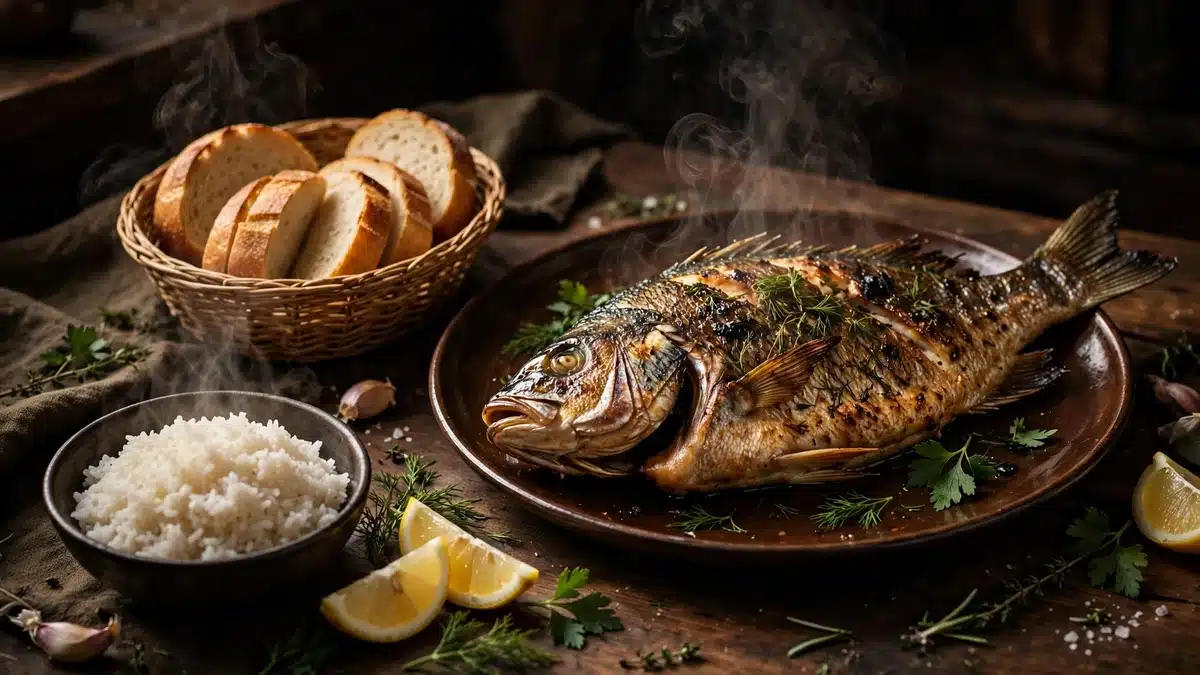
Best Bread and Grain Pairings for Fish Dinners
Fish is cooked, the sauce is right, and my plate still feels unfinished. I know that feeling well. For years I asked the wrong question at that moment, rice or bread, and picked by habit. Some nights a heavy pilaf landed beside a heavy curry. Other nights a delicate fillet sat almost alone, and the dinner felt thin no matter how well I had cooked it.
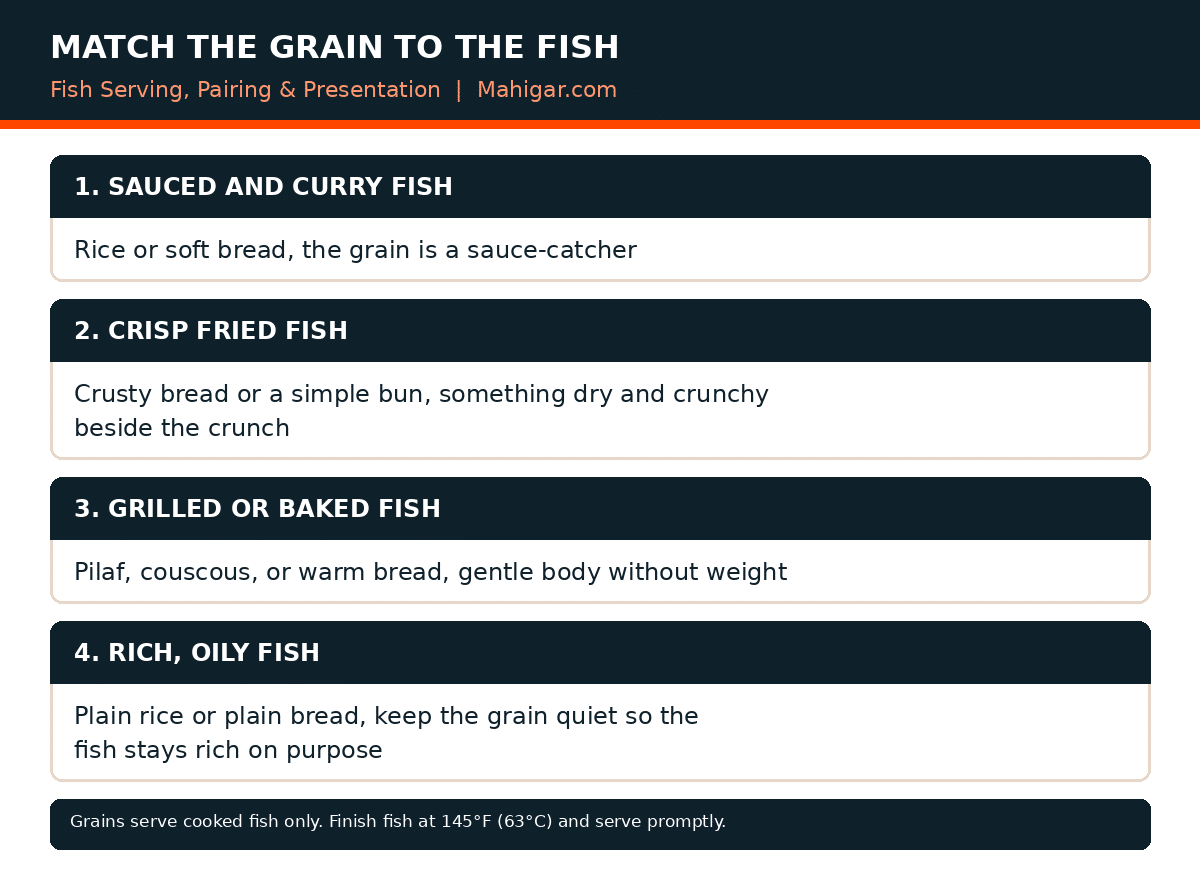
The best bread or grain for a fish dinner is the one that does the job my fish leaves undone. Saucy fish needs a sauce-catcher. Crisp fried fish needs something dry and plain beside the crunch. Grilled fish needs gentle body. Rich, oily fish needs a quiet grain that stays out of the way. Once I give the grain one job, the plate feels finished. This guide belongs to How to Serve Fish: Pairing and Presentation Guide, where the plate is built in order: fish, side, sauce, garnish. Grains sit early in that order. One honesty note before we start: these are pairings and choosing rules, not bread recipes. Your own roti, your own pilaf, your own crusty loaf stay yours.
Table of Contents
Table of Contents
First: Every Grain Has One Job
A fish plate goes wrong at the grain more often than at the fish. The fish is good, the sauce is good, and then a heavy, richly seasoned grain lands beside a heavy, richly seasoned fish, and the whole dinner feels like hard work. Or the opposite: a delicate steamed fillet with nothing beside it, and the plate feels unfinished no matter how well the fish cooked.
So I name the grain’s job before I choose it. Sauce-catcher: something plain and absorbent under sauced or curried fish. Contrast: something dry, crisp, or chewy beside soft or crisp fish, to change the bite. Body: gentle starchy comfort under a light, mild fish that needs a partner. Quiet base: a plain grain under bold fish, giving the eater a reset between mouthfuls. One grain, one job. When the grain knows its work, I stop piling things onto the plate hoping something helps.
And the boundary that never moves: breads and grains here accompany cooked fish. Fish is done at 145°F (63°C) in the thickest part, or opaque and flaking easily, and it is served promptly. In my kitchen the grain waits for the fish, never the other way around.
Rice and Pilaf: The Sauce-Catchers
Rice is the grain fish asks for most, and the reason is simple: it catches what would otherwise be lost. Fish curries, coconut-sauced fish, tomato-baked fish, any fish that arrives with a sauce worth eating: rice carries that sauce to the last bite instead of leaving it pooled on the plate.
I keep the rice as plain as the sauce is loud. Under a bold fish curry, plain steamed rice is not a lazy choice; it is the correct one, because the eater needs a calm mouthful between bites of spice. A gentle pilaf, rice cooked to be fragrant in its own right, belongs beside plainer fish, where the grain is allowed a voice: a simple baked fish or grilled fillet that would leave the plate too bare on its own. My own table rule is simple: sauce loud, rice quiet; fish quiet, rice may sing a little.
Rice also calms. Beside spicy fish, a plain bowl of rice is the reset that lets the eater go back for another bite instead of reaching for water. That is why the South Asian fish table so often looks like fish, rice, and something cooling: the rice does two quiet jobs at once.
Soft Breads: Roti, Naan, and the Scoop
Where fish is eaten by hand, soft bread is not a side; it is the tool the meal is eaten with. A warm roti or naan beside curry fish scoops the sauce, wraps a piece of fish, and makes the plate interactive in a way a fork never does. I keep the bread soft and plain: it is there to carry, not to flavour.
Soft breads suit sauced fish and fish that flakes easily, including baked fish with pan juices, where a roll or flatbread makes sure nothing good is left on the plate. They struggle beside crisp fish, where there is nothing to scoop and the bread just goes soft against the steam. If my fish is fried and proud of its crust, I keep the soft bread for a curry day and reach for something crusty instead.
Crusty Bread: For Fried Fish and Pan Juices
Crusty bread earns its place at two fish tables in my house. The first is fried fish: battered or crumbed fillets, fish and chips at home, any crisp-coated fish. Something crusty and dry beside it doubles the crunch, and a simple bun turns fried fish into a sandwich that eats cleanly. Dry against crisp works; wet against crisp never does.
The second table is anywhere there are juices worth saving: a baked whole fish with lemony pan juices, grilled fish with a sauce spooned beside it, fish cooked in a light tomato sauce. A crusty slice torn and dragged through those juices is often the bite people remember. I keep the bread plain, because garlic bread and heavily flavoured loaves fight the fish instead of serving it.
If the fish already has a sauce with a job, the bread’s job is carrying it, not competing with it, and Sauces That Pair Perfectly with Fish walks through choosing that sauce.
Couscous and the Light Middle Ground
Some fish dinners want starch but not weight: a grilled fillet, a baked fish with herbs, a lemony pan-cooked fish in warm weather. That is the light middle ground, couscous and similar small, quick grains that soak up lemony juices and chopped herbs without sitting heavily on the plate.
Their virtue is neutrality. They carry the flavours already on the fish, lemon, herbs, a little oil from the pan, and repeat them quietly through the plate, so a mild fish becomes a calm, complete dinner on a bed of herbed couscous. I keep them plain when the fish is bold, and let them carry herbs and lemon when the fish is gentle. Grains seasoned like the fish belong with it; grains seasoned like a different dinner argue with it.
Match the Grain to the Cooking Method
If the families above still leave you unsure, decide by how the fish was cooked. This is how it works at my counter:
- Fried fish: crusty bread, a simple bun, or plain rice if the fish is spiced. Dry and plain beside the crunch.
- Curry and sauced fish: plain rice first, soft roti or naan second. The grain is a sauce-catcher before it is anything else.
- Grilled fish: couscous, a gentle pilaf, or warm crusty bread for the juices. Body without weight.
- Baked fish, especially whole: rice, couscous, or crusty bread, following the sauce on the fish. If the tray made juices, bread wins.
- Steamed or gently poached fish: soft, quiet grains, plain rice or soft bread. The fish is delicate; the grain should not march in.
- Rich, oily fish: the plainest grain on the table. Salmon or mackerel with rich rice and rich sauce is a plate arguing with itself.
None of these are laws. They are the order I think in, so the plate is decided before the fish finishes cooking. The wider side-by-side choosing habit, freshness, crunch, comfort, cooling, is set out in What to Serve with Fish: 30+ Side Dish Ideas.
When the Grain Should Stay Off the Plate
Sometimes my honest answer is no grain at all. A rich fish with a good sauce and a fresh salad is a complete dinner; adding rice because fish needs rice makes it heavier, not better. I watch the plate’s total weight: rich fish, rich sauce, and heavy grain crowd one another, and the eater feels it by the third bite. If two of the three are already rich, I let the third be plain, or absent. Fish night should end with the table satisfied, not stuffed.
Frequently Asked Questions
Is rice or bread better with fish?
Neither wins in general. Rice is the better sauce-catcher, so sauced and curried fish usually ask for rice. Bread wins where there are pan juices to mop or where the meal is eaten by hand, like curry fish with roti. I choose by the job, not by habit.
What grain goes with fried fish?
Something dry and plain: crusty bread, a simple bun, or plain rice beside spiced fried fish. The coating is already the rich, crisp part of the plate, so the grain’s job is contrast and calm, not more richness.
Can I serve a flavoured pilaf with fish curry?
Keep the grain quiet under a bold curry. A fragrant pilaf beside a loud fish curry makes two voices at once. I save the pilaf for plain grilled or baked fish, where the grain is allowed to sing a little.
What if my fish is rich, like salmon or mackerel?
Choose the plainest grain on the table, simple steamed rice or plain bread, or skip the grain and serve a fresh, bright side instead. Rich fish plus rich grain is a heavy plate by the third bite.
What to Check Next
Before the fish goes in the pan, name the grain’s job: sauce-catcher, contrast, body, or quiet base. Decide it while the fish cooks, not after, and set out only that one grain. A fish plate with one well-chosen grain always eats better than a table crowded with three starches hoping to help.
