
How to Get Rid of Fishy Smell on Hands and in the Kitchen
Learning how to get rid of fishy smell does not need a cupboard full of special products. Start with soap and water first, then use a lemon or salt rub and a final rinse if your hands still need it. In the kitchen, wash the board and knife in hot soapy water, wrap the scraps and take them out, and wipe the sink last. The real secret is cleaning as you go, not hunting for a stronger cure after everything has sat for an hour.
This is the closing step of the prep sequence in Fish Prep and Butchery: Every Skill You Need. Once the fish is portioned and safely cold, this is how I get my hands, board and kitchen back to normal.
Table of Contents
Prevention Beats Every Cure
Work on one fish at a time and keep the rest cold. A fish waiting on the counter while you deal with another one gives every surface more time to pick up smell. Clean as you go: rinse, wipe and clear the board between fish instead of saving the whole mess for the end.
A clean start helps too. If you are working from a whole fish, the rinsing and trimming in How to Gut and Clean a Whole Fish keeps a lot of the mess in one place. As soon as the guts and trimmings come off, wrap the scraps, tie the bag shut, and keep it away from the board until it leaves the kitchen.
Start With Soap and Water
Before lemon, salt or anything else, wash properly. Use soap and warm water and work over the palms, the backs of your hands, between the fingers and under the nails. That last part matters after gutting and scaling, because that is where smell likes to hide. Dry with a clean towel, not the fish towel.
This is the same hand hygiene habit the FDA recommends around seafood handling, and on a normal fish day it is often enough on its own. Only reach for the extra steps below when a strong fish, a long prep session or a lot of gutting has left the smell behind after a proper wash.
Hands: Lemon, Salt, and Steel
These are home habits from my own kitchen, not chemistry lessons. I use them because they work well enough in practice after the soap-and-water wash, and I finish with another rinse so my hands are clean, not just lemon-scented.
Rub With a Halved Lemon
Rub a halved lemon over your palms and fingers, squeeze a little juice as you go, then wait a moment and rinse. I keep the lemon halves for the board afterwards, so one lemon usually does hands and board before it goes in the scrap bag.
Try the Salt Rub
The salt rub is a family trick in our house. Take a small handful of ordinary table salt, rub it over damp hands for half a minute, then wash again with soap and rinse. It is the step I reach for on strong days, followed by a normal soap wash to finish.
Use the Stainless Steel Tap
Rubbing your hands on the stainless steel tap or sink under running water is another helper people swear by. I treat it as a helper beside soap, not instead of it, and there is no need to buy a special steel soap bar for it. Your tap and sink are already there.
Boards, Knives, and the Sink
Wash the board, knife and any scissors straight after prep in hot soapy water, rinse them, and let them dry standing up so air can get around them. A board left flat in a wet sink keeps the smell and the moisture in one place.
If the board still smells, rub it with the used lemon halves before another hot rinse. That is a habit, not a ritual: wash first, lemon second, rinse last. Wipe the sink and tap last of all, because everything you rinsed has passed through there.
Trash: The Smell That Stays Behind
When a kitchen still smells of fish the next day, the bin is usually the cause. Heads, guts and skin should not sit in a kitchen bin overnight. Tie the scrap bag shut and take it to the outside bin the same day, then wipe the kitchen bin rim and lid, where drips collect without anyone noticing.
Scraps you are keeping for stock are the one exception, and they should not sit in the fridge in an open bowl. Wrap them well and freeze them promptly, clearly separate from food you are about to eat.
Apron, Sleeves, and the Rest of You
Roll your sleeves before you start, not after the first splash. After a big fish day, my apron goes straight in the wash, and the fish towel goes in the same load instead of back on its hook. If you are going out afterwards, change the top layer as well; fabric holds fish smell far longer than washed skin does.
The Fridge After a Big Fish Day
Put leftover fish away covered or tightly wrapped, in a fridge at 40°F or below, and treat raw fish as a 1 to 2 day food at most. I explain fridge timing in How Long Does Fish Last in the Fridge, including how I arrange trays so raw fish cannot drip onto other food.
A sour or ammonia smell from fish in the fridge is a freshness warning, not a cleanup job. Do not try to wash that away and cook anyway. Check How to Tell If Fish Has Gone Bad and, if the signs are there, throw the fish out.
My Cleanup Order After a Fish Day
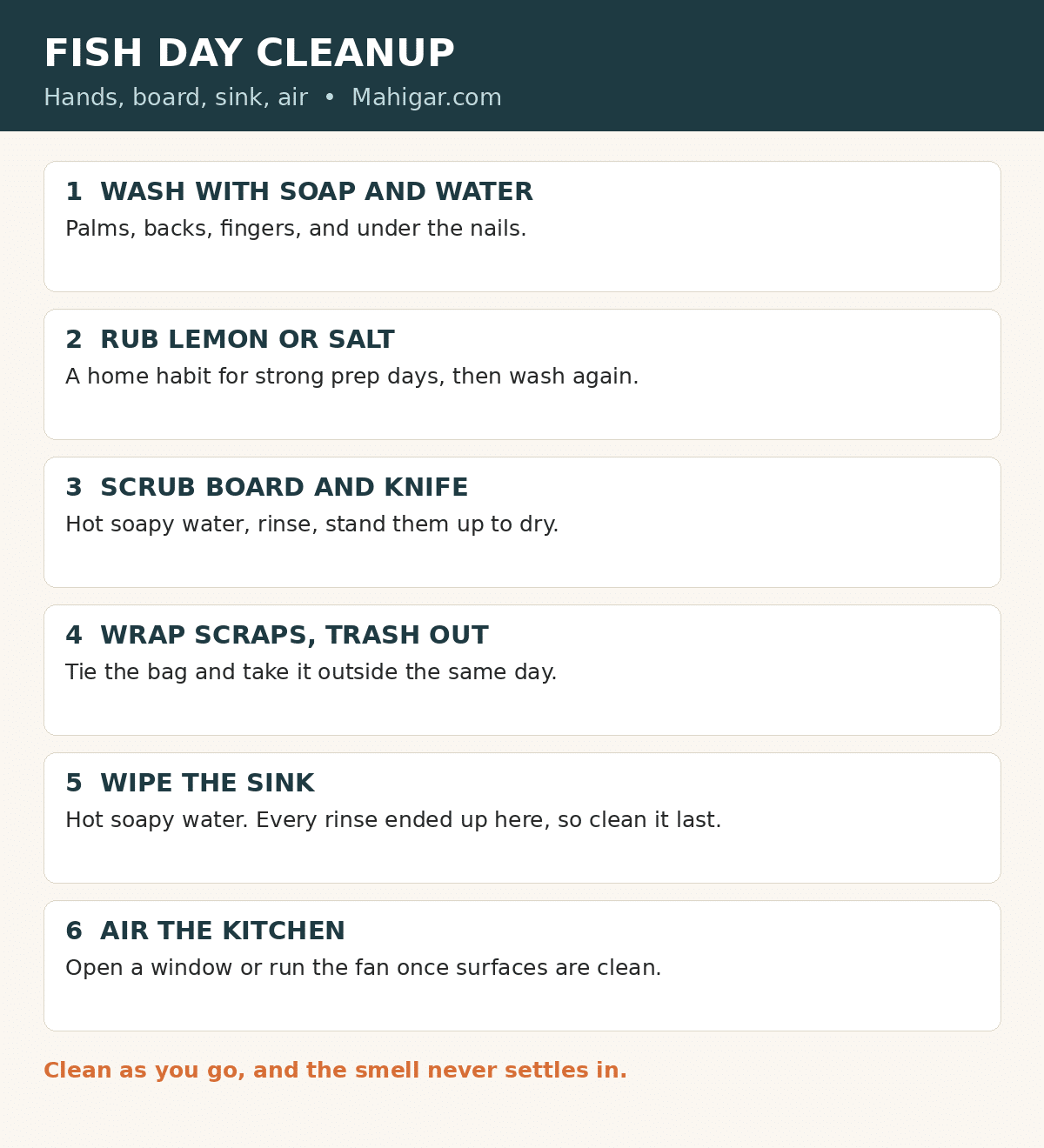
This is the order I use after prepping fish, from hands to sink to fresh air. Work through it straight away and the smell never gets a chance to settle.
-
Wash your hands
Wash your hands, including under the nails. On strong days, use a lemon or salt rub, then wash again.
-
Scrub the board and tools
Scrub the board, knife and scissors in hot soapy water, rinse them, and stand them up to dry.
-
Take the scraps out
Tie the scrap bag shut, put it in the outside bin, and wipe the kitchen bin rim and lid.
-
Wipe the sink
Wipe the sink, tap and counter with hot soapy water.
-
Wash the apron and towel
Put the apron and the fish towel in the wash.
-
Air the kitchen
Air the kitchen with a window or a fan.
Frequently Asked Questions
Does lemon really remove fish smell from hands?
For most people, yes, as a home habit. Rub a halved lemon over your hands after a soap-and-water wash, rinse, and check. It is kitchen practice, not a guaranteed formula. On strong days I use salt as well and finish with soap.
Is the stainless steel trick worth buying a steel soap bar for?
No. There is no purchase needed: the tap or sink gives you the same habit at home. Treat it as a helper beside soap, not instead of soap.
Why does my kitchen still smell of fish the next day?
Usually the bin. After that, check an unwiped sink and then an uncovered tray in the fridge. Take scraps out the same day, wipe the sink last, and keep fish covered and cold.
Can I stop my cutting board from smelling of fish?
Wash it straight after prep in hot soapy water and dry it standing up. If you prep fish often, keeping one board mainly for fish also helps.
What to Check Next
This article closes the full prep sequence in pillar order: choose, scale, gut, fillet, pin-bone, skin, portion, and now clean up. If the smell seems too strong for fresh fish, check the fish before you cook it rather than blaming the board or the bin.
Sources: This guide follows FDA seafood handling guidance and FoodSafety.gov food safety principles for hand washing, refrigeration and storage times. The lemon, salt and stainless steel habits are home practice from my own kitchen. This is general kitchen information, not medical advice.
