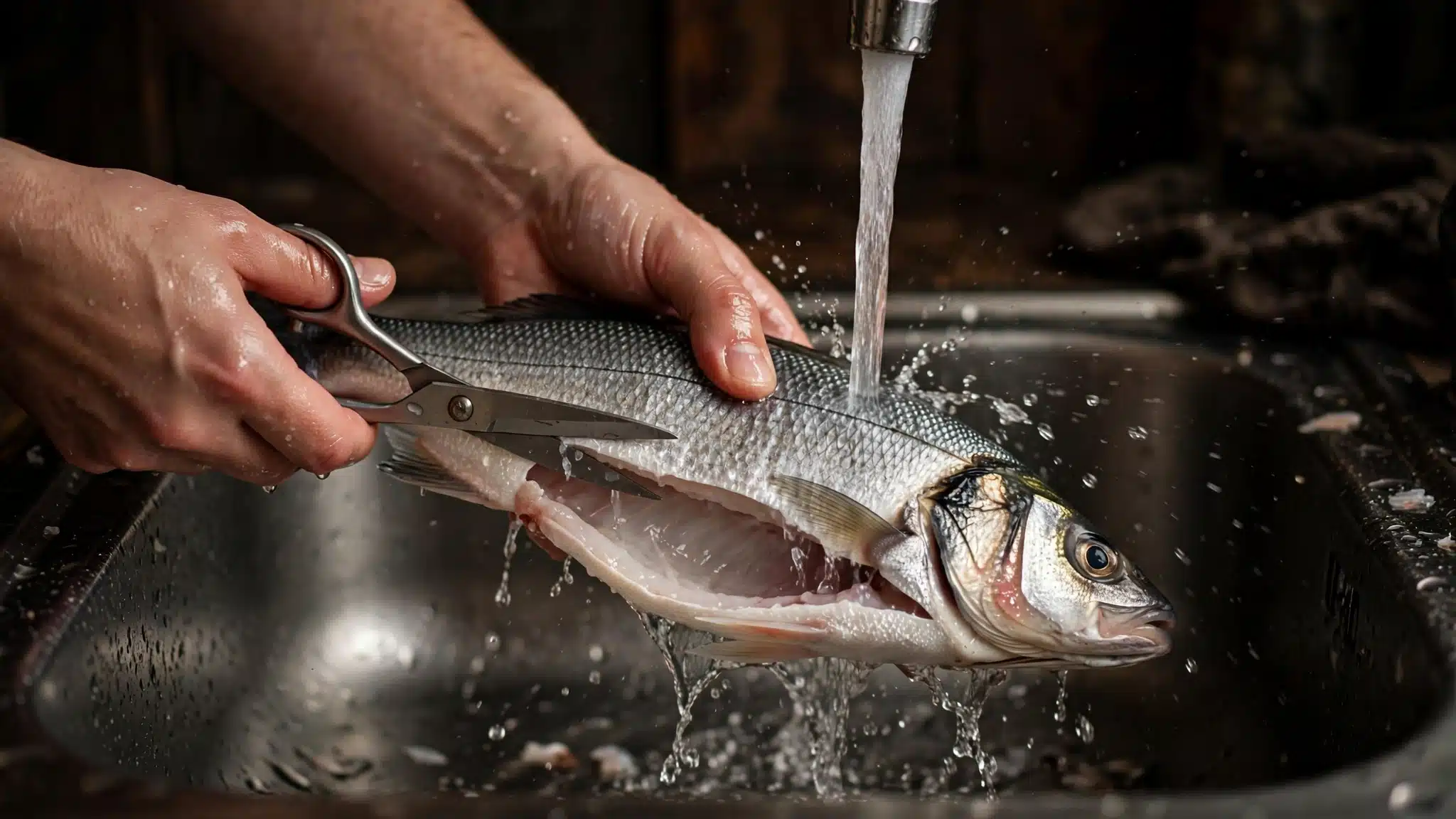
How to Gut and Clean a Whole Fish
Gut a whole fish by opening the belly shallow from the vent near the tail toward the gills, pulling the innards out in one gentle motion, scraping the dark bloodline along the backbone, rinsing cold and patting dry. It is step three in the full prep sequence in Fish Prep and Butchery: Every Skill You Need, after scaling, before filleting.
Table of Contents
First, Check the Fish Is Worth Cleaning
Start with clear eyes, red gills, firm flesh and a clean smell. See How to Tell If Fish Has Gone Bad for the full checks. Fish that fails those checks goes in the bin; cooking will not rescue it.
What You Need: Scissors and a Short Knife
- Kitchen scissors
- Short pointed knife
- Large board with a towel underneath to stop slipping
- Scrap bowl close by
- Spoon or your thumb for the bloodline
- Cold water
- Paper towels
The Order: Scale First, Then Gut
Scale while the belly is still closed and the fish is firm; follow How to Scale a Fish Quickly and Cleanly. Gutting first makes the fish floppy and hard to hold. The order is: choose, scale, gut, then cook whole, cut steaks or fillet.
How to Gut and Clean a Whole Fish, Step by Step
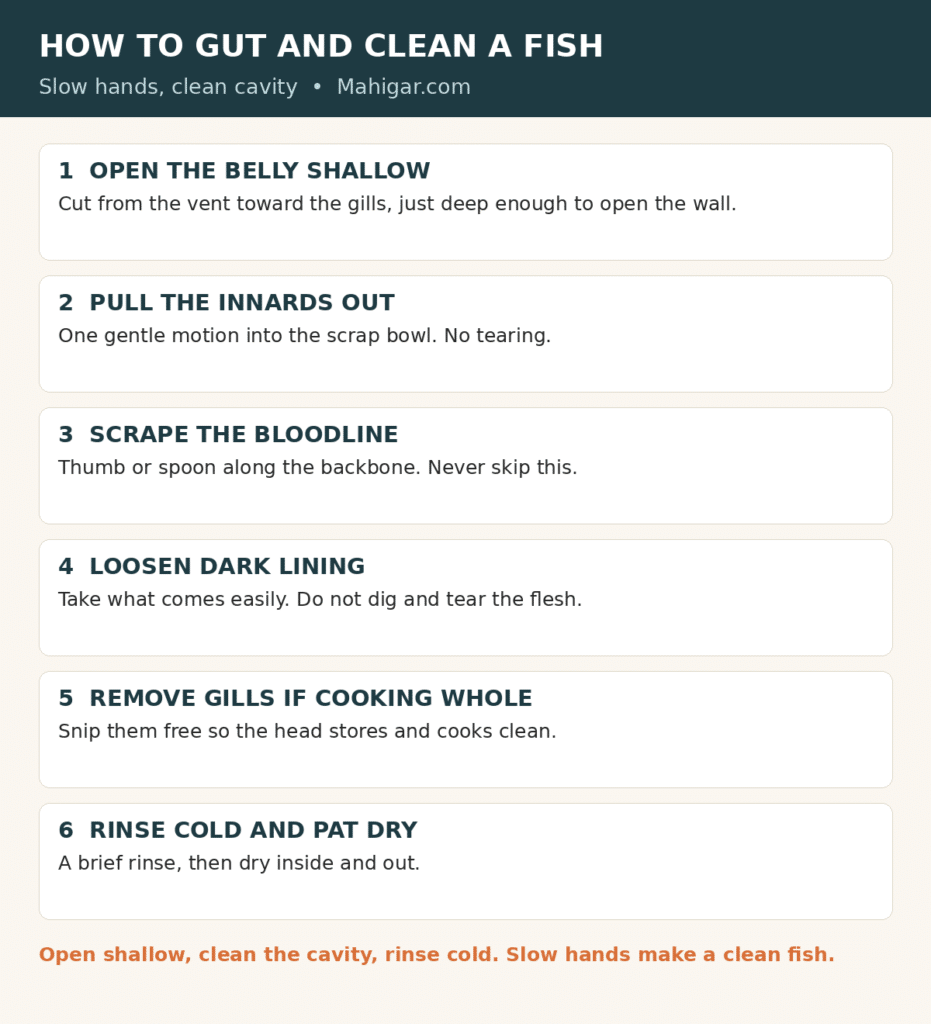
Open the belly shallow, remove the innards, scrape the bloodline and rinse cold.
Lay the fish on its side
Lay fish on side, dry grip, belly facing you.
Open the belly
Open belly from vent toward gills with shallow cut, tool riding under skin.
Pull out the innards
Pull innards out in one gentle motion into scrap bowl.
Scrape the bloodline
Scrape bloodline along backbone with thumb or spoon.
Loosen the dark lining
Loosen dark lining only if it comes easily.
Remove the gills
Remove gills if cooking or storing whole.
Trim fins and tail
Trim fins and tail, optional.
Rinse and pat dry
Rinse cold briefly, pat dry inside and out, do not soak.
The Bloodline and the Dark Lining, Explained Plainly
The dark line along the backbone is normal; it is the bloodline. Scrape it with your thumb or a spoon and rinse it away. The dark lining peels easily on some fish and clings on others; take what comes easily and leave the rest.
After Cleaning: Whole, Steaks, or Fillets?
Cook the fish whole, cut bone-in steaks (the rohu and catla family way), or fillet it now. Use How to Fillet a Fish: Step-by-Step for Beginners as your starting point. Tilapia or pomfret are good first fish to practise on.
Keep It Cold, Keep It Separate
Wash hands, tools and board in hot soapy water. Keep raw fish and its juices away from ready-to-eat food. Chill at 40°F or below, keep raw fish for 1 to 2 days at most, cook to 145°F, and work on one fish at a time.
Frequently Asked Questions
Do you gut a fish before or after scaling it?
After scaling while whole and firm.
Do you need to remove the gills?
Yes if cooking or storing whole with head on; not if head discarded.
What is the dark line inside the fish belly?
Bloodline along backbone; scrape with thumb or spoon, rinse.
Can I gut and clean fish the day before cooking?
Yes if rinsed, dried, covered, chilled; cook next day at latest within 1-2 days.
What to Check Next
Decide whether to keep the fish whole, cut steaks, or move on to filleting and pin bones in the pillar sequence.
Sources: FDA seafood handling guidance and FoodSafety.gov principles. General kitchen information, not medical advice.
