Why Mace Is the Secret Weapon of Refined Cooking
While most home cooks reach for nutmeg without hesitation, discerning chefs whisper about mace the more sophisticated, delicate sister spice that few understand yet all appreciate. Mace comes from the same fruit as nutmeg, the Myristica fragrans tree native to Indonesia’s Banda Islands, but it occupies a completely different culinary universe. Where nutmeg declares itself with warm sweetness and earthy comfort, mace whispers with elegant citrus, delicate florals, and sophisticated peppery complexity.
Mace contains significantly higher sabinene (38.4% versus nutmeg’s 21.38%), creating a peppery-woody profile, yet contains lower myristicin (5.9% versus nutmeg’s 13.57%), making it chemically and sensorially distinct. This is the spice that finishes classical French béchamel, brightens Indian curries, and adds golden sophistication to Mediterranean meat pies. Understanding mace its chemistry, its proper applications, and its mastery techniques separates competent home cooks from true culinary professionals. This comprehensive guide unlocks mace’s potential.
The History: From Medieval Treasure to Forgotten Sophistication
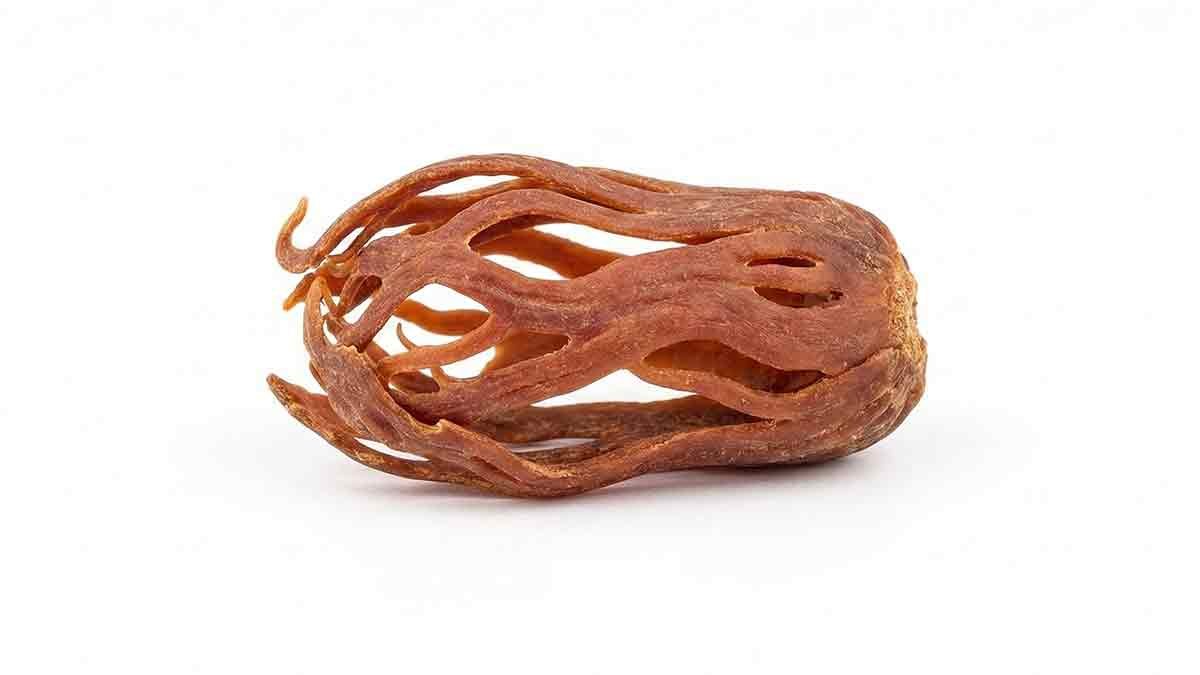
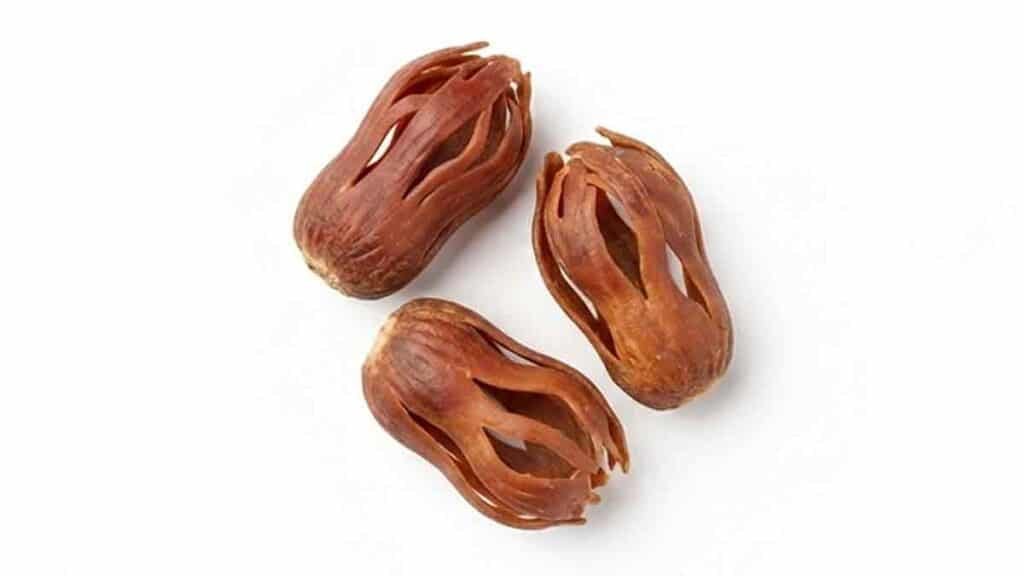
Mace and nutmeg were so valued during the Middle Ages that they traded for their weight in gold and served as symbols of wealth at noble dining tables. The lacy red aril (mace) was harvested separately from the inner seed (nutmeg) and dried to golden-orange brittleness, commanding such high prices that only nobility could afford regular use. Spice merchants in medieval Europe understood mace as the more refined spice—delicate enough for royal custards, sophisticated enough for court sauces.
Control over the Banda Islands sparked colonial wars, with the Dutch East India Company committing genocide to monopolize production. Today, though mace remains more expensive and less common than nutmeg, it has been rescued from near-obscurity by chefs who understand that its unique chemistry higher sabinene, lower myristicin, superior antioxidant phenolics creates flavor complexity unmatched by its sister spice. Indonesia, Grenada, India, and Sri Lanka remain primary producers, though mace’s refined profile ensures it remains the choice of culinary professionals worldwide.
The Chemistry: Understanding Mace’s Sophisticated Aroma
Chemical Composition and Volatile Profiles
Mace’s essential oil yield (8.1% w/w) actually exceeds nutmeg’s (6.85%), yet yields a completely different sensory experience. The dominant volatile compound is sabinene (38.4%), a monoterpene that creates the woody, peppery, slightly citrus-like character that distinguishes mace from its earthier sibling.
This elevated sabinene concentration (38.4% versus nutmeg’s 21.38%) is the chemical key to mace’s peppery, more piquant profile. Supporting this is a lower myristicin concentration (5.9% versus nutmeg’s 13.57%), the compound responsible for nutmeg’s characteristic numbing warmth. This chemical difference means mace lacks nutmeg’s “spicy numbing” sensation it tastes lighter, more delicate, less heavy on the palate.

Aromatic Compounds and Complexity
Additional compounds create mace’s sophisticated complexity. Terpinen-4-ol (3.0%) adds slight sweetness and herbal notes. Limonene (7.1%) contributes citrus brightness actually higher than nutmeg’s 5.57% creating the distinctive lemon/citrus undertone that refined cooks recognize instantly. Safrole (3.9%) adds anise-like character. The combination of higher α-pinene (8.2%) and β-pinene (7.6%) creates pine-like freshness, while the total terpenoid concentration (75.4%) explains mace’s exceptional aromatic intensity.
Superior Antioxidant Properties
The chemical distinction creates a profound practical difference: mace’s phenolic content (43.85 mg GAE/g) actually exceeds nutmeg’s, making it superior as a food preservative. Scientists have documented mace oleoresin’s antioxidant capacity as superior to nutmeg in oil preservation tests mace shows “minimal increases” in peroxide values and oxidation markers during accelerated degradation testing. This means mace is biochemically more stable, a property that extends to both spice shelf life and preserved foods.
Flavor Profile Decoded: The Sensory Experience of Mace
Multidimensional Flavor Analysis
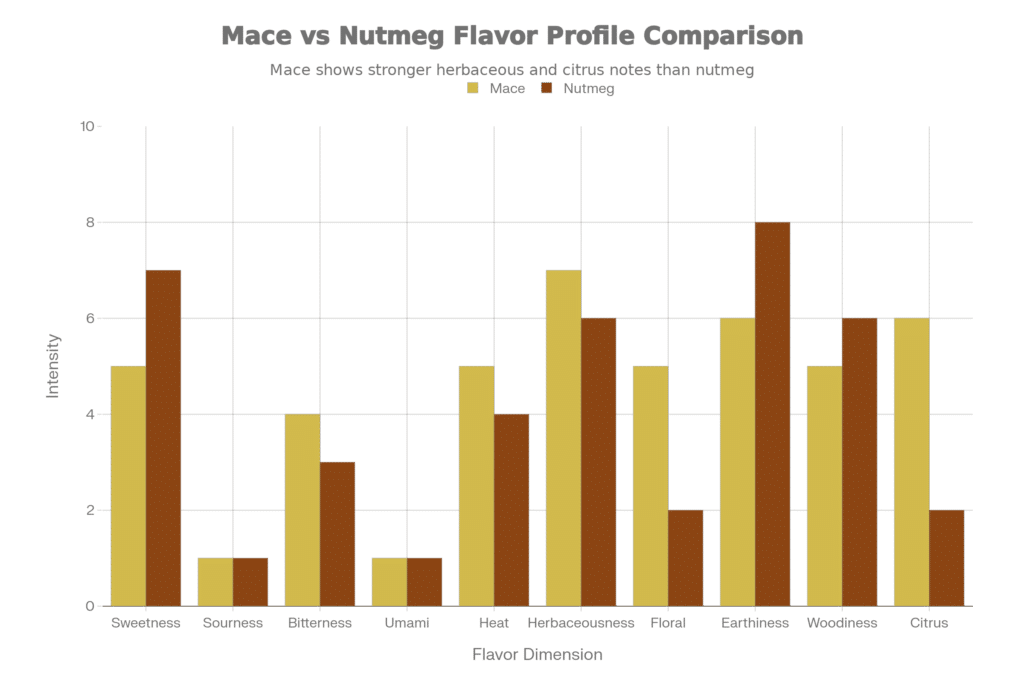
Mace’s 10-dimensional flavor profile reveals why it occupies a different culinary niche than nutmeg. The dominant characteristic is herbaceousness (7/10) a garden-like, botanical quality that feels fresh and alive on the palate. Unlike nutmeg’s earthy grounding, mace’s herbaceousness is airy and sophisticated. Citrus (6/10) and earthiness (6/10) tie as secondary notes, creating balance.
The citrus character—brighter and more pronounced than nutmeg (which rates only 2/10) gives mace a quality some describe as saffron-like in its elegant aroma and light golden color.
Supporting Sensory Notes
Supporting these characteristics are moderate floral (5/10), heat (5/10), and woodiness (5/10) notes, creating complexity without dominance. Bitterness (4/10) emerges subtly, adding refinement without harsh drying. Notably, sweetness registers only 5/10 in mace versus 7/10 in nutmeg—this is why mace suits delicate dishes better, why it won’t overwhelm pastry cream or custard, why it enhances rather than dominates cream sauces. Sourness (1/10) and umami (1/10) remain minimal, ensuring mace’s clean finish.
Culinary Pairing Implications
This sensory profile explains mace’s natural pairing preferences. It aligns with delicate flavors (cream, butter, light seafood preparations, gentle vegetable dishes) rather than heavy applications. It complements floral, citrus, and herbal elements. It works beautifully in refined European sauces but would overpower rustic stews where nutmeg’s earthiness provides exactly the right grounding.
Culinary Mastery: Whole Blades vs Ground Mace
Whole Mace Blades: The Infusion Approach
Whole mace blades those thin, lacy, golden-orange pieces remain the preferred form for slow-cooked dishes where the spice infuses gradually. Unlike whole nutmeg seeds (which resist softening), whole mace blades are delicate enough to release flavor into simmering broths, stocks, and rice dishes over 20-40 minutes of cooking. Add whole mace to the cooking liquid at the beginning; it will soften slightly and release its aromatic compounds gradually, creating integrated seasoning rather than front-and-center spice character.
Classical Béchamel Preparation
For béchamel sauce the classical French preparation that forms the foundation of lasagna, moussaka, gratins, and cauliflower au gratin place one or two whole mace blades directly into the milk as you heat it, then remove before making the roux. The gentle infusion creates sophistication that ground mace cannot match. Similarly, whole mace blades infused into rice pilaf, chicken stock, or vegetable broth provide depth of flavor that emerges subtly.
Shelf Life Advantages of Whole Blades
The advantage of whole blades is preservation mace blades stored properly last 2-3 years optimally, up to 5 years with perfect dark, cool conditions. The thin blade’s delicacy means quick flavor extraction; even brief simmering (15 minutes) releases noticeable aroma.
Ground Mace: Strategic Application with Caution
Ground mace represents a different approach. Because it distributes throughout dishes as fine particles, it works for applications requiring even spice distribution but with an important caveat: ground mace loses flavor rapidly. The ground form maintains optimal intensity for only about 1-2 years, degrading noticeably after 6 months. This makes purchasing small quantities and using quickly essential.
Optimal Applications
Ground mace excels in spice blends (garam masala, curry pastes, spice rubs), baked goods (where its delicacy won’t overwhelm), and cream-based preparations where even distribution matters. For optimal results, purchase whole mace blades, toast briefly (30 seconds at 160°C), cool immediately, then grind fresh using mortar & pestle. Fresh-ground mace demonstrates noticeably superior aroma and flavor penetration compared to pre-ground.
The Toasting Technique: Activating Mace’s Complexity
The single most important technique for elevating mace is toasting but with a critical difference from nutmeg. Whole mace blades toast faster and must be watched carefully. Place blades in a dry skillet over medium heat for 30 seconds to 2 minutes (not 2-5 minutes like nutmeg mace burns quickly). The blade should become slightly darker and release an intense aroma. Immediately transfer to a cool plate to stop cooking.
Critical Timing Consideration
However and this is crucial toasted mace’s volatile compounds begin dissipating within minutes. Unlike toasted nutmeg (which can maintain enhanced flavor for hours), toasted mace must be used à la minute. Grind immediately after cooling, add to your dish immediately. If you toast mace more than 2-3 minutes before using it, you’ve wasted the toasting benefit the aromatic compounds will have evaporated.
This means toasting mace requires planning. Toast immediately before cooking, not in advance. For professional results, toast mace while simultaneously preparing your other ingredients, then grind and incorporate into the finished dish. This timing requirement while demanding more precision delivers a flavor elevation that home cooks rarely achieve.
The Blooming Technique: Maximum Impact
For ground mace, employ the blooming technique: warm butter, ghee, or oil in a pan over medium heat, add the measured ground mace, stir constantly for 15-20 seconds (shorter than nutmeg’s 30 seconds mace is more delicate), then immediately add remaining ingredients.
This brief heating activates essential oils while dispersing them into the fat, ensuring even distribution without bitter concentrations. Use this technique for cream-based pasta sauces, soups requiring spiced integration, and savory meat dishes where ground spice powder must distribute evenly.
Pairing Science: Creating Harmonious Dishes with Mace
Cream-Based Pairings
Mace pairs exceptionally well with cream, milk, butter, and cheese better than nutmeg in refined applications. The fat distributes mace’s delicate aromatic oils evenly while the dairy’s richness prevents the spice from registering as thin or insubstantial. Classical béchamel sauce benefits tremendously from mace the infused blade creates sophistication that transforms a simple white sauce into restaurant-quality elegance. Creamed spinach, mashed potatoes, custard tart all benefit from mace’s delicate warmth.
Light Seafood Pairings
Unlike nutmeg (which overwhelms delicate fish), mace enhances seafood subtly. The citrus and herbaceous notes complement white fish, sole, and scallops. When seafood is prepared with cream-based sauces, mace shines—its delicacy respects the protein rather than dominating it.
Fruit Pairings
Mace works beautifully with tart fruits (apple, berry, rhubarb) where its citrus notes enhance natural acidity without competing. Berry cobblers, apple crisps, and rhubarb cakes showcase mace better than nutmeg the spice brightens rather than sweetens.
Spice Blend Pairings
Mace harmonizes with cinnamon, cloves, allspice, and ginger in traditional warm spice combinations, but with differentiation: where nutmeg would create a heavy, earthy blend, mace creates sophistication. In Indian garam masala, mace adds citrus brightness. In European spice rubs, mace prevents the blend from becoming too dark and heavy.
Protein Pairings
Mace suits lamb exceptionally well (Middle Eastern tradition), where the lamb’s richness balances mace’s delicacy. In sausage formulations, mace adds complexity without the heaviness nutmeg brings. For beef and venison, use mace sparingly its delicacy complements leaner proteins better than fatty cuts.
Forbidden Pairings
Mace resists pairing with umami-dominant dishes without supporting cream or vegetables. Fish sauce-based dishes, soy-heavy applications, and tomato-forward preparations clash with mace the spice becomes invisible or medicinal-tasting. Similarly, highly acidic dishes (vinegar-forward preparations) overwhelm mace’s delicate profile.
Medicinal Dimensions: The Health Properties of Refined Sophistication
Beyond culinary pleasure, mace delivers remarkable health-supporting properties validated by modern research.
Superior Antioxidant Capacity
Mace contains higher phenolic content (43.85 mg GAE/g) than nutmeg, making it biochemically superior for antioxidant defense. Scientists documented mace oleoresin as the most effective among tested samples for preventing oil oxidation a marker of broader antioxidant capability. This means regular mace consumption delivers meaningful free-radical protection supporting long-term cellular health.
Anti-Inflammatory Properties
The lower myristicin concentration (combined with eugenol and other compounds) provides gentle anti-inflammatory effects. Research shows mace extract reduces inflammation markers. Traditional use for joint pain and arthritis appears grounded in these mechanisms.
Antibacterial Activity
Mace demonstrates broad-spectrum antibacterial effects (MIC 180-530 μg/ml) against harmful bacteria. It also shows specific anti-Helicobacter pylori activity (MIC 125-250 μg/ml), supporting traditional use in treating dyspepsia and peptic ulcers. Lab studies show ethanolic mace extract has anti-H. pylori, anti-inflammatory, and cytotoxic properties.
Brain Health Support
Myristicin (even at mace’s lower concentration) supports cognitive function and mood. Mace has traditionally been used for stress relief and insomnia support modern research suggests it helps regulate neurotransmitter function and reduce anxiety.
Digestive Support
Mace addresses nausea, vomiting, stomach spasms, and intestinal gas. The antispasmodic effects may relieve cramping and diarrhea. A pinch in warm milk or light dishes may provide gentle digestive support.
Safer Psychoactive Profile
Mace’s lower myristicin (0.3-1.0% versus nutmeg’s 13.57%) makes it biochemically safer. Normal culinary use poses zero risk; GRAS designation confirms safety at food-use levels. The reduced hallucinogenic compound concentration means mace can be used more liberally without concern.
Storage and Preservation: Maintaining Mace’s Sophistication
Whole Mace Blade Storage
Whole mace blades, protected by their natural structure, maintain flavor excellently. Stored in airtight glass containers in cool, dark conditions (50-60°F ideal, room temperature acceptable), whole mace keeps for 2-3 years optimally, potentially up to 5 years with perfect storage. Test freshness by snapping a blade it should be crisp, releasing aromatic powder. If it bends without breaking, it’s degraded.

Ground Mace Challenges and Solutions
Ground mace faces far greater challenges. Upon grinding, the 8.1% essential oil is exposed to air across thousands of increased surface-area particles. Oxidation and volatile evaporation begin immediately. Ground mace retains optimal flavor for 1-2 years, with noticeable degradation after 6 months. The practical approach: purchase whole blades, store them properly, grind fresh when needed.
Optimal Storage Conditions
Storage location matters profoundly. Kitchen countertops near stoves, above dishwashers, or under cabinet lights all accelerate degradation. Ideal storage is a cool, dark pantry or spice cabinet in glass or metal airtight containers. Never refrigerate (moisture causes clumping and potential mold). Never use plastic containers (mace oils leach chemicals).
The investment in purchasing whole mace and grinding fresh while requiring extra effort delivers flavor improvements easily discernible to any palate. A jar of pre-ground mace purchased months ago tastes flat and medicinal compared to blades ground 10 minutes before serving.
Substitution Guide: Alternatives When Mace Is Unavailable
Nutmeg (0.75 Amount of Recipe’s Mace)
Since nutmeg is sweeter and earthier, use only 75% of the mace amount. If a recipe calls for 1 teaspoon mace, substitute 3/4 teaspoon nutmeg. The result will be richer, earthier, less citrus-forward—but acceptable.
Allspice (1:1 Ratio)
Provides similar warm spice profile with distinct character. Use at 1:1 in recipes calling for mace, particularly in baked goods and sweet preparations. The flavor shifts but remains pleasant.
Cinnamon (1/2 Amount)
For baking applications, use half the mace amount in cinnamon. Combine with a pinch of cardamom for more complete flavor coverage.
Cardamom (1/2 Amount)
Green cardamom provides floral, citrus notes closer to mace than other substitutes. Use 1/2 the mace amount as cardamom is significantly more potent.
Ginger and Other Options
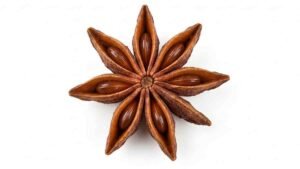
Ground ginger provides warmth for savory applications curries, meat dishes at 1:1 ratio, though the flavor becomes distinctly different. Star anise provides sweet licorice-forward warmth for mulled preparations, though lacking mace’s citrus and floral complexity.
Global Cuisines: Mace’s Refined Expression Across Cultures
European Culinary Tradition
European Cuisine—Particularly Northern Europe features mace prominently in refined preparations. British cooking incorporates mace into meat pies and traditional meat preparations. French cuisine considers mace essential in classical béchamel sauce the mother sauce of French cooking and employs it in custards, crème brûlée, and pastry cream.
German and Austrian traditions use mace in sausage formulations alongside cinnamon and cloves, and in spiced meat dishes. Dutch and Scandinavian cooking maintain historical mace traditions in traditional meat and vegetable preparations.
Indian and Middle Eastern Applications
Indian Culinary Tradition incorporates mace (javitri) into garam masala, creating the warm spice blend foundational to curries, rice preparations, and spiced dishes. Indian cooks understand mace as providing citrus brightness that balances heavier spices.
Mace appears in curry pastes, chutneys, and traditional meat preparations particularly lamb korma. Middle Eastern Cooking employs mace in meat stews, particularly lamb dishes where mace’s delicacy complements the protein’s richness. Mace appears in traditional spice blends and slow-braised meat preparations throughout the Levantine region.
Caribbean Heritage
Caribbean Tradition Particularly Grenada centers on mace as national treasure. The island’s flag features nutmeg and mace, symbolizing their cultural importance. Caribbean cooking incorporates mace into traditional preserved recipes and meat dishes, reflecting the region’s spice heritage.
Conclusion
Mace is the sophisticated spice that separates competent cooking from refined culinary artistry. Understanding its chemistry (38.4% sabinene, 5.9% myristicin, 43.85 mg GAE/g phenolics creating superior antioxidants), mastering its applications (whole blades for infusion, fresh-ground for precision, toasting for immediate use), and deploying it strategically (delicate dishes over heavy applications, cream-based sauces, refined preparations) transforms mace from overlooked pantry addition into culinary superpower.
Purchase whole mace blades, store them properly in cool darkness, toast briefly (30-60 seconds maximum) when immediate use is planned, grind fresh using mortar & pestle, and use à la minute for peak flavor. For every recipe calling for mace, remember it demands respect, precision, and timing the same qualities that define professional cooking. Master mace, and you elevate every dish it touches from competent to exceptional, from ordinary to refined, from good to extraordinary.