How to Scale a Fish Quickly and Cleanly
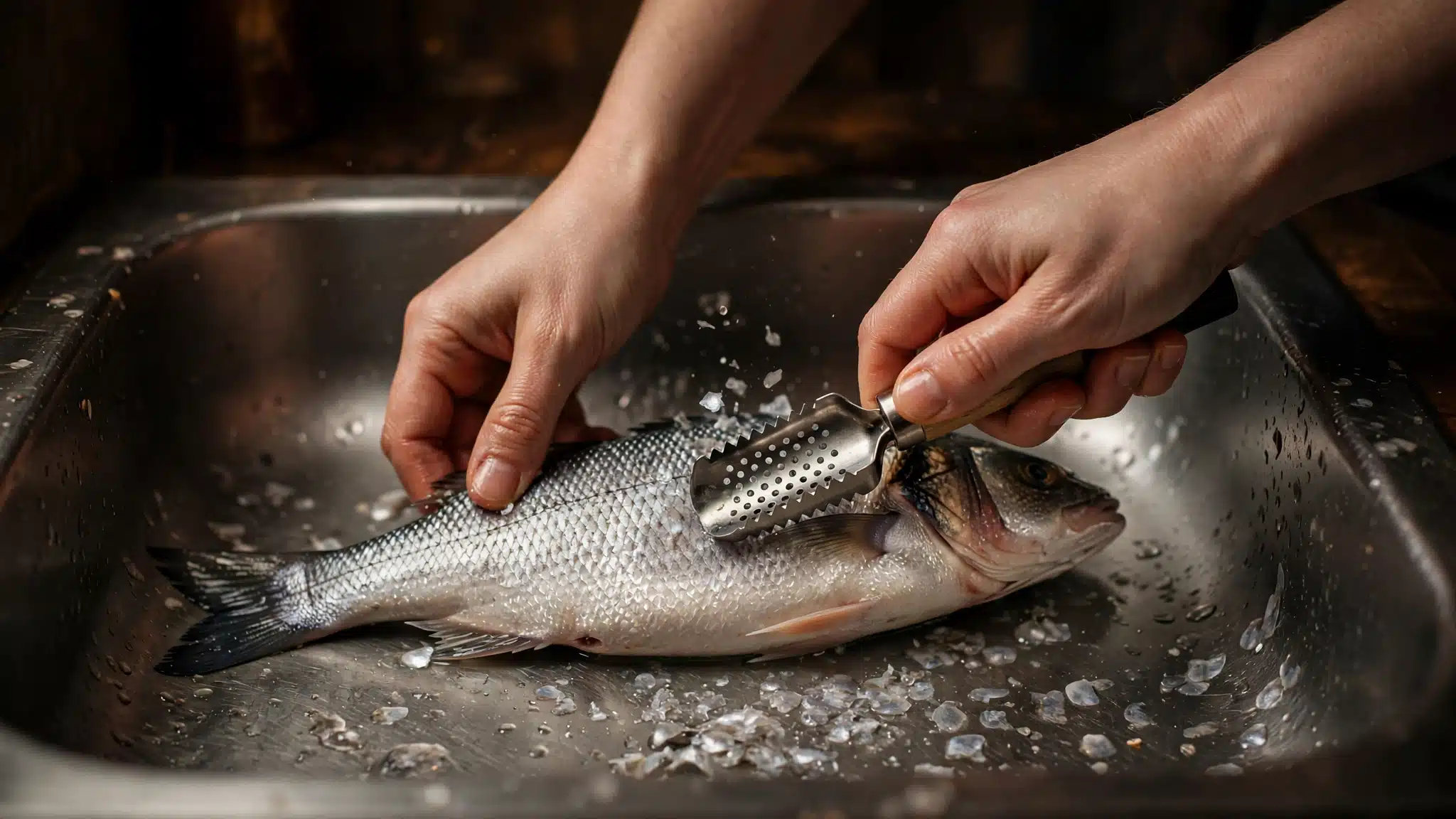
Scale a fish by scraping from tail to head, against the way the scales lie, with a fish scaler, the back of a spoon, or the back of a knife, working inside the sink. That sink setup is the difference between a short, tidy job and scales scattered across every surface. Scaling is step two in the full prep sequence in Fish Prep and Butchery: Every Skill You Need.
Table of Contents
First, Check the Fish Is Worth Scaling
Good scaling starts with a good fish. Look for clear, bright eyes, gills that are red rather than dull or brown, flesh that feels firm and springs back when pressed, and a clean, mild smell. If you are unsure what spoilage looks like, read How to Tell If Fish Has Gone Bad before you go any further. A fish that fails those checks belongs in the bin, not on the board. Fresh, firm fish is also easier to scale, because the skin and flesh hold their shape under the tool.
What You Need: Scaler, Spoon, or Knife Back
A purpose-made fish scaler is the first choice. Its serrated edge lifts scales quickly and pushes them down instead of flicking them across the room. The back of a spoon is a gentle home stand-in and works well on small, delicate fish such as pomfret and tilapia, where a heavy scaler can tear the skin. The back of a knife — never the cutting edge — can also work in a pinch. Pair your tool with a dry towel for gripping the tail and a supply of cold water for rinsing as you go.
The Mess-Control Setup
Work inside the sink, not on an open counter. The basin walls catch most flying scales before they can travel. If your sink is very small, line it with a large open bag and work inside the bag, so the scales collect in one place you can lift out and throw away. A little water in the bottom of the sink helps scales stick where they land instead of bouncing. Keep ready-to-eat food well away from the scaling area, and clear the space before you start.
How to Scale a Fish, Step by Step
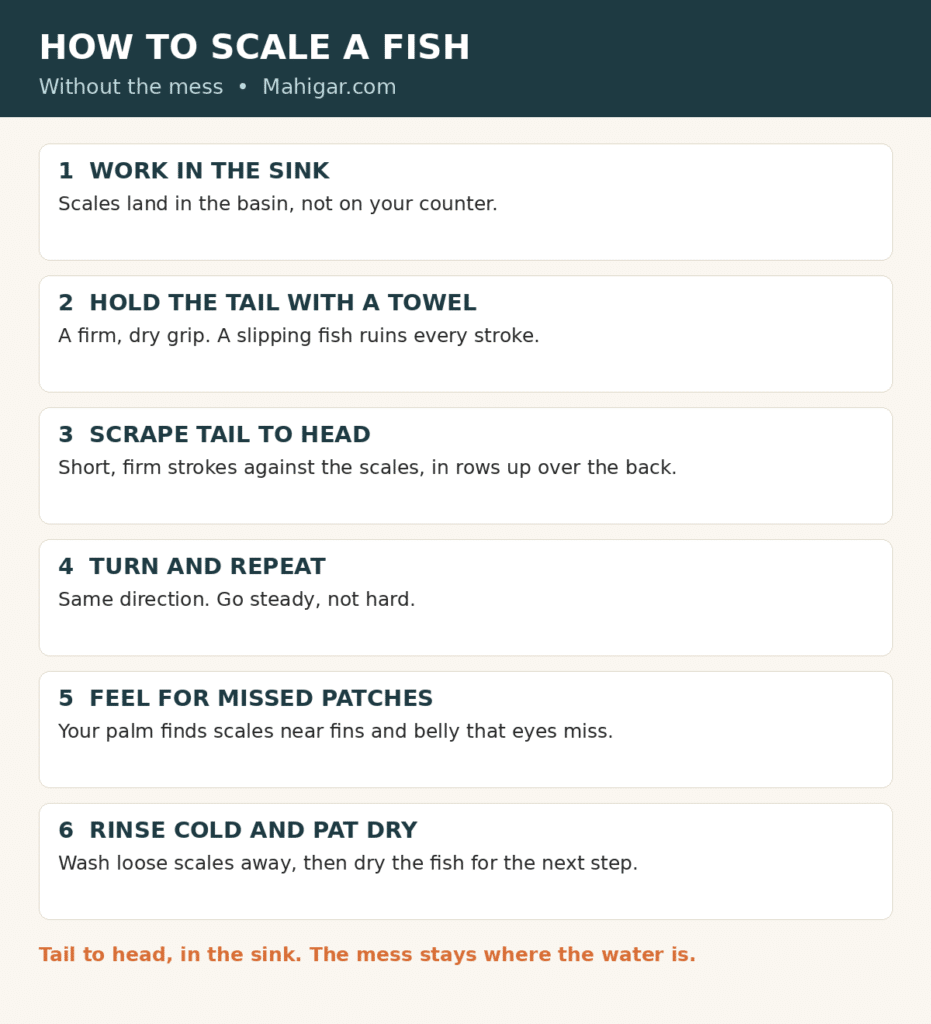
Scale a whole fish in the sink in six steps: wet the fish, grip the tail with a towel, scrape from tail to head in short firm strokes, turn and repeat, feel for missed patches, then rinse cold and pat dry.
Wet the fish and lay it in the sink
Wet the fish under cold water and lay it flat in the sink.
Grip the tail with a towel
Hold the tail firmly with a dry towel so the fish cannot slip while you scrape.
Scrape tail to head in short firm strokes
Scrape from tail to head in short, firm strokes, working in rows against the way the scales lie.
Turn the fish and repeat
Turn the fish over and repeat the same tail-to-head strokes on the second side.
Feel for missed patches
Run your palm over the fish and feel for missed patches near the fins, belly, and head, then scrape any rough spots again.
Rinse cold and pat dry
Rinse the fish under cold water, check once more for loose scales, and pat it dry.
Which Fish Need Scaling — and Which Skip It
Scale fish with clear, hard scales before cooking, including rohu, catla, tilapia, pomfret, sea bass, snapper, and carp. You can skip the step when your fishmonger has already scaled the fish for you, and you can also skip it when you plan to take the skin off before cooking, because the scales leave with the skin. Keeping the skin on to fry? Scaling matters even more, because crisp skin cannot be eaten comfortably with scales still attached. For more on that choice, see Is Fish Skin Safe to Eat?
Scaling Comes Before Gutting and Filleting — Always
Scale the fish while it is still whole, with the belly closed. A whole fish gives you firm control under the scaler; once the belly is opened, the fish turns floppy and much harder to hold steady. The order is simple: scale first, then gut, then fillet. Our fillet guide assumes you are starting with a scaled, cleaned fish, so follow How to Fillet a Fish: Step-by-Step for Beginners once scaling and gutting are done.
Next, follow How to Gut and Clean a Whole Fish.
After Scaling: Clean Hands, Clean Board
Wash your hands, tools, board, and sink with hot, soapy water as soon as scaling is finished. Keep the fish at 40°F (about 4°C) or below, and move on to the next prep step promptly rather than leaving it sitting out. Use raw fish within 1 to 2 days at most, and cook fish to 145°F (about 63°C) for safe serving.
Frequently Asked Questions
Do you scale a fish before or after gutting it?
Before. Scale the fish while it is still whole and firm, then gut it. A whole fish is much easier to hold steady under the scaler.
Can you scale a fish with a spoon?
Yes. Use the back of a spoon with gentle strokes. It is a great home option for delicate fish such as pomfret and tilapia.
Do you need to scale fish before filleting it?
Yes, if the skin stays on. If you plan to skin the fillet anyway, you can skip scaling because the scales leave with the skin.
How do you keep scales from flying everywhere?
Work in the sink with a little water in the basin, grip the tail with a towel, and rinse as you go. For a small sink, work inside a large open bag so the scales collect in one place.
What to Check Next
With scaling done, gutting is next, then filleting, then removing pin bones, in the order set out in the prep pillar. Work through them in that sequence and each step will feel easier, because the fish is prepared properly for the stage that follows.
Sources: FDA seafood handling guidance and FoodSafety.gov principles. This article provides general kitchen information, not medical advice.
