How to Remove Pin Bones from Fish
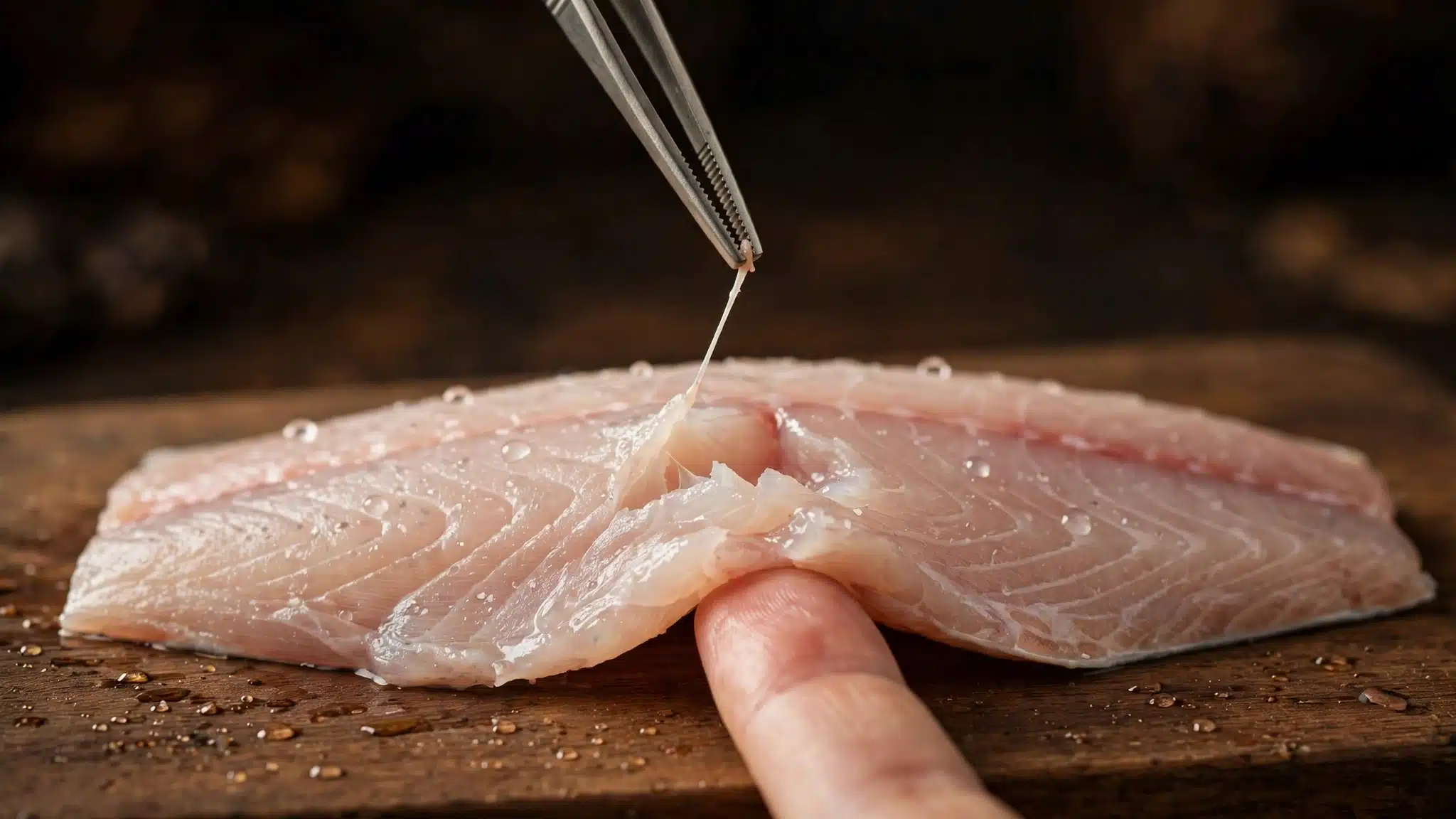
Remove pin bones by touch, not sight. Run a fingertip along the thick centre of the fillet, from the head end to the tail, then grip each sharp tip you feel with fish tweezers and pull it out towards the head end. Then run the same fingertip check again. That slow first pass, a steady pull, and an honest second check will clear almost every fillet. This is step five in the full prep sequence in Fish Prep and Butchery: Every Skill You Need, right after filleting.
Table of Contents
What Pin Bones Actually Are
Pin bones are the thin, fine bones that sit in the thick part of a fish fillet. They are not the larger rib bones you cut around during filleting. A fillet can look clean and bone-free, yet still hide a neat row of pin bones under the surface. They are easy to miss — until someone finds one at the table.
The Tools: Tweezers, Pliers, or Nothing Fancy
Fish tweezers are the first choice. They are wide, flat, and easy to control close to the flesh. Clean needle-nose pliers work as a backup, but use them gently so you do not tear the fillet. Your fingertip is the real detector here; the tool only does the pulling. Keep any fish you are not working on cold in the fridge while you debone one fillet at a time. If your fillet still needs trimming before this step, see How to Fillet a Fish: Step-by-Step for Beginners.
How to Remove Pin Bones, Step by Step
Work slowly and in order. Finding the row once and pulling each bone the same way is faster than hunting at random.
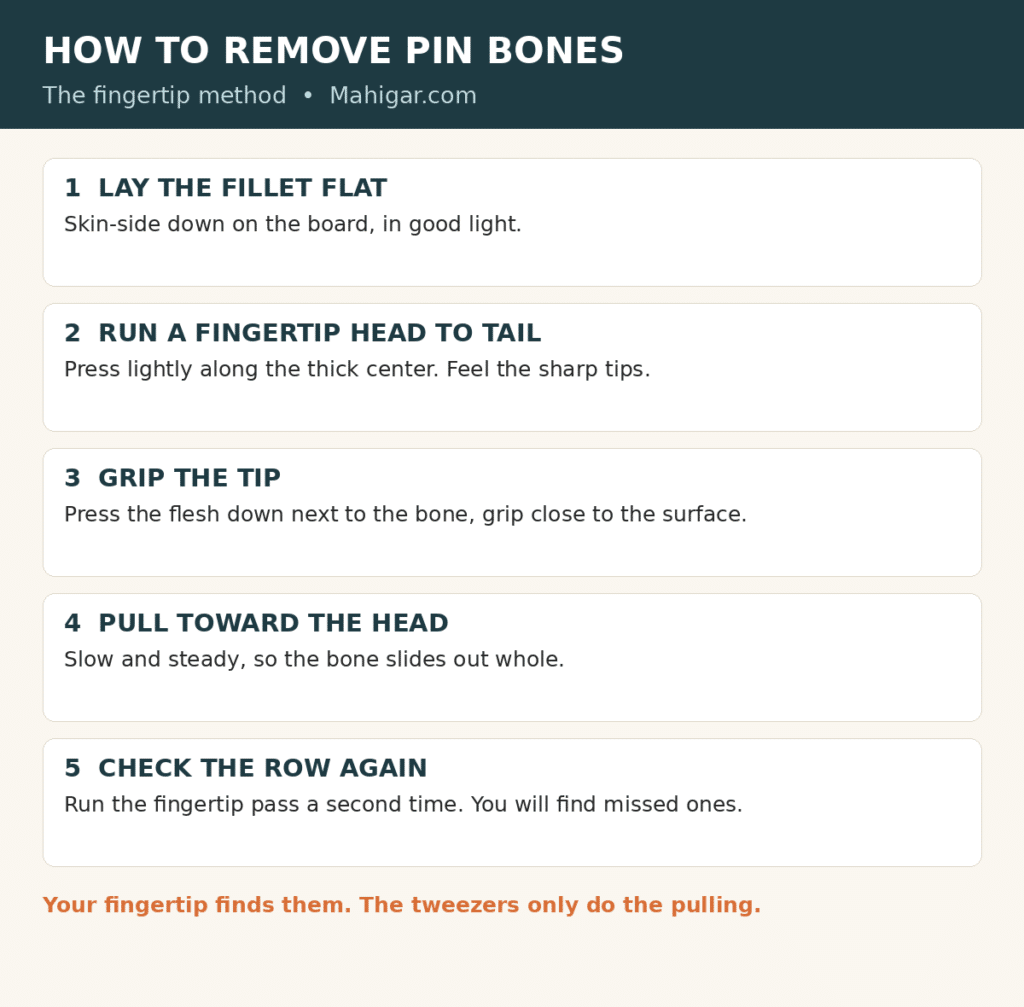
How to remove pin bones from a fish fillet with fish tweezers and a simple fingertip check.
Lay the fillet flat
Lay the fillet flat, skin-side down, in good light.
Run a fingertip along the thick centre
Run a fingertip from the head end to the tail along the thick centre, and feel for the sharp bone tips.
Grip the first tip
Grip the first tip close to the surface with the tweezers, holding the flesh pressed down.
Pull towards the head end
Pull slowly and steadily towards the head end so the bone slides out whole.
Work down the row
Work down the row, pulling each bone out the same way.
Check the row again
Run the fingertip check again — this second pass is not optional.
Decide on the skin
Decide whether the skin stays on or comes off before cooking. For the safety side, see our skin guide.
Which Fish Have Pin Bones?
Salmon and trout have a clear, easy-to-find row of pin bones. Sea bass and snapper also carry pin bones worth checking for. Tilapia has a more modest row, while pomfret has fewer pin bones and is more forgiving for beginners. When in doubt, run the fingertip check anyway — it takes seconds.
Rohu and Catla: The Honest Truth About Y-Bones
Rohu and catla have many fine, Y-shaped bones spread through the flesh. Tweezers cannot turn them into a boneless fillet, and it is honest to say so plainly. Cook rohu and catla as bone-in steaks or in a curry, and eat with care. If you truly need a boneless result, choose an easier fish such as tilapia or pomfret instead.
The V-Cut: An Alternative for Some Fillets
For some fillets you can cut a thin V-shaped strip along the bone line and lift the whole row out at once. It is faster, but you lose a little flesh. Use tweezers for small or precious fillets, and the V-cut for thick fillets when speed matters. Never call a carp-family V-cut “boneless” — Y-bones can still remain elsewhere in the fish.
After Deboning: Chill and Cook
Once deboning is done, chill the fish, covered, at 40°F or below. Use raw fish within 1 to 2 days at most. Cook fish to 145°F in the thickest part — see Safe Internal Cooking Temperatures for Every Type of Fish — and wash your hands, tools, and board well. Keep raw fish separate from other food.
Frequently Asked Questions
Short answers to the questions home cooks ask most at the cutting board.
What can I use if I do not have fish tweezers?
Clean needle-nose pliers, with a gentle, slow pull.
Do pin bones dissolve or soften when fish cooks?
No. Cooking is not deboning — remove them at the board.
Should I remove pin bones before or after skinning?
Before skinning, with the fillet skin-side down for stability.
Can you eat fish pin bones if one is missed?
Try not to swallow them. A second fingertip pass prevents most misses; eat slowly, and for children or guests use a fully cleared, easy fish.
What to Check Next
Decide whether the skin stays on or comes off, portion the fillet evenly, and keep following the prep pillar in order. Above all, run the fingertip check twice — once to find the bones, and once to prove the row is clear. For the skin question in full, see our guide Is Fish Skin Safe to Eat?
Sources: U.S. FDA seafood handling guidance and FoodSafety.gov safe-handling principles. This article is general kitchen information, not medical advice.
