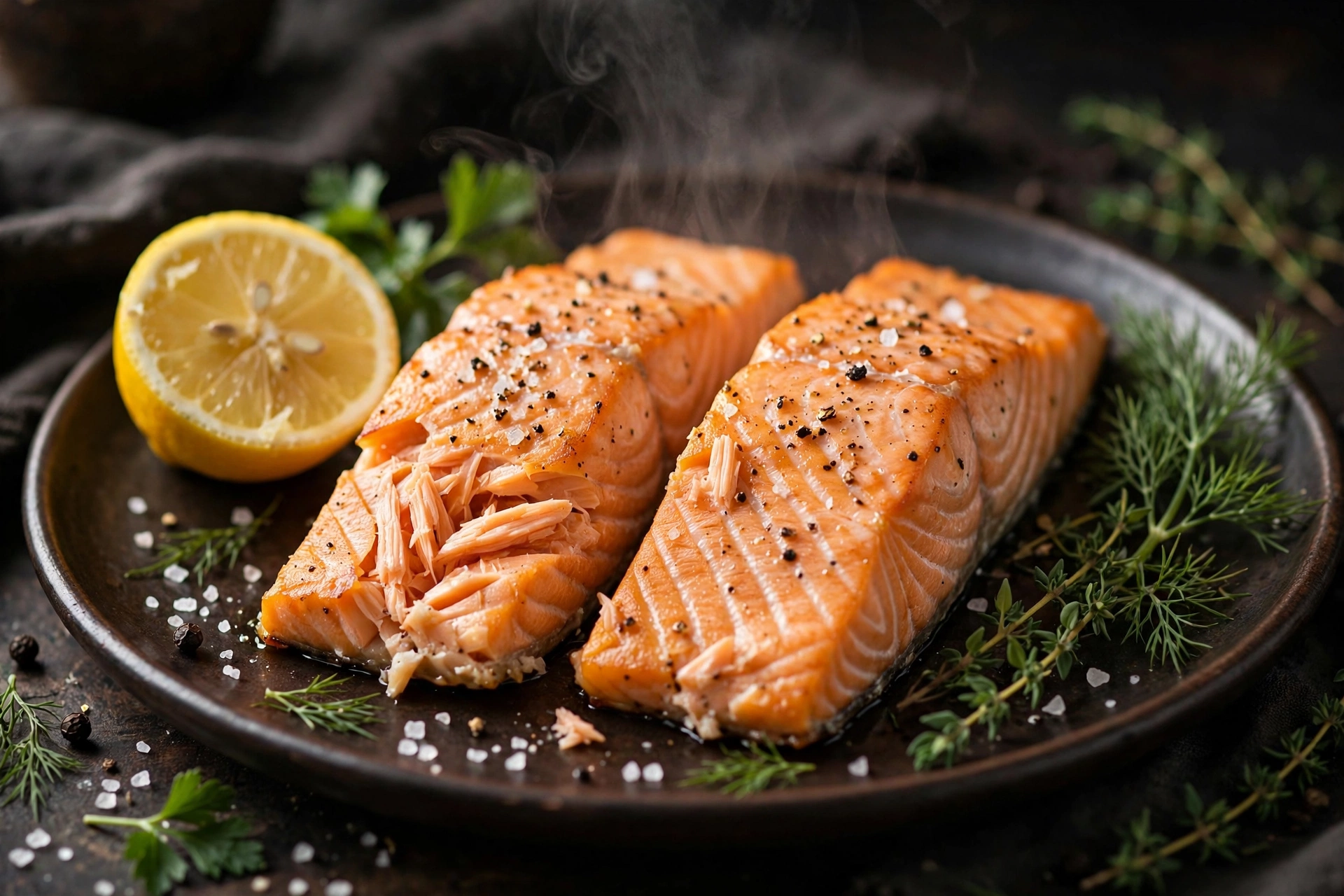
Is Farmed Fish as Healthy as Wild-Caught?
At the fish counter the wild-caught label sounds better, costs more, and comes with a nicer story on the packet, and plenty of people will tell you farmed fish is the troubled one. I have watched that story make shoppers stretch their budgets for wild fish that sat longer on the ice, while perfectly good farmed fish they could afford went back in the case. So this guide does one plain job: it runs three farmed-versus-wild pairs through the USDA’s own numbers, side by side, and shows where the real differences are and where they are not.
Yes, farmed fish can be just as healthy as wild-caught. In the three pairs I could verify, protein is nearly the same, the farmed fish carries more fat and calories, and the omega-3 gap changes direction from one species to the next. The label matters less than the species you pick.
I am Wasim Abbas Bhatti, the Fish’s Chef. I have cooked fish for more than twenty years, and “should I pay more for wild?” is a question my readers ask with real money behind it. This guide is my sourced answer, inside Fish Nutrition and Health: The Complete Guide, Mahigar’s nutrition hub. One note before the table: this is general information, not medical advice. Your own doctor’s guidance comes first.
Table of Contents
How I Built This Comparison
I compared like with like. Every figure below comes from USDA FoodData Central, the US government’s food database: the farmed entry and the wild entry for the same species, both raw, both per 100 grams. I read protein, total fat, energy, and the two omega-3 fats EPA and DHA, the pair this hub already tracks in its ranked omega-3 guide, and I changed nothing between the two columns.
Three pairs had clean entries on both sides: Atlantic salmon, rainbow trout, and channel catfish. That is the whole table. I did not borrow numbers from memory, packaging, or other websites, and I did not fill gaps for fish the database does not pair up, including our own rohu and pangasius, which get an honest word later, without figures.
One caution before the numbers argue with each other: a database entry is an average of sampled fish. Real fillets vary with origin, season, water, and, for farmed fish, feed. Treat this as a reliable guide to the pattern, not a promise about the exact piece on your board tonight.
The Three Pairs, Side by Side
| Species (per 100 g, raw) | Protein | Total fat | Energy | EPA + DHA |
|---|---|---|---|---|
| Salmon, Atlantic, farmed | 20.4 g | 13.4 g | 208 kcal | 1.96 g |
| Salmon, Atlantic, wild | 19.8 g | 6.3 g | 142 kcal | 1.44 g |
| Rainbow trout, farmed | 19.9 g | 6.2 g | 141 kcal | 0.73 g |
| Rainbow trout, wild | 20.5 g | 3.5 g | 119 kcal | 0.59 g |
| Catfish, channel, farmed | 15.2 g | 5.9 g | 119 kcal | 0.07 g |
| Catfish, channel, wild | 16.4 g | 2.8 g | 95 kcal | 0.37 g |
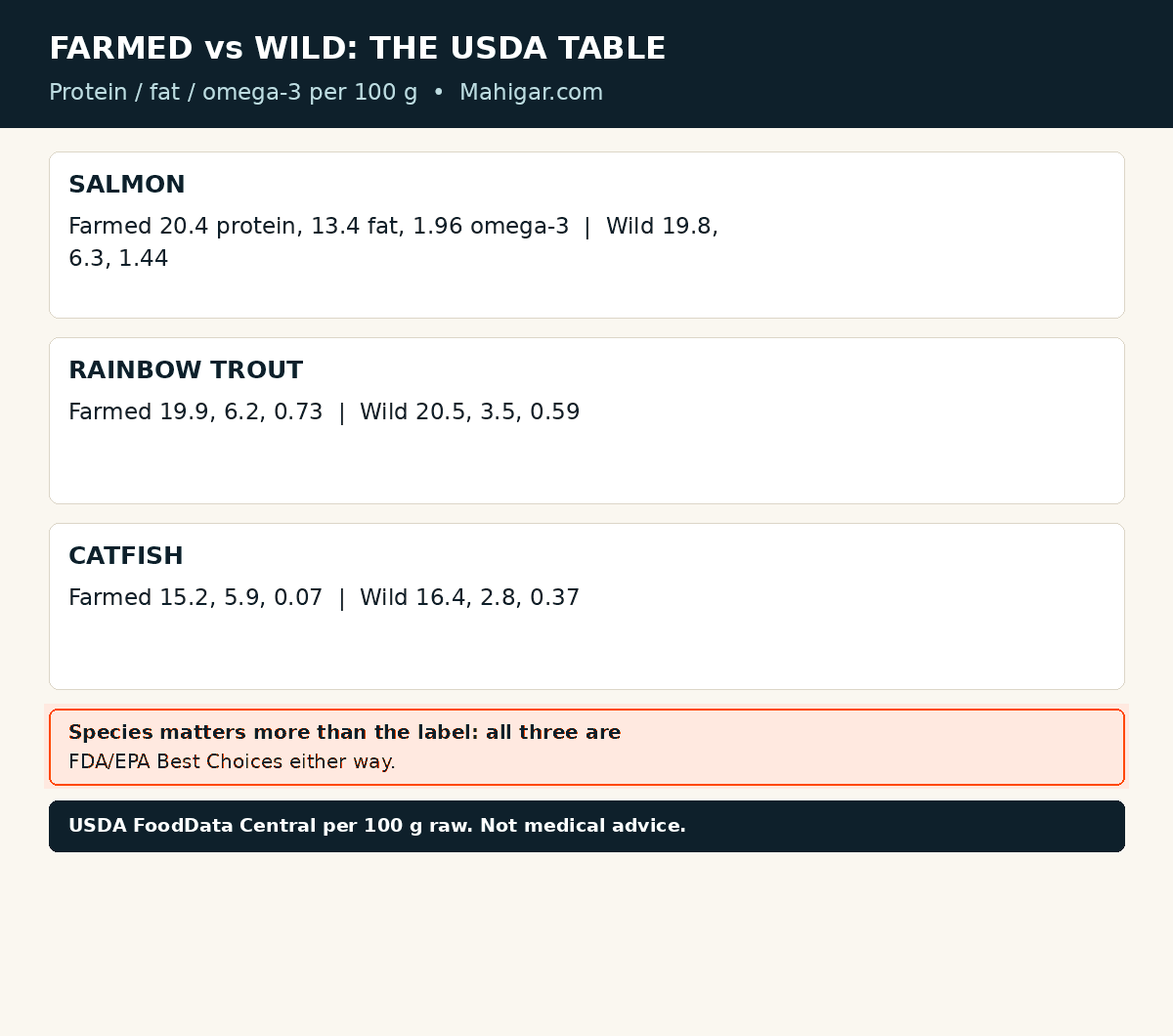
Salmon: the pair everyone argues about. Protein is effectively tied: 20.4 grams farmed, 19.8 wild. The real difference is fat: the farmed entry carries more than double the total fat, and the calories follow it, 208 against 142. In these entries the farmed salmon also holds more EPA and DHA per 100 grams, about 1.96 grams against 1.44, because omega-3 travels with the fat. That is the same farmed salmon that sits near the top of Omega-3 Rich Fish, Ranked by Species. Fattier is not automatically worse here; it depends whether you came for a lean plate or for omega-3.
Rainbow trout: the quiet middle. Protein again barely moves: 19.9 grams farmed, 20.5 wild, a tie for any real plate. The farmed entry is fattier, 6.2 grams against 3.5, with a little more EPA and DHA, 0.73 against 0.59. Nobody’s health turns on that gap; freshness and cooking will matter more at the table.
Catfish: where the direction flips. Here the wild entry is the leaner, stronger fish on paper: slightly more protein, 16.4 against 15.2 grams, about half the fat, and more EPA and DHA. Honesty matters here: at 0.37 grams against 0.07, both catfish entries are low-omega-3 fish. Catfish earns its place as mild, affordable protein, not as an omega-3 fish, whichever label it wears. The full protein picture across species is in Fish Protein Content Compared by Species.
Read the three pairs together and the pattern is plain: protein does not care much about the label. Fat does. And omega-3 follows the species first. Salmon is an omega-3 fish farmed or wild; catfish is not, farmed or wild.
That also settles a common kitchen worry: farmed does not mean protein-poor. Across these pairs, the largest protein gap is just over one gram per 100 grams, and it does not even point the same way every time. If protein is why the fish is on the menu, either label can carry the meal; choose by freshness and species.
What About Mercury? The Species Decides, Not the Label
Mercury is where most readers expect wild to win, so here is exactly what the official chart does. The FDA and EPA sort fish by species into Best Choices, Good Choices, and Choices to Avoid. Salmon, trout, and catfish all sit in Best Choices: two to three servings a week at a 4-ounce adult serving, and the chart gives the farmed and wild versions of a species the same placing. It does not split them.
So no, farmed is not “mercury-free,” and wild is not “mercury-risky.” Both claims are inventions. A Best-Choice species is a Best-Choice species; the big predators on the avoid list are there because they are big, long-lived predators. The full chart, with pregnancy and child servings, is in Mercury in Fish: Safe Levels by Species.
The Questions This Table Cannot Answer
A nutrient table settles nutrition. It says nothing about how a fish was raised or caught, and I will not pretend it does.
Readers ask me about medicines used on farms, what farmed fish are fed, other contaminants, and which choice is kinder to the sea. Those are real questions, and this article does not answer them, because I did not build it on sources that could. Answering them from habit or headlines would be exactly the verdict theatre this guide promised to avoid. What I can say from the kitchen side is simpler: buy from a seller you trust, ask what the fish is and where it came from, and let freshness you can see and smell outrank any label story.
Our own market makes the point. Rohu and pangasius feed more families here than salmon ever will, and much of that fish is farmed, but FoodData Central does not give me verified farmed-versus-wild pairs for them, so they get no invented table. What holds is the principle from the safety guide: know your species, buy it fresh, cook it properly, and rotate what you eat instead of leaning on one fish every week.
How I Choose, Standing at the Counter
My order of decisions has not changed since I wrote the nutrition pillar, and this table only confirmed it. My rule at the counter: species first, category second, freshness third, label last.
Species first. Choose the fish that does the job: salmon or trout when omega-3 is the point, catfish or another mild white fish when the plate needs gentle protein.
Category second. Stay inside the FDA/EPA Best Choices for the weekly rhythm, farmed or wild.
Freshness third, and it outranks the label. A fresh farmed fillet beats a tired wild one every day of the week. Clear smell, firm flesh that springs back, cold fish on ice: you already know the checks.
Label last. Farmed or wild can refine the choice: budget, availability, the fat level you want tonight. But it is the last question I ask, not the first.
Frequently Asked Questions
Is farmed salmon less healthy than wild salmon?
In the USDA entries, their protein is effectively tied, the farmed salmon carries more total fat and calories, and it holds more EPA and DHA per 100 grams in these entries. “Less healthy” is too simple for that table: it depends whether you want the leaner fillet or the omega-3 delivery. Both are FDA/EPA Best Choices.
Does wild fish always have more omega-3?
No. Farmed salmon and farmed rainbow trout carry more EPA and DHA than their wild entries in the USDA table above, while the wild catfish carries more than the farmed, from a low base either way. Species decides the omega-3 league; the label only adjusts within it.
Is farmed fish higher in mercury?
The FDA/EPA chart places fish by species, not by label: salmon, trout, and catfish are Best Choices farmed or wild. Nothing is mercury-free, and no cooking removes mercury; choosing the species does that work.
Should I only buy wild fish for my family?
You do not need to. A varied week built from Best-Choice species, bought fresh and cooked properly, serves a family well with farmed fish in it. Spend the extra on wild when the species, freshness, or a special meal earns it, not out of fear of the farmed label.
What to Check Next
Farmed versus wild is a real difference: in fat, in calories, and sometimes in omega-3. But it is a smaller difference than the one between species, and a much smaller one than the difference between fresh fish cooked well and any fish cooked badly. Pick the species for the job, keep it in the Best Choices, and buy the freshest fillet in front of you. The label can come last without costing your family anything.
