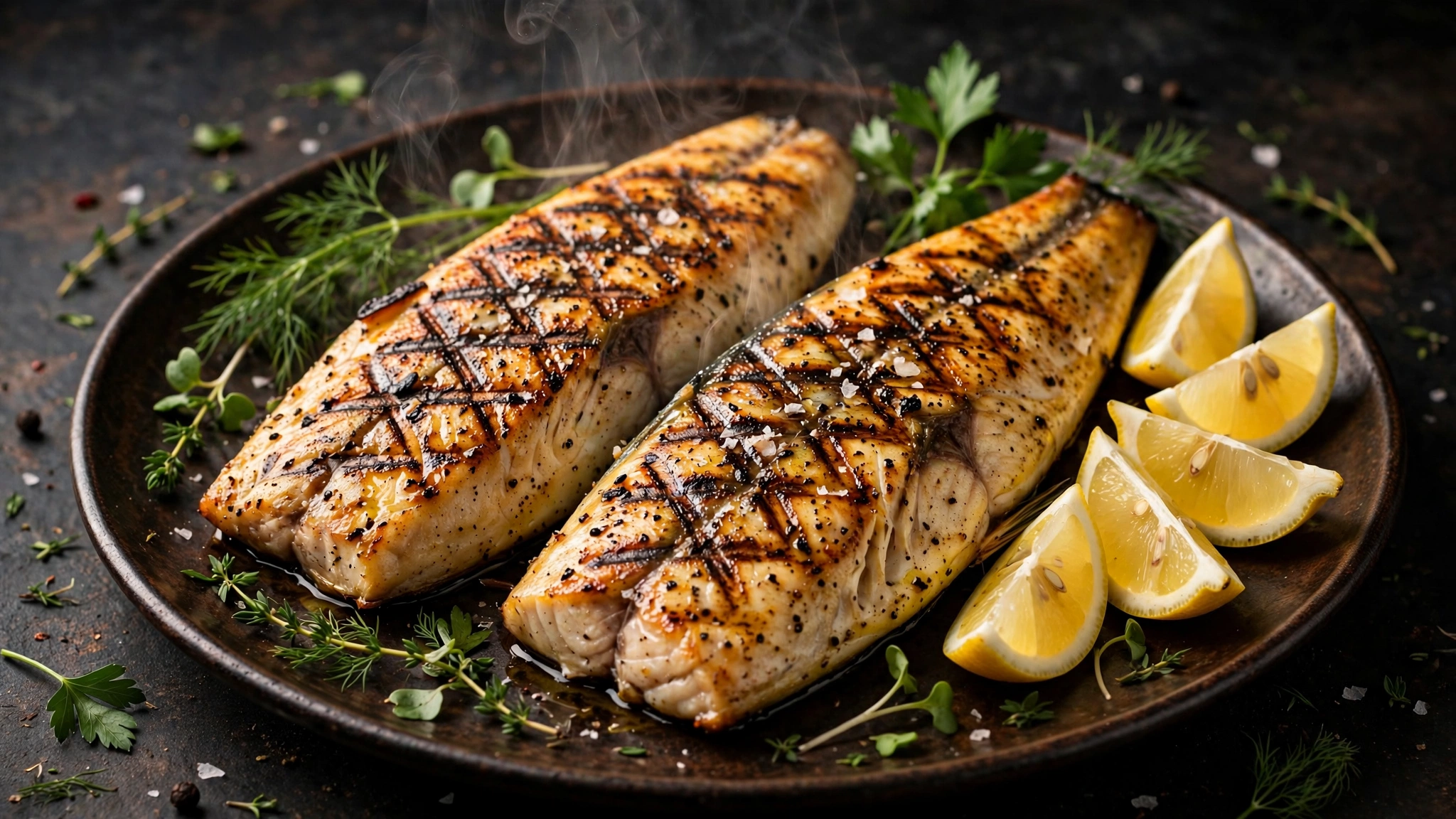
Mahi Mahi: How to Buy, Prep, and Cook It
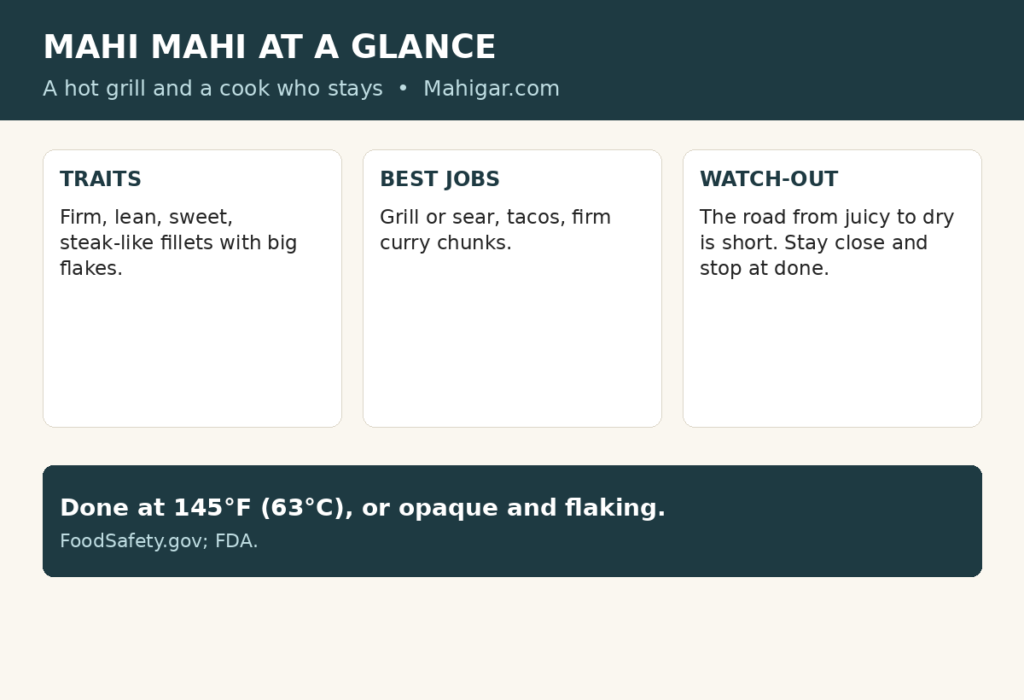
Mahi mahi is the firm fish I give to people who say fish breaks too easily. Its fillets are lean, sweet, and steak-like, with big flakes that hold on a grill and in a taco. And it has one honest trap: the road from juicy to dry is short. Cook it with attention and it is generous. Walk away from it and it will remind you why lean fish punishes wandering.
I am Wasim Abbas Bhatti, the Fish’s Chef. Mahi mahi teaches the difference between firm and forgiving — it is the first, not the second. This profile sits inside Fish Species Guide: What to Buy and How to Cook Each One, where species are sorted by the jobs they do best. Mahi mahi’s job is confident heat, watched closely.
Table of Contents
What Mahi Mahi Is Like at the Counter
Mahi mahi is sold mostly as skinless fillets or steaks, sometimes with the skin on. The raw flesh can be pale pink to light beige, always firm to the touch, and it cooks up white with big, clean flakes. The flavour is sweet and clean — stronger than tilapia, gentler than an oily fish — and carries rubs and char without disappearing.
At the counter, press the flesh. It should feel firm and spring back. Soft, mushy flesh before cooking only becomes dry and mushy at once in the pan. The smell should be clean and mild, never sour. No spice blend in my kitchen rescues a tired mahi mahi.
Look at the surface honestly too. A large fillet may show a darker strip along one side — the bloodline, where the flavour runs stronger. That strip is normal, not damage. If your eaters like clean, mild flavour, trim the darkest part away; for curry and tacos, many cooks leave it. Decide by the dish.
Bones, Skin, and Prep
Mahi mahi is kind at the table. It does not carry the fine-bone problem of carp-family fish, and a centre-cut fillet eats cleanly once you have done one honest check: run a fingertip over the flesh before cooking, and pick out any stray pin bone you feel. Let an adult make that check for children’s portions.
The skin is thicker and tougher than on delicate fish, and on this species it is usually removed rather than crisped and eaten. Skinning and portioning are taught steps in Fish Prep and Butchery: Every Skill You Need. Portioning matters here: mahi mahi is often thick at one end and thinner at the other, and those two ends never finish together. Cut or sort pieces so the thickness matches.
Two prep habits protect this fish. First, pat the surface very dry before heat — a wet surface steams instead of searing, and a lean fish cannot spare the moisture lost while waiting for browning. Second, season close to cooking; long salty marinades draw moisture out of a lean fillet.
The Safety Frame: Mercury and Doneness
On mercury, I use the official frame, not my own guess. In the FDA/EPA categories set out in Mercury in Fish: Safe Levels by Species, mahi mahi sits among the Good Choices — the group the advice places at one serving a week for the people that advice is written for. I will not turn that into a promise or a scare. It is a planning category, and the full chart is in that guide.
Doneness is where this fish is won or lost. Like every fin fish on my site, mahi mahi is done at 145°F (63°C) in the thickest part, or when the flesh is opaque and flakes easily. The full chart is in Safe Internal Cooking Temperatures for Every Type of Fish. With mahi mahi, probe early rather than late: lean flesh has very little fat to protect it past the finish line, so a piece can travel from ready to dry while you are setting the table. Check the thickest piece, and let the fish — not the clock — give the answer.
Best Ways to Cook Mahi Mahi
Grill or sear: the lead method
This is mahi mahi’s home. Firm flesh meets direct heat without falling apart, the outside takes char, and the inside stays sweet if you stop on time.
How to grill or sear mahi mahi.
-
Choose even pieces and dry the fish
Choose pieces of even thickness, and pat the surface very dry.
-
Season simply close to cooking
Season simply close to cooking — salt, pepper, and your spice rub — and let the fish stand only briefly.
-
Heat the grill or pan properly
Heat the grill or heavy pan until properly hot, and oil the fish lightly, not the whole surface.
-
Lay the fish down and leave it
Lay the fish down and leave it. Firm fish releases when the sear is ready; forcing it early tears the surface.
-
Turn once when coloured
Turn once, when the first side has real colour.
-
Check the thickest piece early
Check the thickest piece early: 145°F (63°C), or opaque and flaking.
-
Rest briefly and serve with lemon
Rest briefly, serve with lemon; overcooked pieces suit tacos or sauce.
Tacos and firm pieces
Few fish serve a taco better. The flakes are big, the flesh holds under slaw and sauce, and a slightly firmer cook disappears happily into a warm tortilla. Cut even pieces before cooking so they finish together. This is also the honest rescue for mahi mahi that went a little long: sauce is not cheating, it is good hosting.
Curry chunks, cut thick
Mahi mahi holds its shape in a curry where a delicate fish would dissolve. Cut the chunks on the larger side, add them late, and let the sauce finish them gently. Dry surface, even size, stop at opaque — the same three rules, in a pot instead of on a grill.
What to Avoid
- Walking away. This fish’s juicy-to-dry window is short. Stay at the grill. A lean fillet does not send a warning before it turns.
- Cooking past opaque “to be safe.” Past done, mahi mahi does not become safer in any way that helps your dinner; it becomes dry. Use the temperature or the flake check, then stop.
- Putting wet fish on the heat. Surface water steams, the sear arrives late, and the fish spends longer cooking to reach the same colour — moisture a lean fish cannot spare.
- Mixed thickness on one grill. A thick centre and a thin tail cannot finish together. Sort or cut pieces to match before the heat, not after.
- Rough rescue attempts. If a piece is already dry, do not grill it again. Slice it for tacos, fold it into a sauced dish, or serve it with something moist and honest.
If You Cannot Find Mahi Mahi
Swap by the job, not by the name. For grill steaks, swordfish does the firm, meaty job — with its own mercury care, so check the guide before making it a habit. For a whole celebration fish, red snapper gives firm, sweet flesh in a different form. For a mild, quick family pan, tilapia is gentler and leaner still. Every substitute keeps the rule that matters: match the thickness, respect the doneness, and do not wander off.
Frequently Asked Questions
Why does my mahi mahi always come out dry?
Because this lean fish has a short road from juicy to dry. The usual causes are cooking past 145°F (63°C), mixed thick-and-thin pieces, or a wet surface that delays the sear while moisture escapes. Dry the fish, match the thickness, probe the thickest piece early, and stop at opaque and flaking.
Is mahi mahi a good fish for beginners?
For the grill, yes — firm flesh resists breaking; timing still needs close attention.
Should I eat the skin on mahi mahi?
Usually not — skin is thick and tough, so most cooks remove it before cooking.
How often can I eat mahi mahi?
Rated a Good Choice in FDA/EPA advice: one serving weekly for its intended audience; see mercury guide.
What to Check Next
Mahi mahi in one line: firm, lean, sweet — and finished before you think. Buy it firm and clean-smelling, dry it well, match the thickness, and stay at the heat until the thickest piece says done.
From here, the Species hub sorts every other fish by the same job logic. If the fish is home and needs skinning or portioning, the Prep pillar takes it from board to grill. Right species, dry surface, honest finish — that is the whole mahi mahi game.
